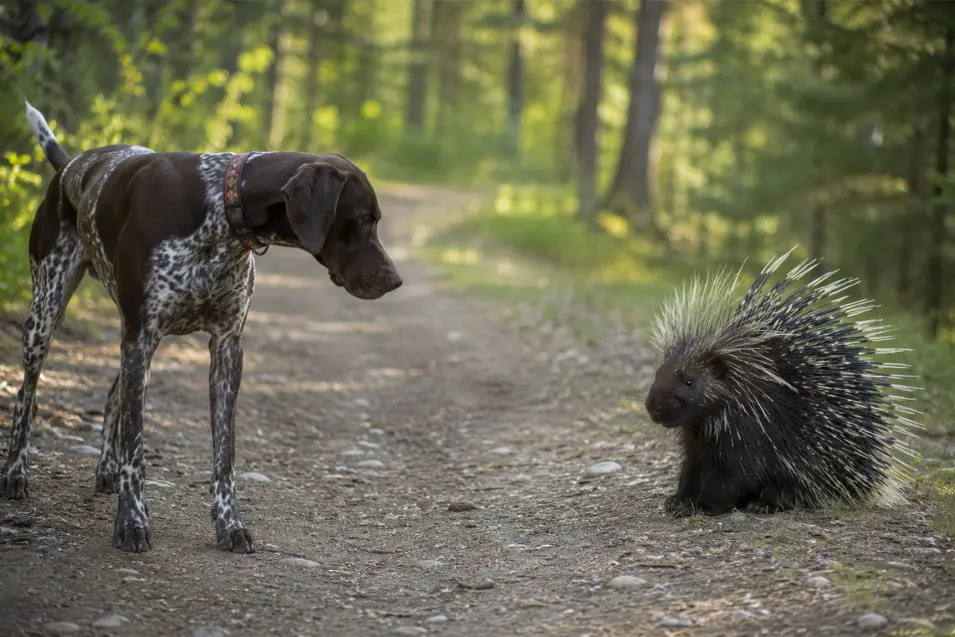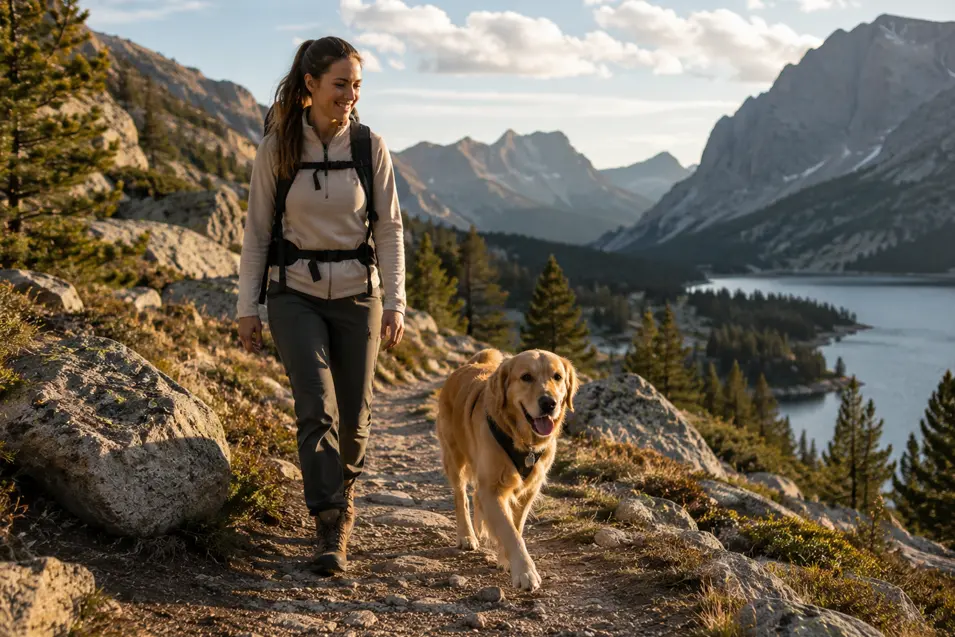
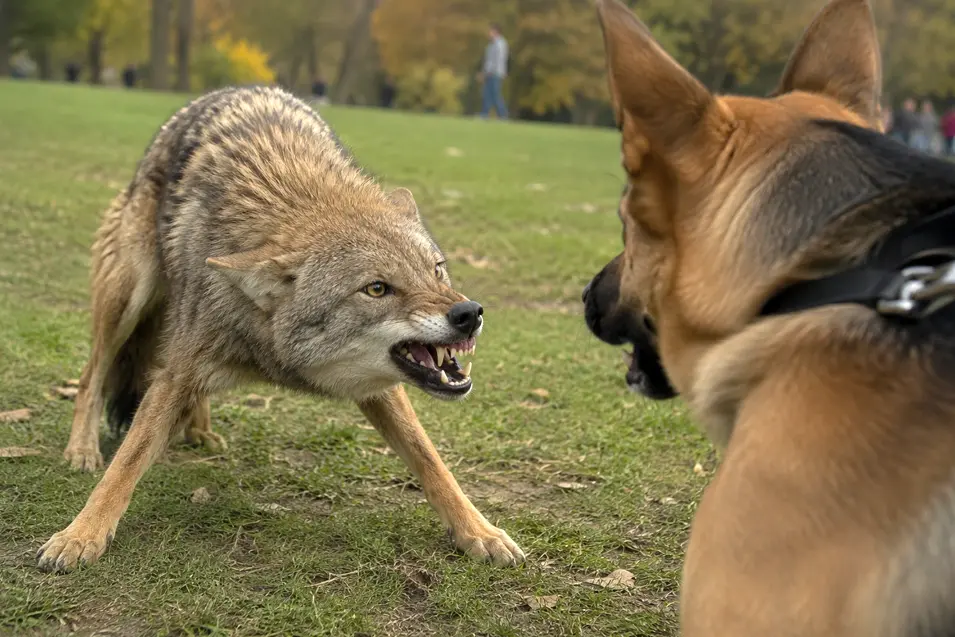
Coyotes have become an increasingly common sight across North America. Once found mainly in rural areas, these intelligent and highly adaptable animals now live in cities, suburbs, parks, golf courses, and residential neighborhoods. For dog owners, this means a routine walk or visit to an off-leash park can sometimes lead to an unexpected—and potentially dangerous—wildlife encounter.
While most coyotes avoid people, they may view small dogs as prey or larger dogs as competitors, especially during the spring denning season when they are protecting their pups. Understanding how coyotes behave and knowing how to respond can significantly reduce the risk of an attack.
Why Coyotes Can Be Dangerous to Dogs
Coyotes are naturally cautious animals, but they are also opportunistic predators. Most encounters occur because the coyote is protecting territory, defending its young, or searching for food.
Dogs may attract coyotes for several reasons:
- Small dogs can be mistaken for prey.
- Larger dogs may be viewed as territorial rivals.
- Barking or chasing wildlife can provoke a defensive response.
- Unleashed dogs may unknowingly approach a den site.
- Pet food and garbage can attract coyotes into neighborhoods.
Although attacks on people are uncommon, attacks on dogs occur every year throughout Canada and the United States.
Where You’re Most Likely to Encounter Coyotes
Coyotes thrive in surprisingly diverse environments.
Common locations include:
- Urban parks
- Off-leash dog parks
- River pathways
- Nature reserves
- Golf courses
- Campgrounds
- Hiking trails
- Rural properties
- Residential neighborhoods bordering natural areas
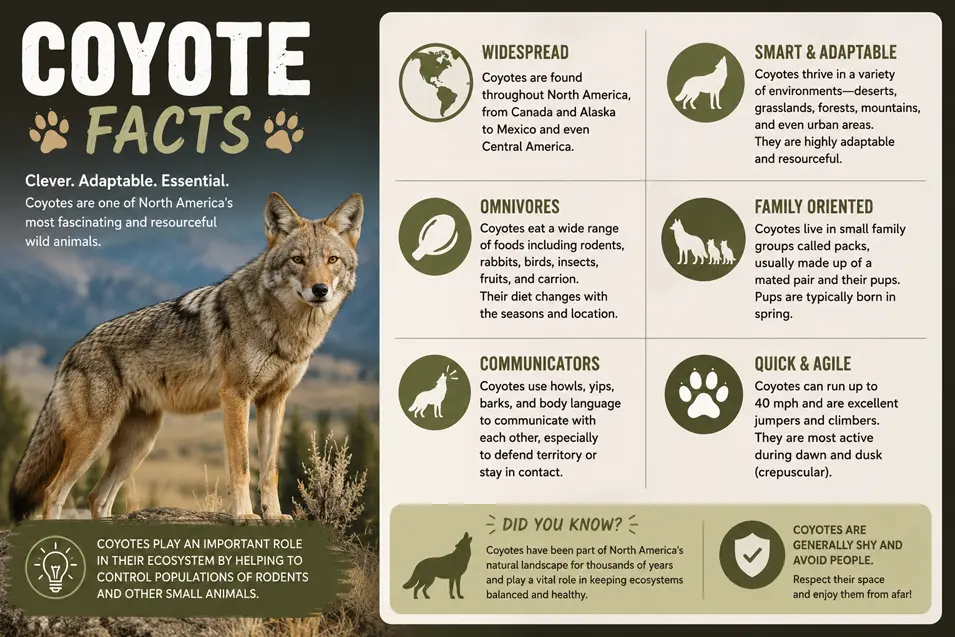
They are most active at dawn and dusk, but daytime sightings are becoming increasingly common in urban environments.
Why Off-Leash Parks Can Be Risky
Many owners assume fenced or designated off-leash areas are completely safe. Unfortunately, coyotes frequently travel through large natural parks, especially those connected by rivers, forests, or green corridors.
Dogs that wander far from their owners are more vulnerable because they may:
- Chase a coyote.
- Accidentally approach a den.
- Become separated from their owner.
- Be lured into wooded areas by one or more coyotes.
Keeping your dog within sight—even in an off-leash park—can greatly reduce the risk of an encounter.
When Are Coyotes Most Aggressive?
Although coyotes can be encountered year-round, certain times present greater risks.
Spring (Denning Season)
From spring through early summer, coyotes become highly protective of their pups. Dogs that unknowingly approach a den may be chased or attacked.
Fall and Winter
During colder months, food becomes scarcer. Coyotes may travel farther into residential neighborhoods in search of easy meals.
Signs a Coyote Is Becoming Aggressive
Most coyotes will avoid confrontation. However, warning signs include:
- Approaching instead of retreating
- Following you or your dog
- Barking or growling
- Raised hackles
- Direct staring
- Circling behavior
- Standing its ground despite your presence
Never assume a coyote that appears calm is harmless.
How to Prevent a Dangerous Encounter
Simple precautions can greatly reduce your risk.
- Keep your dog on a leash in areas where coyotes are known to live.
- Avoid walking at dawn and dusk whenever possible.
- Stay on established trails.
- Keep small dogs close.
- Never allow your dog to chase wildlife.
- Make noise while hiking.
- Avoid areas where coyotes have recently been reported.
- Carry a flashlight during evening walks.
The best defense is awareness.
What to Do If You Encounter a Coyote
Remain calm.
Most coyotes will leave if given the opportunity.
If you see one:
- Pick up small dogs immediately if it is safe to do so.
- Keep larger dogs close on a short leash.
- Stand tall and face the coyote.
- Speak loudly and firmly.
- Wave your arms.
- Slowly back away without turning your back.
- Leave the area.
Never run. Running may trigger a chase response.
If a Coyote Approaches
If the animal continues approaching:
- Make yourself appear as large as possible.
- Clap loudly.
- Shout.
- Throw sticks or small objects toward the coyote to scare it away.
- Continue backing away slowly.
This technique, often called hazing, helps reinforce a coyote’s natural fear of humans.
If Your Dog Is Attacked
Although rare, attacks can happen quickly.
If possible:
- Make as much noise as you can.
- Do not attempt to separate fighting animals with your hands.
- Use loud sounds or objects to distract the coyote.
- Once your dog is safe, seek veterinary care immediately.
Even minor puncture wounds can become infected.
Protecting Your Dog at Home
Coyotes don’t only visit parks.
To reduce the risk around your property:
- Never leave small dogs outside unattended.
- Bring pet food indoors after meals.
- Secure garbage bins.
- Remove fallen fruit.
- Keep bird seed off the ground.
- Trim dense shrubs where coyotes may hide.
- Install motion-activated lighting if coyotes are frequent visitors.
Simple changes can make your yard less attractive to wildlife.
Camping Tip
Camping Tip: Never leave your dog’s food or water bowl outside overnight. Coyotes and other wildlife are attracted to easy food sources around campsites.
Related: Camping With Pets: Essential Safety Tips for Outdoor Adventures
Urban Wildlife Alert
Coyotes have adapted remarkably well to city life. In many communities, including Calgary and other major North American cities, coyotes regularly use parks, pathways, golf courses, and green spaces. Local authorities often receive reports of dogs being chased or attacked, particularly during denning season.
Always pay attention to wildlife warning signs posted in parks and avoid areas that have been temporarily closed because of aggressive coyote activity.
Frequently Asked Questions
Do coyotes attack large dogs?
They can. While smaller dogs are generally at greater risk, larger dogs may be attacked if coyotes are defending territory or protecting pups.
Should I let my dog chase a coyote?
No. Coyotes may lure dogs away from people or lead them toward other coyotes. Always call your dog back immediately.
Are coyotes afraid of people?
Healthy coyotes usually avoid humans. However, animals that have become accustomed to people or have been fed intentionally may show much less fear.
Can coyotes jump fences?
Yes. Coyotes are excellent jumpers and climbers. Standard backyard fences may not always prevent them from entering a property.
What time of day are coyotes most active?
Coyotes are generally most active around dawn and dusk, although urban coyotes are increasingly seen during daylight hours.
Final Thoughts
Coyotes are an important part of North America’s ecosystems, but they deserve respect and caution. By understanding their behavior, supervising your dog, and staying alert during walks and outdoor adventures, you can dramatically reduce the chances of a dangerous encounter.
Most coyote encounters end peacefully when people remain calm, keep their dogs close, and give wildlife the space it needs.
Related Articles
- How to Keep Your Dog Safe Around Moose
- Dogs and Porcupines: What Every Owner Should Know
- Snake Bites in Dogs | Prevention, Symptoms and Treatment
- Heatstroke in Dogs | Risks, Signs and Treatment
- Camping With Pets: Essential Safety Tips for Outdoor Adventures