What If Michelangelo’s Greatest Masterpieces Had Never Been Lost?
Art history tells us Michelangelo completed some of the greatest sculptures ever carved from marble.
But what if history had overlooked an extraordinary final series?
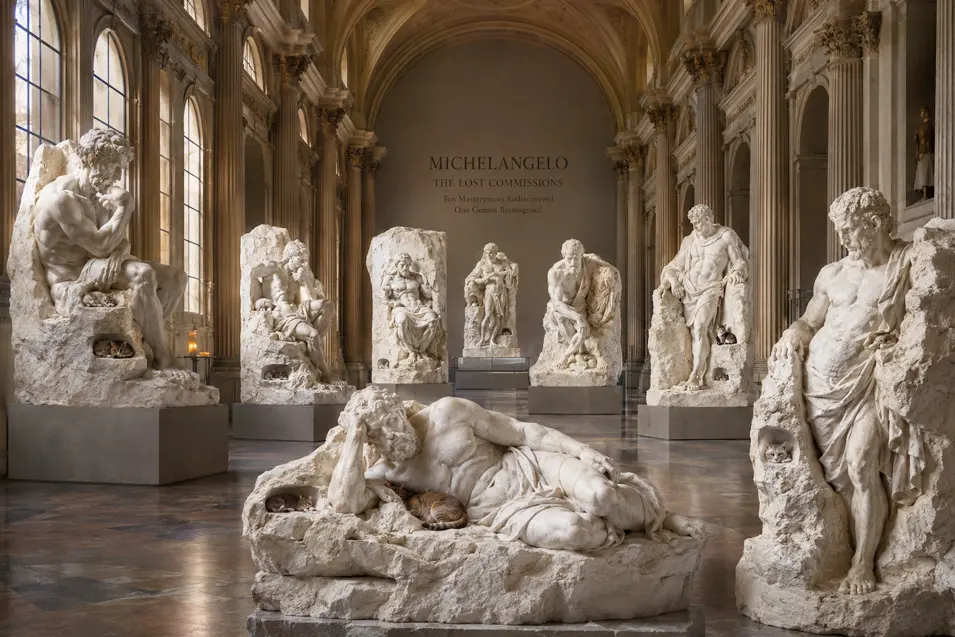
Imagine discovering ten previously unknown commissions hidden within the archives of the Renaissance—each one revealing a different chapter of the human experience. Not saints or kings. Not monuments to victory. But deeply personal studies of wisdom, humility, imagination, compassion, creation, and ultimately, peace.
Each sculpture begins with a single monumental block of luminous Carrara marble.
Nothing is assembled.
Nothing is engineered.
Everything is revealed through carving.
Inspired by Michelangelo’s belief that every sculpture already exists within the stone waiting to be set free, these AI-generated concepts imagine ten entirely original masterpieces created in the spirit of his artistic philosophy. Rather than recreating David, Moses, the Pietà, or any existing work, each sculpture explores an original subject while embracing Michelangelo’s mastery of anatomy, monumental scale, expressive drapery, and his celebrated non-finito technique.
Only after spending time with each work does a second story quietly emerge.
Hidden within the untouched marble are discreet resting places, sheltered alcoves, climbing routes, and peaceful sanctuaries that have become the home of curious cats. These spaces are never attached to the sculpture or treated as furniture. Instead, they are imagined as natural voids revealed during the carving process—as though they had always existed within the stone itself.
The result is a fictional museum collection we call The Ten Lost Commissions—a series of AI-assisted artistic concepts celebrating Michelangelo’s enduring philosophy while exploring how timeless sculpture, architecture, and the quiet companionship of cats might exist in perfect harmony.
These concepts are not intended as historical reconstructions or product designs. They are imaginative works created to inspire artists, sculptors, designers, architects, pet lovers, and anyone who has ever wondered what might happen when classical art is allowed to dream beyond the boundaries of history.
Commission I — The Awakening
“Every masterpiece begins with the first breath beneath the stone.”
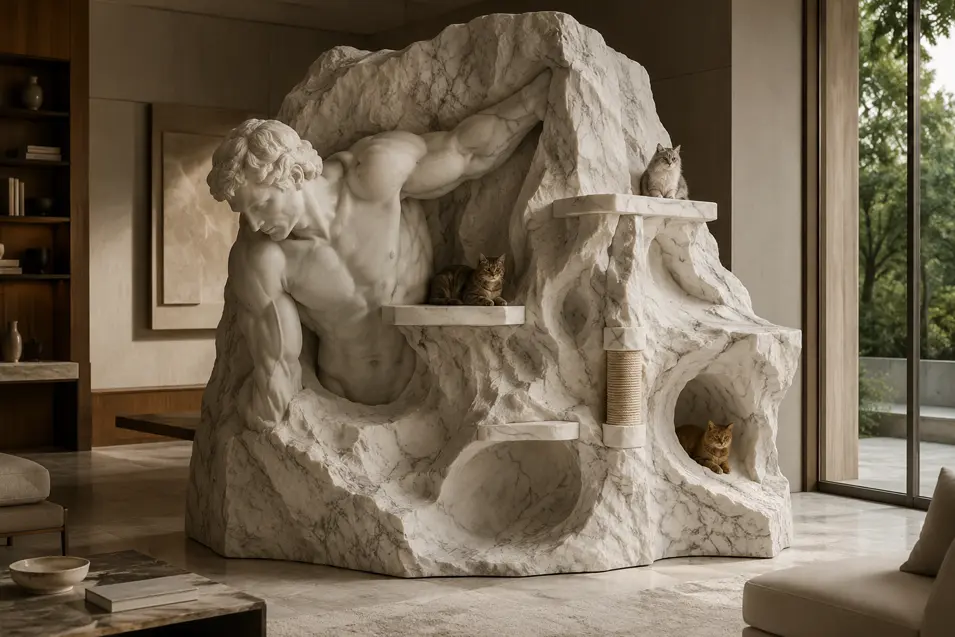
Imagine Michelangelo accepting an extraordinary final commission—not to carve furniture, but to reveal a monumental sculpture that quietly becomes part of a cat’s world.
From a single block of luminous Carrara marble, a powerful figure strains forward, one arm still imprisoned within the untouched stone while the rest of his body emerges with astonishing anatomical precision. The contrast between polished flesh and rough, unfinished marble captures Michelangelo’s celebrated non-finito philosophy: the belief that every sculpture already exists within the block, waiting to be released.
Only after admiring the work as a Renaissance masterpiece does another story begin to unfold. Hidden within the untouched marble are discreet resting alcoves where cats have naturally made the sculpture their home. Nothing feels added or engineered. The feline spaces are discovered just as the figure himself is discovered—revealed from within the same timeless block of stone.
The result is less a piece of furniture than an imagined lost masterpiece: a sculpture where art and function coexist so naturally that neither diminishes the other.
Commission II — The Philosopher
“Wisdom is not found in motion, but in stillness.”
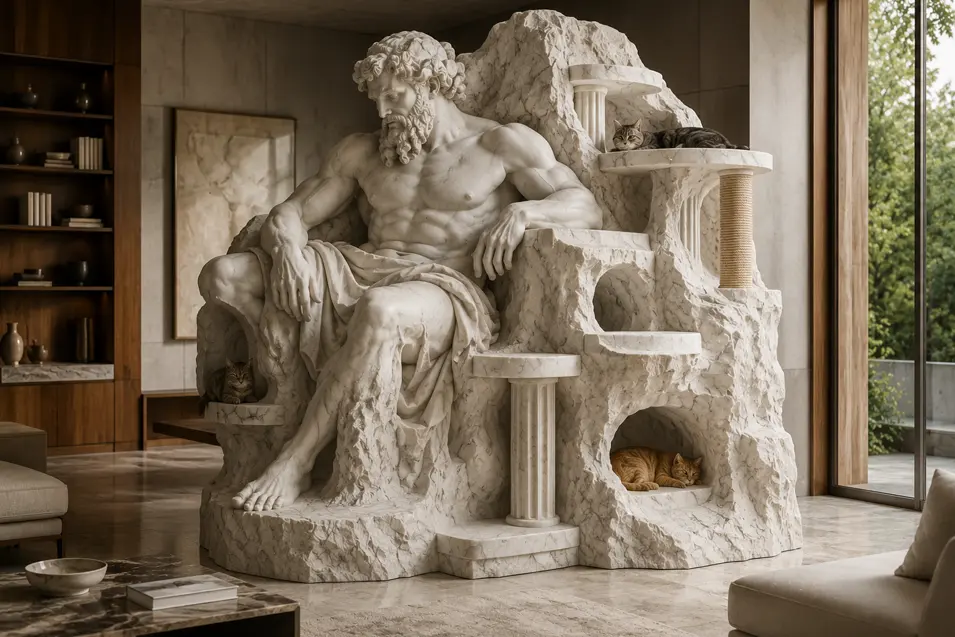
Unlike the heroic figures often associated with the High Renaissance, The Philosopher possesses no triumph to proclaim. His strength has already been tested. What remains is quiet reflection.
Carved from a single monumental block of luminous Carrara marble, the seated figure rests naturally upon the stone from which he emerged. His posture is relaxed yet commanding, his gaze lowered not in sorrow but in contemplation. Every fold of drapery, every tendon of the hand, and every subtle shift of weight reflects Michelangelo’s extraordinary understanding of the human form.
Nearly half of the original marble remains untouched. Rough chisel marks dissolve into highly polished anatomy, embracing the non-finito philosophy that became one of Michelangelo’s most recognizable artistic signatures. The sculpture appears suspended between creation and completion.
Only after lingering does another purpose quietly reveal itself. Within the untouched marble are naturally carved alcoves, elevated ledges, and sheltered recesses where cats instinctively gather. Nothing interrupts the sculpture’s artistic integrity. The feline spaces feel as though they have always belonged there—waiting patiently to be discovered alongside the figure itself.
Commission III — The Seer
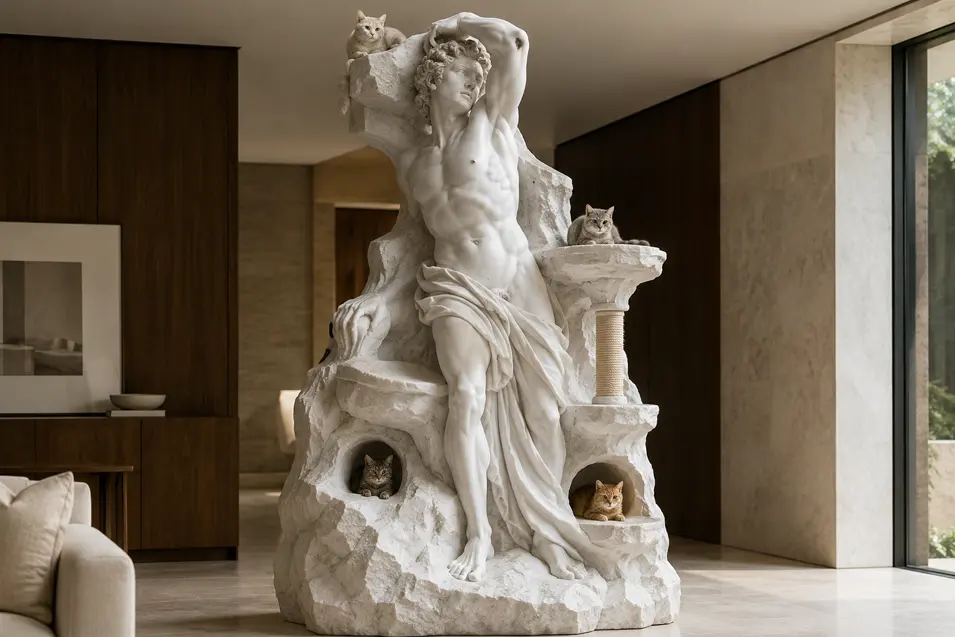
“A graceful figure gazes toward unseen horizons while hidden marble alcoves quietly welcome feline visitors.”
Standing between the unfinished stone and the world beyond it, The Seer embodies the Renaissance belief that vision precedes creation. His body is youthful and powerful, yet free of dramatic tension. One arm reaches effortlessly overhead, opening the figure toward light while the other falls naturally at his side. His upward gaze suggests contemplation not of the present, but of possibilities still hidden within the marble.
Carved from a single block of luminous Carrara marble, the sculpture balances polished anatomy against rough, untouched stone. Broad masses remain deliberately unfinished, preserving Michelangelo’s celebrated non-finito approach and reinforcing the illusion that the figure is still being liberated from the block itself.
Only after careful observation do the sculpture’s hidden inhabitants begin to emerge. Small alcoves, elevated perches, and sheltered recesses have been carved directly into the remaining marble, providing quiet retreats where cats naturally settle. Rather than interrupting the composition, these spaces become part of the sculpture’s rhythm, allowing the artwork to remain, first and foremost, a monumental Renaissance masterpiece.
Commission IV — The Penitent
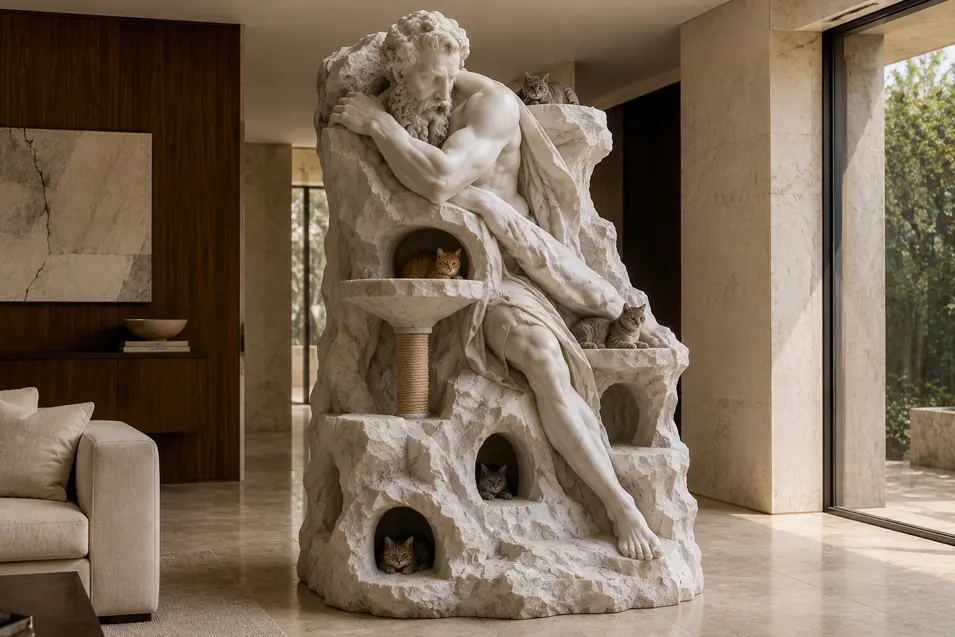
“True strength bows first to humility”
Unlike the heroic monuments that celebrate conquest or glory, The Penitent speaks of something quieter. A solitary figure leans into the unfinished marble, his powerful body no longer straining against the stone but finding comfort within it. His bowed head and folded arms suggest neither defeat nor sorrow, but acceptance—the calm that follows a lifetime of struggle.
Carved from a single monumental block of luminous Carrara marble, the sculpture embodies Michelangelo’s non-finito philosophy. Vast portions of the stone remain rough and untouched, their chisel marks contrasting with the flawlessly polished anatomy of the figure. The tension between finished and unfinished surfaces creates the illusion that the sculpture is still emerging, suspended between creation and eternity.
Only after spending time with the work does another layer reveal itself. Hidden within the remaining marble are discreet alcoves, sheltered niches, and elevated ledges where cats naturally find places of rest. These quiet refuges feel inseparable from the sculpture itself, discovered rather than designed, allowing the artwork to remain first and foremost an imagined Renaissance masterpiece.
Commission V — The Thinker
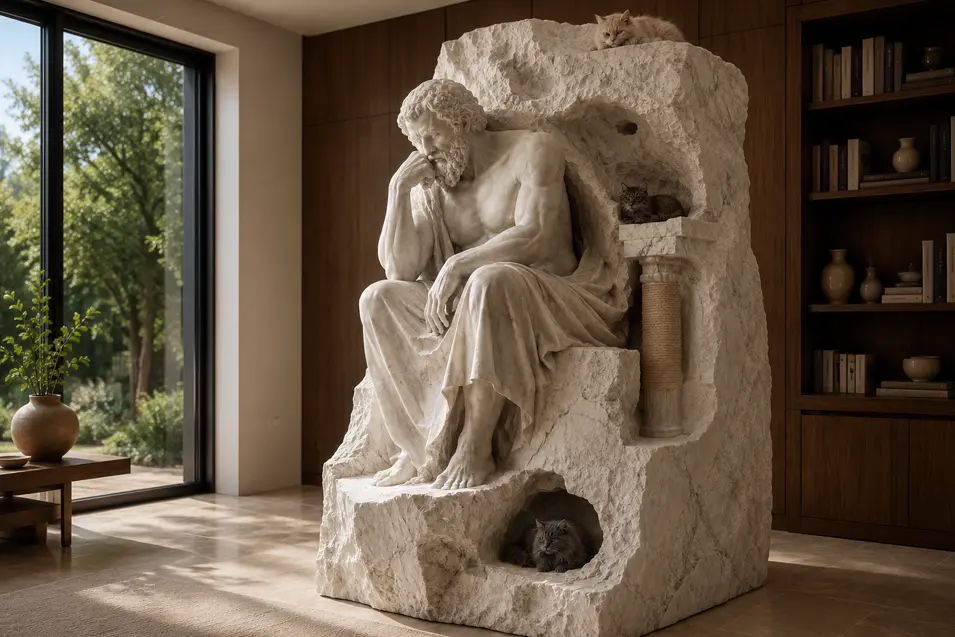
“A solitary figure sits in profound contemplation while hidden marble alcoves quietly shelter the sculpture’s feline inhabitants.”
Not every Renaissance masterpiece celebrates action. The Thinker honors the quiet discipline of reflection—the unseen labor that gives birth to every great idea.
Carved from a single monumental block of Carrara marble, the solitary figure sits in complete stillness. One hand supports his chin while the other rests effortlessly across his lap. His powerful frame suggests a lifetime of physical strength, yet it is the intensity of his contemplation that commands attention. Michelangelo often believed that the most profound beauty emerged through restraint rather than spectacle, and nowhere is that philosophy more evident than here.
Large portions of the original marble remain deliberately untouched. Deep chisel marks and rough surfaces surround the flawlessly polished figure, creating the illusion that he has only partially emerged from the stone. The contrast between raw marble and refined anatomy embodies the Renaissance ideal that every sculpture already exists within the block, waiting patiently to be revealed.
Only after lingering before the sculpture do its hidden companions begin to appear. Quiet alcoves carved into the untouched marble provide secluded retreats where cats instinctively gather. Their presence feels entirely natural, as though the sculpture itself anticipated that one day these silent observers would make the unfinished stone their home.
Commission VI — The Sentinel
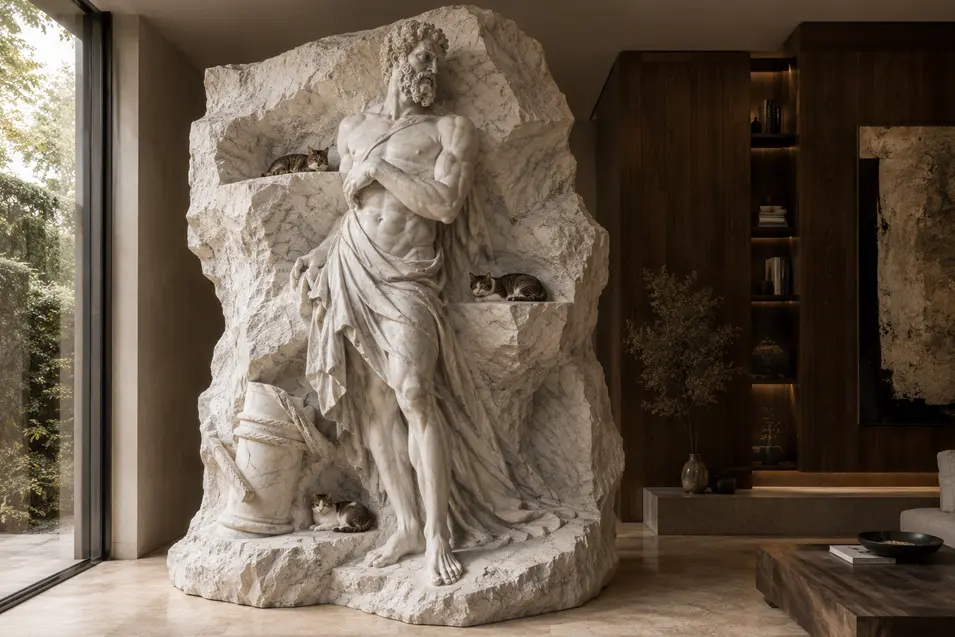
“A timeless guardian stands in silent watch while hidden sanctuaries carved into the unfinished marble quietly become a refuge for cats.”
Standing in quiet vigilance, The Sentinel embodies unwavering strength without aggression. His posture is neither triumphant nor defensive. Instead, he appears to have accepted a timeless responsibility—to remain present, watchful, and steadfast.
Michelangelo often conveyed power through restraint rather than movement, and this imagined commission follows that same philosophy. Carved from a single monumental block of luminous Carrara marble, the figure emerges with remarkable anatomical precision while vast portions of the original stone remain rough and unfinished. The untouched marble frames him like the remnants of the mountain from which he has only partially been released, reinforcing the enduring beauty of the non-finito technique.
Only after careful observation does the sculpture reveal another purpose. Within the untouched stone are quiet alcoves, elevated ledges, and sheltered recesses that naturally invite feline visitors. These hidden sanctuaries never compete with the sculpture’s artistic presence. Instead, they seem to have existed within the marble from the very beginning, waiting to be discovered by both observer and cat alike.
Commission VII — The Guardian
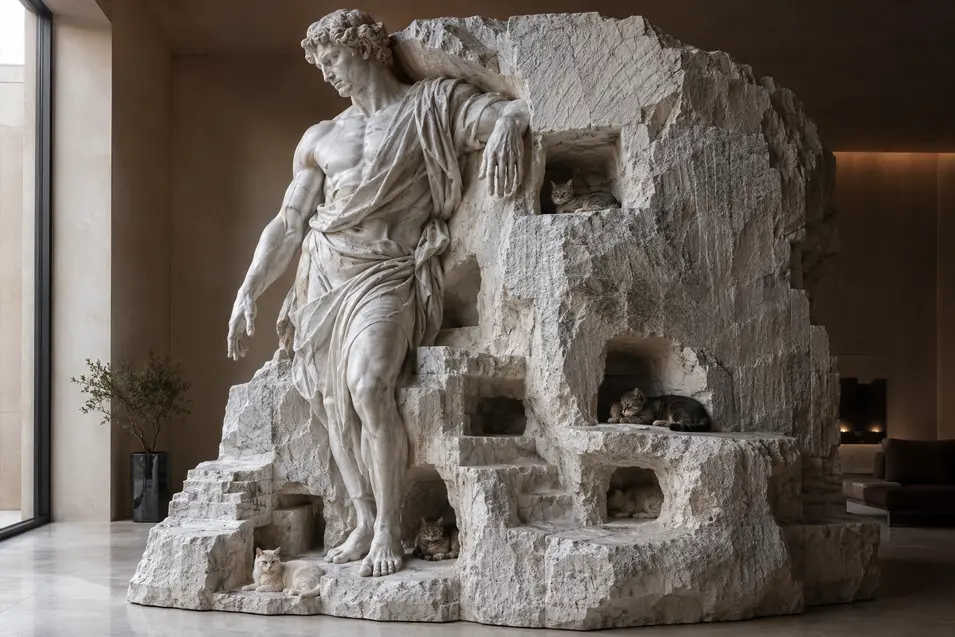
“The greatest strength is found in those who quietly protect others.”
Standing in quiet dignity, The Guardian embodies compassion rather than conquest. His powerful form emerges from a single monumental block of Carrara marble, yet he remains intimately connected to the stone from which he was revealed. One arm rests naturally against the unfinished marble while the other hangs effortlessly at his side, suggesting neither authority nor command, but steadfast reassurance.
Inspired by Michelangelo’s mastery of anatomy and his celebrated non-finito philosophy, vast portions of the original marble block remain untouched. Rough chisel marks contrast with flawlessly polished musculature, creating the impression that the figure continues to emerge from the living stone. The sculpture feels suspended between creation and completion, inviting the viewer to imagine the masterpiece still waiting within.
Only after lingering before the work do its hidden details become apparent. Sheltered alcoves, elevated ledges, and quiet recesses have been carved into the untouched marble, providing peaceful havens where cats instinctively gather. These spaces never interrupt the sculpture’s artistic presence. Instead, they become a natural extension of its protective character, transforming the remaining stone into a sanctuary that welcomes every quiet traveler.
Commission VIII — The Pilgrim
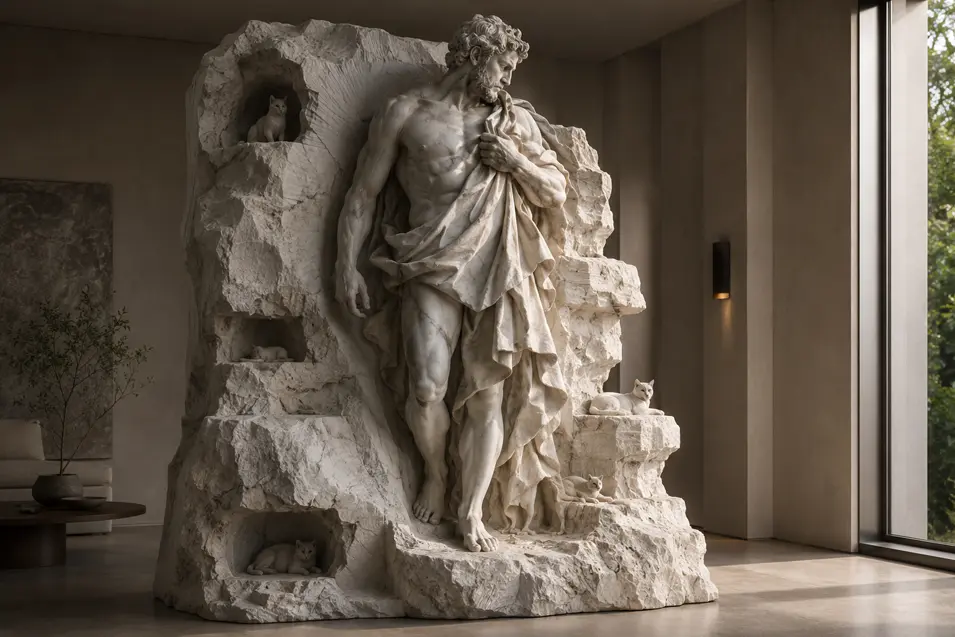
“A solitary traveler leaves the shelter of unfinished marble, while hidden sanctuaries within the stone quietly become a refuge for cats.
Having gained wisdom, endured hardship, and learned humility, The Pilgrim turns away from the safety of the stone and begins the next chapter of his journey. His stride is measured rather than hurried, his gaze lowered in quiet purpose. One hand gathers the folds of his robe across his chest, as though carrying nothing more than the lessons of a life already lived.
Carved from a single monumental block of luminous Carrara marble, the figure remains forever connected to the mountain from which he emerged. Large portions of untouched stone preserve Michelangelo’s celebrated non-finito technique, allowing rough chisel marks to contrast with the extraordinary refinement of the human form. The sculpture captures a fleeting moment between stillness and movement, suggesting that even the greatest journeys begin with a single deliberate step.
Only after prolonged observation do the hidden details reveal themselves. Within the untouched marble are naturally carved alcoves and sheltered resting places where cats quietly gather. These spaces feel inseparable from the sculpture itself, as though they had always existed within the stone, waiting to be discovered alongside the traveler.
Commission IX — The Creator
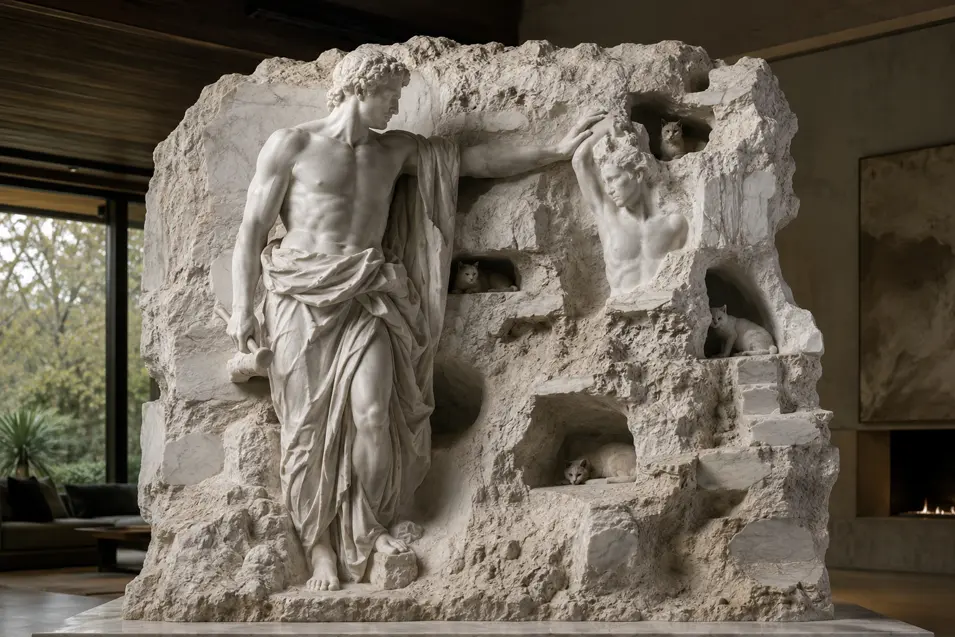
“Every masterpiece already exists within the marble. The sculptor merely sets it free.”
Few ideas defined Michelangelo more completely than his belief that every sculpture already existed within the stone, waiting patiently for the artist to uncover it. The Creator captures that philosophy at the precise moment inspiration becomes reality.
A monumental figure stands firmly before an immense block of Carrara marble, one hand extending toward a second figure only partially released from the stone. Their fingertips nearly meet—not as an act of creation from nothing, but as a quiet recognition of what has always been hidden within. The sculpture becomes less about invention than discovery.
The contrast between polished anatomy and rough, unfinished marble is striking. Deep chisel marks, fractured planes, and untouched masses preserve the energy of the carving process itself, allowing viewers to witness the work suspended between imagination and completion.
Only after exploring the sculpture do its secondary purpose and hidden delights emerge. Throughout the untouched marble, discreet chambers, elevated ledges, and sheltered recesses have been carved for feline inhabitants. Cats occupy these spaces naturally, as though they too have always belonged within the stone. Their quiet presence transforms the sculpture into a living sanctuary without diminishing its monumental character.
More than a work of art, The Creator celebrates the enduring belief that greatness is never imposed upon stone—it is patiently revealed from within.
Commission X — The Eternal
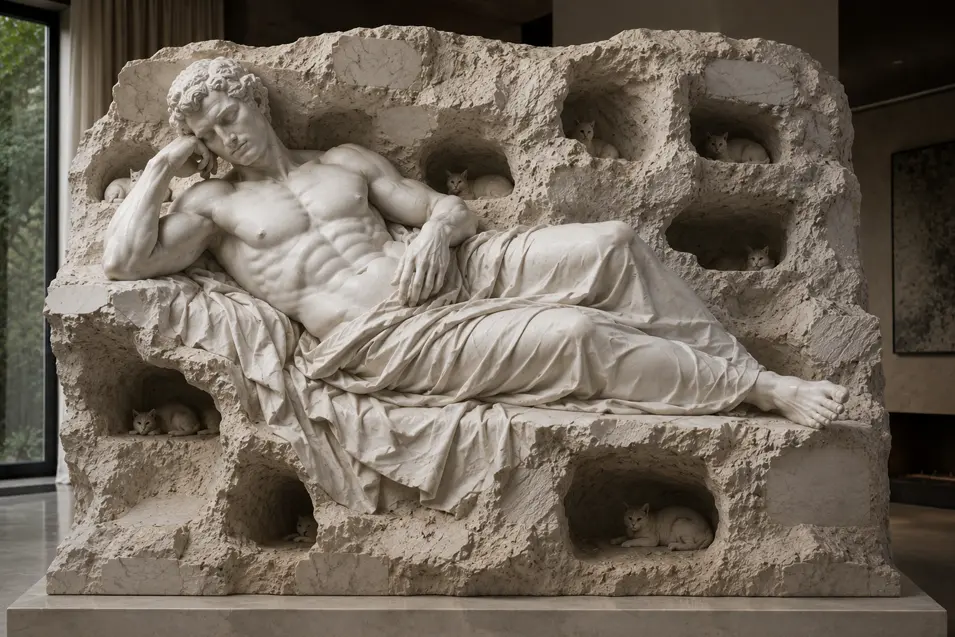
“Michelangelo’s imagined final masterpiece, where a monumental reclining figure rests forever within unfinished Carrara marble while hidden sanctuaries quietly welcome feline companions.
Every commission that came before led to this final moment.
The Eternal is neither a monument to triumph nor a celebration of artistic genius. Instead, it portrays something far rarer: complete contentment. A monumental figure reclines effortlessly upon the remaining marble, one arm supporting his head while the other rests softly across his body. His expression is peaceful—not asleep, but completely at ease. There is nothing left to carve, nothing left to prove.
Unlike the dramatic tension of unfinished figures struggling to emerge from stone, the marble here feels settled. Vast untouched masses still surround the reclining form, preserving Michelangelo’s celebrated non-finito technique, yet the unfinished surfaces no longer suggest incompletion. They have become part of the sculpture’s serenity, allowing polished anatomy and rough stone to exist in perfect harmony.
Hidden throughout the marble are quiet sanctuaries for feline companions. Sheltered alcoves, elevated resting places, and softly carved chambers appear almost accidental, discovered rather than designed. The cats occupy these spaces with complete confidence, reinforcing the sculpture’s overwhelming sense of calm. Nothing disturbs the silence.
Viewed as a whole, The Eternal becomes less a sculpture than a meditation on completion itself. It reminds us that mastery is not found in endless striving, but in knowing when nothing more needs to be added.
It is a fitting conclusion to The Ten Lost Commissions—a final masterpiece where both artist and stone have found lasting peace.
A Final Reflection
Whether Michelangelo would ever have accepted such an unusual commission is something history can never answer.
What we do know is that he believed every sculpture already existed within the marble, waiting patiently to be revealed. That single idea became the foundation for this collection.
The Ten Lost Commissions imagines what might have happened if one of history’s greatest sculptors had been given complete creative freedom to explore not only beauty, anatomy, and proportion, but also the quiet relationship between people, architecture, animals, and the spaces we share.
Every sculpture in this collection is an original AI-assisted concept inspired by Michelangelo’s artistic philosophy rather than any specific existing work. Nothing here is intended as a historical reconstruction or reproduction. Instead, these images celebrate the enduring influence of Renaissance sculpture while exploring how classical craftsmanship and modern imagination can inspire entirely new ideas.
If these imagined masterpieces made you pause—even for a moment—to wonder “What if?” then they have accomplished exactly what great art has always done.
Explore More AI Design Concepts
If you enjoyed The Ten Lost Commissions, be sure to explore our growing collection of AI-assisted concept galleries imagining how history’s greatest architects, artists, and designers might reinterpret the spaces we share with our pets today.