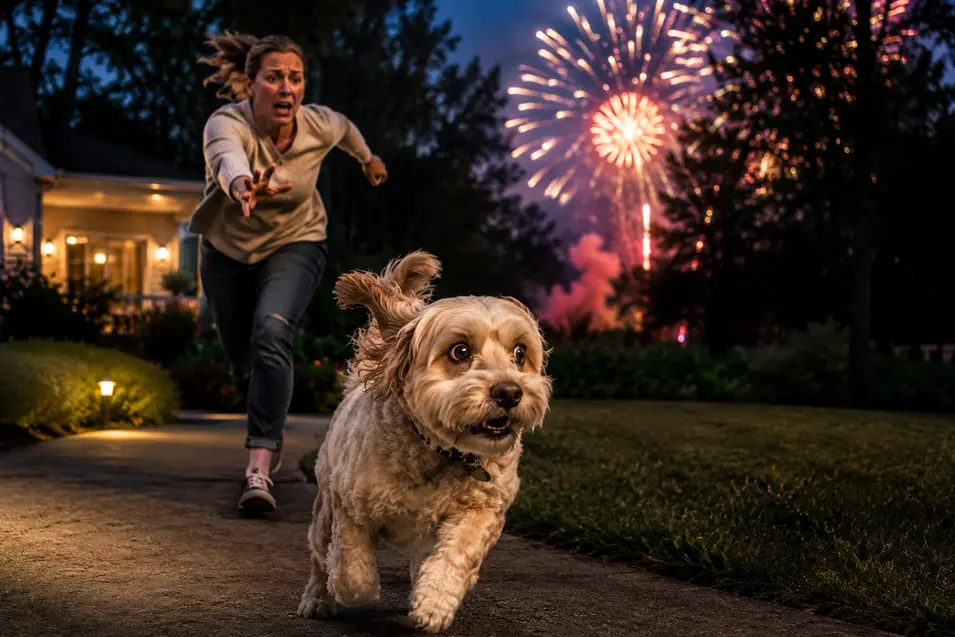
Fireworks are one of the leading causes of lost pets every year. Whether it’s the Fourth of July, Canada Day, New Year’s Eve, or another celebration, frightened dogs can panic and escape through open doors, broken fences, or even windows.
The good news is that acting quickly—and knowing what to do—can dramatically increase your chances of finding your dog.
This guide explains the steps you should take immediately if your dog goes missing during fireworks and how to prevent it from happening again.
Why Dogs Run Away During Fireworks
Dogs experience fireworks very differently than humans.
Their hearing is significantly more sensitive, making every explosion seem much louder and closer than it does to us. Combine loud noises with flashing lights, unfamiliar smells, and excited crowds, and many dogs enter full survival mode.
Instead of thinking logically, a frightened dog often runs in an attempt to escape what they believe is danger.
Unfortunately, they may continue running long after the fireworks stop.
Stay Calm and Act Quickly
Your first instinct may be to panic, but staying calm helps you make better decisions.
The first few hours are often the most important when recovering a missing dog.
Before leaving to search:
- Tell everyone in your household.
- Grab your dog’s leash.
- Bring high-value treats.
- Bring their favorite toy.
- Take a flashlight if it’s dark.
- Have a recent photo ready on your phone.
Search Your Immediate Area First
Many frightened dogs don’t actually travel very far.
Instead, they often hide.
Look carefully in places such as:
- Under decks
- Bushes
- Garages
- Sheds
- Wood piles
- Parks
- Neighbor’s yards, with permission
- Under vehicles
- Construction sites
Call your dog’s name calmly.
Avoid shouting.
Many frightened dogs become even more scared when people yell or chase them.
Bring Familiar Smells
Dogs rely heavily on scent.
Items that smell like home can help attract them.
Consider placing:
- Their favorite blanket
- Their bed
- A recently worn shirt
- Their crate
- A favorite toy
outside your home or near the area where they were last seen.
Ask Neighbors Immediately
The sooner people know your dog is missing, the better.
Knock on nearby doors and ask neighbors to:
- Check garages
- Check sheds
- Look under decks
- Review security camera footage
- Watch for sightings
Many recovered dogs are first spotted by neighbors.
Contact Local Animal Shelters
Don’t assume someone will call you.
Contact every local:
- Animal shelter
- Humane society
- Animal control office
- Municipal shelter
- Emergency veterinary clinic
Provide:
- Recent photos
- Breed
- Color
- Weight
- Age
- Collar description
- Microchip number, if known
- Your phone number
Visit shelters in person whenever possible.
Descriptions over the phone don’t always match what staff see.
Report Your Dog Missing
If your dog has a microchip:
Report them missing immediately through the microchip registry.
Update:
- Phone numbers
- Emergency contacts
- Address
Many dogs are reunited because of an up-to-date microchip.
Use Social Media
Social media can spread information incredibly quickly.
Post in:
- Local Facebook groups
- Lost pet groups
- Neighborhood groups
- Nextdoor
- Community pages
Include:
- Clear photos
- Last known location
- Date and time missing
- Contact information
- Whether the dog is friendly or fearful
Ask friends to share the post.
Create Lost Dog Posters
Even in today’s digital world, posters remain effective.
Include:
- Large color photo
- “LOST DOG” headline
- Breed
- Name
- Date lost
- Area last seen
- Phone number
- Reward, only if you choose
Post them at:
- Veterinary clinics
- Pet stores
- Community centers
- Parks
- Coffee shops
- Grocery stores
Avoid Chasing Your Dog
One of the biggest mistakes owners make is chasing a frightened dog.
A panicked dog often believes they’re being pursued.
Instead:
- Sit down.
- Turn sideways.
- Speak softly.
- Offer treats.
- Let the dog approach you.
Patience often works much better than pursuit.
Search Again at Dawn
Many lost dogs become more active early in the morning when neighborhoods are quiet.
Early morning searches can be much more successful than searching during noisy nighttime celebrations.
Bring:
- Flashlight
- Treats
- Water
- Leash
Walk slowly and listen carefully.
Check Security Cameras
Many homes now have:
- Ring doorbells
- Security cameras
- Wildlife cameras
Ask neighbors if they captured any footage.
Knowing which direction your dog traveled can save hours of searching.
Keep Searching
Many dogs are recovered several days after going missing.
Don’t give up after the first night.
Continue:
- Checking shelters daily
- Monitoring social media
- Reposting updates
- Driving your neighborhood
- Walking nearby trails
- Speaking with delivery drivers and postal workers
Persistence often makes the difference.
How to Prevent Future Escapes
Preparation is always easier than recovery.
Before fireworks begin:
- Exercise your dog earlier in the day.
- Keep them indoors.
- Close windows and doors.
- Create a safe room.
- Play calming music or white noise.
- Keep identification tags on.
- Verify your microchip information.
- Walk your dog before dark.
- Never leave your dog outside unattended during fireworks.
Frequently Asked Questions
How far can a scared dog run?
Some frightened dogs stay within a few blocks, while others may travel several miles. Every dog reacts differently depending on their personality, environment, and level of fear.
Should I leave food outside?
A small amount of food or water may encourage your dog to stay nearby, but avoid leaving large amounts that could attract wildlife or other animals.
How long should I keep searching?
Continue searching every day until your dog is found. Many dogs have been reunited with their families after several days—or even weeks.
Is a microchip enough?
A microchip is one of the best forms of permanent identification, but it only works if your contact information is current and the chip is registered.
Final Thoughts
Losing your dog during fireworks is every pet owner’s nightmare, but acting quickly and methodically can greatly improve the chances of a happy reunion. Search nearby hiding places, alert neighbors, contact local shelters, update your dog’s microchip information, and use social media to spread the word.
Most importantly, don’t wait until the next holiday to prepare. Creating a safe room, keeping identification current, and ensuring your dog stays indoors during fireworks can help prevent an escape before it happens.
Key Takeaways
- Fireworks are one of the leading causes of lost dogs each year.
- Search nearby hiding places before assuming your dog has traveled far.
- Notify neighbors, shelters, veterinarians, and animal control immediately.
- Report your dog as missing through their microchip registry.
- Use social media and printed posters to increase visibility.
- Never chase a frightened dog—let them come to you if possible.
- Prevention, including a safe room and secure fencing, is the best protection.
Related Articles
- How to Create a Safe Room for Dogs During Fireworks
- How to Keep Your Pets Safe During Fourth of July Celebrations
- Summer Pet Safety Checklist
- Why Are Dogs Afraid of Fireworks? The Science Behind Noise Anxiety