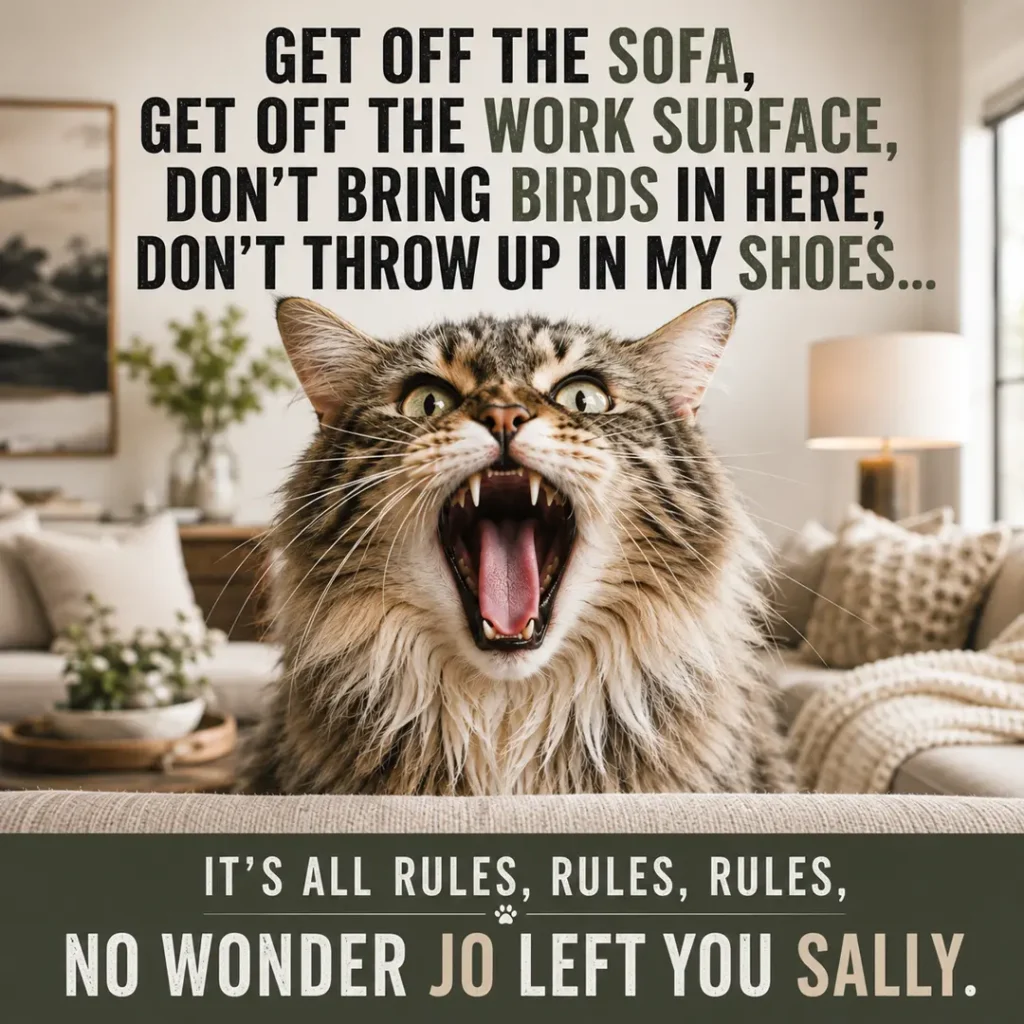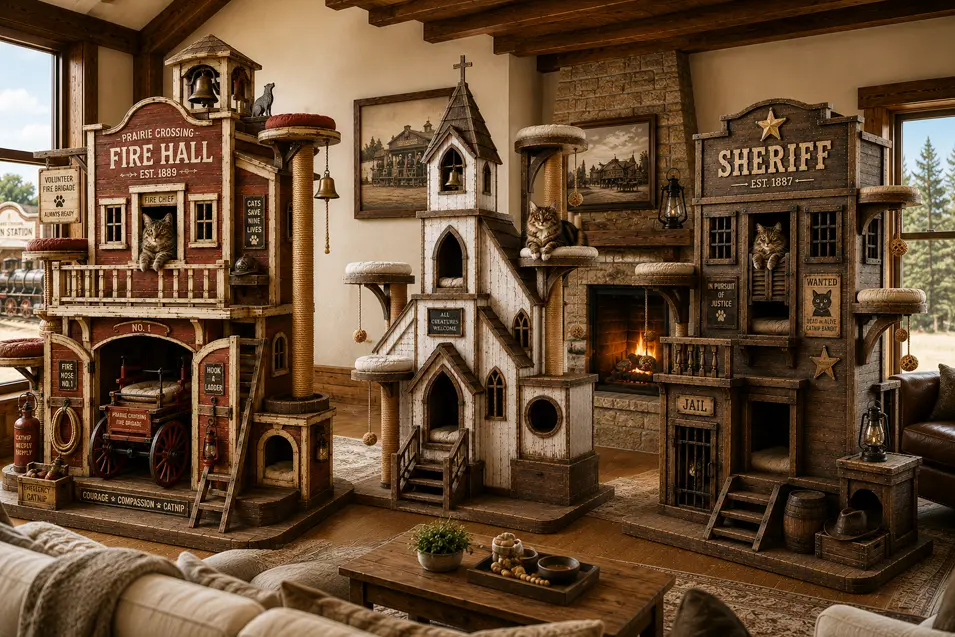
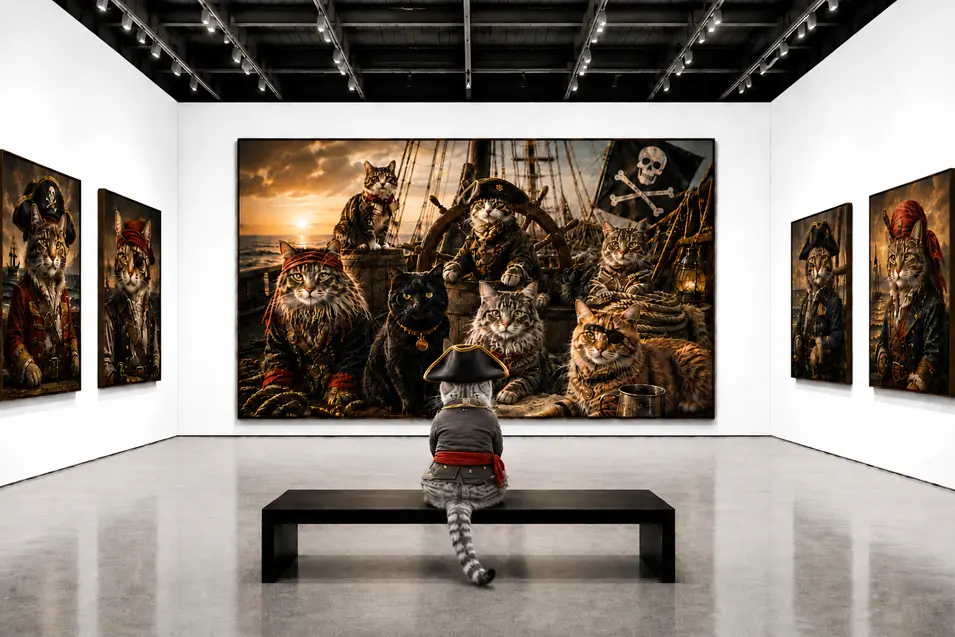
Every civilization honors its greatest heroes. Cats simply chose to immortalize themselves.
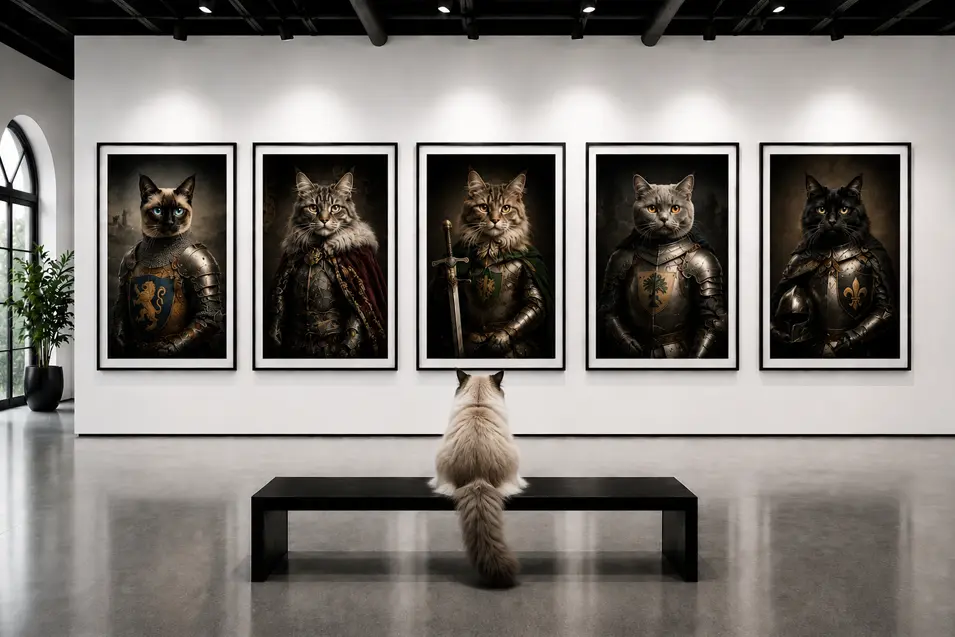
Welcome to the National Gallery of Feline Art
Step through the grand entrance, and you’ll quickly realize this isn’t an ordinary museum.
There are no landscapes.
No still lifes.
No portraits of kings or queens.
Instead, every gallery celebrates the most important figures in feline history.
Regal long-haired monarchs.
Legendary ship’s cats.
Master hunters.
Distinguished elders with magnificent whiskers.
Young prodigies already displaying remarkable confidence.
According to the museum’s feline curators, this is exactly how art history should have unfolded.
Gallery One: Royal Portraits
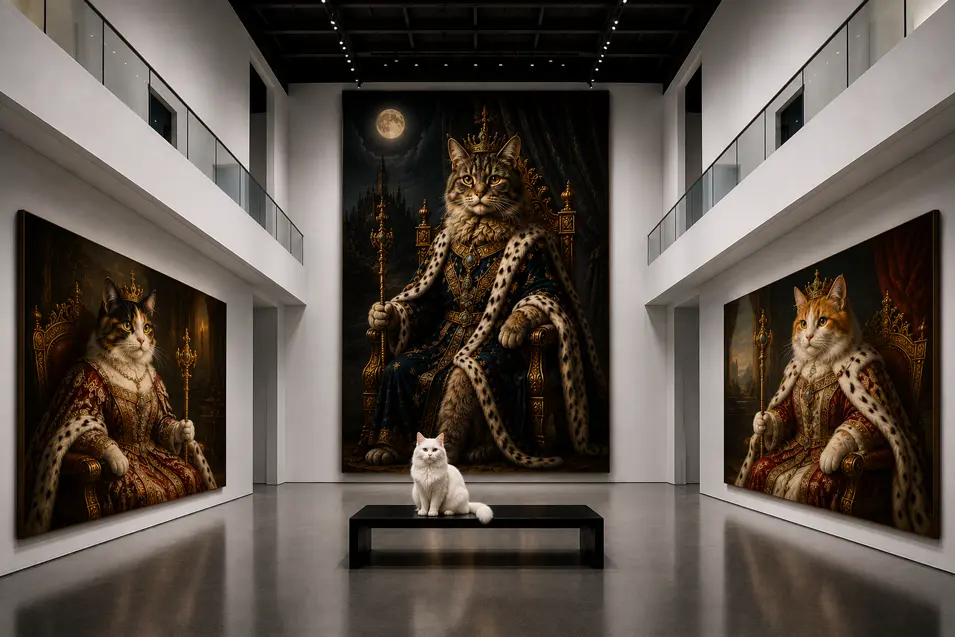
No collection would be complete without portraits of feline nobility.
These imposing works depict cats as emperors, duchesses, scholars, and aristocrats, dressed with the dignity they have always believed they deserved.
Their expressions remain wonderfully familiar.
One appears mildly disappointed.
Another looks ready to dismiss your life choices.
A third seems convinced the entire museum belongs to them.
The curators insist these are expressions of wisdom.
Cat owners know better.
Gallery Two: Masters of the Hunt
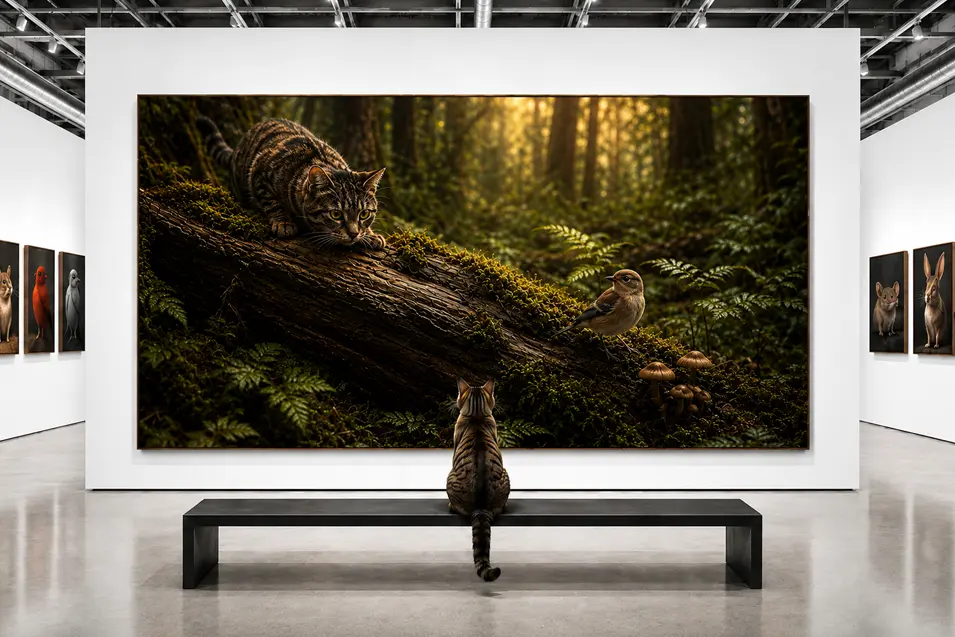
Some portraits celebrate titles.
Others celebrate achievement.
This gallery honors the legendary hunters whose patience, precision, and determination became the stuff of feline folklore.
Each painting captures the quiet confidence that defines every successful hunter—from the focused stare before the pounce to the triumphant return home carrying a “gift” for bewildered humans.
Museum guides politely refer to these cats as conservationists.
The birds respectfully disagree.
Gallery Three: The Great Mousers
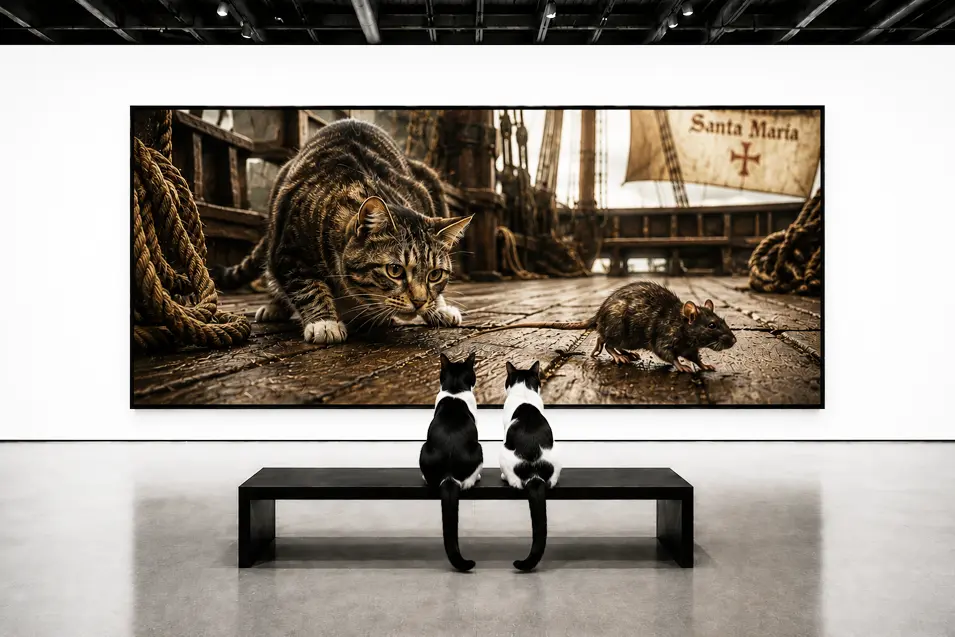
Every museum reserves space for national heroes.
Here, the walls celebrate the cats whose legendary mouse-catching abilities earned them lasting fame in barns, libraries, ships, and city streets.
Their stories have grown with every retelling.
Some are said to have defended entire granaries.
Others allegedly protected merchant vessels crossing distant oceans.
Whether every tale is true hardly matters.
Legends rarely require fact-checking.
Gallery Four: Masters of Everyday Life
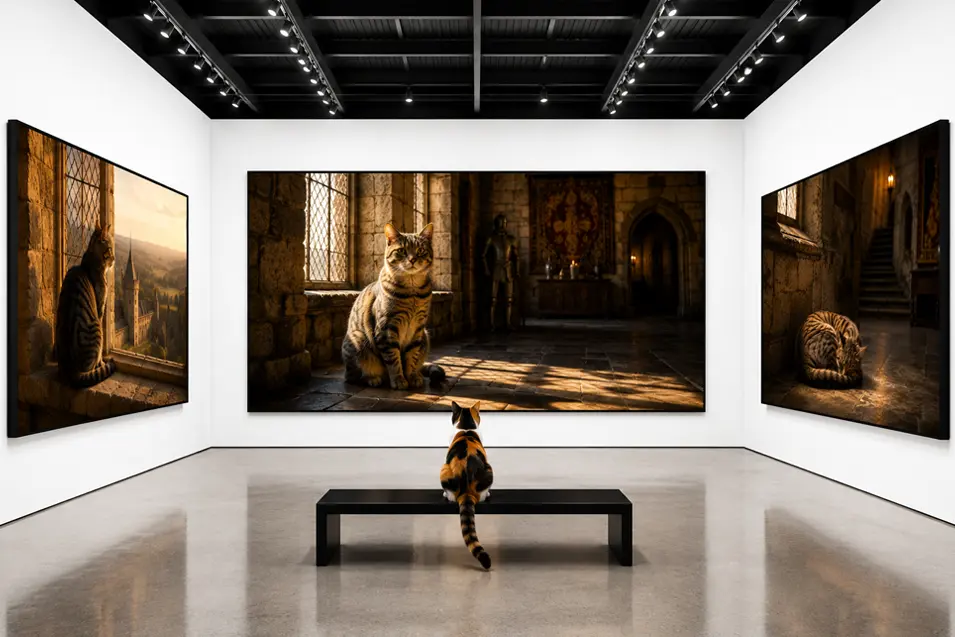
Not every masterpiece commemorates dramatic adventure.
Some celebrate the simple moments that define feline existence.
A cat sleeping in a perfect circle.
Another basking in a patch of afternoon sunlight.
One surveying the neighborhood from a favorite windowsill.
Another proudly occupying a freshly folded pile of laundry.
These quiet scenes remind visitors that greatness often comes disguised as an exceptionally comfortable nap.
Gallery Five: Contemporary Feline Expression
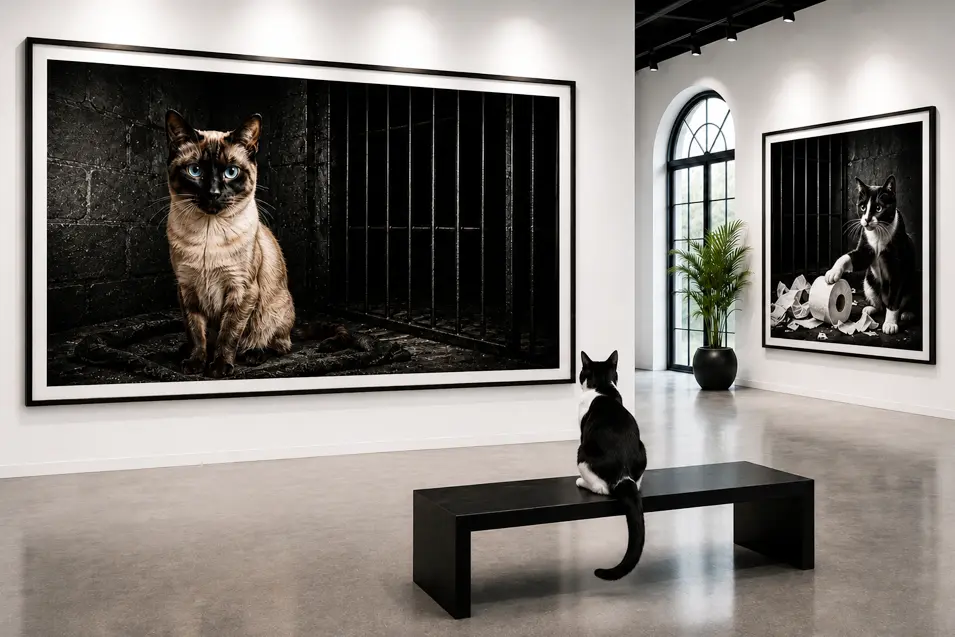
The final gallery explores modern portraiture.
Today’s artists celebrate cats in all their wonderful contradictions.
Playful kittens.
Wise seniors.
Elegant Siamese.
Fluffy Persians.
Mischievous tuxedos.
Majestic Maine Coons.
Tiny tabbies who somehow rule households ten times their size.
Different breeds.
Different personalities.
One unmistakable attitude.
The Curator’s Favorite
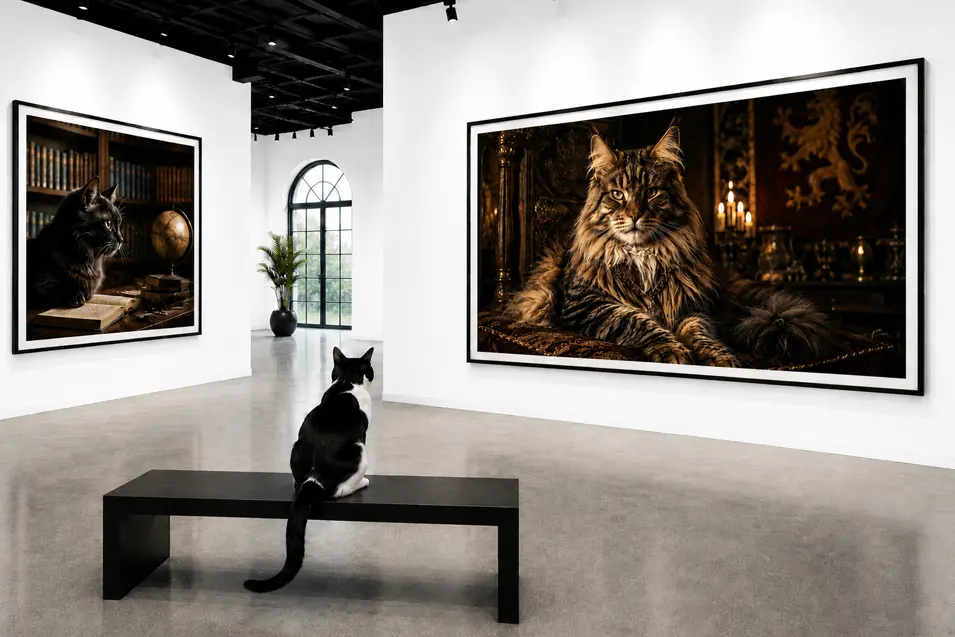
Before leaving, visitors inevitably gather around one final portrait.
No plaque explains why it has become the museum’s most admired work.
Perhaps it’s the piercing eyes.
Perhaps it’s the perfect symmetry.
Or perhaps every visitor secretly recognizes their own cat staring back with that familiar expression:
“You’re taking far too long. Dinner was five minutes ago.”
No matter how impressive the collection becomes, that portrait always earns the longest pause.
Final Thoughts
Dogs may celebrate loyalty.
Horses may celebrate strength.
But cats have always appreciated something a little more timeless.
Grace.
Curiosity.
Confidence.
Comfort.
And, above all, the quiet certainty that they belong at the center of every room.
If cats ever built a national gallery devoted entirely to great works of art, the walls probably wouldn’t feature famous humans.
They’d simply feature famous cats.
And judging by the crowds, the museum would never run out of visitors—even if many of them only came to admire someone who looked suspiciously like the cat waiting for them at home.
Related Articles