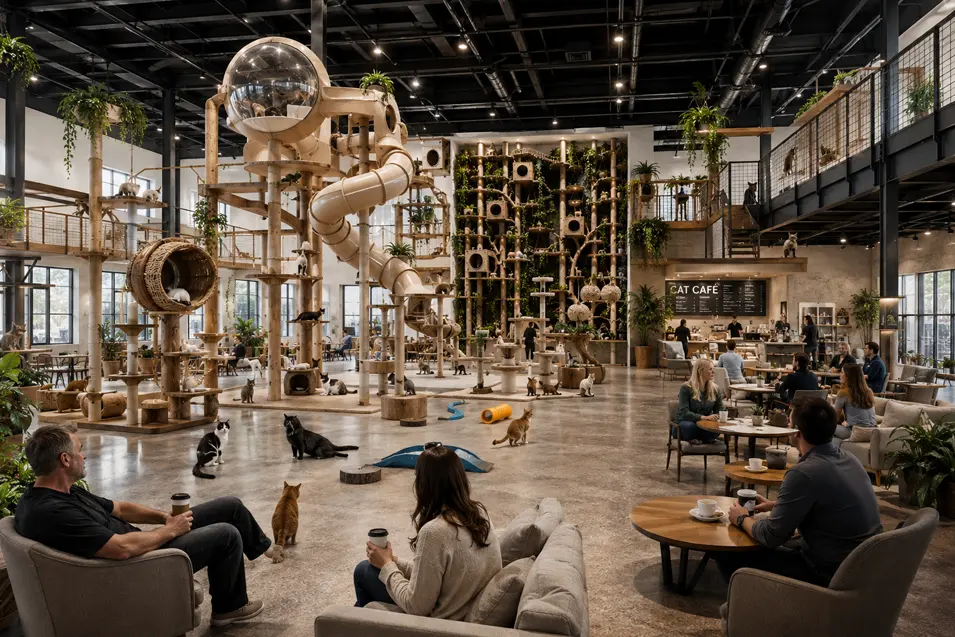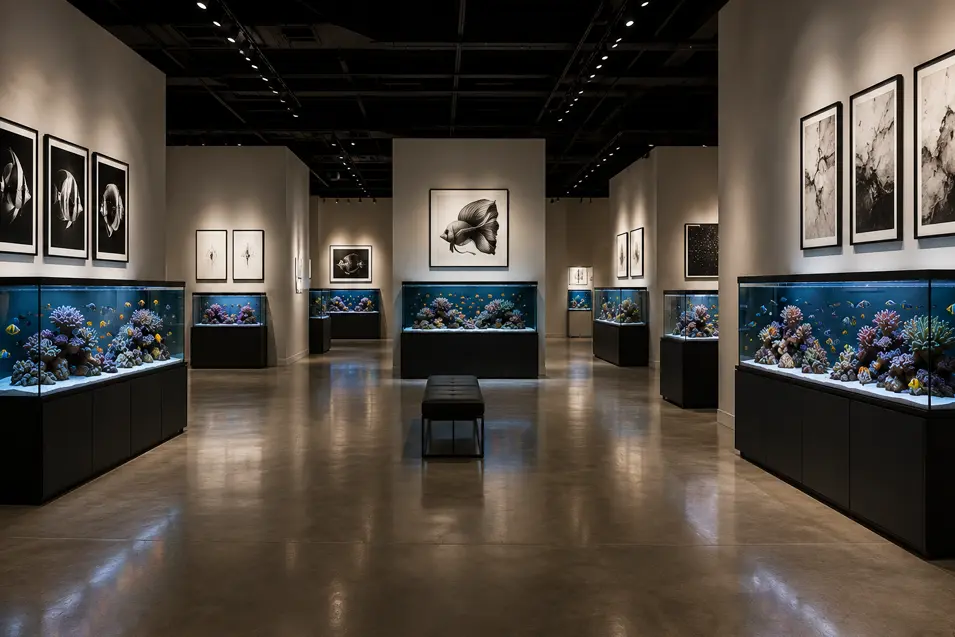
Every great civilization leaves behind remarkable architecture. Cats just happened to skip the pyramids and go straight to luxury climbing towers.
Welcome to the Museum of Catification
Imagine a museum where every exhibit has been designed with one goal in mind:
Making life better for cats.
Not prettier.
Not more expensive.
Just better—for climbing, scratching, hiding, sleeping, surveying the room from impossible heights, and occasionally judging everyone below.
Welcome to the Museum of Catification, where ordinary cat trees are treated as architectural masterpieces and every exhibit celebrates the art of designing spaces from a feline point of view.
Humans may appreciate the craftsmanship.
Cats simply wonder if they’re allowed to climb on it.
The Grand Atrium: The Living Climbing Wall
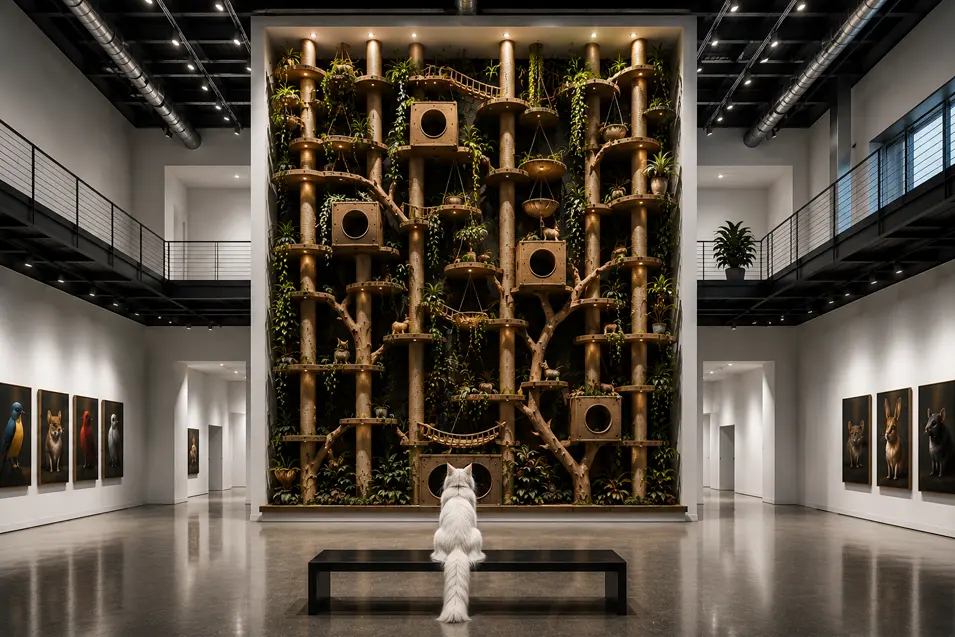
The museum’s centerpiece rises several stories high—a breathtaking vertical landscape of platforms, bridges, scratching posts, hidden dens, and living plants woven together into what many critics have called the greatest achievement in feline architecture.
Visitors often compare it to a living tree.
Cats compare it to home.
Every platform offers a new vantage point.
Every bridge leads to another discovery.
Every hiding place provides the perfect balance between privacy and surveillance.
It’s less a piece of furniture than an entire ecosystem.
Some visitors spend an hour admiring the craftsmanship.
The resident cats spend the same hour deciding which shelf deserves today’s nap.
Gallery One: The Evolution of the Cat Tree
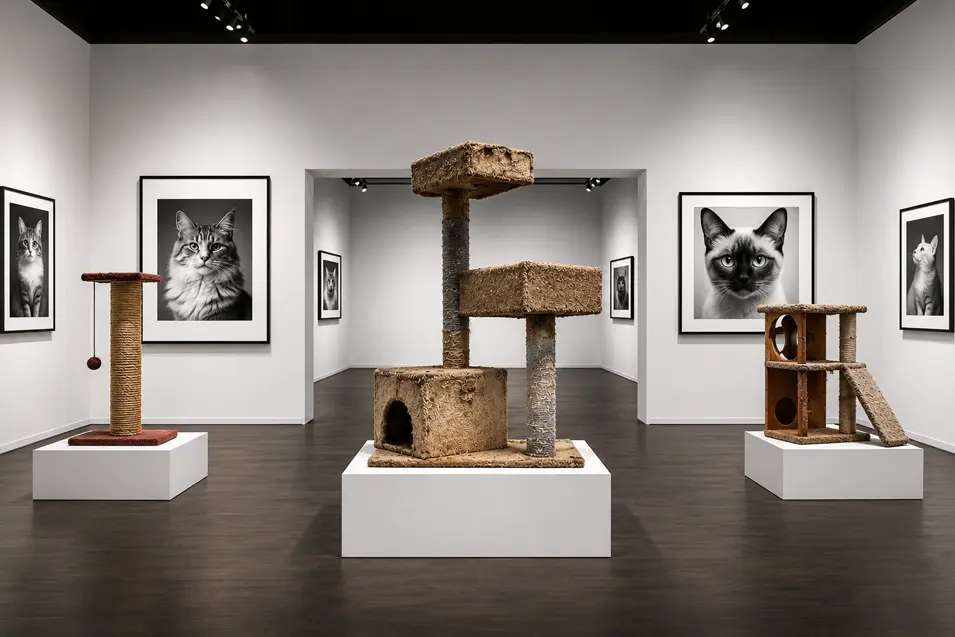
Like every architectural movement, cat furniture has evolved dramatically.
The earliest designs were simple.
A scratching post.
A platform.
Maybe a dangling toy.
Functional—but hardly inspiring.
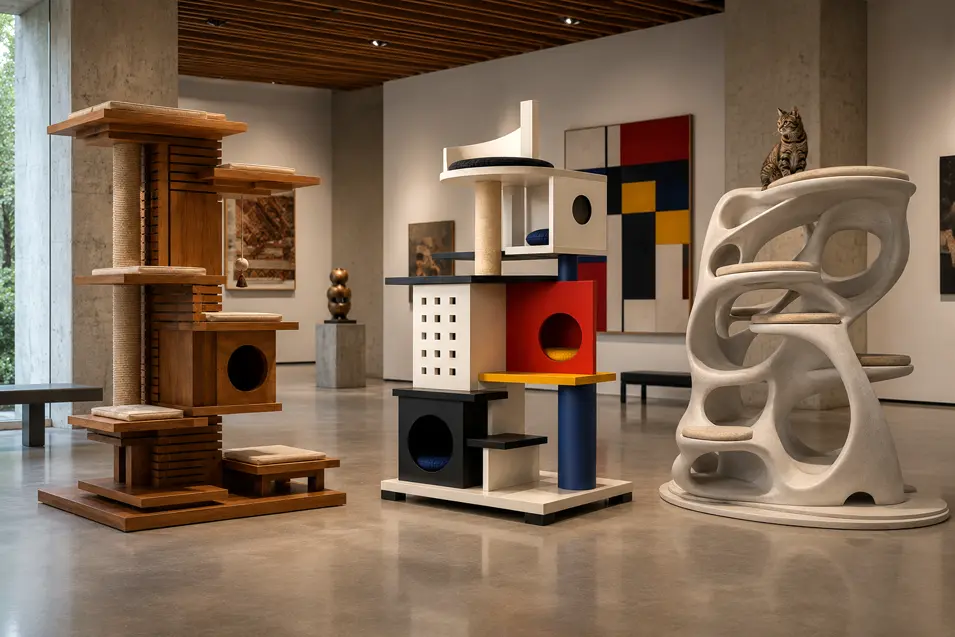
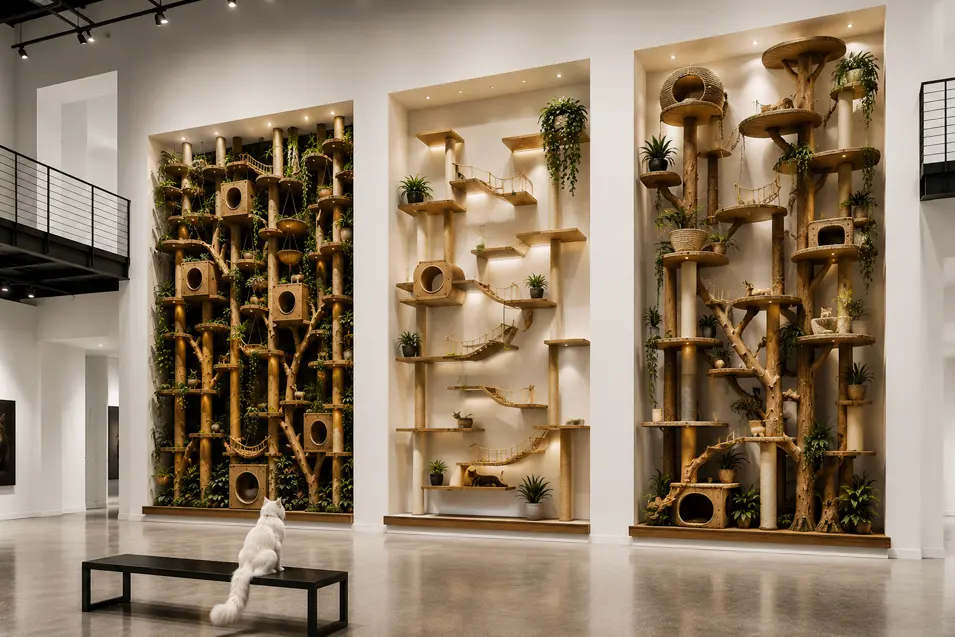
Today’s cat trees resemble miniature skyscrapers, complete with observation decks, sleeping quarters, climbing columns, tunnels, suspended bridges, and private suites that rival luxury hotels.
Some appear almost sculptural, blurring the line between furniture and modern art.
Cats, naturally, approve of all of them.
Gallery Two: Form Meets Function
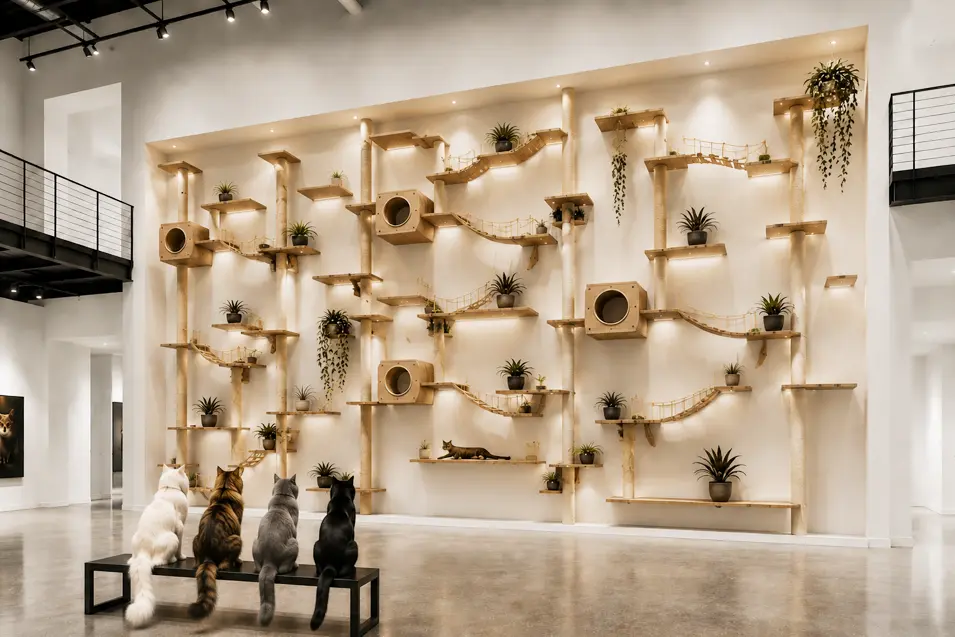
The best architecture solves problems without sacrificing beauty.
Catification follows the same philosophy.
A climbing tower isn’t just a climbing tower.
It’s a lookout.
A refuge.
A scratching station.
A nap pod.
A place to escape energetic dogs, curious toddlers, and overly affectionate humans.
Every curve, perch, and tunnel serves a purpose.
The result is furniture that looks elegant in a living room while secretly functioning as an entire feline city.
Gallery Three: Vertical Living
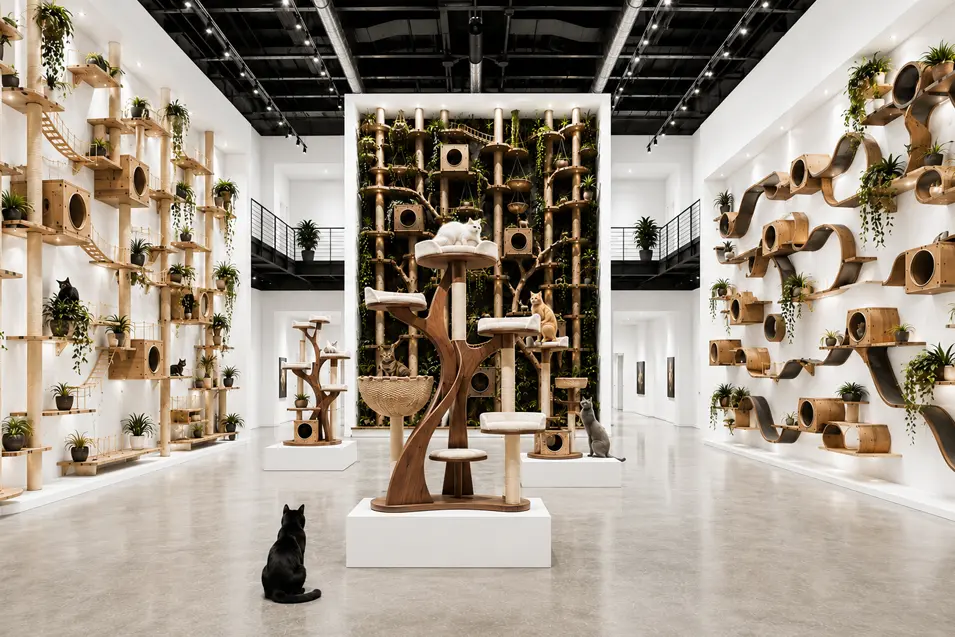
If there’s one lesson every visitor takes away, it’s this:
Cats don’t think in square footage.
They think in cubic footage.
Humans decorate floors.
Cats decorate walls.
They measure rooms by available shelves, window ledges, cabinets, and anything high enough to survey their kingdom.
Modern catification embraces this instinct by transforming unused vertical space into elevated highways connecting every corner of the home.
To a cat, the floor is simply where the humans walk.
The real world exists several feet above it.
Gallery Four: Future Concepts
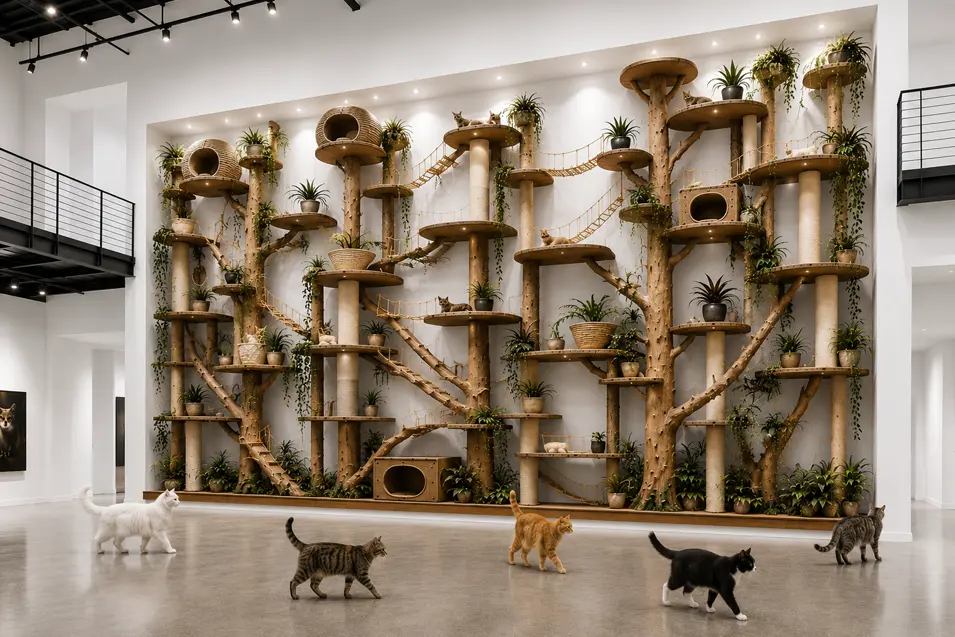
The museum’s final gallery explores concepts that may soon become reality.
Floor-to-ceiling climbing forests.
Living walls filled with plants and elevated walkways.
Integrated shelving systems that double as feline highways.
Entire rooms designed around the daily routines of both humans and cats.
Some concepts seem ambitious today.
Others simply look like something an especially determined cat owner will build next weekend.
Final Thoughts
Good architecture isn’t about making buildings impressive.
It’s about making them enjoyable to live in.
The same is true for cats.
Whether it’s a modest scratching post tucked into the corner of a room or a floor-to-ceiling climbing paradise worthy of its own museum exhibit, every thoughtful design gives cats something they naturally crave: places to climb, hide, observe, and rest.
Perhaps that’s why the Museum of Catification feels strangely believable.
Given the chance, cats probably wouldn’t fill museums with paintings.
They’d fill them with places to explore.
And honestly…
We’d probably buy tickets.