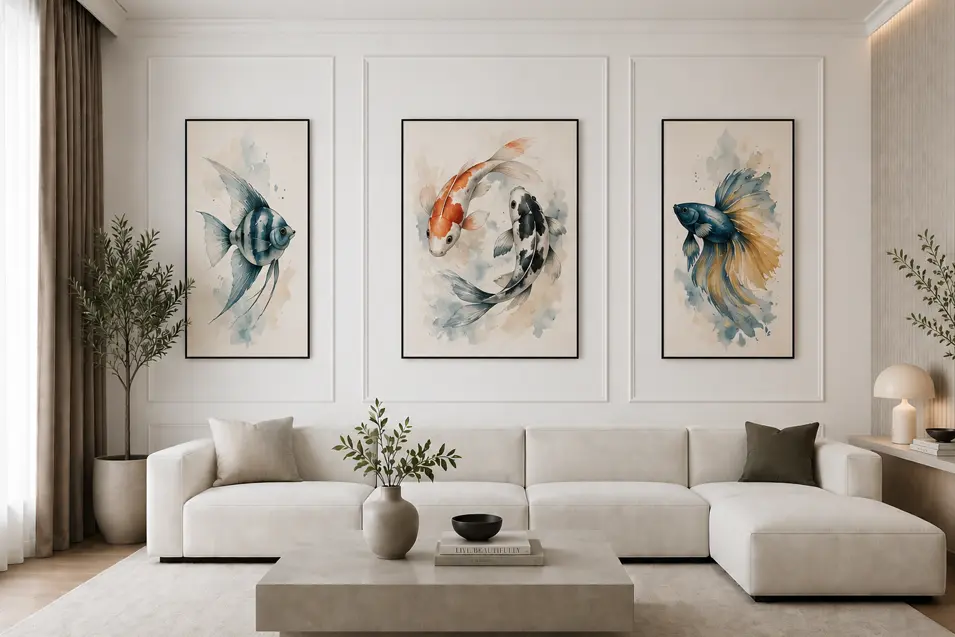
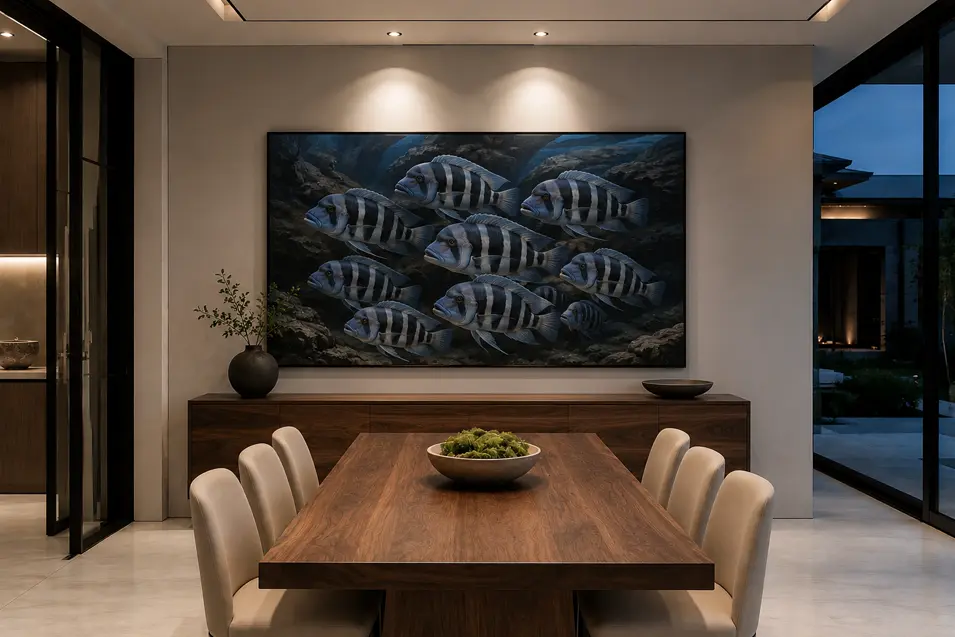
Aquatic art is more than a picture of a fish or a painting of the ocean.
It is a design language inspired by water, movement, color, marine life, and the quiet beauty of the underwater world. From koi paintings and coral reef photography to reef aquariums, glass sculptures, AI-generated fish artwork, and ocean-inspired interiors, aquatic art brings something uniquely powerful into the home.
It creates calm.
It introduces movement.
It adds color.
It connects us to nature.
And in many cases, it becomes the visual centerpiece of a room.
Whether you love koi ponds, reef tanks, tropical fish, coastal interiors, or simply the feeling of peace that water brings, aquatic art offers countless ways to make a home feel more alive, more personal, and more connected to the natural world.
What Is Aquatic Art?
Aquatic art is any artwork or design inspired by water and the life found within it.
It can include:
- Koi paintings
- Tropical fish artwork
- Coral reef photography
- Ocean paintings
- Underwater photography
- Aquarium-inspired artwork
- Fish sculptures
- Glass marine art
- Abstract water-inspired pieces
- AI-generated aquatic images
- Reef tanks and aquascapes
The category is broad, which is exactly what makes it so interesting. Aquatic art can be traditional, modern, minimalist, colorful, dramatic, peaceful, realistic, abstract, or completely imaginative.
Why Aquatic Art Works in the Home
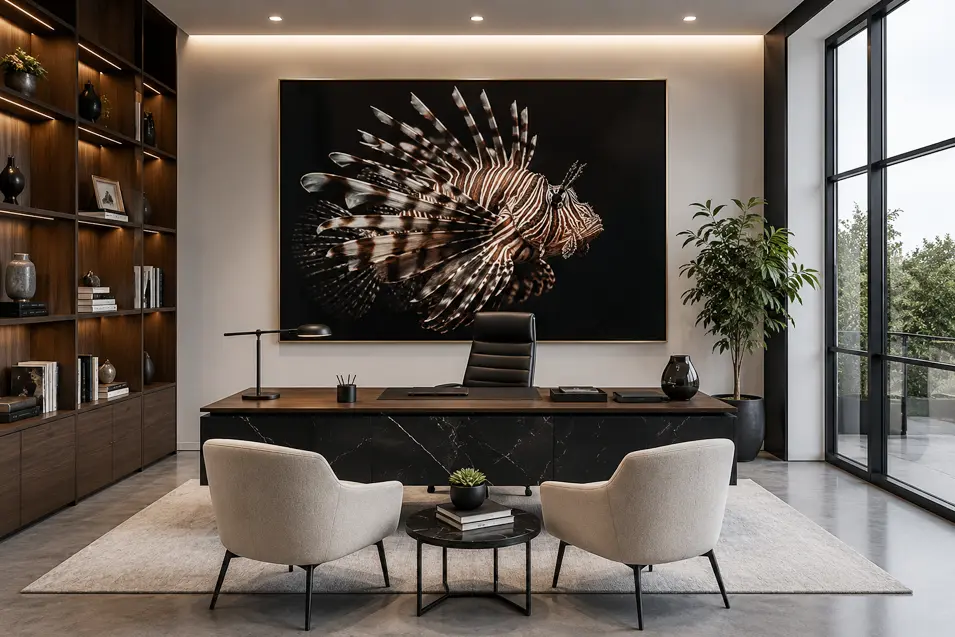
Aquatic art succeeds because it combines qualities that homeowners and designers often look for.
Water feels calming.
Fish create movement.
Coral reefs bring color.
Aquariums introduce life.
Ocean imagery suggests openness and escape.
Together, these elements can change how a room feels. A large koi painting can make an entryway feel elegant. A reef photograph can energize a living room. A minimalist fish sketch can bring quiet beauty to an office. A reef tank can become a living focal point.
Unlike purely decorative art, aquatic art often carries atmosphere.
It affects the mood of a space.
Koi Art: Grace, Symbolism, and Elegance
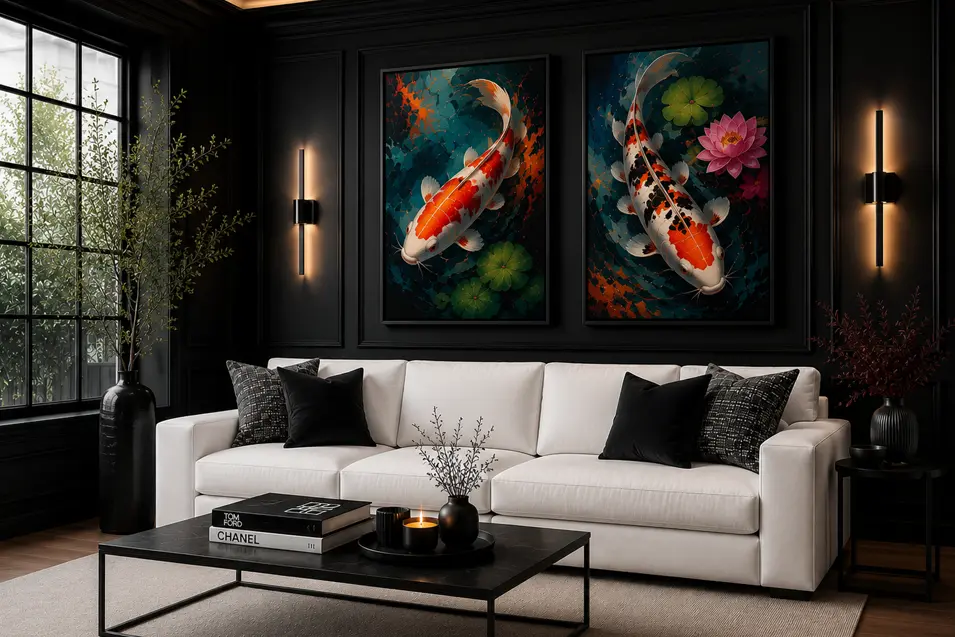
Koi are among the most beloved subjects in aquatic art.
Their graceful movement, beautiful markings, and long history in Asian art make them ideal for both traditional and modern homes.
Koi are often associated with:
- Prosperity
- Strength
- Perseverance
- Good fortune
- Personal growth
- Longevity
In interior design, koi artwork often works best as a statement piece. A single oversized koi painting above a bench, sofa, or dining room sideboard can feel architectural rather than merely decorative.
Koi art works especially well in:
- Entryways
- Dining rooms
- Living rooms
- Home offices
- Meditation spaces
Fish Art in Modern Homes
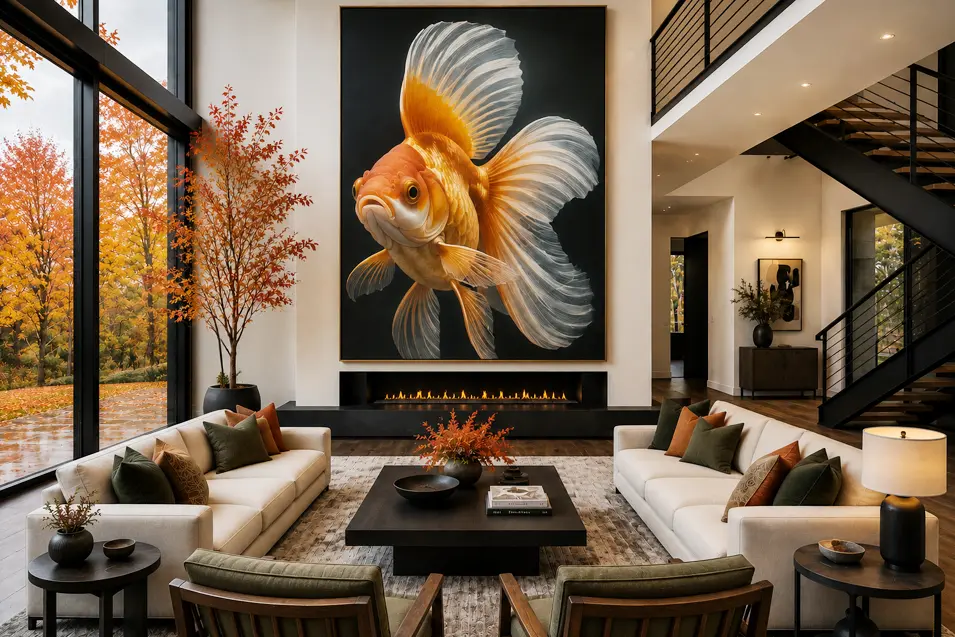
Fish art has moved far beyond beach cottages and novelty décor.
Today, fish-inspired artwork appears in modern apartments, luxury homes, boutique hotels, offices, and minimalist interiors.
Why?
Because fish naturally create visual flow.
Their shapes guide the eye across the artwork. Their colors add vibrancy without feeling artificial. Their connection to water makes a room feel calmer and more organic.
In modern interiors, fish art often works best when it is simple, bold, and well-scaled.
Examples include:
- A dramatic betta fish portrait
- A minimalist koi ink drawing
- A black-and-white fish photograph
- An abstract school of fish
- A large coral reef canvas
Coral Reef Photography
Reef photography brings the underwater world directly into the home.
Coral reefs are filled with color, texture, movement, and life. A reef photograph can feel like a window into another world.
Reef photography works especially well in:
- Living rooms
- Hallways
- Bathrooms
- Offices
- Aquarium rooms
- Coastal homes
Large acrylic or metal prints can make reef images feel vivid and immersive. Softer canvas prints can give reef scenes a more painterly appearance.
Common reef subjects include:
- Clownfish and anemones
- Angelfish
- Butterflyfish
- Coral gardens
- Macro coral photography
- Schools of reef fish
- Blue water scenes
Reef Tanks as Living Art
Perhaps the most fascinating form of aquatic art is the living aquarium.
A reef tank is not just a container of fish and coral. At its best, it is a living composition.
Reef keepers consider:
- Aquascaping
- Coral placement
- Lighting
- Fish selection
- Color balance
- Negative space
- Water movement
- Long-term growth
The result is a work of art that changes every day.
Corals grow.
Fish move.
Lighting shifts.
New details emerge over time.
Unlike a painting, a reef tank is never finished. It is a living artwork that continues to evolve.
Aquascaping and Design
Aquascaping is the art of designing underwater landscapes.
In freshwater tanks, this may involve plants, stones, driftwood, and carefully chosen fish.
In reef tanks, aquascaping uses rock structures, corals, sand, and marine life.
The same design principles used in traditional art also apply here:
- Balance
- Contrast
- Scale
- Focal points
- Movement
- Negative space
- Color harmony
Aquascaping proves that aquatic art does not always hang on a wall. Sometimes it lives behind glass.
Ocean-Inspired Art
Ocean art is one of the most versatile forms of aquatic design.
It may include:
- Seascapes
- Waves
- Underwater photography
- Whale art
- Jellyfish images
- Coastal abstracts
- Deep ocean scenes
Ocean-inspired artwork can make a home feel more spacious and peaceful. Blues, greens, sandy neutrals, and soft whites naturally create a calming palette.
This type of artwork is especially effective in bedrooms, bathrooms, coastal homes, and wellness-inspired interiors.
Sculptural Aquatic Art
Aquatic art is not limited to prints and paintings.
Sculptural pieces add dimension and texture.
Popular options include:
- Glass fish sculptures
- Metal wall fish
- Ceramic marine life
- Driftwood sculptures
- Bronze koi
- Coral-inspired objects
- Shell and stone compositions
These pieces are especially useful on shelves, consoles, mantels, and built-ins. They allow homeowners to include aquatic design without relying only on framed artwork.
AI Aquatic Art
Artificial intelligence has opened a new creative path for aquatic artwork.
With tools like ChatGPT, homeowners can create custom fish, reef, and ocean-inspired images tailored to their exact style.
AI can generate:
- Luxury koi paintings
- Photorealistic reef scenes
- Minimalist fish illustrations
- Black-and-white underwater photography
- Abstract coral art
- Japanese ink wash koi
- Coastal watercolor fish
- Large-format aquatic wall art
A useful prompt might be:
Create a large contemporary koi painting featuring two elegant orange and white koi swimming through dark water, subtle ripples, dramatic lighting, minimalist composition, gallery-quality artwork suitable for a modern entryway.
AI makes aquatic art more personal because it can be designed for a specific room, color palette, mood, and aspect ratio.
Choosing Aquatic Art by Room
Entryway
Choose bold, elegant pieces.
Koi art works especially well here because it creates movement and symbolism right at the entrance.
Living Room
Use large statement pieces.
Coral reef photography, oversized fish art, or a reef aquarium can anchor the room.
Bedroom
Choose calming pieces.
Soft watercolor fish, ocean photography, and minimalist aquatic art work beautifully.
Bathroom
Aquatic art feels natural in water-related spaces.
Try reef prints, coastal fish illustrations, or ocean abstracts.
Home Office
Choose artwork that supports focus.
Black-and-white fish photography, minimalist koi art, or blue underwater scenes can create calm without distraction.
Dining Room
Use elegant, refined artwork.
Koi paintings, Japanese ink wash pieces, or panoramic reef photography can become sophisticated conversation pieces.
Matching Aquatic Art to Decorating Styles
Modern
Choose minimalist fish art, large koi canvases, black frames, acrylic prints, and abstract reef compositions.
Coastal
Choose reef photography, ocean blues, watercolor fish, driftwood frames, and soft natural textures.
Scandinavian
Choose simple line drawings, Japanese ink wash fish, neutral palettes, and natural wood frames.
Farmhouse
Choose vintage fish illustrations, rustic frames, muted colors, and handcrafted textures.
Luxury
Choose oversized koi paintings, acrylic reef photography, dramatic lighting, and museum-quality presentation.
Eclectic
Mix reef photography, fish sculpture, AI art, vintage marine prints, and bold colors.
The Psychology of Water
Aquatic art often feels peaceful because water itself feels peaceful.
Many people associate water with rest, reflection, travel, and renewal. Fish add gentle movement. Blue and green tones suggest calm, nature, and openness.
This is why aquatic artwork can soften a room emotionally.
It can make a home feel less static and more alive.
Creating an Aquatic Art Collection
A strong aquatic art collection does not need to feel repetitive.
The key is variety within a shared theme.
For example:
- A koi painting in the entryway
- Reef photography in the living room
- Minimalist fish sketches in the hallway
- Ocean photography in the bedroom
- Glass fish sculptures on shelving
- A living aquarium as the centerpiece
Together, these pieces create a cohesive aquatic design story without making the home feel overly themed.
Common Mistakes to Avoid
Choosing Art That Is Too Small
Aquatic art often works best when it has room to breathe. Large walls usually need large pieces.
Going Too Literal
Not every piece needs to feature obvious fish. Abstract water movement, coral textures, and ocean colors can also support the theme.
Overdecorating
A few strong pieces are better than too many small aquatic accessories.
Ignoring the Room’s Mood
Bright reef art may energize a living room but feel too busy in a bedroom.
Forgetting the Frame
The frame or print material can completely change the feeling of the artwork.
Why Aquatic Art Feels Timeless
Trends change, but water remains universally meaningful.
People have always been drawn to oceans, lakes, rivers, ponds, and aquariums. Fish have long inspired artists because they combine beauty, movement, mystery, and symbolism.
Aquatic art feels timeless because it is rooted in nature.
It does not depend on a passing trend.
It reflects something people have always found fascinating: life beneath the surface.
Final Thoughts
The complete world of aquatic art includes far more than fish paintings.
It includes koi symbolism, reef photography, underwater design, aquariums, ocean-inspired interiors, sculpture, AI artwork, and the emotional power of water itself.
Whether you are decorating a modern home, creating an aquarium room , designing a coastal retreat, or simply looking for artwork that brings more calm and beauty into your space, aquatic art offers endless inspiration.
It brings movement without chaos.
Color without clutter.
Nature without leaving home.
And perhaps most importantly, it reminds us that some of the world’s most beautiful art has always existed beneath the surface.