Artificial intelligence has completely transformed the way pet lovers create artwork.
What once required hiring an artist, waiting weeks for a commission, or learning advanced digital illustration techniques can now begin with a single photograph and a well-crafted prompt. Whether you dream of turning your Labrador into a Renaissance noble, your cat into a minimalist ink drawing, or your reef aquarium into a gallery-worthy masterpiece, AI makes it possible.
But creating great AI art isn’t about pressing a button.
The best results come from understanding how to write prompts, choose artistic styles, refine images, and match artwork to the space where it will eventually be displayed.
This guide brings together everything we’ve learned about creating AI pet art. Think of it as your starting point—and your roadmap—for transforming ordinary pet photos into extraordinary works of art.
Why AI Pet Art Has Become So Popular
Pet portraits have always been popular, but AI has made them more creative and accessible than ever before.
Instead of choosing a single artistic style, you can now experiment with dozens.
One photo can become:
- A watercolor painting
- A Renaissance portrait
- A charcoal sketch
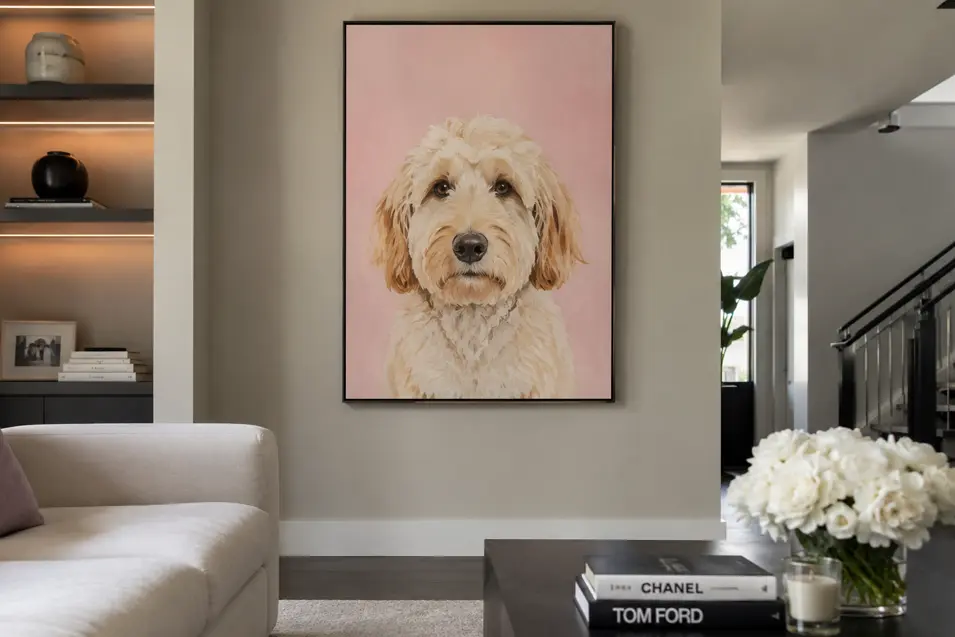
- A luxury magazine photograph
- A modern gallery print
- A Japanese ink wash
- A Pop Art masterpiece
- A Scandinavian minimalist illustration
- A fantasy scene
- A farmhouse-style portrait
The possibilities are almost endless, and each version tells a different story about your pet.
Start with the Best Photograph
Everything begins with a great reference image.
The better the original photograph, the better the AI artwork will usually be.
Look for photos that include:
- Sharp focus on the eyes
- Natural lighting
- High resolution
- Clear facial details
- Minimal background distractions
- A pose that reflects your pet’s personality
Don’t worry if the background isn’t perfect. AI can replace or completely redesign it later.
Learn to Write Better Prompts
The biggest difference between average AI artwork and stunning AI artwork is almost always the prompt.
Instead of writing:
“Create a picture of my dog.”
Describe exactly what you want.
Include details such as:
- Subject
- Artistic style
- Lighting
- Mood
- Composition
- Background
- Camera angle
- Color palette
- Quality
- Intended use
For example:
Create a photorealistic portrait of a Golden Retriever sitting in a wildflower meadow during golden hour, soft cinematic lighting, shallow depth of field, magazine-quality photography, ultra-detailed fur, elegant composition, suitable for a large framed wall print.
Small details often make a dramatic difference.
Explore Different Artistic Styles
One of AI’s greatest strengths is variety.
We’ve compared dozens of styles, but some of the most popular include:
Traditional Art
- Oil Painting
- Watercolor
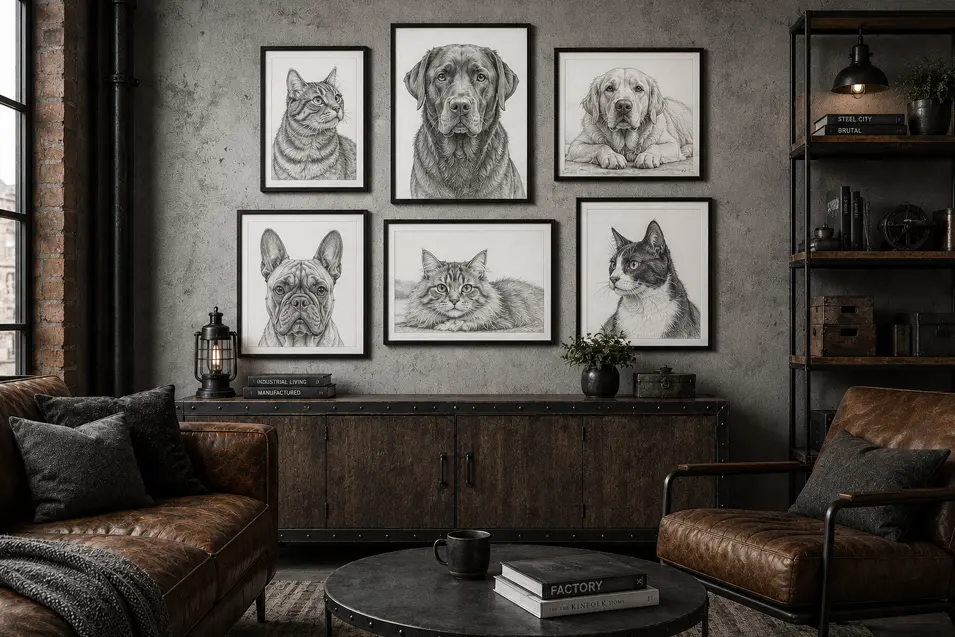
- Pencil Sketch
- Charcoal Drawing
- Pastel
- Ink Wash
Historic Styles
- Renaissance
- Victorian
- Impressionism
- Art Deco
Modern Styles
- Minimalist
- Contemporary Gallery
- Mid-Century Modern
- Abstract
- Scandinavian
Creative Styles
- Fantasy
- Cartoon
- Storybook
- Pop Art
- Surrealism
Don’t stop after generating one version. Often the fifth or sixth style becomes your favorite.
Think Like a Photographer
Many people overlook one of the easiest ways to improve AI-generated images: adding professional photography language.
Words like these dramatically improve realism:
- Photorealistic
- Magazine-quality
- Professional studio lighting
- Soft diffused light
- Golden hour
- Cinematic lighting
- Shallow depth of field
- Soft bokeh
- 85mm lens
- Macro photography
- Ultra-detailed
- Razor-sharp focus
- HDR
- Museum-quality
These terms tell the AI not only what to create, but how it should look.
Match the Art to Your Home
Creating beautiful artwork is only part of the process.
It should also complement your home’s decorating style.
For example:
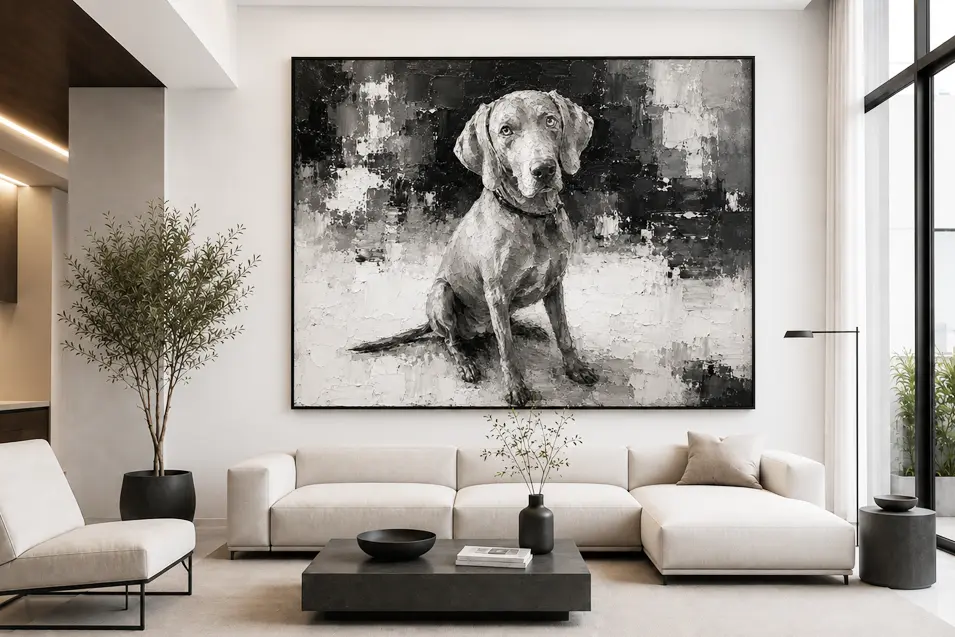
Modern Homes
Minimalist compositions
Neutral backgrounds
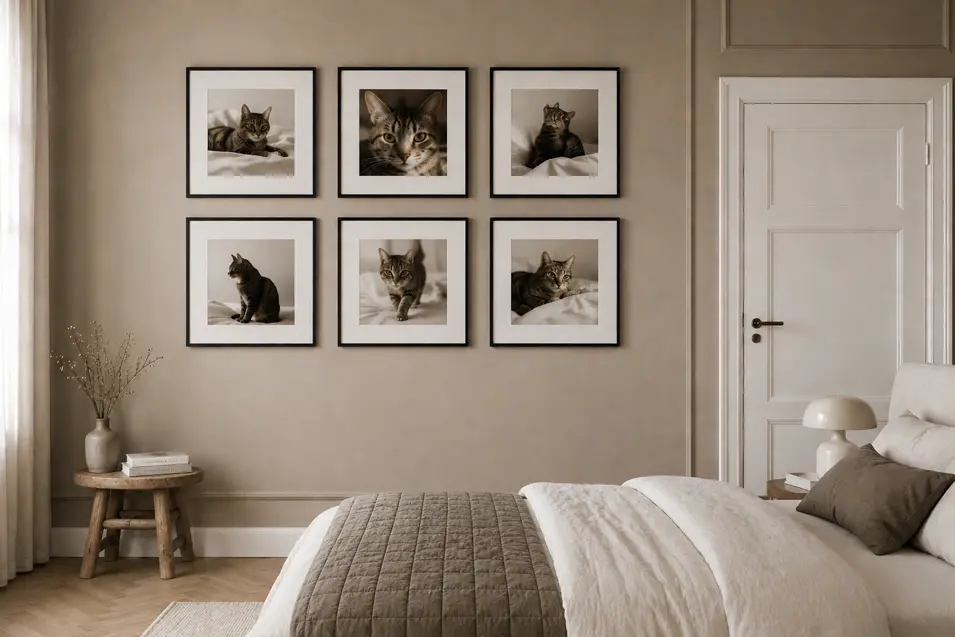
Gallery-quality photography
Black-and-white portraits
Farmhouse Homes
Soft watercolor
Natural wood frames
Warm neutral colors
Rustic textures
Coastal Homes
Ocean blues
Watercolor styles
Beach backgrounds
Light, airy compositions
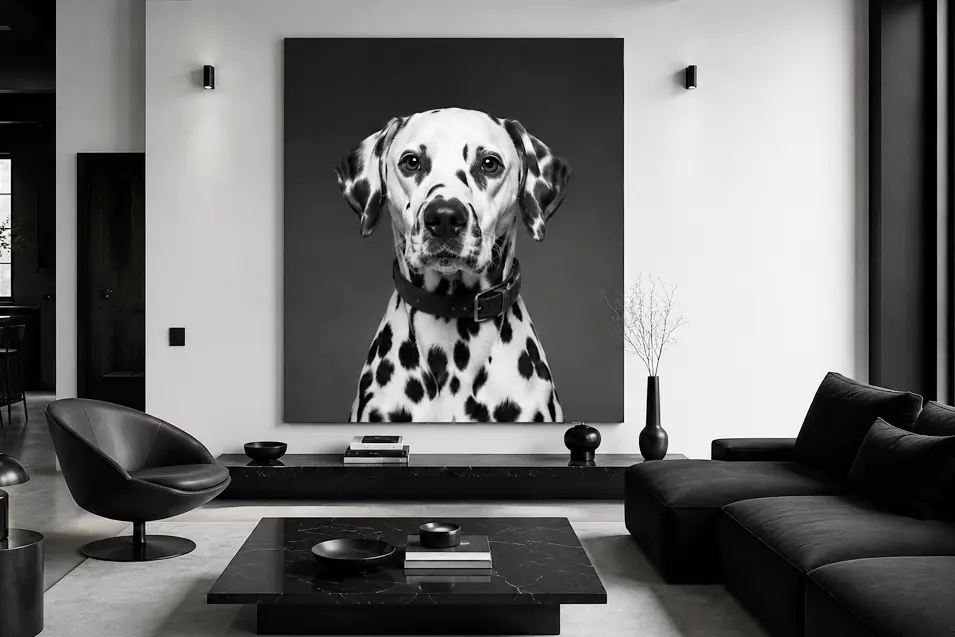
Luxury Interiors
Dramatic lighting
Dark backgrounds
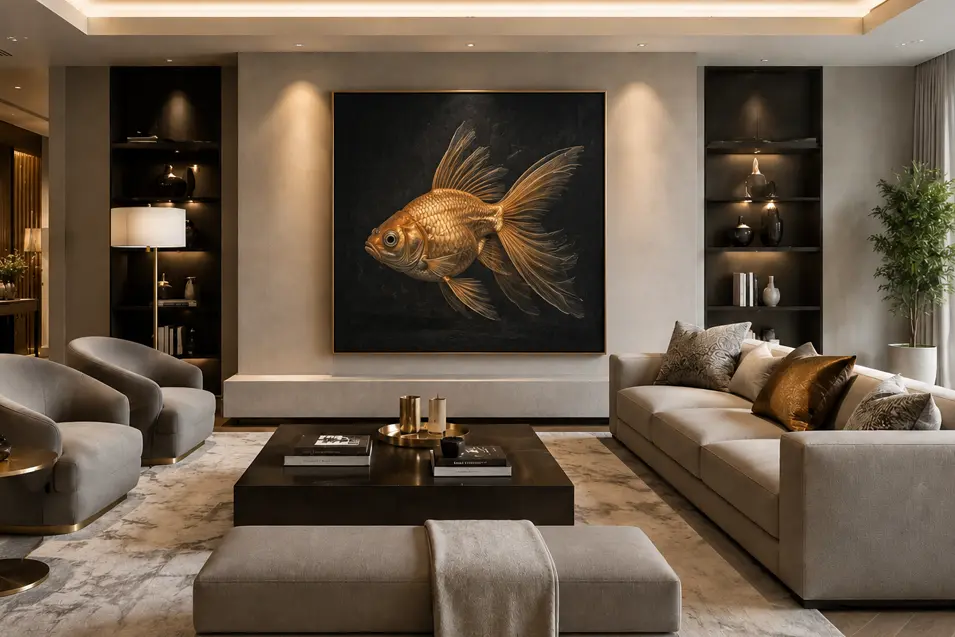
Large-format portraits
Museum-quality realism
When the artwork matches the room, it feels intentional rather than decorative.
Choose the Right Aspect Ratio
Before generating artwork, think about where it will hang.
Different spaces require different image formats.
Square (1:1)
Perfect for social media and square canvases.
Portrait (2:3)
Ideal for vertical wall art.
Landscape (3:2 or 16:9)
Excellent above sofas and beds.
Panoramic (21:9)
Perfect for dramatic statement walls.
Adding the aspect ratio directly into your prompt often produces better compositions.
Learn to Edit Without Starting Over
One of the biggest mistakes beginners make is changing too many things at once.
Instead of asking AI to completely regenerate an image, make small, focused edits.
Examples include:
- Change the background to a forest.
- Keep the dog exactly the same.
- Brighten the lighting only.
- Do not modify the facial expression.
- Add autumn leaves.
- Preserve the pose.
- Replace the background with a mountain lake.
- Do not change the fur markings.
Small refinements almost always produce better results than complete rewrites.
Experiment with AI Pet Portrait Styles
One of the most enjoyable parts of AI art is seeing the same pet interpreted through completely different artistic lenses.
Try generating:
- Watercolor
- Oil Painting
- Pencil Sketch
- Charcoal Drawing
- Renaissance
- Victorian
- Art Deco
- Mid-Century Modern
- Pop Art
- Impressionist
- Farmhouse
- Contemporary Gallery
- Black & White Fine Art
- Fantasy
- Japanese Ink Wash
- Scandinavian
- Abstract
- Luxury Photography
- Wildlife Photography
- Editorial Magazine Cover
You may discover styles you never would have considered.
AI Art Isn’t Limited to Dogs and Cats
AI works beautifully with almost every type of pet.
Try creating artwork featuring:
- Horses
- Birds
- Rabbits
- Guinea pigs
- Reptiles
- Hamsters
- Ferrets
- Fish
- Reef aquariums
- Koi ponds
Each presents unique creative possibilities.
Displaying Your Finished Artwork
After creating your favorite image, think about presentation.
Popular options include:
- Framed prints
- Canvas wraps
- Acrylic prints
- Metal prints
- Gallery walls
- Large statement pieces
- Triptychs
- Floating frames
The right presentation can make an AI-generated image feel indistinguishable from artwork purchased in a professional gallery.
Continue Learning
If you’d like to explore AI pet art in greater depth, these guides expand on each stage of the process:
Getting Started
Prompt Writing
Artistic Styles
Home Decorating
Technical Skills
Inspiration
- Before and After: Transforming Ordinary Pet Photos into Artwork
- AI Pet Portraits as Gifts
- AI Fish Art: Creating Stunning Aquatic Artwork with ChatGPT
Together, these articles provide everything you need to become confident creating AI-generated artwork.
The Future of Pet Portraits
Artificial intelligence isn’t replacing creativity.
It’s expanding it.
Instead of limiting pet owners to a single artistic style, AI allows us to explore dozens of creative possibilities in just a few minutes. A playful puppy can become a Renaissance prince, a watercolor painting, a luxury fashion portrait, or a modern minimalist illustration—all while preserving the personality that makes that pet unique.
The technology will continue to improve, but the purpose remains the same.
We create pet art because we love the animals who inspire it.
AI simply gives us new tools to celebrate that relationship.
Final Thoughts
Whether you’re creating your very first AI portrait or refining prompts like a professional digital artist, the most important ingredient isn’t the software.
It’s the connection you have with your pet.
Every prompt begins with a memory.
Every portrait celebrates a personality.
Every finished image becomes another way to tell the story of an animal that has made your life richer.
Master the prompts.
Experiment with the styles.
Refine the details.
Print your favorites.
And don’t be surprised if your next favorite piece of art starts with a photograph on your phone and a single line typed into ChatGPT.
Because that’s where some of today’s most beautiful pet portraits begin.