
I was talking with a few friends recently about our Pet Friendly House project when someone jokingly asked:
“Why bother building a real one? Just use AI.”
At first, it sounded like a brilliant idea.
Why spend months designing rooms, researching pet-friendly materials, building catios, testing flooring options, and figuring out where everything should go when I can simply type:
“Create the world’s greatest pet-friendly house.”
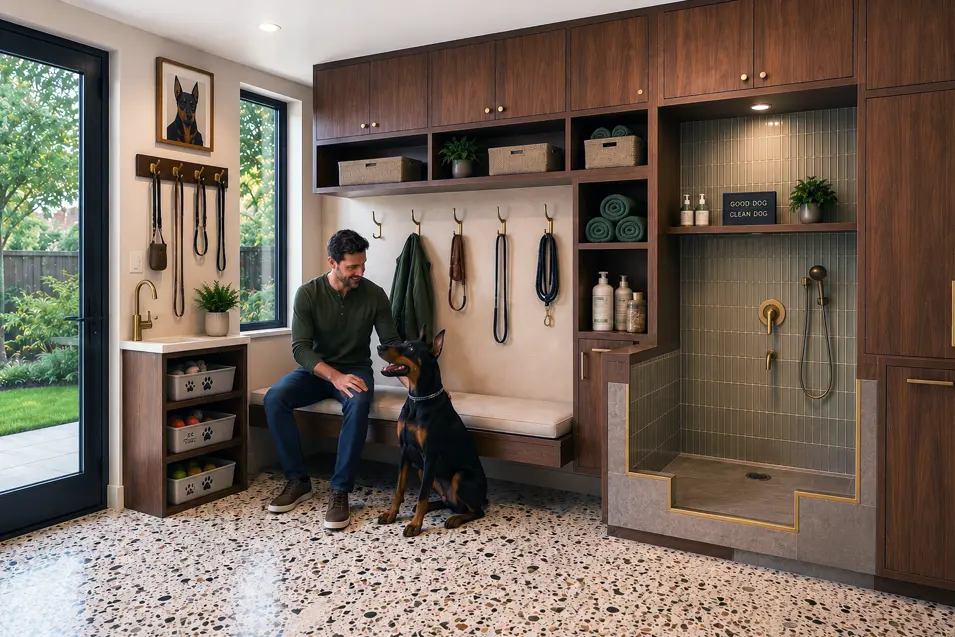
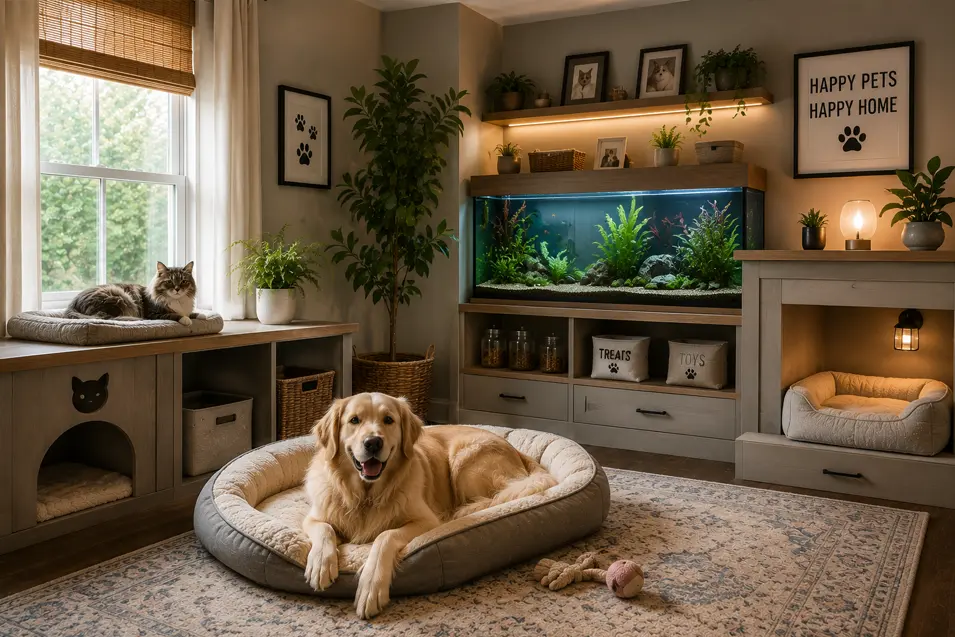
Thirty seconds later I have a stunning home with custom dog wash stations, built-in pet feeding areas, luxury cat walkways, a wall-sized aquarium, and a Golden Retriever that apparently never sheds.
Project complete.
Let’s all go home.
The more I thought about it, however, the more I realized there was one small problem.
None of it is real.
The dog doesn’t shed because AI has clearly never owned a Labrador.
It doesn’t understand finding dog hair in your coffee despite the dog spending most of the day outside.
It doesn’t understand how a black shirt can become a fur coat in less than thirty seconds.
AI-generated dogs are always sitting politely.
Real dogs are eating something they found in the backyard that absolutely should not be eaten.
AI-generated cats pose gracefully in sunbeams.
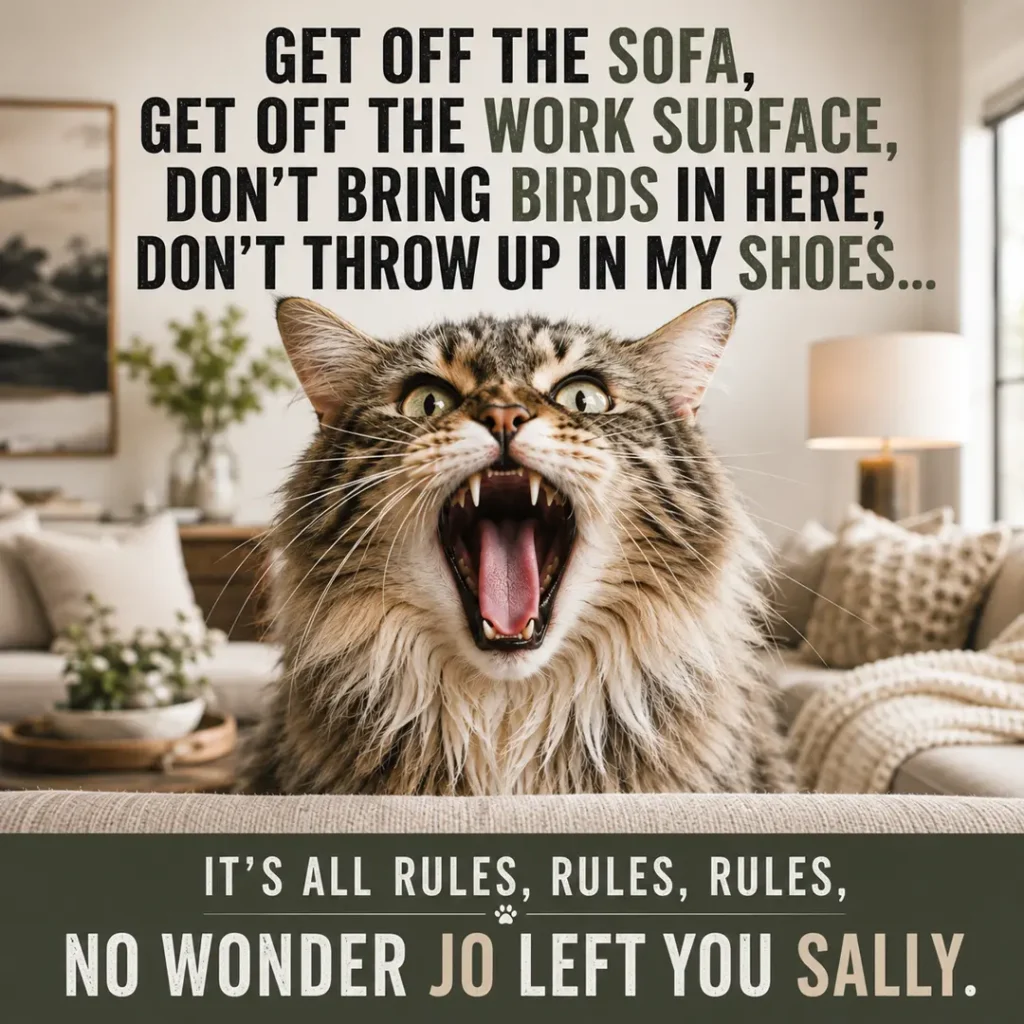
Real cats knock a glass off the counter while maintaining direct eye contact.
AI-generated aquariums are crystal clear forever.
Real aquariums occasionally teach you that water always wins.
AI can create beautiful hardwood floors.
It can’t explain the mysterious wet spot that appeared in the hallway overnight.
AI can erase objects from photos.
It cannot erase the smell of wet dog.
Trust me, if AI ever solves that one, we’ll know the future has truly arrived.
The Amazing Thing About AI
Now before anyone accuses me of declaring war on technology, let’s be clear.
I love AI.
I use it every day.
In fact, projects like this would be significantly harder without it.
Years ago, building something like Professors House required a small army of people. Writers, editors, graphic designers, photographers, researchers, marketers, SEO specialists, and developers all working together.
Today, I’m still technically a team of one.
At least on paper.
In reality, I have access to tools that help me write, edit, brainstorm, generate images, create social media content, analyze data, improve SEO, organize projects, and explore ideas faster than ever before.
I often joke that I’m no longer a team of one.
I have Scout and his team.
Need help writing an article? Scout can help.
Need to visualize a room? Scout can help.
Need feedback on a design idea? Scout can help.
Need someone to tell me an idea might be terrible before I spend three weeks working on it? Scout can definitely help.
Technology allows small creators to punch above their weight class.
It allows individuals to do things that once required entire departments.
Companies that ignore tools like AI are making a mistake.
People who refuse to learn new technology are making a mistake.
Every major advancement throughout history has been met with skepticism.
The smart move isn’t avoiding technology.
The smart move is learning how to use it effectively.
And AI is one of the most powerful tools I’ve ever used.
The Difference Between a Rendering and a Life
But here’s where things get interesting.
AI can create a picture of a family room.
It can’t create a family.
It can create a picture of a dog.
It can’t create the feeling of that dog curling up beside you after a difficult day.
It can generate artwork for a wall.
It can’t create the story behind the family photo hanging beside it.
It can show a beautiful catio.
It can’t show the Saturday afternoon spent building it while your cat supervises from a lawn chair and contributes absolutely nothing to the project.
It can create a picture of a home.
It cannot create the life that happens inside one.
That’s the difference between a rendering and reality.
One is an image.
The other is a story.
Why We Have Pets in the First Place
The truth is, pets make absolutely no sense if your goal is efficiency.
Dogs track mud into the house.
Cats shed on everything.
Birds scatter seeds farther than professional athletes can throw.
Aquariums require maintenance.
Every pet costs money.
Every pet creates work.
And every pet has an uncanny ability to schedule veterinary emergencies for weekends and holidays.
Yet millions of people gladly welcome pets into their homes every year.
Why?
Because pets give us something technology can’t.
Companionship.
Affection.
Connection.
Comfort.
Memories.
No matter how advanced artificial intelligence becomes, it can’t replace the feeling of being greeted at the door by a dog that’s genuinely excited to see you.
It can’t replace the comfort of a cat curled up beside you.
It can’t replace the bond people develop with the animals they share their lives with.
Those experiences aren’t efficient.
They’re meaningful.
Why We’ll Use Both
That’s why we’ll be using plenty of AI throughout the Pet Friendly House project.
We’ll use it to visualize rooms.
We’ll use it to test layouts.
We’ll use it to create illustrations.
We’ll use it to explain ideas.
We’ll use it whenever it helps us communicate better and build smarter.
But we’re also going to build real spaces.
With real people.
Real pets.
Real successes.
Real mistakes.
Real stories.
And probably at least one project that takes three times longer than expected because someone misplaced the instructions.
The goal was never to build the perfect AI-generated pet-friendly house.
The goal is to build a home.
A place where pets can be pets.
Where people can be people.
Where memories are made.
And where the occasional muddy paw print is considered a feature rather than a design flaw.
AI helps me build the project.
The pets are the reason I’m building it.