For generations, pet-friendly design was often viewed as a compromise. Dog beds occupied corners of living rooms. Cat trees towered awkwardly beside carefully selected furniture. Aquariums were hidden away in basements, hobby rooms, or spare bedrooms. Homeowners who valued beautiful interiors frequently found themselves choosing between elegant design and the practical needs of the animals they loved.
That mindset is changing.
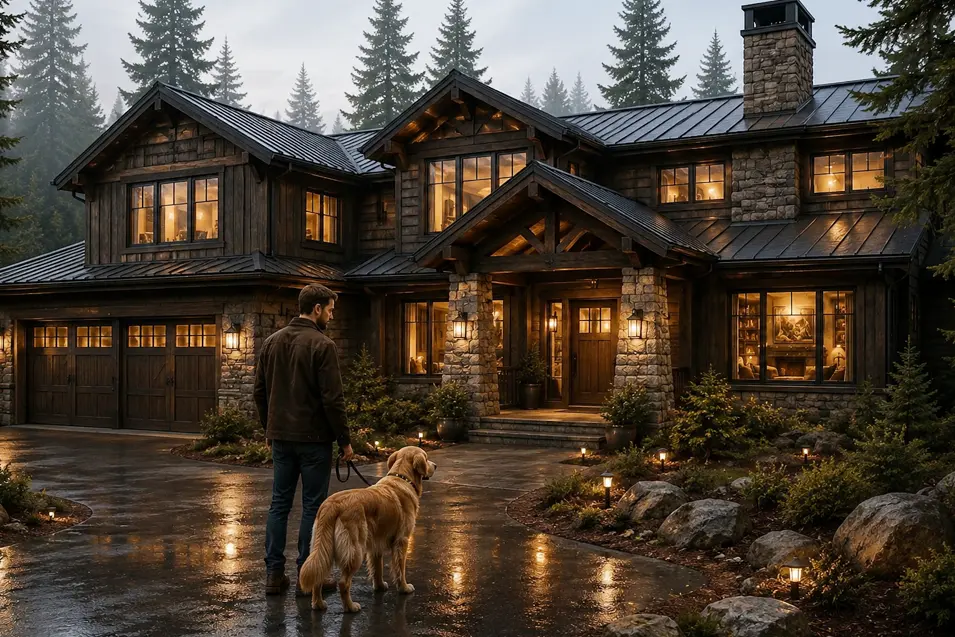
Today, pets are no longer being accommodated within a home’s design—they are becoming part of it. Architects, interior designers, and homeowners are increasingly creating spaces that celebrate the animals who share their lives. Rather than hiding pet beds, feeding stations, aquariums, and portraits, they are integrating them directly into the architecture of the home.
The result is a new approach to luxury living: homes where companion animals are honored through thoughtful design, meaningful artwork, and spaces that enrich both human and animal lives.
Welcome to the Executive Pet Home.
The Executive Mudroom: Where Great Design Meets Real Life
“A thoughtfully designed mudroom may be the most practical luxury a dog owner can build.”
The reality of pet ownership is rarely glamorous.
Dogs track mud through the house. Wet paws leave prints on freshly cleaned floors. Leashes, coats, toys, and grooming supplies quickly accumulate near entryways. In many homes, these necessities become a source of clutter.
A thoughtfully designed mudroom solves the problem before it reaches the rest of the house.
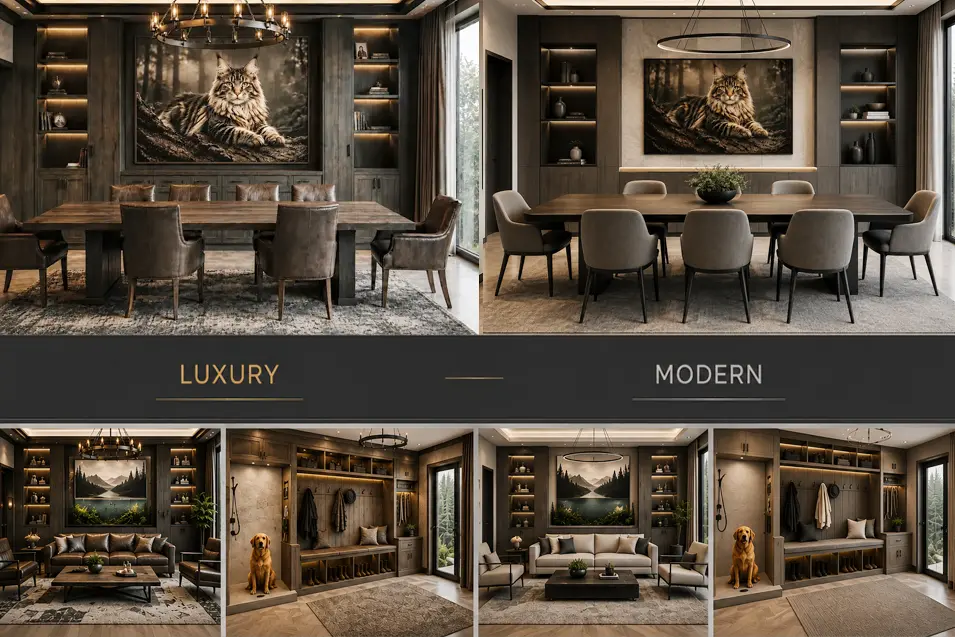
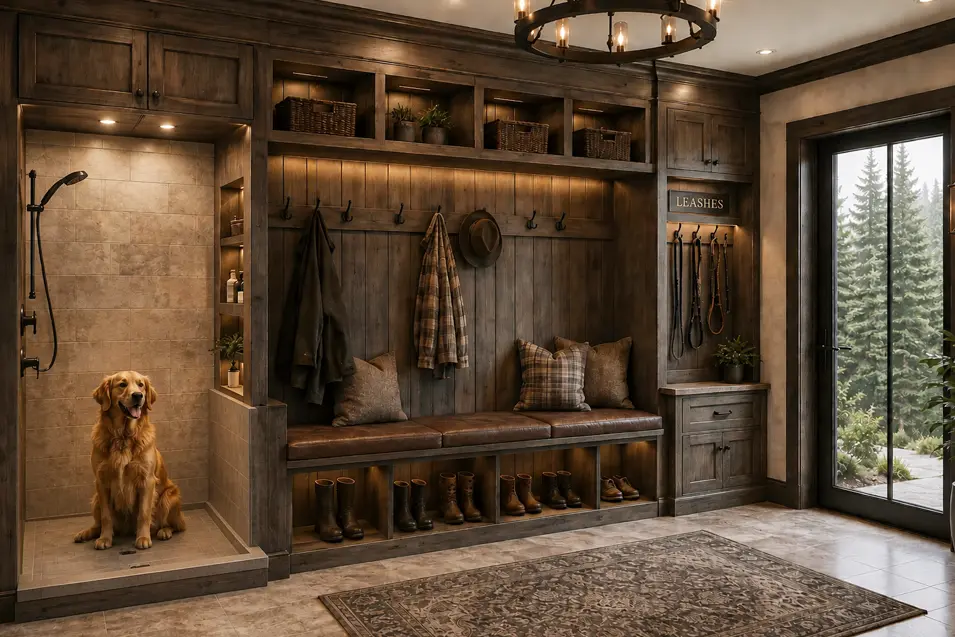
Built-in storage provides dedicated space for leashes, collars, jackets, and outdoor gear. Bench seating creates a convenient place to prepare for walks, while custom cabinetry keeps everyday essentials organized and out of sight.
The best pet-friendly homes don’t hide pets. They celebrate them.
For dog owners, the true luxury may be the integrated washing station. Positioned near the home’s entrance, it allows muddy paws and dirty coats to be cleaned before pets venture further inside.
The best pet-friendly design is often the most practical. Rather than adding pet features as afterthoughts, the Executive Mudroom incorporates them directly into the architecture of the home.
The result is a space that makes daily life easier while preserving the beauty of the rooms beyond.
The Executive Library: A Place to Unwind Together
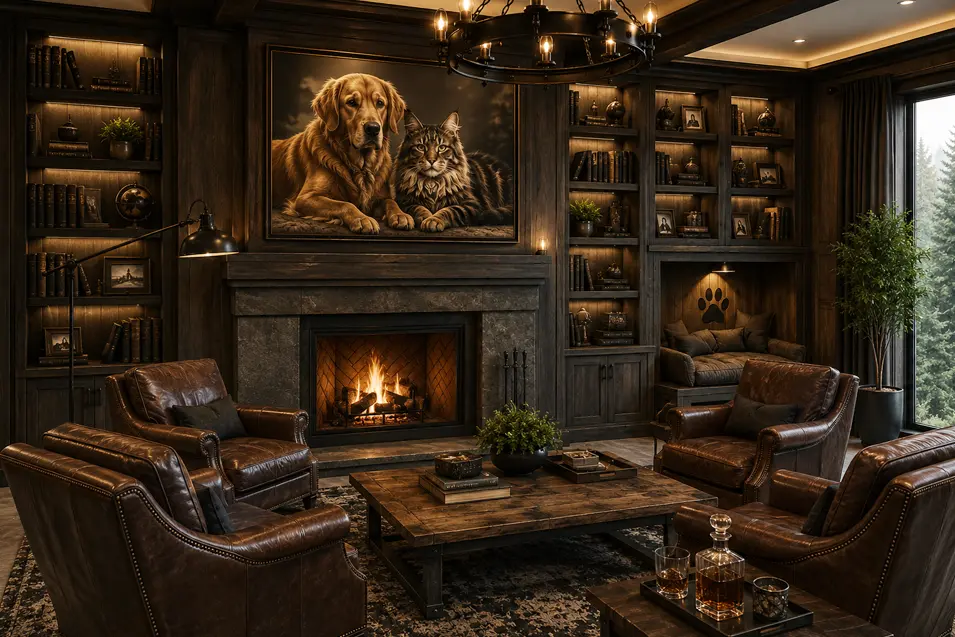
The traditional library has long been a symbol of comfort, reflection, and sophistication. Rich wood paneling, leather seating, warm lighting, and crackling fireplaces create an atmosphere designed for quiet evenings and thoughtful conversation.
In a pet-centered home, however, the library becomes something more.
Rather than treating pets as visitors to the room, the design incorporates them as permanent residents. A built-in pet retreat tucked seamlessly into custom cabinetry creates a comfortable resting place while maintaining the room’s architectural integrity. The space feels intentional rather than improvised.
Above the fireplace, a large portrait featuring beloved companions transforms the animals themselves into part of the home’s visual identity. The portrait is not simply decoration. It is a declaration that these animals are family members whose presence deserves to be celebrated.
The result is a room where both people and pets can relax, read, and spend time together in comfort.
The Executive Dining Room: When Pet Portraits Become Fine Art
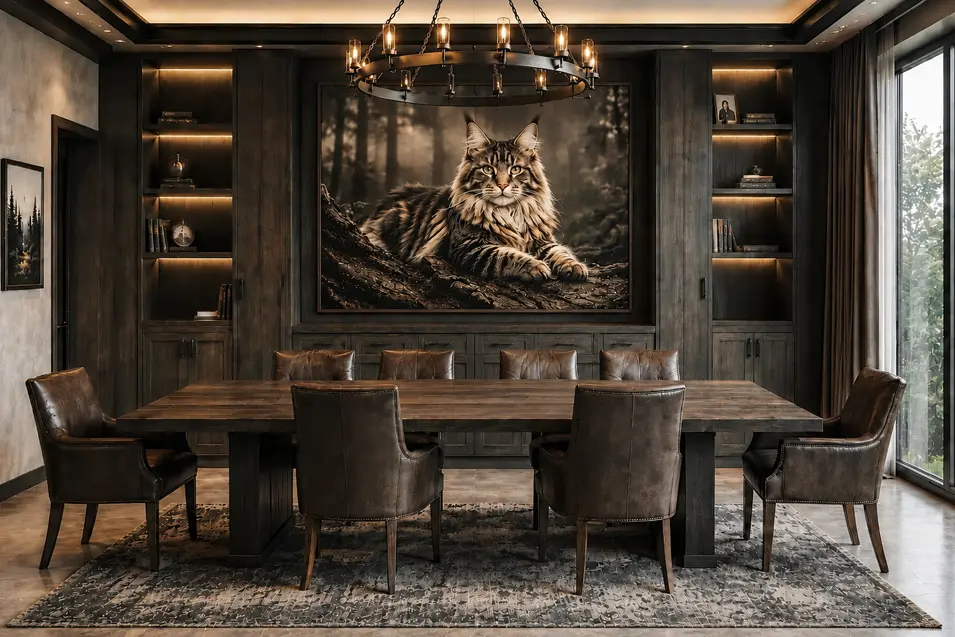
For centuries, portraiture was reserved for royalty, political leaders, and prominent families. Today, many homeowners are commissioning artwork that places their beloved pets at the center of the frame.
Large-scale pet portraits have become increasingly popular because they create an emotional connection that generic artwork often cannot match. They tell visitors something meaningful about the people who live in the home.
A dramatic portrait of a beloved cat positioned above a dining room creates an unforgettable focal point. The artwork immediately draws the eye while adding warmth and personality to an otherwise formal space.
Unlike novelty pet décor, sophisticated portraiture elevates the animal into the realm of fine art. The room does not feel themed. It feels personal.
This growing trend reflects an important shift in how many people view their pets. They are no longer simply animals who live in the home. They are companions whose presence shapes the lives and memories of the family itself.
The Living Room: Aquariums as Living Art
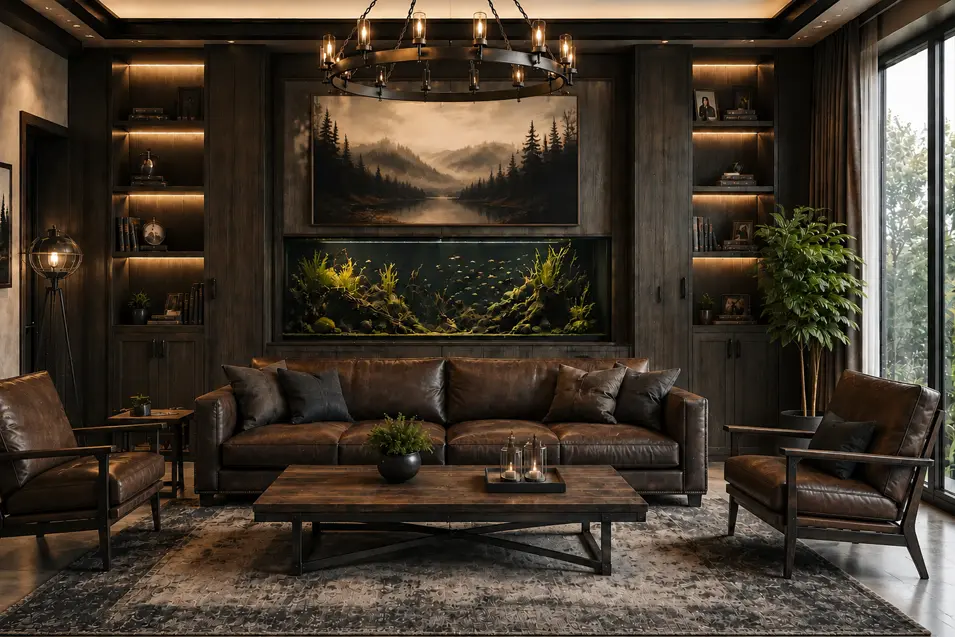
“An aquarium is more than décor—it is living art.”
Few design elements command attention quite like a beautifully crafted aquarium.
Unlike traditional artwork, aquariums introduce movement, light, texture, and life into a space. Fish glide through carefully arranged underwater landscapes while aquatic plants sway gently in the current. The display changes throughout the day, creating a living composition that never remains exactly the same.
For many homeowners, aquariums have become one of the most compelling forms of functional art.
Integrated directly into custom cabinetry, a large aquarium becomes both a conversation piece and a source of relaxation. The natural beauty of the underwater environment contrasts beautifully with the warmth of wood, stone, and leather furnishings.
Researchers have long noted the calming effect aquariums can have on observers. Watching fish move through a carefully designed aquatic environment can reduce stress and promote relaxation, making them particularly well suited for gathering spaces where families unwind and entertain guests.
In many ways, an aquarium serves the same purpose as a traditional painting—except that it is alive.
The Executive Office: Designing for Focus and Well-Being
Modern workspaces are evolving.
The executive office is no longer simply a place to answer emails or attend meetings. It has become a space where productivity, creativity, and well-being intersect.
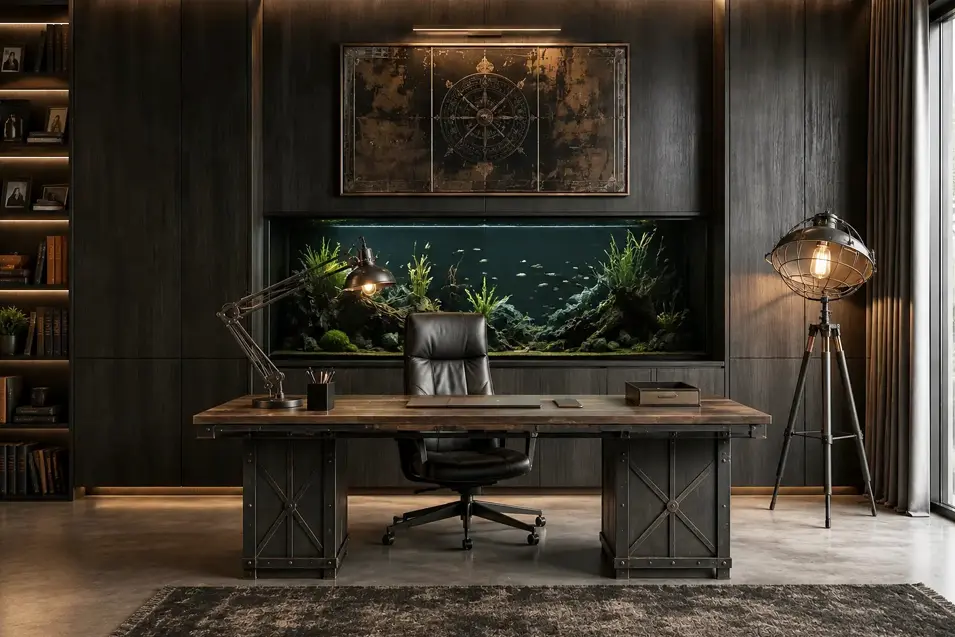
Biophilic design—the practice of incorporating natural elements into interior spaces—has gained popularity because of its ability to reduce stress and improve focus. Aquariums represent one of the most effective expressions of this philosophy.
A built-in aquarium positioned behind a desk creates a calming backdrop that brings nature indoors. The movement of fish and aquatic plants introduces life into a space that might otherwise feel static and purely functional.
For professionals who spend long hours working, these small connections to nature can have a meaningful impact on daily well-being.
The aquarium also reinforces a broader theme found throughout the Executive Pet Home: animals are not separate from the homeowner’s lifestyle. They are woven into every aspect of it.
The Executive Bedroom: Sharing the Most Personal Space
Few places in the home feel more personal than the bedroom.
It is where people begin and end their day, making it one of the most meaningful spaces in any residence. For many pet owners, it is also where their closest animal companions spend a great deal of time.
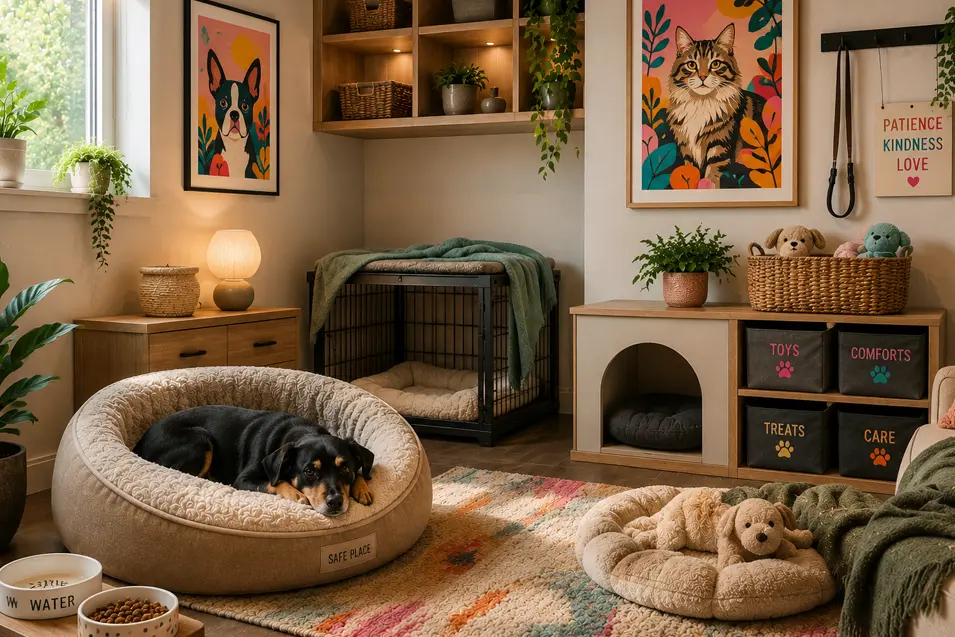
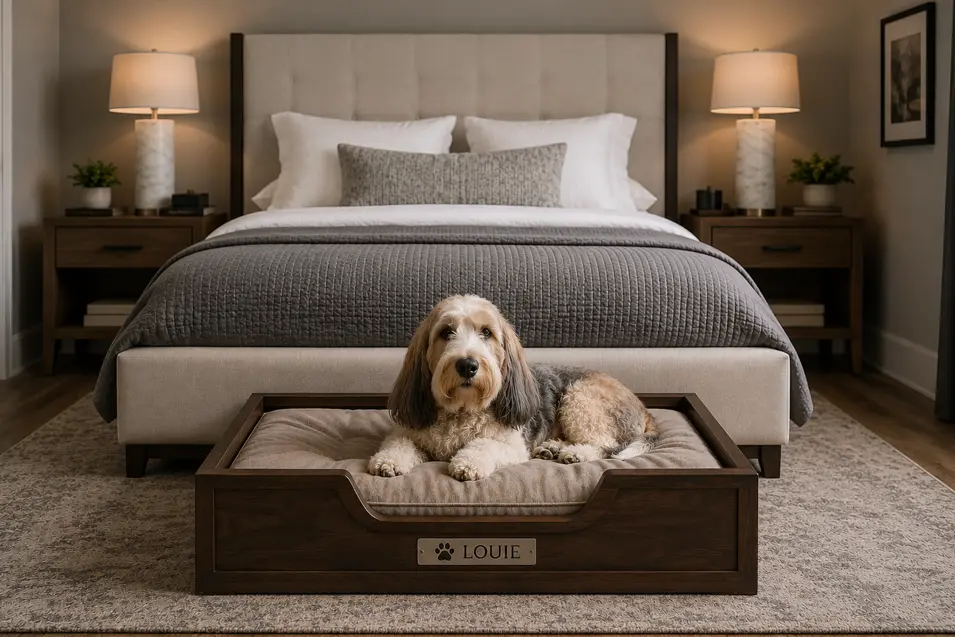
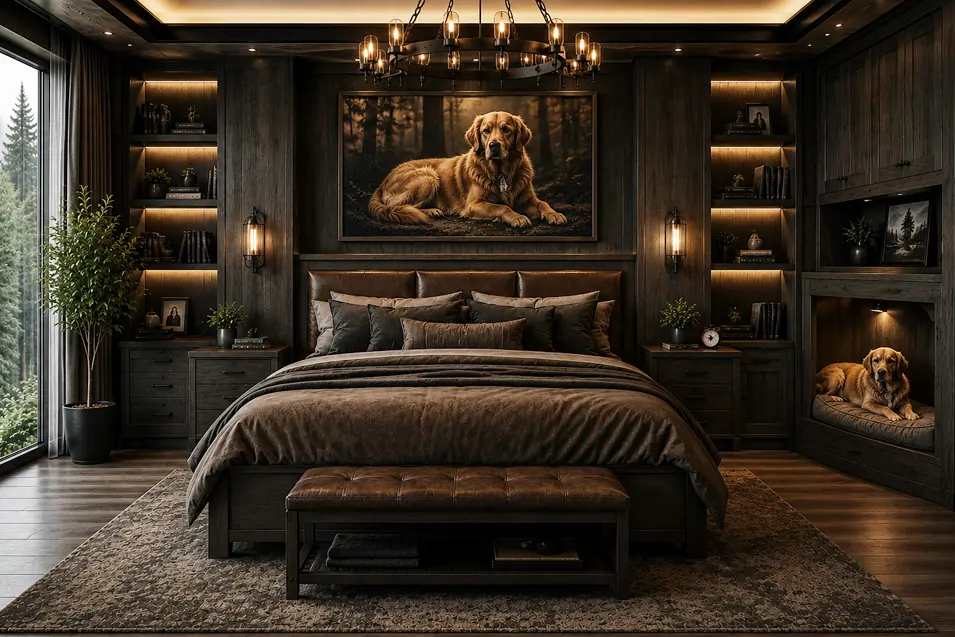
Rather than placing a dog bed on the floor as an afterthought, thoughtful design can incorporate dedicated sleeping spaces directly into custom furniture and cabinetry. These integrated retreats provide comfort for pets while maintaining the room’s visual harmony.
A large portrait of a beloved dog positioned above the bed further reinforces the emotional connection between owner and companion. The artwork serves as a reminder that the relationship extends far beyond simple pet ownership.
For many people, pets provide comfort, routine, companionship, and emotional support. Designing a bedroom that acknowledges that bond feels both natural and deeply personal.
The Executive Kitchen: Where Function Meets Compassion
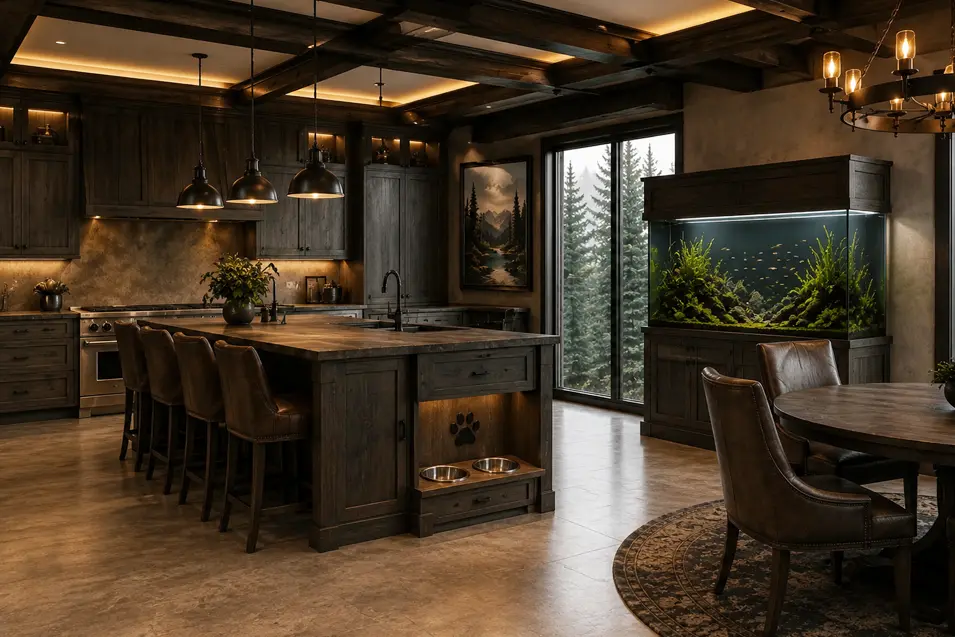
The kitchen is often described as the heart of the home. It is where meals are prepared, conversations unfold, and families gather throughout the day.
In a pet-centered home, the kitchen can also become a space designed with animals in mind.
Integrated feeding stations eliminate clutter while providing pets with dedicated dining areas that complement the surrounding cabinetry. Hidden storage solutions keep food, treats, and supplies organized without disrupting the room’s aesthetic.
When combined with a beautiful aquarium and carefully considered design details, the kitchen becomes a perfect example of how functionality and elegance can coexist.
The best pet-friendly design often goes unnoticed because it feels so natural. Rather than drawing attention to itself, it simply improves daily life for both humans and animals.
The Future of Luxury Pet Design
As pets continue to occupy a central place in family life, design trends are evolving accordingly.
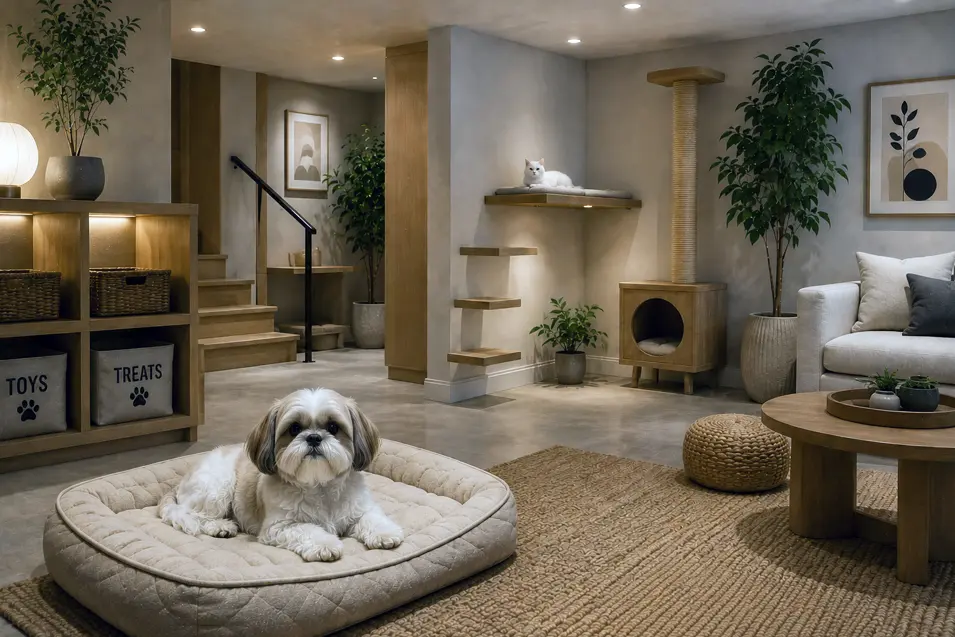
Custom dog retreats, integrated feeding stations, dedicated pet rooms, aquarium installations, climbing walls for cats, and commissioned pet portraits are becoming increasingly common in high-end homes. Architects are designing entire residences around the needs of both human and animal occupants.
This shift reflects a broader cultural change.
People are spending more time with their pets than ever before. They are investing in their well-being, celebrating their companionship, and acknowledging the profound role animals play in their lives.
Rather than treating pet ownership as a practical consideration, homeowners are embracing it as a source of inspiration.
A Home Designed Around What Matters Most
The most memorable homes are not defined solely by square footage, luxury finishes, or expensive furnishings.
They are defined by the lives lived within them.
For millions of people, pets are among the most important relationships they will ever experience. They provide companionship, loyalty, comfort, and joy. It is only natural that the spaces we create would reflect those relationships.
The Executive Pet Home demonstrates what happens when great design embraces that reality.
The result is not simply a beautiful home.
It is a home that tells a story about the animals who make it complete.