For centuries, human museums have celebrated history’s greatest artistic achievements.
Visitors travel across the world to admire paintings, sculptures, and artifacts worth millions of dollars. Experts debate their meaning. Critics analyze their significance. Entire books are written about their cultural impact.
Dogs, however, may have different tastes.
If canines curated their own museums, there is little doubt that one exhibit would occupy a place of honor above all others:
The Stick Collection.
Welcome to the Canine Museum of Fine Arts, where ordinary branches become priceless treasures and every walk has the potential to uncover the next great masterpiece.
The Origins of Stick Appreciation
No one knows exactly when dogs first developed their fascination with sticks.
Perhaps it began with a fallen branch discovered during an ancient walk. Perhaps it emerged through centuries of outdoor exploration. Whatever the origin, dogs around the world continue to demonstrate an almost universal appreciation for exceptional pieces of wood.
Unlike humans, who often overlook such objects entirely, dogs possess a remarkable ability to recognize potential artistic value.
Especially if the stick can be carried.
What Makes a Great Stick?
Museum curators evaluate artwork based on composition, rarity, and historical significance.
Dogs tend to focus on slightly different criteria.
Length matters.
Weight matters.
Texture matters.
Chewability matters.
Throwability may be the most important factor of all.
The finest examples combine multiple qualities into a single extraordinary specimen.
A truly exceptional stick can inspire excitement the moment it is discovered.
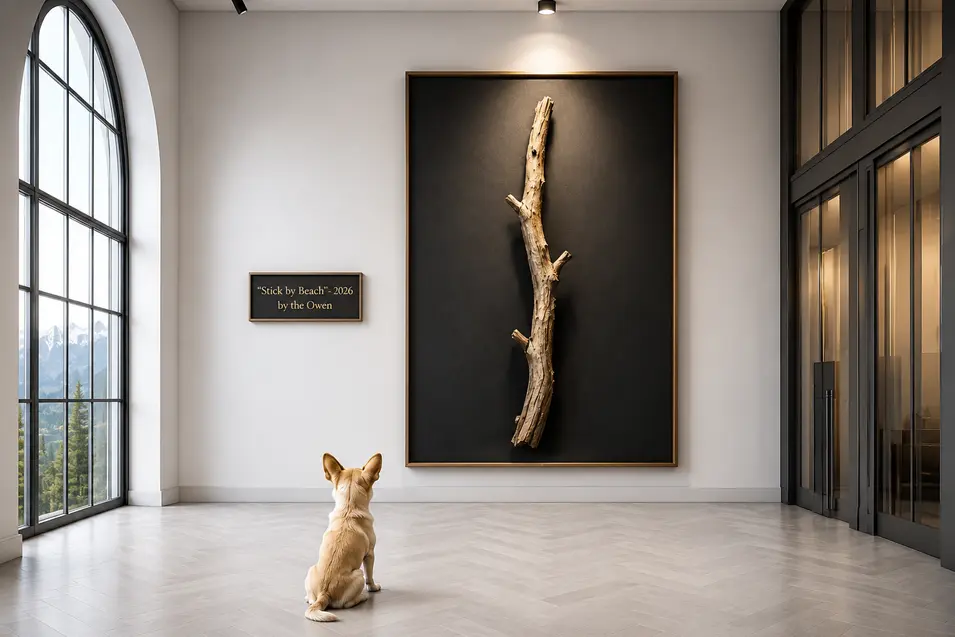
Stick by Beach (2025)

Collected during a series of coastal expeditions, Sticks from the South Pacific Ocean represents one of the most significant acquisitions in the museum’s history.
This celebrated triptych showcases three distinct specimens shaped by years of exposure to ocean currents, salt air, and the relentless forces of nature. Though each piece possesses its own unique character, together they form a harmonious collection that explores balance, texture, and the timeless relationship between dog and stick.
The central work, noted for its rare forked composition, remains a favorite among visitors and is widely regarded as one of the finest examples of coastal stick craftsmanship ever discovered.
Critics have described the collection as both elegant and deeply moving.
The artist reportedly attempted to carry all three home at the same time.
Branch Near Pond (2027)
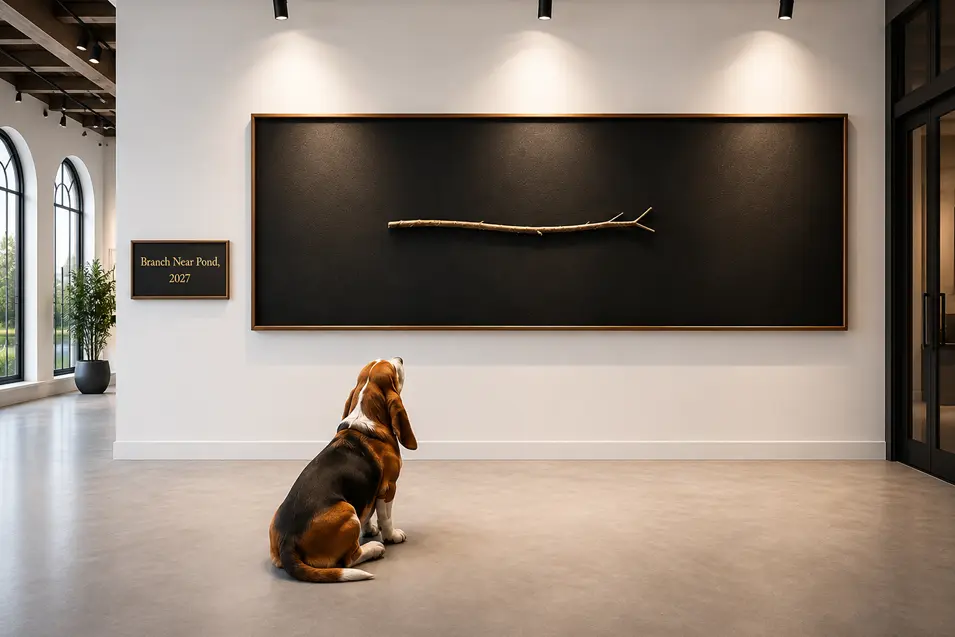
Initially overlooked by casual observers, Branch Near Pond would later become one of the most debated works in the collection.
Discovered during a routine expedition near the water’s edge, the piece challenged conventional expectations of what a great stick could be. Its understated form, clean lines, and minimalist structure divided critics. Some dismissed it as ordinary. Others recognized a quiet elegance rarely found in more elaborate specimens.
The artist remained unconcerned with the controversy.
After a brief inspection, the branch was immediately selected, proudly carried, and enthusiastically presented for further appreciation.
Today, Branch Near Pond is widely regarded as proof that true greatness doesn’t need to be complicated.
Autumn Stick No. 5
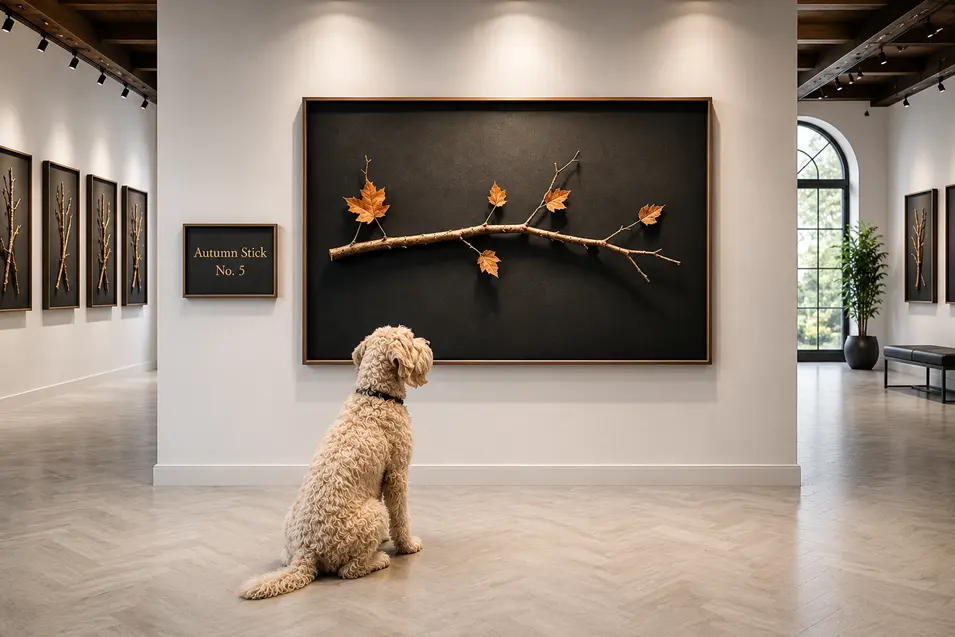
Widely regarded as one of the defining works of the artist’s autumn period, Autumn Stick No. 5 captures the fleeting beauty of a perfect seasonal discovery.
Featuring a naturally balanced composition, delicate branching structure, and several preserved autumn leaves, the piece is celebrated for blending artistic elegance with exceptional carrying potential. Critics have noted its remarkable ability to stop dogs in their tracks, often inspiring prolonged contemplation before acquisition.
While some observers admire its visual harmony and natural textures, canine experts point to something far more important:
It is, quite simply, a really good stick.
Choices (2024)
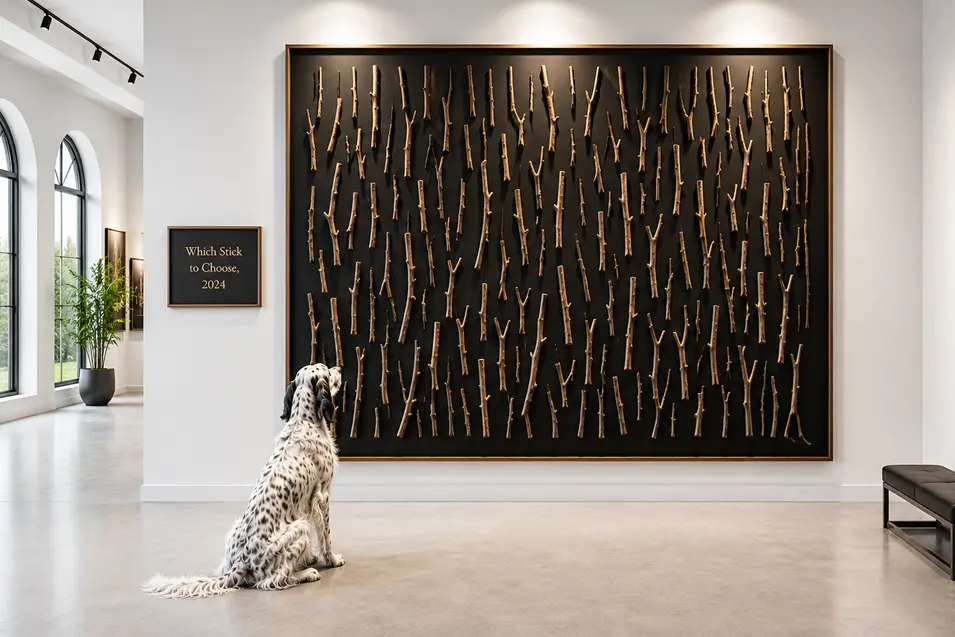
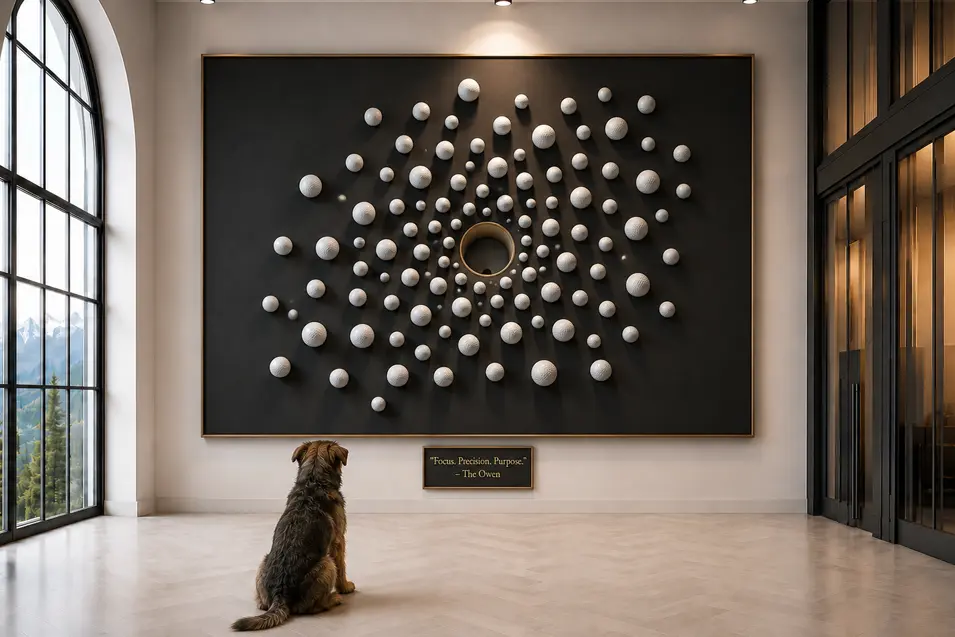
Standing before a wall filled with hundreds of carefully curated specimens, the viewer is confronted with one of the greatest dilemmas in canine art appreciation: which stick deserves to come home?
“Choice” explores the overwhelming abundance of opportunity that exists within every walk, hike, park visit, and backyard adventure. While humans may see a collection of ordinary branches, dogs recognize something far more significant—a gallery of possibilities waiting to be evaluated, selected, and proudly carried away.
Critics have praised the work for its emotional depth, while dogs simply understand the challenge. Sometimes the hardest part isn’t finding a great stick.
It’s choosing just one.
Rocky Mountain Collection:
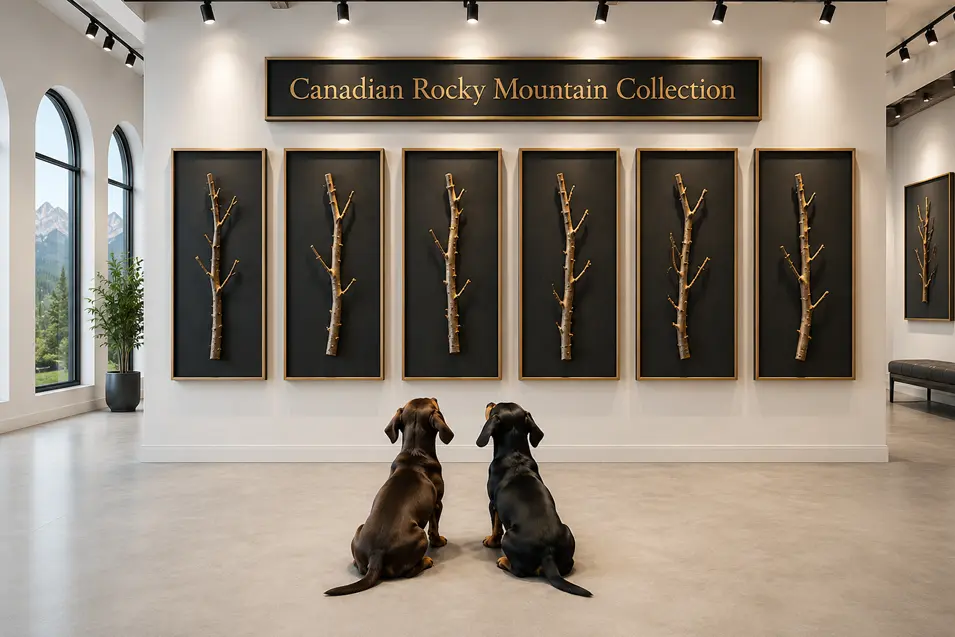
Discovered across remote trails, alpine forests, and rugged wilderness landscapes, The Canadian Rocky Mountain Collection is widely considered one of the finest assemblages of natural stick art ever presented by the Canine Museum of Fine Arts.
Each specimen was carefully selected for its unique character, proportions, and exceptional carrying potential. Though similar at first glance, closer inspection reveals subtle differences in branching, texture, and form—qualities that continue to inspire lively debate among canine scholars and collectors.
The collection is particularly admired for its authenticity. Unlike many modern works, these pieces remain largely untouched, allowing visitors to appreciate the raw beauty shaped by nature itself.
Visitors often spend hours comparing the individual works, discussing their merits, and choosing personal favorites.
The dogs reached their conclusion almost immediately.
They wanted all of them.
The Grand Gallery
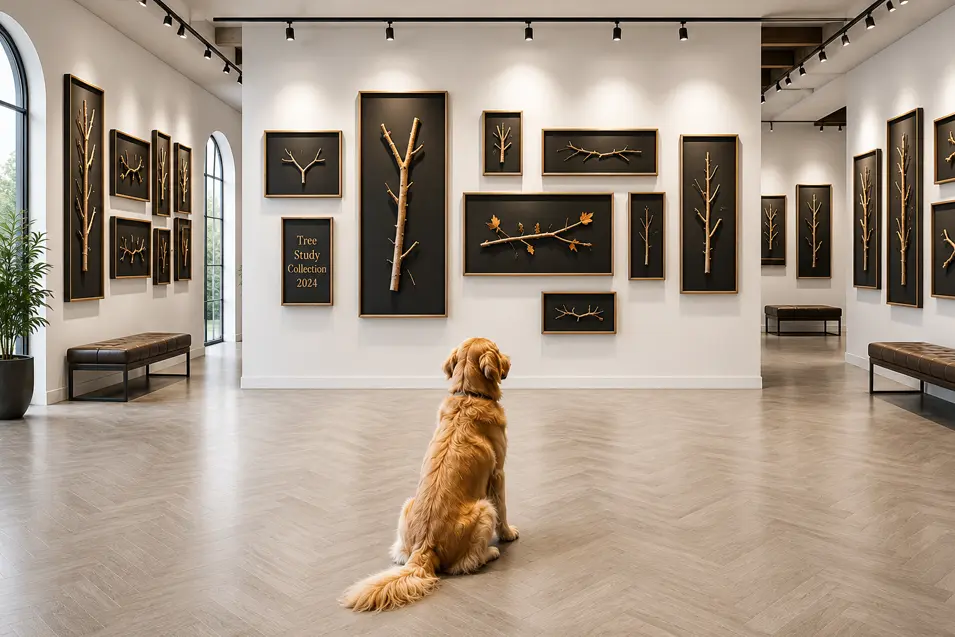
As visitors approach the final room, they are greeted by a lifetime of discoveries.
Towering branches. Delicate twigs. Seasonal masterpieces. Coastal finds. Mountain specimens. Works that once lay unnoticed on forest trails, beaches, sidewalks, and backyards now stand together as part of a collection greater than the sum of its parts.
For some, the gallery is a celebration of nature’s creativity.
For others, it is a reminder that beauty often exists in the simplest things.
The artist seems lost in quiet reflection, surrounded by the greatest stick collection ever assembled. Each piece represents a walk, an adventure, a discovery, or a moment worth remembering.
And perhaps that is the true lesson of the exhibition.
The world is filled with treasures.
Sometimes all it takes is seeing it through a dog’s eyes to appreciate them.
The Interactive Experience
Unlike many human museums, the Canine Museum of Fine Arts encourages audience participation.
In fact, interaction is often considered essential.
Visitors are welcome to:
- Carry selected exhibits.
- Present exhibits to friends.
- Request repeated throwing demonstrations.
- Conduct structural testing through chewing.
Traditional museum staff have expressed concerns.
Dogs remain unconvinced.
Why Dogs Love Sticks
The appeal of sticks goes beyond their physical qualities.
A stick represents discovery.
Every walk contains the possibility of finding something unexpected. A branch hidden beneath leaves or resting beside a trail can instantly transform an ordinary outing into an adventure.
For dogs, the excitement lies not only in possessing the stick but in finding it.
The discovery itself becomes part of the story.
The Artist’s Perspective
Humans often search for meaning in art.
Dogs may approach the subject differently.
A great stick does not need symbolism.
It does not require explanation.
It exists exactly as it is.
Interesting.
Useful.
Fun.
Perhaps there is wisdom in that simplicity.
Future Exhibitions
The museum continues to expand its collection.
Upcoming exhibits may include:
The Ball Gallery
A retrospective exploring the relationship between dogs and spherical objects.
Squirrel Studies
A dramatic photographic series examining one of nature’s most elusive subjects.
Masterpieces of Mud
An immersive exhibition celebrating texture, adventure, and poor life choices.
The Art of the Perfect Nap
A collection devoted to comfort, sunlight, and strategic couch positioning.
Final Thoughts
To humans, a stick may appear ordinary.
To a dog, it may represent discovery, adventure, beauty, and endless possibility.
Perhaps that is why dogs find so much joy in simple things. They possess a unique ability to see value where others see nothing at all.
The next time your dog proudly carries a stick across the yard as though it were a priceless treasure, remember:
You may not be looking at a branch.
You may be looking at the newest acquisition of the Canine Museum of Fine Arts.