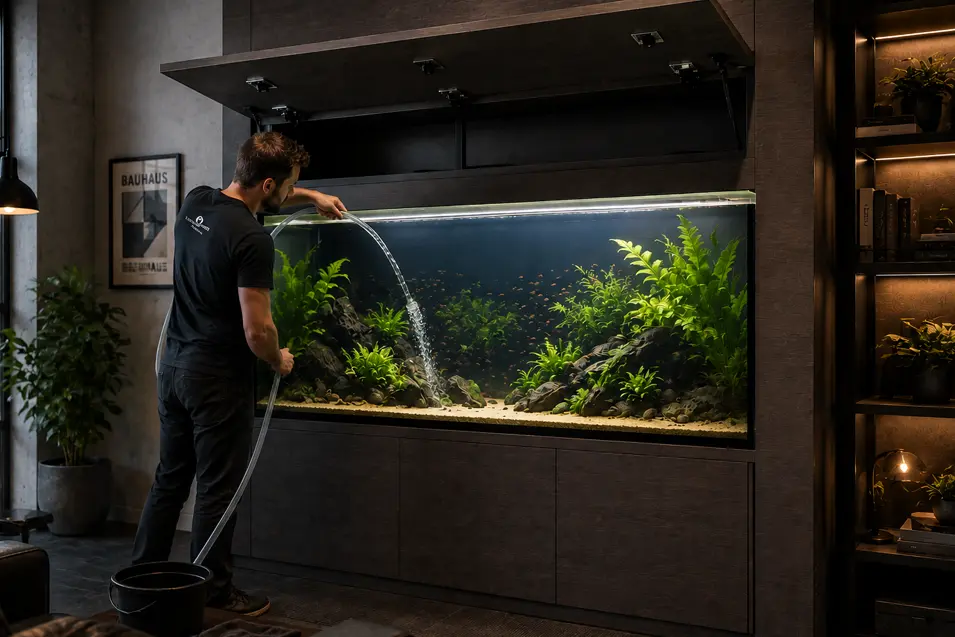
When people imagine owning an aquarium, they often picture colorful fish, beautiful aquascapes, and relaxing evenings spent watching aquatic life. What many new aquarium owners don’t think about is water.
Lots of water.
Every aquarium requires regular filling, topping off, cleaning, and water changes. While these tasks may seem simple at first, the logistics become increasingly important as aquarium size grows. A small desktop aquarium may only require a few gallons of water during maintenance, while a large home aquarium may require moving dozens of gallons at a time.
This is why experienced aquarium owners often say that aquarium placement should be planned around maintenance as much as aesthetics.
Before installing an aquarium, homeowners should carefully consider how water will be added, removed, and managed throughout the life of the tank.
Why Water Access Matters
Water changes are one of the most important aspects of aquarium care.
Regular maintenance helps:
- Remove waste
- Reduce excess nutrients
- Maintain water quality
- Support fish health
- Improve aquarium stability
The easier water changes become, the more likely owners are to perform them consistently.
Unfortunately, many aquarium owners discover too late that their beautiful aquarium location is inconvenient for routine maintenance.
What seems manageable on installation day can become frustrating after months or years of carrying buckets through the house.
Understanding Routine Aquarium Water Needs
Aquariums require water for more than just the initial setup.
Ongoing water-related tasks include:
- Filling the aquarium
- Routine water changes
- Topping off evaporation
- Cleaning equipment
- Quarantine tanks
- Emergency water replacements
These tasks occur repeatedly throughout the life of the aquarium.
Planning ahead can save considerable time and effort.
The Challenge of Large Aquariums
As aquarium size increases, water management becomes increasingly important.
For example:
- A 20-gallon aquarium may require a 4 to 6-gallon weekly water change.
- A 75-gallon aquarium may require 15 to 25 gallons.
- A 180-gallon aquarium may require 35 to 50 gallons or more.
Transporting this volume of water manually can quickly become exhausting.
Large aquarium owners often develop dedicated systems to simplify maintenance.
Choosing the Right Location
One of the easiest ways to simplify aquarium maintenance is selecting a location with convenient water access.
Ideal locations are often near:
- Utility sinks
- Laundry rooms
- Bathrooms
- Kitchens
- Water supply lines
While aesthetics remain important, convenience should not be ignored.
The farther an aquarium is from a water source, the more effort routine maintenance generally requires.
Aquariums Near Utility Rooms
Many experienced aquarists favor locations near:
- Laundry rooms
- Mudrooms
- Utility areas
These spaces often provide:
- Easy access to water
- Drainage options
- Storage opportunities
- Reduced cleanup concerns
Even if the aquarium is located in a living area, proximity to these spaces can simplify maintenance significantly.
Planning for Water Removal
Adding water is only half the challenge.
Water must also be removed during maintenance.
Common water removal methods include:
- Buckets
- Siphon hoses
- Python-style water changers
- Utility pumps
- Permanent plumbing systems
The best solution depends on aquarium size and home layout.
Bucket-Based Maintenance
Many beginners start with buckets.
Advantages include:
- Low cost
- Simplicity
- No special equipment
However, buckets become increasingly impractical as aquarium size grows.
Carrying heavy buckets through living spaces can create:
- Fatigue
- Water spills
- Floor damage risks
Most large aquarium owners eventually seek more efficient alternatives.
Using Water Change Systems
Modern aquarium water change systems can dramatically simplify maintenance.
Popular options include:
Faucet-Connected Systems
These systems connect directly to compatible faucets.
Benefits include:
- Faster water changes
- Reduced lifting
- Improved convenience
Pump-Assisted Systems
Utility pumps allow water to be moved over longer distances.
They are particularly useful for:
- Large aquariums
- Basement fish rooms
- Multiple aquarium setups
Automated Systems
Advanced installations may include automatic water change systems that reduce manual labor even further.
These systems are most common in large or luxury aquarium installations.
Planning for Evaporation
Even aquariums that don’t require frequent water changes lose water through evaporation.
This is especially common in:
- Open-top aquariums
- Reef aquariums
- Homes with dry indoor air
Topping off evaporated water becomes another recurring maintenance task.
Easy access to clean water makes this process much simpler.
Water Storage Solutions
Some aquarium owners maintain dedicated water storage containers.
These systems can provide:
- Prepared replacement water
- Temperature stability
- Water conditioning
- Emergency reserves
Storage solutions become particularly valuable for:
- Large aquariums
- Marine aquariums
- Multi-tank systems
Saltwater Aquariums and Water Planning
Saltwater aquariums often require additional water management considerations.
Marine hobbyists frequently maintain:
- Freshwater top-off reserves
- Saltwater mixing stations
- Water storage tanks
These systems require additional space and planning compared to most freshwater setups.
For this reason, many marine aquarists prioritize water access when selecting aquarium locations.
Plumbing Considerations for Built-In Aquariums
Custom-built aquariums offer opportunities to incorporate water access during construction.
Some installations include:
- Dedicated water supply lines
- Floor drains
- Utility sinks
- Maintenance closets
- Equipment rooms
These features can dramatically simplify long-term aquarium care.
Homeowners planning major renovations may find it worthwhile to incorporate aquarium infrastructure from the beginning.
Avoiding Common Water Access Mistakes
Many aquarium owners make similar planning mistakes.
Common issues include:
Ignoring Maintenance Logistics
A beautiful location may become frustrating if water changes are difficult.
Underestimating Water Volume
New owners often fail to appreciate how much water routine maintenance requires.
Lack of Storage Space
Aquarium equipment and water containers require dedicated storage.
No Drainage Plan
Removing water can become more challenging than adding it.
Thinking through these issues before installation can prevent headaches later.
Making Maintenance Easier
Successful aquarium ownership often comes down to consistency.
The easier maintenance becomes, the more likely owners are to:
- Perform regular water changes
- Monitor water quality
- Clean equipment
- Address problems early
Convenience directly contributes to long-term aquarium success.
Water Access and Home Design
Modern aquarium design increasingly considers maintenance as part of the overall installation.
Many luxury aquarium projects now include:
- Hidden maintenance areas
- Dedicated plumbing
- Equipment cabinets
- Water storage systems
These features help preserve aesthetics while simplifying care.
The result is a more enjoyable ownership experience.
Long-Term Thinking Pays Off
Aquariums often remain in homes for many years.
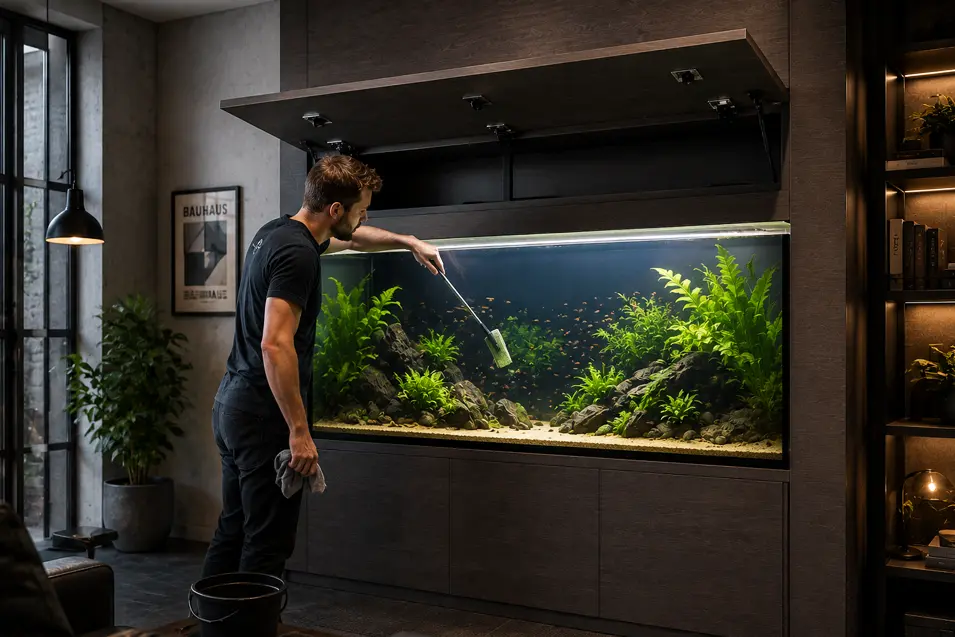
A location that seems acceptable during setup may feel very different after hundreds of water changes.
Planning for:
- Water access
- Storage
- Drainage
- Maintenance routes
can save enormous time and effort over the life of the aquarium.
Conclusion
Water is the foundation of every aquarium, and managing it effectively is one of the most important aspects of successful fishkeeping. While aquarium placement is often driven by aesthetics, water access deserves equal consideration during the planning process.
Convenient access to water sources, efficient water removal methods, and thoughtful maintenance planning can make aquarium ownership significantly easier and more enjoyable. Whether you’re maintaining a small freshwater tank or a large custom installation, investing time in water access planning helps ensure routine care remains simple and sustainable.
The best aquarium is not only beautiful—it is also practical to maintain for years to come.
Frequently Asked Questions
Why is water access important when planning an aquarium?
Water changes, filling, and maintenance require regular access to water. Convenient access makes aquarium care easier and more consistent.
Can I maintain a large aquarium using buckets?
Yes, but many owners find buckets impractical for larger aquariums due to the volume of water involved.
What is the easiest way to perform aquarium water changes?
Many hobbyists use faucet-connected water change systems, utility pumps, or automated systems to simplify maintenance.
Should I place my aquarium near a sink?
Whenever practical, proximity to a sink, utility room, or water source can make maintenance much easier.
Do saltwater aquariums require more water planning?
Often, yes. Saltwater systems may require mixing stations, freshwater top-off systems, and additional water storage solutions.
Related Reading
- Aquarium Electrical Planning: Managing Cords, Heaters, Pumps, and Lighting Safely
- Aquarium Furniture: Stands, Cabinets, and Built-In Storage Solutions
- How Much Does an Aquarium Weigh? Floor, Furniture, and Structural Considerations
- What Happens If an Aquarium Breaks? Preparing for Leaks, Cracks, and Emergencies
- Energy Costs of Owning an Aquarium: What to Expect
- Aquariums in the Home: Design, Placement, Planning, and Practical Living