
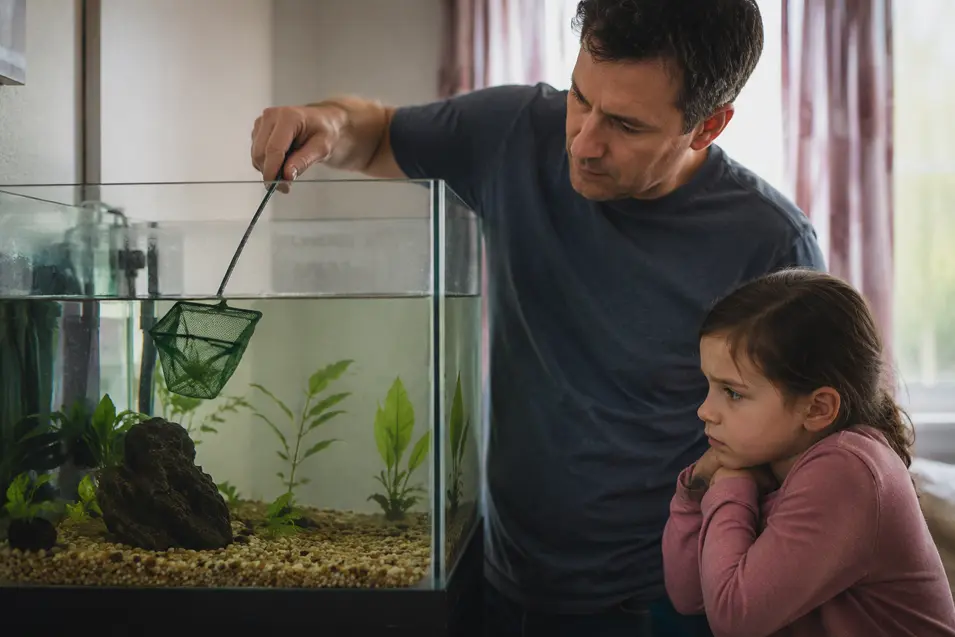
For many children, a pet fish is their first pet and often their first experience with death. While some adults may underestimate the significance of losing a fish, the loss can feel very real and deeply upsetting to a child.
Children often form strong emotional attachments to their aquatic pets. They may help feed them, watch them every day, give them names, and develop routines around caring for them. To a child, a fish isn’t simply part of an aquarium—it is a living companion that has become part of daily life.
When a pet fish dies, parents have an opportunity to help children process grief, understand loss, and develop healthy emotional coping skills. While the conversation may be difficult, it can also become an important learning experience that helps children navigate future losses with compassion and resilience.
Why the Loss of a Fish Can Feel So Significant
Adults sometimes assume that children will quickly move on after losing a fish.
In reality, many children experience genuine grief.
A child may feel sadness because:
- The fish was their pet
- They saw the fish every day
- They helped care for it
- They developed an emotional connection
- The fish was part of their routine
The intensity of grief often depends less on the type of pet and more on the relationship the child had with it.
For some children, the loss of a fish may feel every bit as important as losing any other beloved animal.
Understanding How Children Experience Grief
Children process loss differently than adults.
Depending on age and personality, reactions may include:
- Sadness
- Confusion
- Anger
- Guilt
- Curiosity
- Fear
- Indifference followed by later sadness
Some children cry immediately.
Others ask questions.
Some may seem unaffected at first and only express emotions days later.
All of these reactions can be normal.
Be Honest About What Happened
When discussing the death of a pet fish, honesty is usually the best approach.
Simple, age-appropriate explanations often work best.
For example:
“The fish died today. Its body stopped working, and it can’t swim or eat anymore.”
Clear language helps children understand what happened without creating confusion.
Many experts recommend avoiding phrases such as:
- “The fish went to sleep.”
- “The fish ran away.”
- “The fish is taking a long rest.”
While these phrases may seem comforting, they can sometimes create misunderstandings or unnecessary fears.
Encourage Questions
Children often process difficult situations by asking questions.
Common questions may include:
- Why did the fish die?
- Was it sick?
- Did I do something wrong?
- Will my other fish die?
- Will people die too?
Answer questions honestly while keeping explanations appropriate for the child’s age and emotional readiness.
It’s okay to admit when you don’t have all the answers.
Reassure Children They Are Not to Blame
Many children naturally wonder whether they caused the death.
A child may worry that:
- They forgot to feed the fish
- They tapped on the glass
- They missed a water change
- They somehow did something wrong
Even when these concerns seem irrational to adults, they can feel very real to a child.
Providing reassurance is important.
If the child was not responsible for the fish’s death, explain that fish sometimes become sick, age, or die despite receiving good care.
Allow Children to Express Their Feelings
Every child grieves differently.
Some children may want to talk extensively about the fish.
Others may prefer quiet reflection.
Encourage healthy expression through:
- Conversation
- Drawing pictures
- Writing stories
- Looking at photographs
- Sharing memories
Avoid telling children how they should feel.
Statements such as:
- “It’s only a fish.”
- “You shouldn’t be sad.”
- “We can just buy another one.”
may unintentionally minimize their emotions.
Instead, acknowledge that their feelings are valid.
Use the Experience as a Teaching Opportunity
While loss is painful, it can also provide opportunities for learning.
Children can begin to understand:
- The life cycle of animals
- Responsibility and care
- Empathy
- Compassion
- The reality of loss
These lessons often become valuable foundations for emotional growth.
The goal isn’t to remove sadness but to help children understand and navigate it.
Consider a Simple Goodbye Ritual
Rituals can help children process grief and create a sense of closure.
The ritual doesn’t need to be elaborate.
Ideas include:
- Sharing favorite memories
- Drawing pictures of the fish
- Creating a small memorial
- Writing a goodbye note
- Looking through photographs
- Planting a flower in memory of the fish
The purpose is simply to acknowledge the importance of the pet and the child’s feelings.
Memorializing a Beloved Fish
Some children find comfort in remembering their pet.
Simple memorial ideas include:
Memory Boxes
Create a small box containing:
- Photos
- Drawings
- Written memories
Artwork
Encourage children to draw or paint their fish.
Aquarium Journal
Record stories and memories about the fish’s personality and behavior.
Family Reflection
Share favorite moments together and celebrate the joy the fish brought to the household.
These activities can help shift attention from loss toward appreciation and gratitude.
When Children Want Another Fish Immediately
It’s common for children to ask for a new fish shortly after a loss.
Some children seek comfort through replacement, while others simply miss having a pet.
There is no universal right answer.
Parents may choose to:
- Wait for emotions to settle
- Discuss the responsibilities of fishkeeping
- Evaluate readiness for another pet
A new fish should not be presented as a replacement for the one that died.
Instead, it can be framed as a new pet with its own unique personality and role in the family.
When Grief Lasts Longer Than Expected
Most children gradually adjust after losing a pet fish.
However, some losses may affect children more deeply.
This may be especially true if:
- The fish was owned for many years
- The child recently experienced other losses
- The fish held special meaning
Providing ongoing support, listening, and patience can help children process these emotions over time.
What Children Learn from Pet Loss
Although painful, losing a pet often teaches important life lessons.
Children may develop:
- Greater empathy
- Emotional resilience
- Compassion for animals
- Understanding of life’s natural cycles
These lessons can help prepare them for future experiences while encouraging healthy emotional development.
Supporting the Whole Family
The loss of a pet fish often affects more than one person.
Siblings, parents, and other family members may also feel sadness.
Acknowledging the loss together can strengthen family connections and help children see that grief is a normal part of caring for living creatures.
Sometimes the most helpful response is simply being present and listening.
Conclusion
For a child, the death of a pet fish can be a meaningful and emotional experience. While adults may sometimes underestimate the impact, the loss often represents a child’s first encounter with grief and the realities of life and death.
By responding with honesty, patience, and compassion, parents can help children process their feelings in a healthy way. Encouraging questions, validating emotions, and creating opportunities to remember the fish can provide comfort while teaching valuable life lessons.
Although the loss of a beloved fish is never easy, it can become an opportunity for growth, empathy, and deeper understanding—lessons that often stay with children long after the aquarium has changed.
Frequently Asked Questions
Is it normal for a child to be very upset when a fish dies?
Yes. Children often form strong attachments to their pets, and the loss of a fish can be genuinely painful.
Should I tell my child the truth about the fish dying?
Generally, yes. Honest, age-appropriate explanations help children understand what happened and reduce confusion.
How can I comfort my child after a pet fish dies?
Listen to their feelings, answer questions honestly, offer reassurance, and consider a simple memorial or goodbye ritual.
Should we replace the fish immediately?
There is no right answer. Some families prefer to wait, while others feel ready for a new fish sooner. A new fish should be viewed as a new pet, not a replacement.
What if my child blames themselves for the fish’s death?
Reassure them if they were not responsible and explain that fish sometimes become sick, age, or die even when they receive good care.
Related Reading
- What to Do When a Pet Fish Dies
- Meaningful Ways to Remember a Beloved Fish
- Aquariums in Homes with Young Children
- Pet-Friendly Aquarium Homes: Balancing Fish, Cats, Dogs, and Family Life
- Aquariums and Mental Wellness: Creating Calm Spaces at Home
- Aquariums in the Home: Design, Placement, Planning, and Practical Living