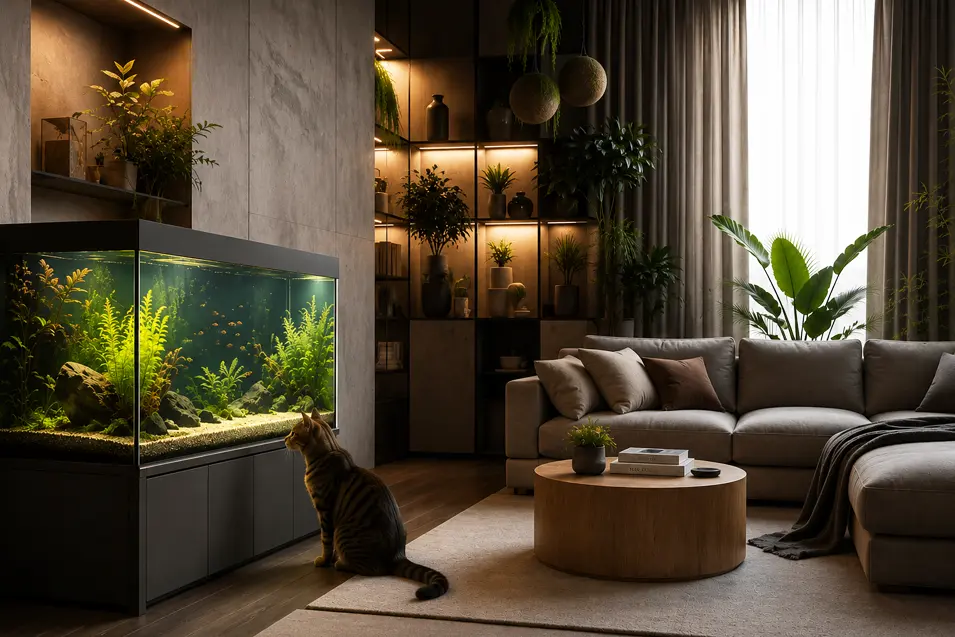
If you’ve ever owned both a cat and an aquarium, you’ve probably witnessed the same scene countless times: a cat sitting motionless in front of a fish tank, eyes locked on the water, carefully tracking every movement inside.
For some cats, watching fish can become a daily activity. They may spend minutes—or even hours—observing the aquarium, following fish from one side of the tank to the other, and occasionally tapping the glass with a paw.
To many owners, this behavior is amusing and endearing. But why are cats so fascinated by fish tanks in the first place?
The answer lies in a combination of instinct, curiosity, mental stimulation, and the unique way cats experience the world around them.
Cats Are Natural Hunters
Even the most pampered house cat retains many of the instincts of its wild ancestors.
Domestic cats are predators by nature. Their survival instincts evolved around identifying movement, tracking prey, and responding quickly to opportunities in their environment.
An aquarium provides exactly the kind of visual stimulation that attracts a cat’s attention.
Fish:
- Move unpredictably
- Change direction suddenly
- Swim at different speeds
- Appear and disappear among decorations
To a cat, this movement can resemble the behavior of prey animals.
The cat may not consciously view the fish as food, but the instinctive urge to observe and track movement remains strong.
Fish Provide Endless Entertainment
Unlike many toys, fish never behave the same way twice.
A fish tank offers a constantly changing display of motion and activity.
Throughout the day, fish may:
- Explore different areas
- Interact with one another
- Chase food
- Hide among plants
- Investigate decorations
This variety keeps the aquarium interesting from a cat’s perspective.
For indoor cats, which may spend much of their time in a relatively predictable environment, an aquarium can become one of the most dynamic features in the home.
Cats Are Drawn to Movement
Cats are highly visual hunters.
Their eyes are particularly sensitive to movement, especially small movements occurring within their field of view.
Even subtle activity inside an aquarium can attract attention.
A fish gliding through the water may trigger the same observational behavior a cat displays when watching:
- Birds outside a window
- Insects on a wall
- Squirrels in the yard
- Moving toys
This doesn’t necessarily mean the cat intends to attack.
Often, the behavior reflects simple curiosity and instinctive observation.
Aquariums Offer Mental Enrichment
Indoor cats benefit from environmental enrichment.
Enrichment refers to activities and experiences that stimulate a cat’s mind and encourage natural behaviors.
Examples include:
- Puzzle feeders
- Climbing structures
- Window perches
- Interactive toys
Aquariums can function as a form of passive enrichment.
Unlike a toy that requires owner participation, an aquarium provides ongoing stimulation throughout the day.
Many cats enjoy quietly observing fish without becoming overly excited or frustrated.
This makes aquariums a unique source of entertainment and mental engagement.
The Appeal of Water
While cats are often associated with avoiding water, many are surprisingly fascinated by it.
Aquariums contain several features that naturally attract feline curiosity:
- Flowing water
- Bubbles
- Surface movement
- Reflections
- Ripples
Combined with fish activity, these elements create a constantly changing visual environment.
For curious cats, the aquarium becomes a source of ongoing investigation.
Why Some Cats Sit for Hours Watching Fish
Some cats seem almost obsessed with aquariums.
This behavior often results from a combination of:
- Natural hunting instincts
- Curiosity
- Visual stimulation
- Habit formation
Cats are creatures of routine.
If they discover that watching fish is enjoyable, they may return to the aquarium repeatedly as part of their daily schedule.
Much like humans enjoy watching a fireplace, garden, or scenic landscape, cats may simply find the experience relaxing and engaging.
Do Cats Want to Catch the Fish?
Sometimes.
Other times, not necessarily.
Cats vary greatly in personality and behavior.
Some cats merely enjoy watching fish and never attempt to interact physically with the aquarium.
Others may:
- Paw at the glass
- Climb onto the stand
- Attempt to access open tanks
- Investigate aquarium equipment
These behaviors often reflect curiosity rather than aggression.
However, because cats are predators, it’s wise to assume that some level of hunting instinct may be involved.
Are Fish Stressed by Cats?
In many cases, fish quickly become accustomed to household activity, including the presence of cats.
However, certain situations can create stress.
Potential problems include:
- Repeated tapping on the glass
- Cats jumping onto the aquarium
- Sudden movements
- Persistent stalking behavior
Shy fish species may hide more frequently if they feel threatened.
Providing plants, rocks, and hiding places helps fish feel secure.
Most well-designed aquariums allow fish to retreat when desired.
Keeping Cats and Fish Safe
The goal is for both pets to coexist safely.
Use a Secure Lid
A strong aquarium lid is one of the best investments for homes with cats.
It helps prevent:
- Curious paws entering the water
- Fish jumping out
- Cats accessing equipment
Stabilize the Aquarium
Cats sometimes jump onto aquarium stands or canopies.
Ensure the aquarium and stand are sturdy enough to handle occasional feline attention.
Discourage Glass Tapping
Repeated tapping may stress fish and encourage unwanted behavior.
Providing alternative forms of enrichment can help redirect the cat’s attention when necessary.
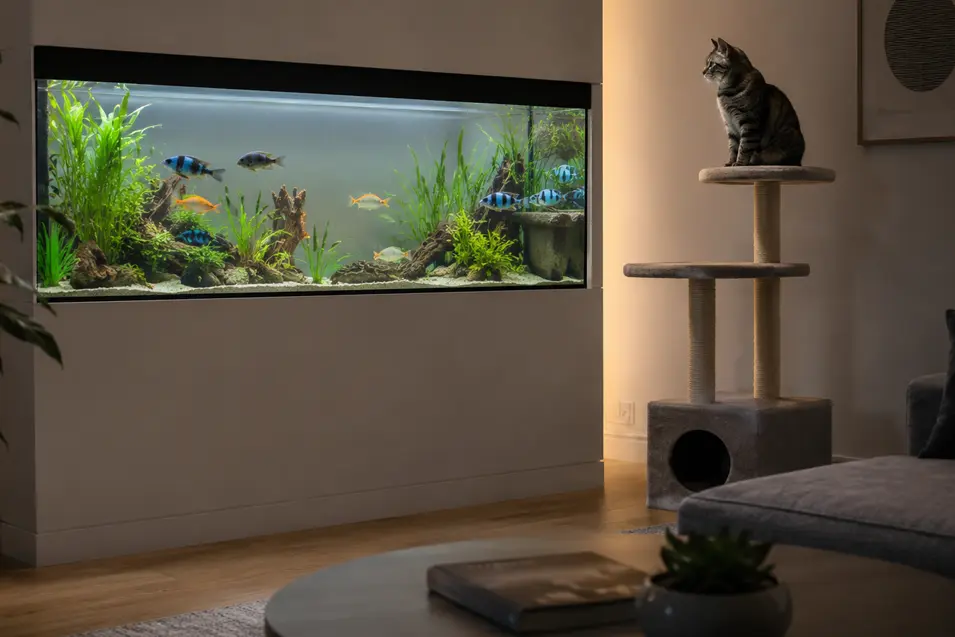
Create Safe Viewing Areas
Many cat owners find success by placing:
- Cat trees
- Window perches
- Comfortable beds
near the aquarium.
This allows cats to enjoy observing the fish without interfering with the tank itself.
Can Aquariums Improve a Cat’s Quality of Life?
For many indoor cats, yes.
Aquariums provide:
- Visual stimulation
- Mental engagement
- Environmental variety
- Opportunities for natural observation
When managed safely, they can become a valuable form of enrichment.
Some cats treat the aquarium almost like a television channel designed specifically for them.
The constant movement and unpredictability keep the experience interesting.
Why Aquarium Owners Often Enjoy the Interaction
Many fishkeepers appreciate watching their cats interact with the aquarium.
The relationship creates an additional layer of enjoyment and often becomes a source of entertainment for the entire household.
It’s common to see:
- Cats choosing favorite viewing spots
- Fish approaching the glass
- Daily observation routines
- Family members laughing at feline reactions
These interactions contribute to the appeal of keeping both cats and aquariums in the same home.
A Natural Combination
Although fish and cats occupy very different worlds, their interaction often highlights the instincts and curiosity that make animals so fascinating.
Cats are naturally drawn to movement, and aquariums provide an endless display of activity.
When managed responsibly, the result is a safe and enriching environment for everyone involved.
Conclusion
Cats love watching fish because aquariums appeal directly to their natural instincts. The movement of fish, the visual stimulation of water, and the opportunity to observe a constantly changing environment create an experience that many cats find irresistible.
For indoor cats, aquariums can provide valuable mental enrichment and entertainment. For aquarium owners, watching a cat become fascinated by a fish tank often adds another enjoyable dimension to the hobby.
With proper precautions, cats and fish can coexist safely, allowing both pets—and their owners—to benefit from the unique relationship between feline curiosity and the underwater world.
Frequently Asked Questions
Why is my cat obsessed with my fish tank?
Cats are naturally attracted to movement and visual stimulation. Fish provide a constantly changing source of entertainment that appeals to their hunting instincts and curiosity.
Do cats see fish as prey?
Some cats may view fish as potential prey, while others simply enjoy observing them. Individual personalities and behaviors vary.
Can fish become stressed by cats?
Fish can become stressed if cats repeatedly tap the glass, jump on the aquarium, or create frequent disturbances. Providing hiding places helps fish feel secure.
How can I stop my cat from bothering my aquarium?
Use a secure lid, discourage glass tapping, provide alternative enrichment, and create safe viewing areas where the cat can observe without interfering.
Are aquariums good enrichment for indoor cats?
Yes. Aquariums provide visual stimulation and mental engagement that many indoor cats find enjoyable and entertaining.
Related Reading
- Keeping Aquariums Safe Around Cats and Dogs
- Pet-Friendly Aquarium Homes: Balancing Fish, Cats, Dogs, and Family Life
- Aquariums in Homes with Young Children
- The Relaxation Benefits of Aquariums: Why People Love Watching Fish
- Aquariums and Mental Wellness: Creating Calm Spaces at Home
- Aquariums in the Home: Design, Placement, Planning, and Practical Living