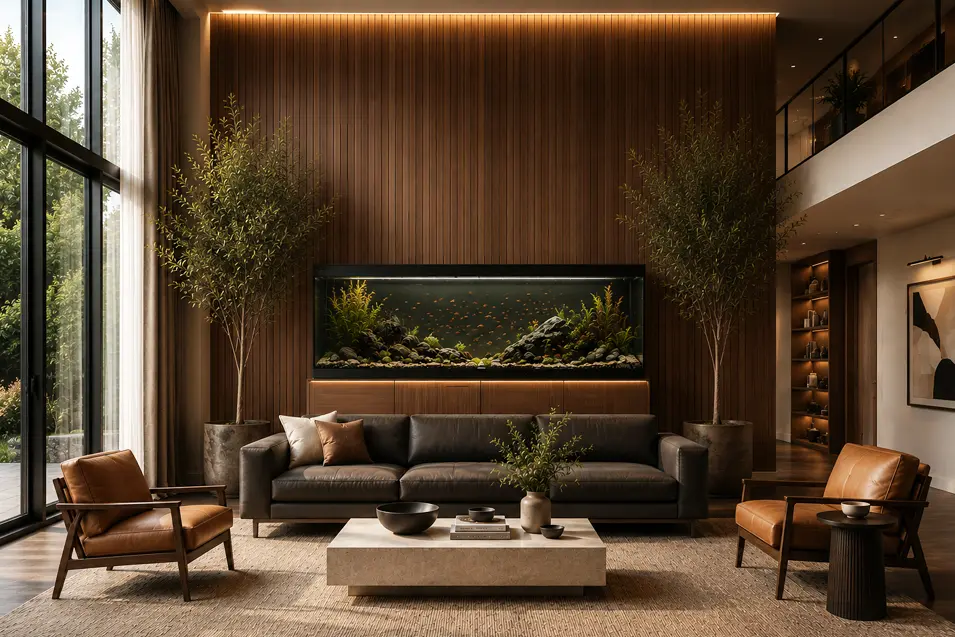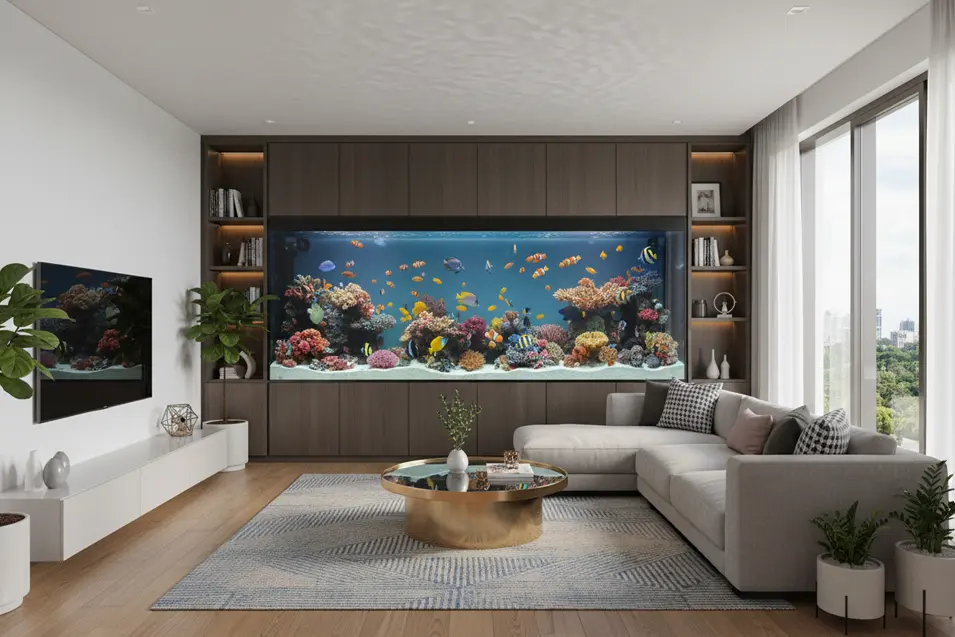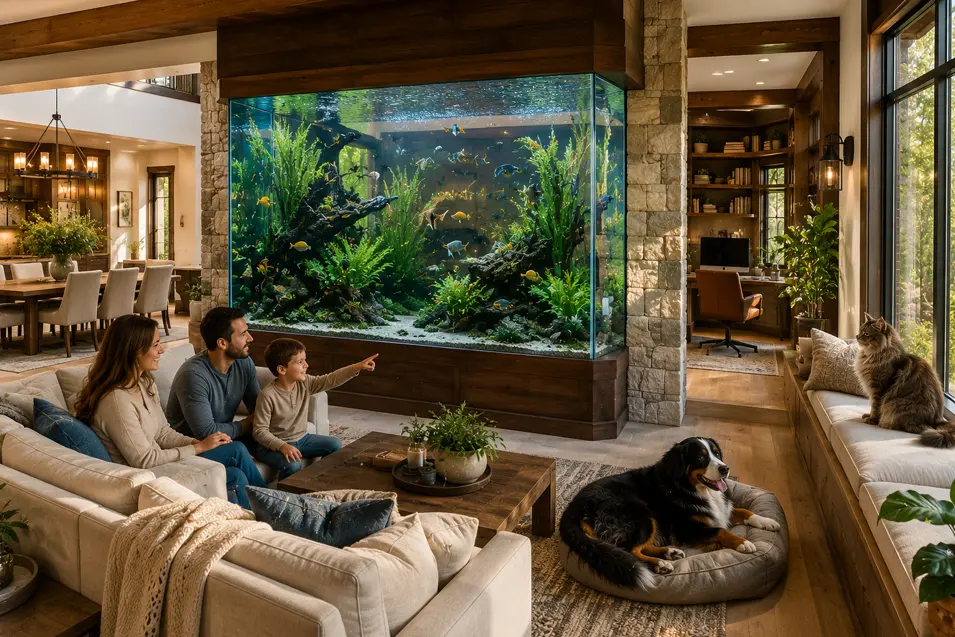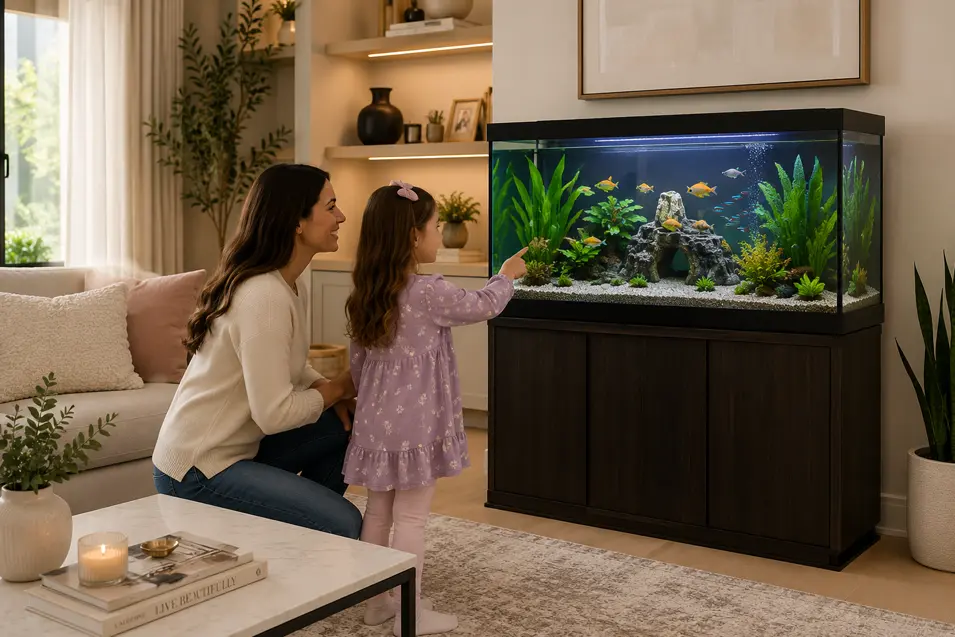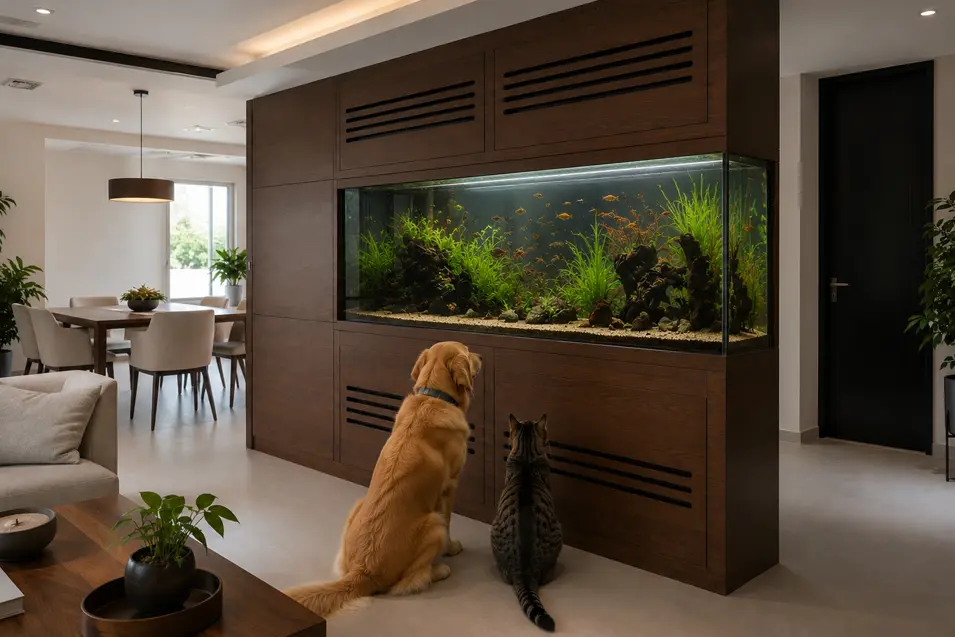
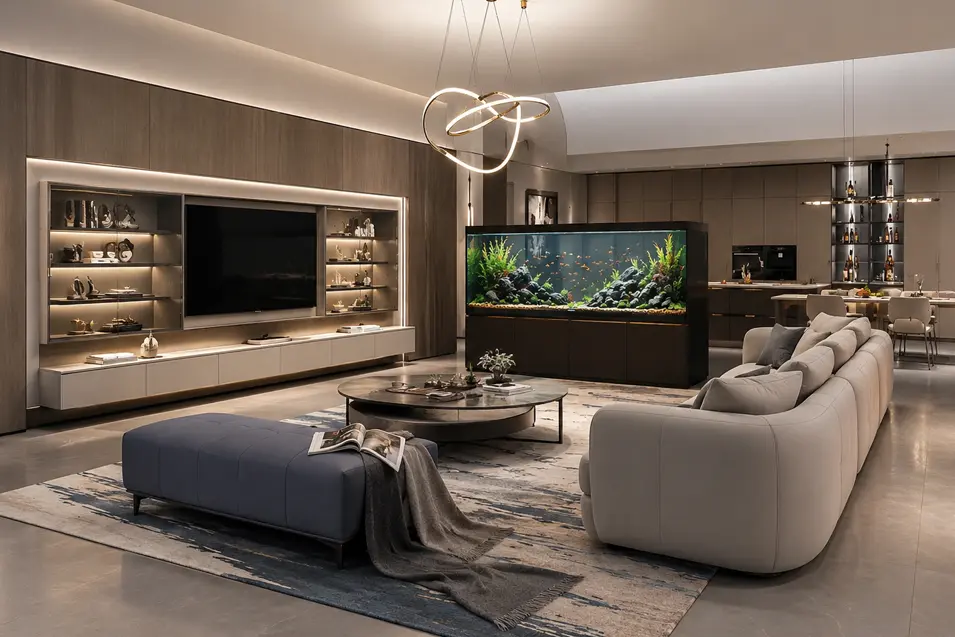
Aquariums have long been used as focal points in homes, but few designs create as much visual impact as a room divider aquarium. Unlike traditional aquariums placed against a wall, room divider tanks serve two purposes at once: they provide a stunning aquatic display while helping define separate living areas.
In modern homes, especially those with open-concept floor plans, room divider aquariums offer a creative way to establish boundaries without blocking light, views, or the sense of spaciousness that homeowners value. Whether incorporated into a custom-built wall, positioned as a freestanding centerpiece, or integrated into cabinetry, these aquariums transform ordinary spaces into living works of art.
When carefully planned, a room divider aquarium can become one of the most impressive and functional design features in an entire home.
What Is a Room Divider Aquarium?
A room divider aquarium is a fish tank designed to separate two spaces while remaining viewable from multiple sides.
Unlike standard aquariums that are typically viewed from the front, room divider tanks often feature:
- Two-sided viewing
- Three-sided viewing
- Peninsula-style layouts
- Floor-to-ceiling installations
- Partial wall integrations
These aquariums allow people in different parts of a home to enjoy the display simultaneously while maintaining visual connection between spaces.
They are especially popular in:
- Open-concept homes
- Luxury residences
- Condominiums
- Modern apartments
- Professional offices
Why Room Divider Aquariums Are So Popular
One of the greatest challenges in modern home design is balancing openness with functionality.
Open-concept homes create bright, airy spaces, but they can sometimes lack definition between living areas. A room divider aquarium solves this problem beautifully.
Rather than constructing a solid wall, homeowners can create separation while preserving:
- Natural light flow
- Sightlines
- Spaciousness
- Architectural interest
The result feels both elegant and inviting.
Additionally, aquariums naturally attract attention and become conversation pieces for guests and family members alike.
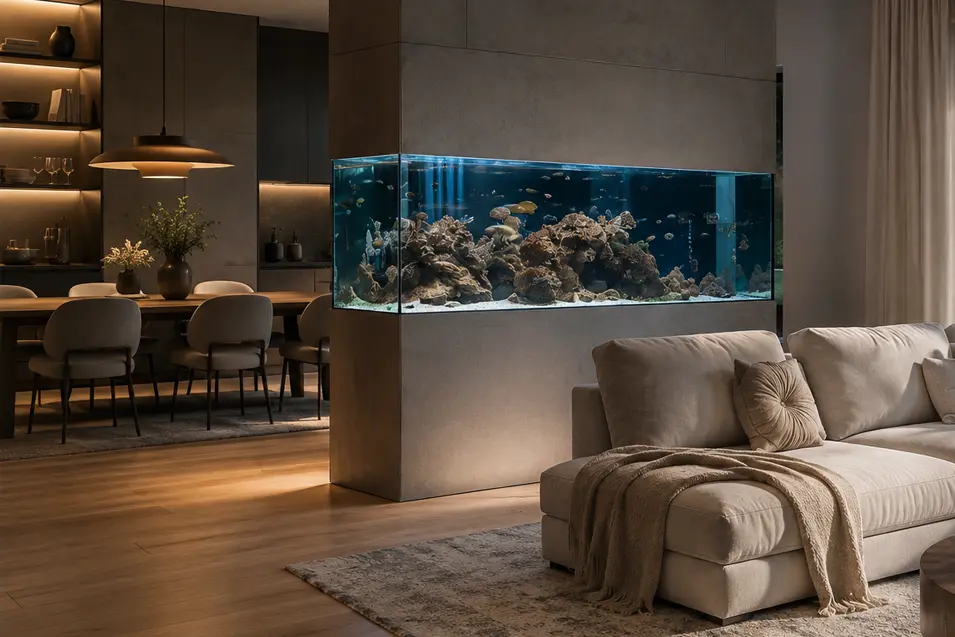
Benefits of Room Divider Aquariums
Create Defined Spaces Without Closing Rooms Off
One of the biggest advantages of room divider aquariums is their ability to create visual boundaries.
For example, an aquarium may separate:
- Living rooms and dining rooms
- Kitchens and family rooms
- Entryways and living spaces
- Home offices and common areas
Unlike traditional walls, the aquarium maintains openness while subtly organizing the room.
Add Movement and Life to Interior Design
Most room dividers are static.
Aquariums add:
- Movement
- Color
- Texture
- Natural beauty
Fish swimming through a thoughtfully designed aquascape create a dynamic visual experience that changes throughout the day.
This living element helps make spaces feel more vibrant and engaging.
Increase Natural Light Flow
Traditional partition walls block light.
Aquariums allow light to pass through, helping maintain bright and welcoming interiors.
This is especially valuable in open-concept homes where preserving natural illumination is often a design priority.
Provide Multiple Viewing Angles
A traditional aquarium is usually enjoyed from one primary perspective.
Room divider aquariums offer views from multiple directions, creating a more immersive experience.
This makes aquascaping particularly important, as both sides of the aquarium become part of the display.
Popular Room Divider Aquarium Designs
There are several approaches homeowners can take depending on their goals and available space.
Peninsula Aquariums
Peninsula tanks extend outward from a wall or cabinet and are visible from three sides.
These are among the most popular room divider designs because they combine excellent visibility with relatively straightforward installation.
Peninsula aquariums work especially well between:
- Kitchens and family rooms
- Living rooms and dining areas
- Open-concept entertaining spaces
Built-In Divider Aquariums
Custom-built aquarium walls can serve as dramatic architectural features.
These installations often incorporate:
- Cabinetry
- Stonework
- Decorative framing
- Hidden equipment rooms
The aquarium becomes part of the home’s permanent structure while serving as a functional partition.
Freestanding Divider Aquariums
Some homeowners prefer large freestanding aquariums positioned strategically between spaces.
This approach provides greater flexibility while avoiding major renovations.
Freestanding divider tanks can often be relocated if room layouts change in the future.
Floor-to-Ceiling Aquarium Walls
For maximum visual impact, some luxury homes feature aquarium walls that extend from floor to ceiling.
These installations create breathtaking displays and often become the defining feature of an entire home.
However, they require significant structural planning and professional installation.
Designing an Aquarium for Multi-Sided Viewing
Designing a room divider aquarium differs from designing a standard tank.
Because the aquarium is visible from multiple directions, every angle matters.
Avoid Flat Backgrounds
Traditional aquarium backgrounds often appear unnatural in divider tanks.
Instead, focus on creating depth using:
- Rock formations
- Driftwood
- Live plants
- Open swimming areas
The goal is to create visual interest from every viewing perspective.
Hide Equipment Carefully
Equipment placement becomes especially important.
Visible:
- Intake tubes
- Heaters
- Powerheads
- Airline tubing
can distract from the display.
Many room divider aquariums use:
- Hidden overflow systems
- External filtration
- Remote sumps
- Concealed plumbing
to maintain a clean appearance.
Consider Fish Behavior
Not every fish species is ideal for highly exposed aquariums.
Some shy species prefer visual barriers and hiding spaces.
Providing adequate cover helps fish feel secure while still allowing excellent visibility for viewers.
Structural and Practical Considerations
While room divider aquariums are beautiful, they require thoughtful planning.
Weight Matters
Water is heavy.
A large room divider aquarium may weigh:
- Hundreds of pounds
- Thousands of pounds for larger systems
Proper floor support is essential.
Homeowners planning large installations should verify that the structure can safely support the load.
Maintenance Access
Maintenance is often overlooked during the design phase.
Ensure there is sufficient access for:
- Cleaning
- Water changes
- Equipment servicing
- Fish care
A stunning aquarium becomes frustrating quickly if basic maintenance tasks are difficult to perform.
Electrical Planning
Room divider aquariums require power for:
- Filters
- Heaters
- Pumps
- Lighting
- Controllers
Electrical outlets should be strategically located and protected from water exposure.
Planning ahead helps keep cords hidden and organized.
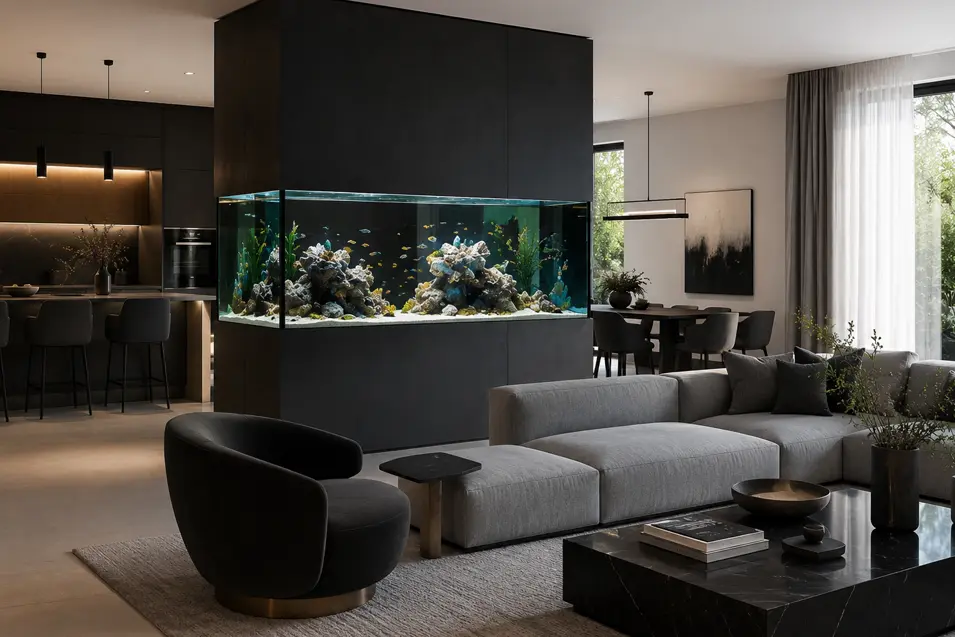
Freshwater or Saltwater Room Divider Aquariums?
Both freshwater and saltwater systems can work beautifully as room dividers.
Freshwater Advantages
- Lower setup costs
- Easier maintenance
- Wide variety of plants
- Flexible aquascaping options
Saltwater Advantages
- Vibrant colors
- Reef displays
- Unique marine species
- Exceptional visual impact
The best choice depends on budget, experience level, and desired appearance.
Ideal Locations for Room Divider Aquariums
Successful installations often separate spaces that naturally flow together.
Popular locations include:
- Living room and dining room
- Kitchen and family room
- Entryway and main living area
- Home office and common space
- Entertainment room and lounge area
The aquarium should feel integrated into daily life rather than positioned as an obstacle.
Conclusion
Room divider aquariums offer a unique combination of beauty and functionality. They define spaces without sacrificing openness, introduce movement and nature into the home, and create unforgettable focal points that can be enjoyed from multiple rooms.
Whether you choose a peninsula aquarium, a custom built-in installation, or a freestanding divider tank, careful planning is essential. Structural support, maintenance access, equipment concealment, and thoughtful aquascaping all contribute to long-term success.
When designed properly, a room divider aquarium becomes much more than a fish tank—it becomes an architectural feature that enhances the way people experience and enjoy their living spaces.
Frequently Asked Questions
What is a room divider aquarium?
A room divider aquarium is a fish tank designed to separate two spaces while remaining visible from multiple sides, allowing it to function as both a decorative feature and a room partition.
Are room divider aquariums difficult to maintain?
They can require more planning than traditional aquariums, particularly when it comes to equipment placement and maintenance access. Proper design helps simplify ongoing care.
Can a room divider aquarium be freestanding?
Yes. Many room divider aquariums are freestanding and positioned strategically between living spaces without being built into walls.
What fish work best in room divider aquariums?
Many community fish, schooling species, and reef fish do well in room divider tanks. The best choice depends on tank size, aquascaping, and overall aquarium goals.
Are room divider aquariums good for open-concept homes?
Absolutely. They are one of the most effective ways to define living spaces while maintaining openness, visibility, and natural light flow.
Related Reading
- Aquariums in the Home: Design, Placement, Planning, and Practical Living
- Built-In Aquariums vs. Freestanding Aquariums: Pros and Cons
- Designing a Built-In Aquarium Wall
- Aquariums as Statement Pieces in Home Design
- Open Concept Homes and Aquarium Placement
- Luxury Home Aquariums: Inspiration and Planning Ideas