For many aquarium enthusiasts, choosing the fish is the fun part. But before selecting species, decorations, or filtration systems, there’s an important question to answer: what type of aquarium installation best suits your home?
Most homeowners choose between two primary options: a built-in aquarium that becomes part of the home’s architecture, or a freestanding aquarium that sits on a dedicated stand or cabinet. Both approaches can create beautiful aquatic displays, but they differ significantly in cost, flexibility, maintenance, and overall impact on a living space.
Understanding the advantages and disadvantages of each can help you make the right choice for your lifestyle, budget, and long-term goals.
What Is a Built-In Aquarium?
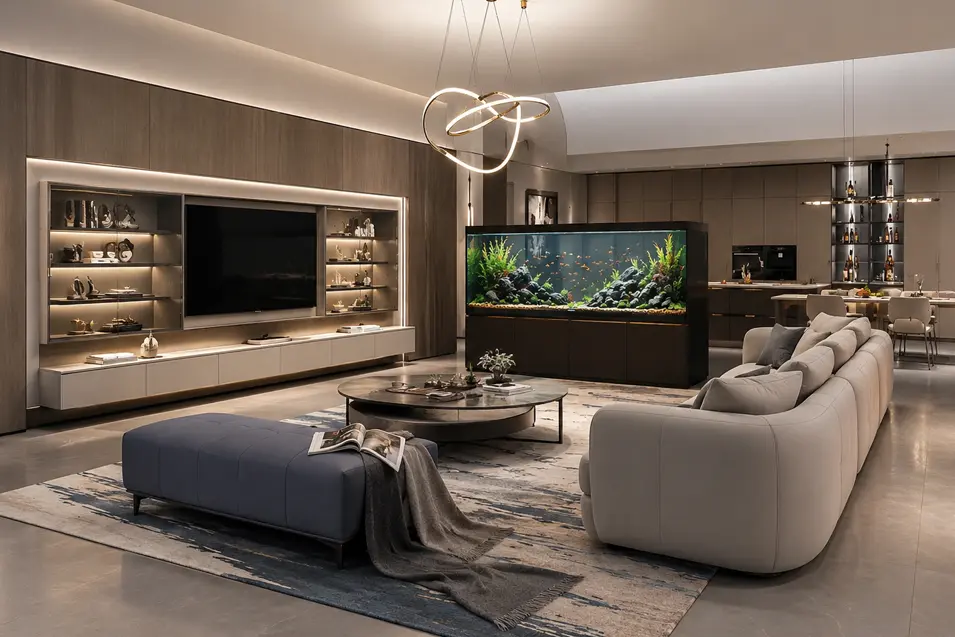
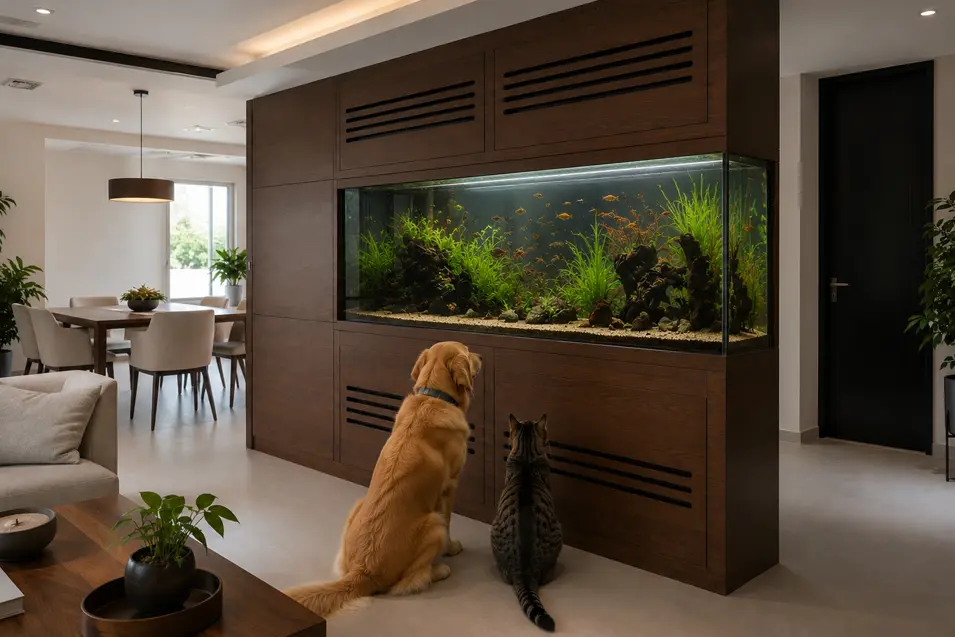
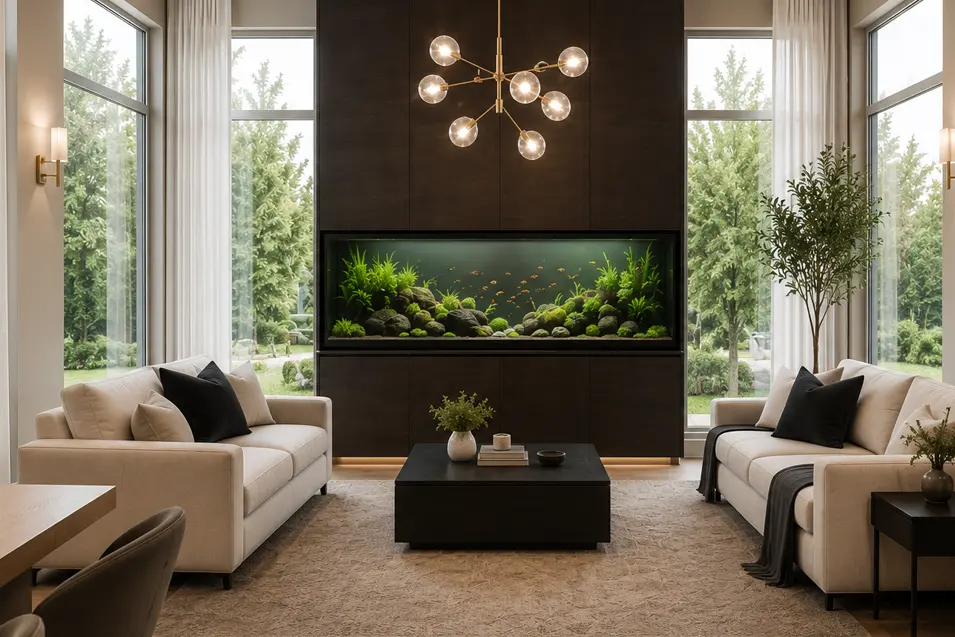
A built-in aquarium is integrated into the structure of a home. It may be recessed into a wall, incorporated into cabinetry, built into a room divider, or designed as part of a custom renovation.
These installations are often intended to appear permanent and become a focal point within the home’s design.
Built-in aquariums are commonly found in:
- Luxury homes
- Custom renovations
- Office spaces
- Hotels and restaurants
- Dedicated aquarium rooms
Because they are incorporated into the architecture, built-in aquariums often create a seamless, high-end appearance.
What Is a Freestanding Aquarium?
A freestanding aquarium sits on a stand, cabinet, or purpose-built aquarium furniture.
This is the most common aquarium setup found in homes because it offers flexibility and requires no structural modifications.
Freestanding aquariums range from small nano tanks to massive custom systems exceeding several hundred gallons.
They can be placed in:
- Living rooms
- Home offices
- Bedrooms
- Family rooms
- Entryways
Unlike built-in systems, freestanding tanks can often be relocated if household needs change.
Advantages of Built-In Aquariums
Built-in aquariums offer a dramatic visual impact that is difficult to match.
Stunning Visual Appeal
One of the biggest reasons homeowners choose built-in aquariums is aesthetics.
A properly designed built-in tank appears less like a piece of equipment and more like living artwork. The aquarium becomes part of the room itself rather than an object placed within it.
This creates a clean, sophisticated appearance that enhances interior design.
Better Integration with Home Design
Built-in aquariums can be customized to match:
- Cabinetry
- Wall finishes
- Lighting systems
- Architectural styles
- Furniture layouts
The result is a cohesive look that feels intentional and professionally designed.
Hidden Equipment
One major advantage is the ability to conceal equipment.
Filters, plumbing, electrical connections, and maintenance supplies can often be hidden behind walls, in adjacent cabinets, or within dedicated equipment rooms.
This creates a cleaner appearance and eliminates much of the visual clutter associated with aquarium ownership.
Increased Property Appeal
Well-designed built-in aquariums can become memorable features that differentiate a home.
While not every buyer may want an aquarium, luxury architectural features often create strong visual impressions during showings.
Disadvantages of Built-In Aquariums
Despite their beauty, built-in systems come with significant challenges.
Higher Initial Cost
Custom installation often requires:
- Construction work
- Electrical upgrades
- Cabinetry
- Structural modifications
- Professional design services
The aquarium itself may represent only a portion of the total project cost.
Limited Flexibility
Once installed, moving a built-in aquarium is rarely practical.
If you decide to redesign a room, relocate, or change aquarium sizes, modifications can become expensive and complicated.
More Complex Maintenance
Many built-in systems are designed with appearance as the priority.
Unfortunately, maintenance access is sometimes overlooked.
Tasks such as:
- Cleaning glass
- Servicing filters
- Catching fish
- Replacing equipment
can become more difficult if adequate access wasn’t included during the design process.
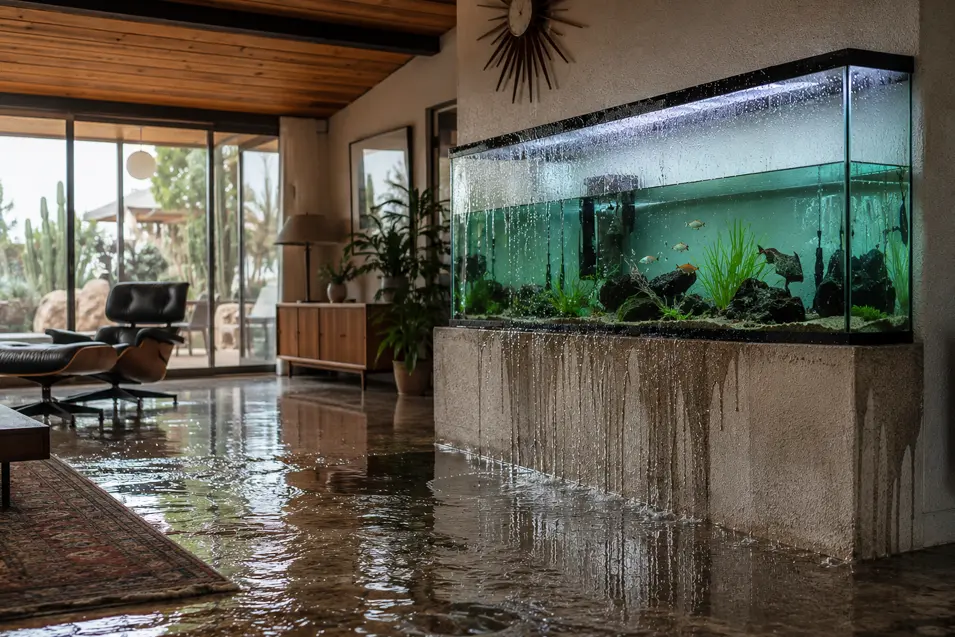
Potential Structural Challenges
Large built-in aquariums often require evaluation of:
- Floor strength
- Wall framing
- Electrical capacity
- Water access
These considerations add complexity compared to standard installations.
Advantages of Freestanding Aquariums
Freestanding aquariums remain popular for good reason.
Greater Flexibility
A freestanding aquarium can often be moved to another room or replaced with a different size as your interests evolve.
This flexibility is particularly valuable for new hobbyists who may eventually upgrade.
Lower Installation Costs
Most freestanding systems require only:
- An aquarium stand
- Nearby electrical outlets
- Basic setup equipment
This significantly reduces startup costs.
Easier Access for Maintenance
Maintenance is typically more straightforward because all sides of the aquarium remain accessible.
This makes routine tasks faster and less frustrating.
More Choices Available
Manufacturers offer thousands of freestanding aquarium options in different:
- Sizes
- Shapes
- Materials
- Styles
Homeowners can often find a solution that fits both their budget and available space.
Easier to Upgrade
Many hobbyists eventually want a larger aquarium.
Replacing a freestanding tank is usually far easier than modifying a built-in installation.
Disadvantages of Freestanding Aquariums
Freestanding aquariums also have limitations.
Visible Equipment
Even with careful planning, some equipment remains visible.
Power cords, filters, tubing, and accessories can sometimes detract from the overall appearance.
Occupies Floor Space
Freestanding aquariums require dedicated floor space and may limit furniture placement within a room.
Large tanks can become dominant visual elements rather than seamlessly blending into the design.
Less Architectural Impact
Although many freestanding aquariums are stunning, they generally do not create the same dramatic custom appearance as a professionally integrated built-in system.
Which Option Is Better for Families?
For many families, freestanding aquariums provide the best balance of affordability, flexibility, and practicality.
Children’s interests change, room layouts evolve, and homeowners may relocate in the future. A freestanding system allows greater adaptability without major renovations.
However, homeowners planning long-term custom renovations may find that a built-in aquarium becomes a unique centerpiece for family living spaces.
Which Option Is Better for Large Aquariums?
The answer depends on the goal.
Large freestanding aquariums are often easier to maintain and upgrade.
Large built-in aquariums offer unparalleled visual impact and can transform entire rooms when properly designed.
The key is ensuring adequate structural support and maintenance access regardless of installation type.
Questions to Ask Before Choosing
Before making a decision, consider:
- Is this a long-term home?
- What is my budget?
- How important is flexibility?
- How much maintenance access will I need?
- Do I want the aquarium to stand out or blend in?
- Will I likely upgrade in the future?
Answering these questions often makes the best choice clear.
Conclusion
Both built-in and freestanding aquariums can create beautiful aquatic displays, but they serve different purposes. Built-in aquariums excel in aesthetics, architectural integration, and creating dramatic focal points. Freestanding aquariums offer flexibility, lower costs, easier maintenance, and greater adaptability over time.
For many homeowners, a freestanding aquarium provides the most practical solution. For those building a dream home or undertaking a major renovation, a thoughtfully designed built-in aquarium can become one of the most impressive features in the entire house.
The best choice is the one that aligns with your lifestyle, budget, and long-term vision for living with fish.
Frequently Asked Questions
Are built-in aquariums more expensive than freestanding aquariums?
Yes. Built-in aquariums typically require construction, cabinetry, electrical work, and custom installation, making them significantly more expensive.
Can a built-in aquarium be removed later?
It can, but removal often requires repairs to walls, cabinetry, flooring, or surrounding finishes.
Are freestanding aquariums easier to maintain?
In most cases, yes. Freestanding aquariums usually provide easier access to equipment and all sides of the tank.
Do built-in aquariums increase home value?
Not necessarily, but they can increase a home’s visual appeal and make it stand out to prospective buyers.
Which type is best for beginners?
Freestanding aquariums are generally the better choice for beginners because they are less expensive, easier to install, and more flexible.
Related Reading
- Aquariums in the Home: Design, Placement, Planning, and Practical Living
- Designing a Built-In Aquarium Wall
- Room Divider Aquariums: Beautiful Living Spaces with Fish
- Aquariums as Statement Pieces in Home Design
- Open Concept Homes and Aquarium Placement
- Aquarium Furniture: Stands, Cabinets, and Built-In Storage Solutions