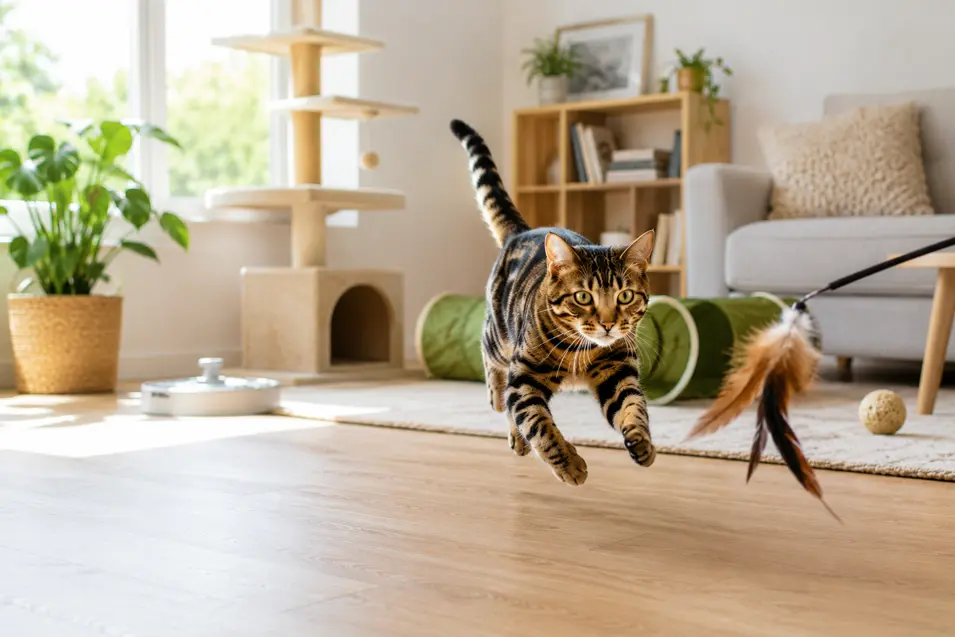
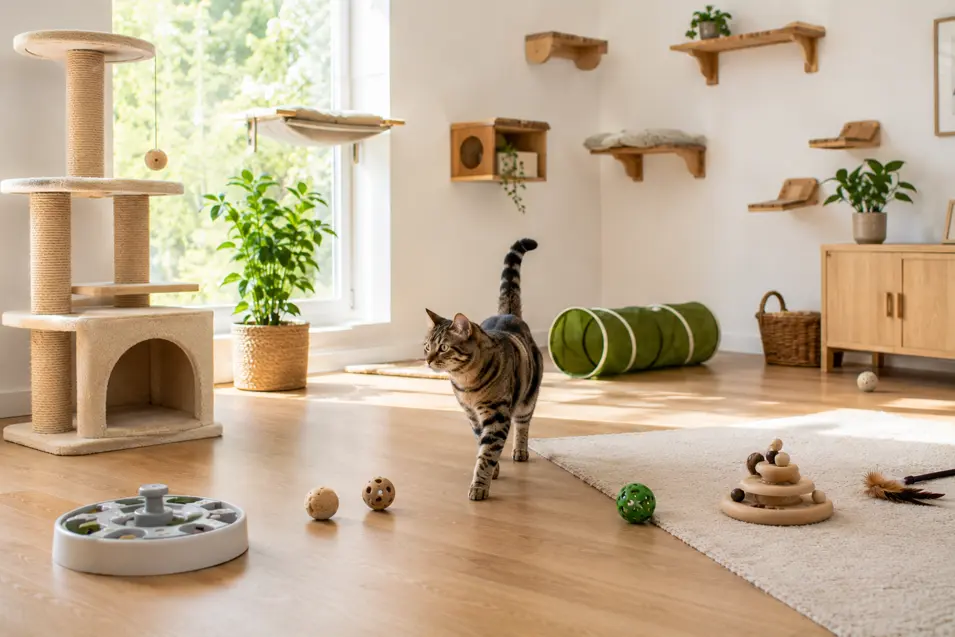
Indoor cats enjoy many advantages, including protection from traffic, predators, diseases, and harsh weather. However, life indoors can sometimes lack the mental and physical stimulation cats naturally experience outdoors. Without opportunities to climb, hunt, explore, and play, indoor cats may become bored, stressed, overweight, or develop unwanted behaviors.
Fortunately, indoor cat enrichment can transform your home into an exciting and stimulating environment that supports your cat’s physical health and emotional well-being.
This guide explores the most effective ways to enrich your indoor cat’s life, from interactive play and climbing opportunities to puzzle feeders and dedicated cat spaces.
What Is Cat Enrichment?
Cat enrichment refers to activities, environments, and experiences that encourage natural feline behaviors. In the wild, cats spend much of their day hunting, exploring territory, climbing, observing their surroundings, and solving problems.
Indoor enrichment helps satisfy these instincts by providing opportunities for:
- Physical exercise
- Mental stimulation
- Exploration
- Hunting and foraging behaviors
- Social interaction
- Environmental variety
A well-enriched cat is often happier, healthier, and less likely to develop behavioral problems.
Why Indoor Cats Need Enrichment
Although indoor living is generally safer, it can also be less stimulating than outdoor life.
Without adequate enrichment, some cats may:
- Gain excess weight
- Become lethargic
- Overgroom
- Scratch furniture
- Meow excessively
- Develop anxiety-related behaviors
- Show signs of frustration or boredom
Providing daily enrichment helps prevent these issues while improving overall quality of life.
Signs Your Indoor Cat May Be Bored
Cats don’t always express boredom in obvious ways.
Common signs include:
- Sleeping excessively
- Increased vocalization
- Attention-seeking behavior
- Destructive scratching
- Chasing other pets
- Overeating
- Lack of interest in toys
- Restlessness
If your cat exhibits these behaviors, increasing environmental enrichment may help.
Related Reading: Signs Your Indoor Cat Is Bored and How to Help
Interactive Play: The Foundation of Enrichment
Daily interactive play is one of the most effective ways to keep indoor cats active and mentally engaged.
Cats are natural hunters. Toys that mimic prey movements help satisfy instincts to stalk, chase, pounce, and capture.
Popular interactive toys include:
- Feather wand toys
- Fishing-pole style toys
- Interactive balls
- Electronic motion toys
- Laser pointers (used responsibly)
- Crinkle toys and toy mice
Aim for two or three short play sessions each day rather than one long session.
Related Reading: Best Interactive Toys for Indoor Cats
Encourage Natural Hunting Behaviors
Hunting is mentally stimulating and physically demanding.
You can encourage these instincts through:
- Treat hunts
- Food puzzles
- Hide-and-seek games
- Rotating toy locations
- Foraging activities
When cats work for their food, they remain more engaged and active throughout the day.
Puzzle Feeders and Food Enrichment
Puzzle feeders turn mealtime into a mentally stimulating activity.
Instead of eating from a bowl in seconds, cats must solve a challenge to access food or treats.
Benefits include:
- Slower eating
- Increased activity
- Reduced boredom
- Mental stimulation
- Weight management support
Many cats quickly learn to enjoy the challenge.
Related Reading: Puzzle Feeders for Cats
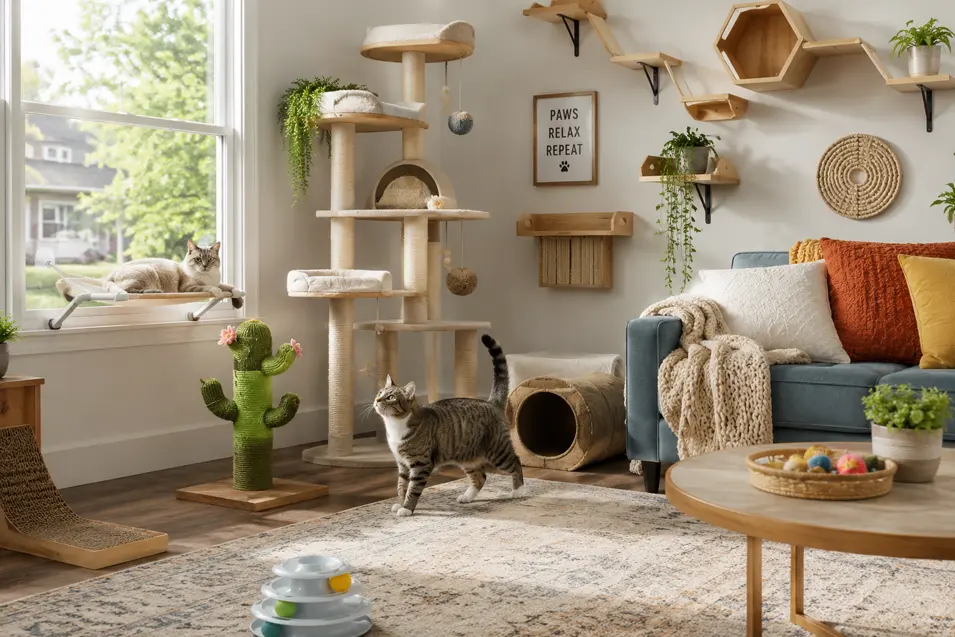
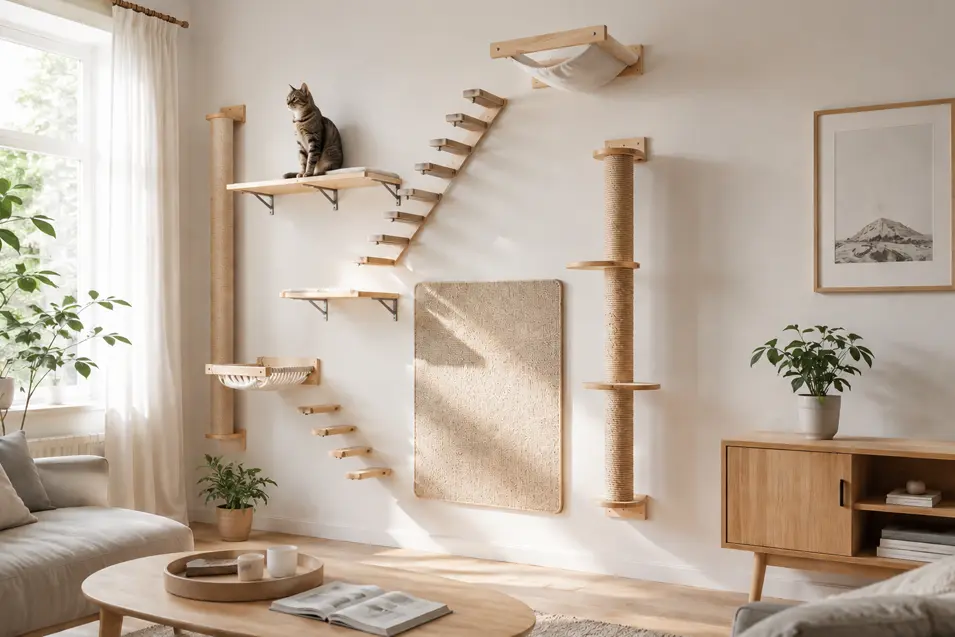
Vertical Enrichment: Think Up, Not Out
Cats naturally seek elevated spaces.
Providing vertical territory can help cats feel more secure while encouraging movement and exploration.
Options include:
- Cat trees
- Wall-mounted shelves
- Cat bridges
- Window perches
- Multi-level climbing structures
Vertical enrichment is especially valuable in apartments and smaller homes.
Related Reading: Cat Climbing Walls and Shelves: Ideas for Vertical Enrichment
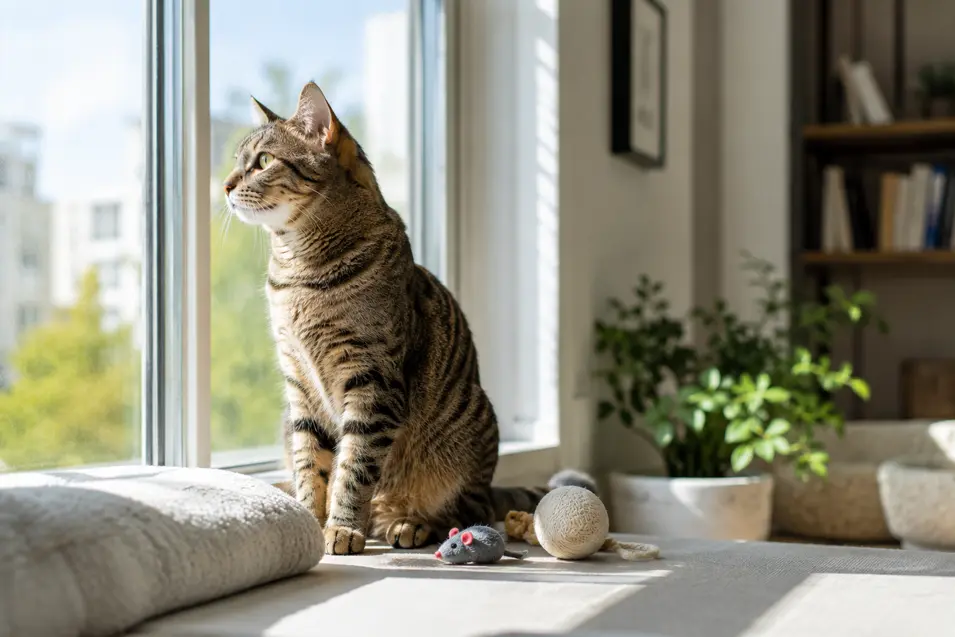
Window Views and Outdoor Observation
A simple window can provide hours of entertainment.
Cats enjoy watching:
- Birds
- Squirrels
- Insects
- People
- Weather changes
Adding a comfortable window perch can create a favorite observation station while satisfying curiosity.
For additional stimulation, consider placing bird feeders outside visible windows.
Related Reading: Window Perches for Cats
Create a Dedicated Cat Space
Some cat owners choose to create an entire room or area dedicated to feline enrichment.
A cat room may include:
- Climbing shelves
- Cat trees
- Hiding spaces
- Window seating
- Puzzle feeders
- Interactive toys
- Scratching posts
Even a small corner of a room can become a stimulating feline retreat.
Related Reading: Creating the Ultimate Cat Room
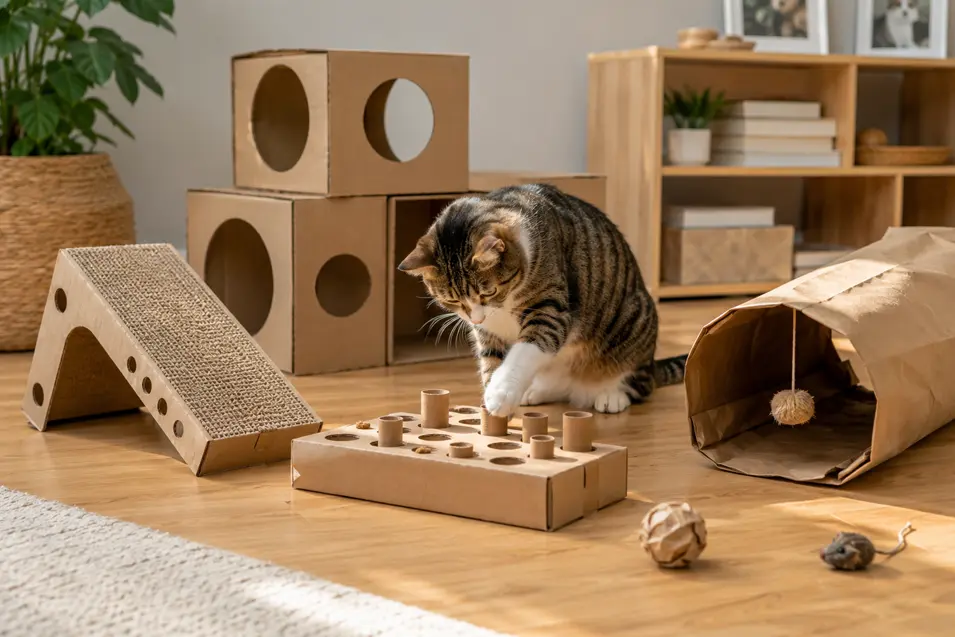
DIY Cat Enrichment Ideas
Enrichment doesn’t have to be expensive.
Many effective enrichment projects can be made using common household items.
Popular DIY ideas include:
- Cardboard forts
- Paper bag exploration zones
- Homemade puzzle feeders
- Toy rotation stations
- Treat-hunting games
- DIY tunnels
Simple projects often provide just as much enjoyment as store-bought alternatives.
Related Reading: DIY Indoor Cat Enrichment Ideas
Cat Grass and Safe Indoor Plants
Plants can add both beauty and enrichment to an indoor environment.
Many cats enjoy:
- Sniffing plants
- Chewing cat grass
- Exploring new textures
- Resting near greenery
Safe options include:
- Cat grass
- Spider plants
- Boston ferns
- Calatheas
- Parlor palms
Always verify that any plant introduced into your home is non-toxic to cats.
Related Reading:
- Cat Grass Benefits: Why Many Cats Love This Safe Indoor Plant
- Cat-Safe Houseplants: Indoor Plants Safe for Cats
Keeping Indoor Cats Active and Preventing Weight Gain
Weight gain is one of the most common health concerns among indoor cats.
Regular activity helps maintain:
- Healthy body weight
- Muscle tone
- Joint mobility
- Cardiovascular health
Strategies include:
- Daily play sessions
- Food puzzles
- Climbing opportunities
- Rotating toys
- Exercise wheels (for some cats)
- Multiple enrichment stations throughout the home
Small increases in daily movement can make a significant difference over time.
Related Reading: How to Keep Indoor Cats Active and Prevent Weight Gain
Enrichment for Senior Cats
Older cats benefit from enrichment just as much as younger cats, although their needs may differ.
Senior-friendly enrichment ideas include:
- Easy-access window perches
- Low-impact interactive play
- Simple puzzle feeders
- Comfortable observation spots
- Pet stairs to favorite locations
Mental stimulation remains important throughout a cat’s life and may help support cognitive health as cats age.
Related Reading: Enrichment for Senior Cats
Rotate Toys and Activities Regularly
One of the easiest ways to increase enrichment is by rotating toys.
Instead of leaving every toy available all the time:
- Store some toys away
- Rotate weekly
- Introduce occasional novelty items
- Change play locations
This helps maintain interest and prevents toys from becoming ignored.
Building an Enrichment Routine
Consistency is often more important than complexity.
A simple daily enrichment routine might include:
Morning:
- Puzzle feeder breakfast
- Window observation time
Afternoon:
- Independent toys
- Climbing opportunities
Evening:
- Interactive play session
- Treat hunt
- Relaxation and social interaction
Even a few minutes of purposeful enrichment each day can significantly improve your cat’s quality of life.
Final Thoughts
Indoor cats thrive when their environment supports their natural instincts. By providing opportunities to climb, explore, hunt, observe, and play, you can help prevent boredom while supporting both physical and emotional health.
Whether you start with a puzzle feeder, a window perch, a cat tree, or a simple DIY project, every enrichment opportunity contributes to a happier and healthier indoor cat.
The goal isn’t to recreate the outdoors—it’s to create an indoor environment where your cat can live a fulfilling, active, and enriched life.