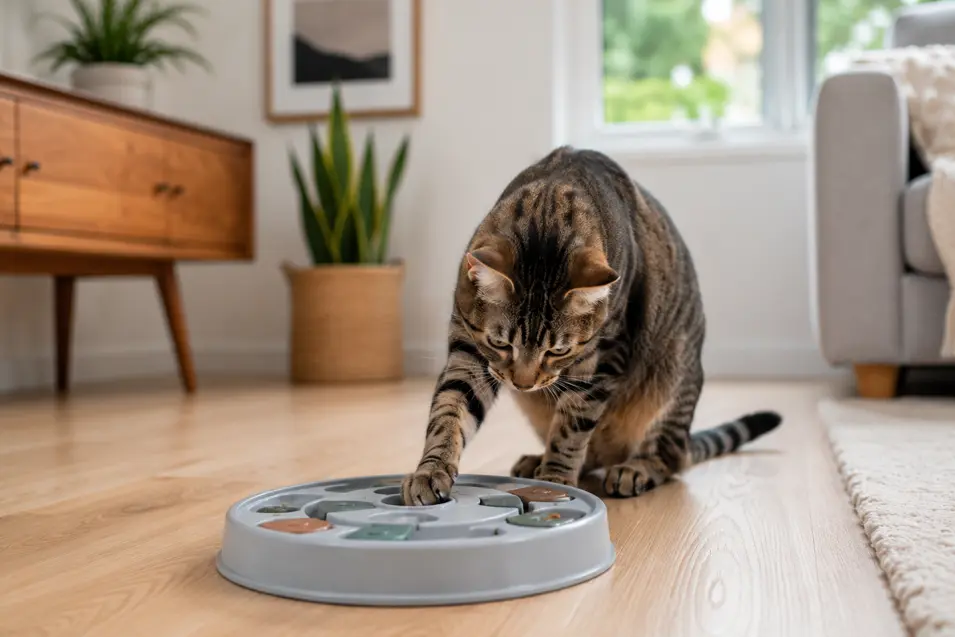
Providing enrichment for indoor cats doesn’t have to be expensive. While there are many excellent commercial toys, feeders, and climbing systems available, some of the most effective forms of enrichment can be created using everyday household items.
Cats are naturally curious animals that enjoy exploring, solving problems, climbing, and hunting. By creating simple DIY enrichment activities, cat owners can provide valuable mental stimulation and physical activity while helping reduce boredom and inactivity.
Whether you’re working with a limited budget or simply enjoy creative projects, there are countless ways to make your home more engaging for your feline companion.
Why DIY Enrichment Matters
Indoor cats depend on their environment for entertainment and stimulation.
Without sufficient enrichment, cats may become:
- Bored
- Inactive
- Overweight
- Destructive
- Excessively vocal
DIY enrichment projects help create opportunities for exploration, play, and problem-solving while encouraging natural behaviors.
DIY Treat Hunts
One of the easiest enrichment activities involves hiding treats around your home.
Start by placing treats in obvious locations.
As your cat becomes more experienced, increase the difficulty.
Benefits include:
- Mental stimulation
- Exploration
- Problem-solving
- Increased activity
Treat hunts encourage cats to use their senses and natural foraging instincts.
Cardboard Box Adventures
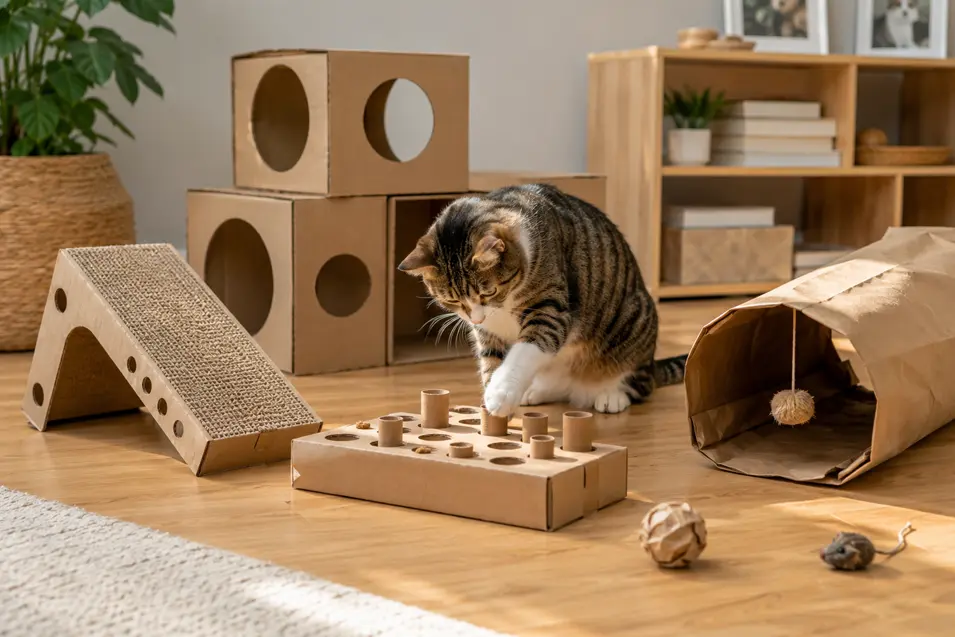
Few cat enrichment tools are as effective—or as affordable—as cardboard boxes.
Ideas include:
- Simple hiding spots
- Box mazes
- Exploration tunnels
- Stacked climbing structures
Many cats find boxes irresistible because they provide security and opportunities for investigation.
DIY Puzzle Feeders

Food puzzles can be made using common household materials.
Examples include:
Toilet Paper Roll Feeder
Place kibble inside an empty cardboard roll and fold the ends.
Cats must manipulate the roll to access the food.
Egg Carton Puzzle
Hide treats inside an egg carton and allow your cat to figure out how to retrieve them.
Muffin Tin Challenge
Place treats in muffin cups and cover some compartments with toys.
These projects encourage problem-solving and extend mealtime.
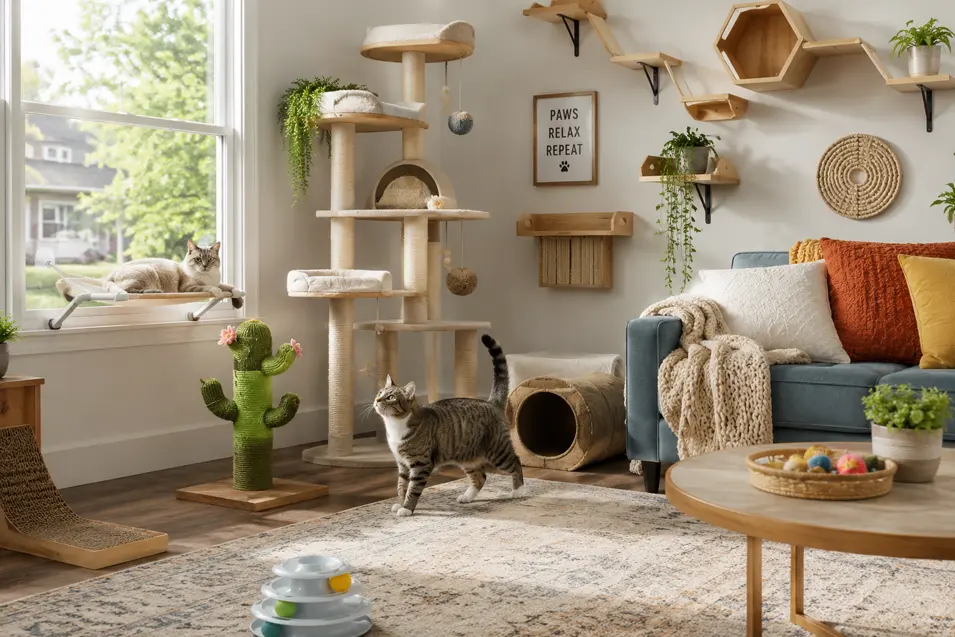
Create Vertical Exploration Areas
Cats naturally enjoy elevated spaces.
Affordable ways to increase vertical territory include:
- Rearranging furniture
- Adding shelves
- Using sturdy bookcases
- Creating window viewing stations
Even simple changes can dramatically increase available enrichment.
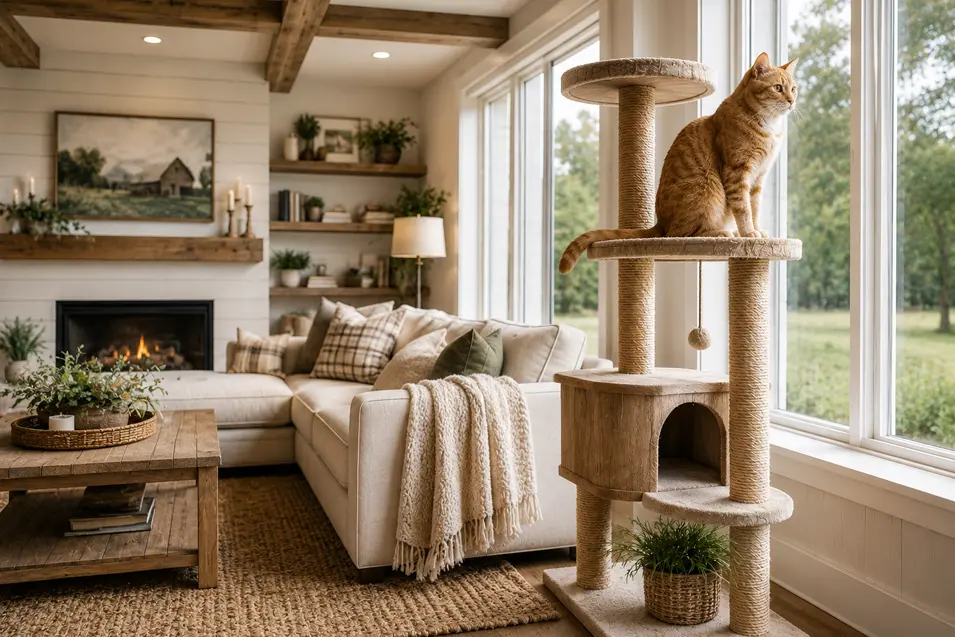
Window Entertainment Stations
Windows provide endless opportunities for observation.
Enhance the experience by adding:
- Window perches
- Comfortable beds
- Bird feeders outside (where appropriate)
- Cat-safe plants nearby
Many cats spend hours watching birds, squirrels, and outdoor activity.
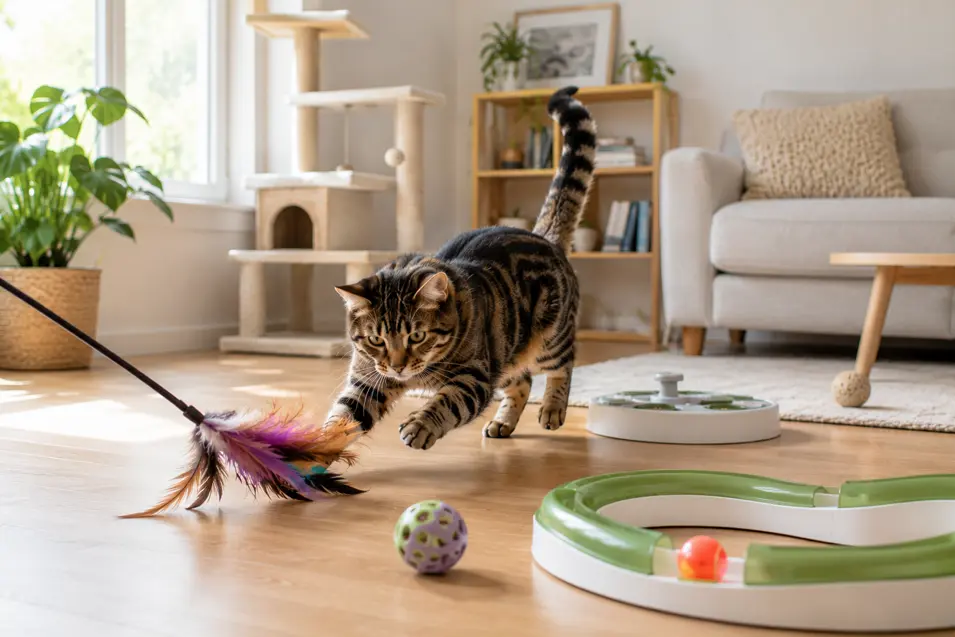
Homemade Wand Toys
Interactive toys can be created using inexpensive materials.
Examples include:
- Feathers attached to string
- Fabric strips
- Corks
- Lightweight pom-poms
Always supervise play with string-based toys and store them safely when not in use.
Rotating Toys for Novelty
Cats often become accustomed to toys that are always available.
Instead of purchasing new toys constantly:
- Store some toys away
- Rotate selections regularly
- Reintroduce forgotten favorites
This simple strategy can make old toys feel new again.
Cat-Safe Plant Stations
Plants can add sensory enrichment while enhancing your home’s appearance.
Popular options include:
- Cat grass
- Catnip
- Spider plants
- Wheatgrass
These plants introduce new scents and textures for exploration.
DIY Scratching Areas
Cats need appropriate places to scratch.
Budget-friendly options include:
- Corrugated cardboard
- Sisal rope
- Repurposed wooden posts
Providing multiple scratching surfaces often reduces damage to furniture.
Create Exploration Zones
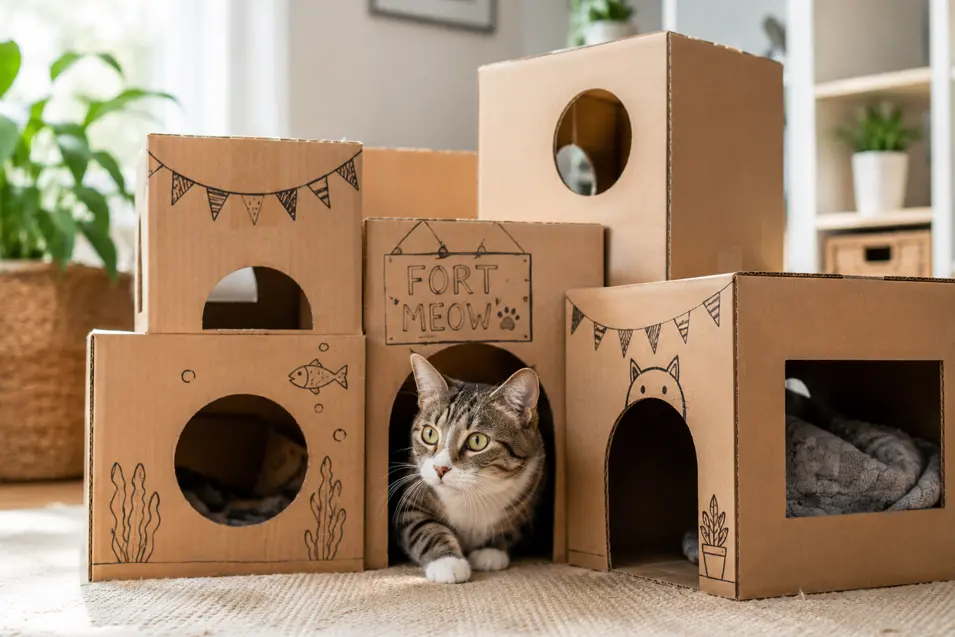
Changing your cat’s environment occasionally can increase curiosity and engagement.
Try:
- Rearranging climbing areas
- Introducing new boxes
- Creating temporary obstacle courses
- Rotating enrichment stations
Novelty is often highly stimulating for indoor cats.
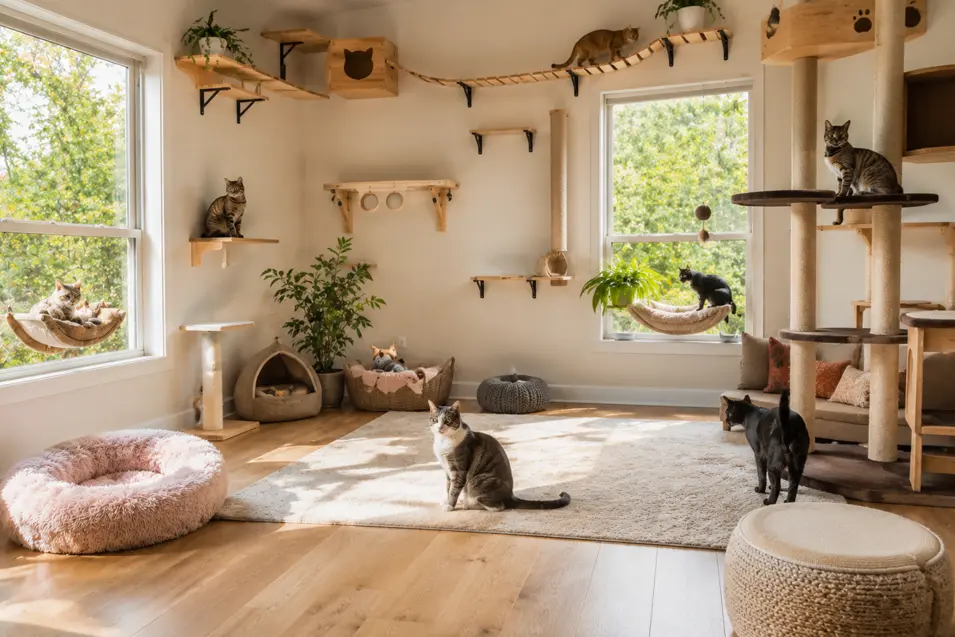
Enrichment for Multi-Cat Households
Homes with multiple cats benefit from additional resources.
Provide:
- Multiple resting areas
- Several scratching stations
- Multiple climbing opportunities
- Separate feeding areas when appropriate
This helps reduce competition and encourages positive interactions.
Safety Considerations
Always evaluate DIY projects for safety.
Avoid:
- Small parts that can be swallowed
- Toxic materials
- Sharp edges
- Unstable structures
When introducing new enrichment items, supervise your cat until you’re confident they are safe.
Enrichment Doesn’t Have to Be Expensive
One of the biggest misconceptions about cat enrichment is that it requires expensive equipment.
In reality, many cats are just as excited by cardboard boxes, homemade puzzles, and simple interactive games as they are by store-bought products.
Creativity, variety, and consistency often matter more than cost.
A More Stimulating Indoor Environment
DIY enrichment projects provide affordable ways to support your cat’s physical and mental well-being. By encouraging exploration, problem-solving, climbing, and play, owners can help indoor cats lead more active and rewarding lives.
With a little imagination, everyday household items can become valuable tools for creating a happier, healthier environment for your feline companion.
Related Reading
Looking for more ways to enrich your cat’s environment?
Explore these helpful guides:
- Indoor Cat Enrichment: Keeping Indoor Cats Happy, Healthy, and Active
- Signs Your Indoor Cat Is Bored (and How to Help)
- Puzzle Feeders for Cats: Benefits and How They Keep Cats Mentally Stimulated
- Best Interactive Toys for Indoor Cats
- Cat Climbing Walls and Shelves: Ideas for Vertical Enrichment
- Cat-Safe Houseplants: Indoor Plants Safe for Cats
These resources can help you create an enriching and engaging indoor lifestyle for your cat.