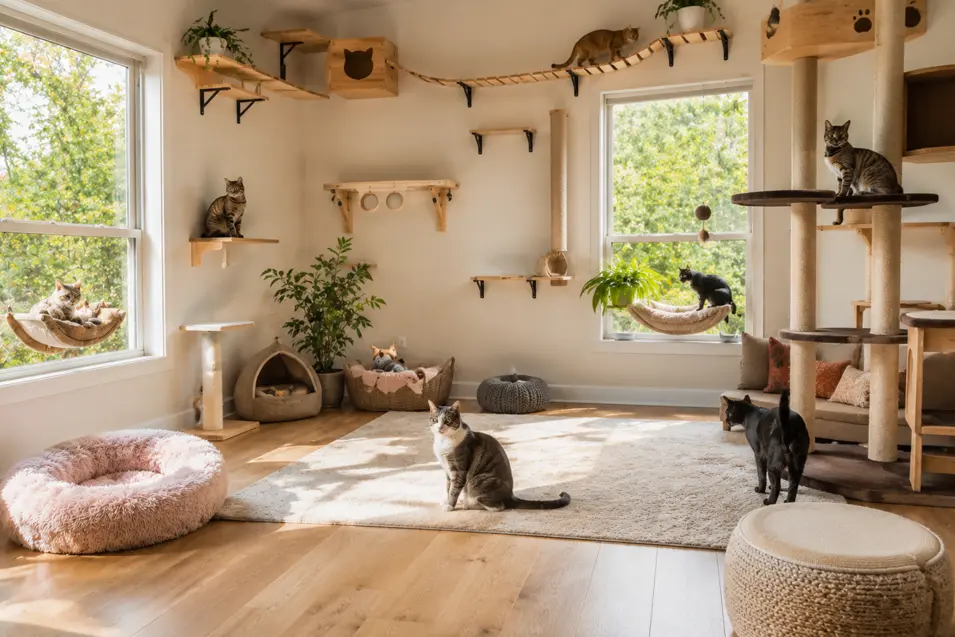
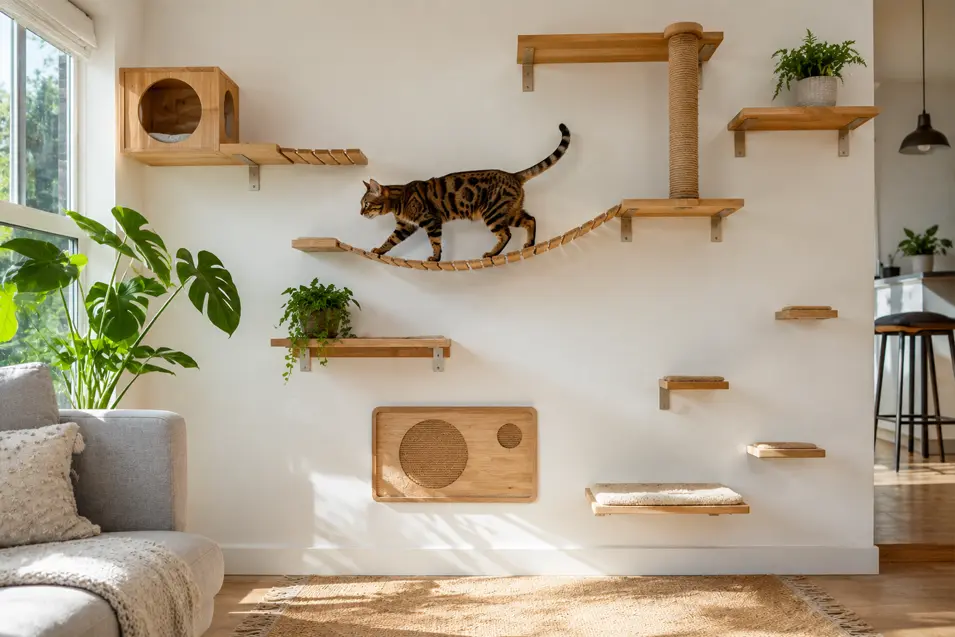
When most people think about cat enrichment, they focus on toys, scratching posts, and play sessions. While these are all important, one of the most valuable forms of enrichment often goes overlooked: vertical space.
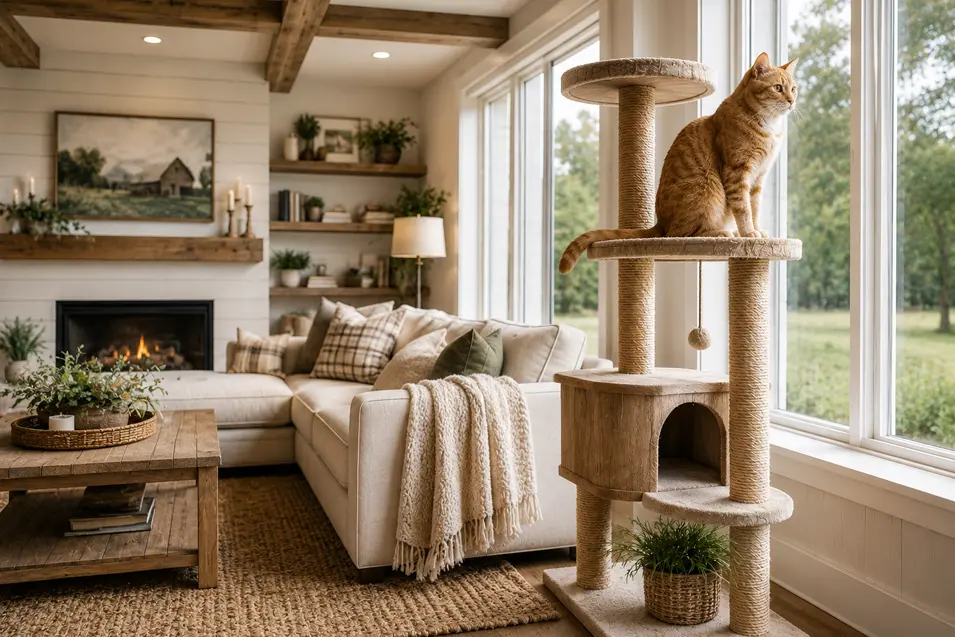
Cats naturally seek elevated positions where they can observe their surroundings, feel secure, and avoid potential threats. In the wild, cats frequently climb trees, rocks, and other structures to gain a better vantage point. Indoor cats retain these same instincts, making climbing walls and shelves an excellent addition to many homes.
By creating vertical pathways throughout your home, you can provide exercise, mental stimulation, and additional territory that helps cats feel more comfortable and engaged.
Why Cats Love Vertical Space
Cats are natural climbers.
Elevated areas allow them to:
- Observe their environment
- Monitor household activity
- Feel safer
- Escape stressors
- Rest undisturbed
- Exercise climbing muscles
For many cats, height equals security.
This is especially true in multi-pet households where access to elevated spaces can help reduce tension and competition.
Benefits of Cat Climbing Walls
Encourages Exercise
Climbing requires strength, coordination, and balance.
Regular use of climbing shelves helps cats:
- Stay active
- Burn calories
- Maintain muscle tone
- Improve flexibility
This can be particularly beneficial for indoor cats with limited opportunities for physical activity.
Expands Territory
Cats often view vertical territory as additional living space.
Even small apartments can feel significantly larger when cats have access to elevated pathways and resting areas.
Reduces Boredom
Climbing structures create opportunities for exploration and movement throughout the day.
They encourage cats to investigate their environment rather than spending all day sleeping in one location.
Supports Natural Behaviors
Vertical enrichment allows cats to engage in instincts that are deeply rooted in their behavior.
Providing safe opportunities to climb and perch helps create a more satisfying indoor environment.
Types of Cat Wall Shelves
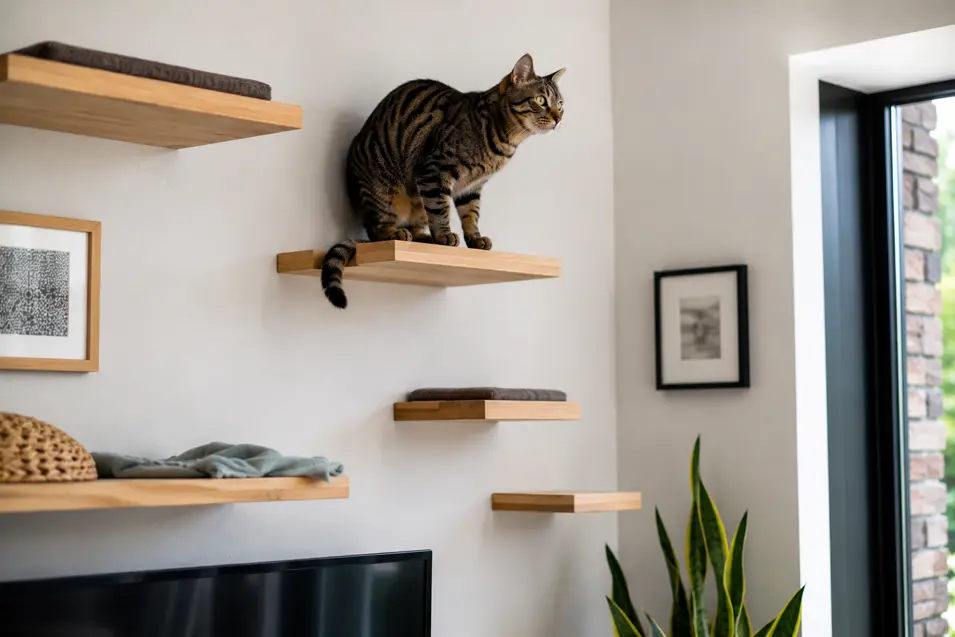
Simple Floating Shelves
Floating shelves are one of the easiest ways to introduce vertical enrichment.
Benefits include:
- Affordable installation
- Clean appearance
- Flexible placement
Adding carpet or textured surfaces can improve traction and comfort.
Step Shelves
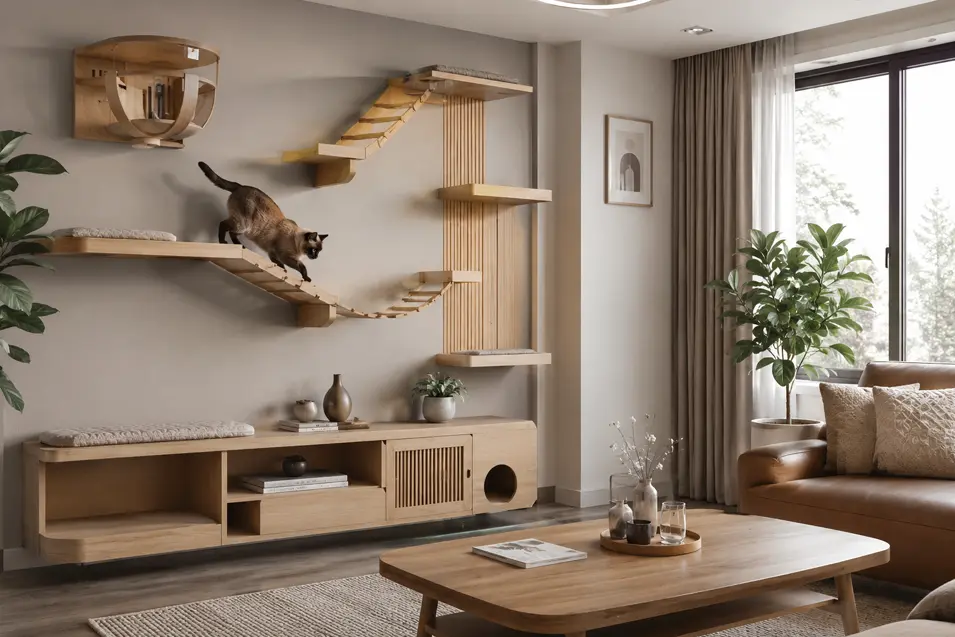
Step-style shelves create a staircase effect that allows cats to move easily between heights.
These are ideal for:
- Kittens
- Senior cats
- Homes with limited wall space
Cat Walkways
Wall-mounted pathways allow cats to travel around a room without touching the floor.
These designs often create exciting routes that encourage exploration and movement.
Corner Shelves
Unused corners can become valuable climbing areas.
Corner shelves maximize available space while creating unique observation points.
Cat Wall Furniture Ideas
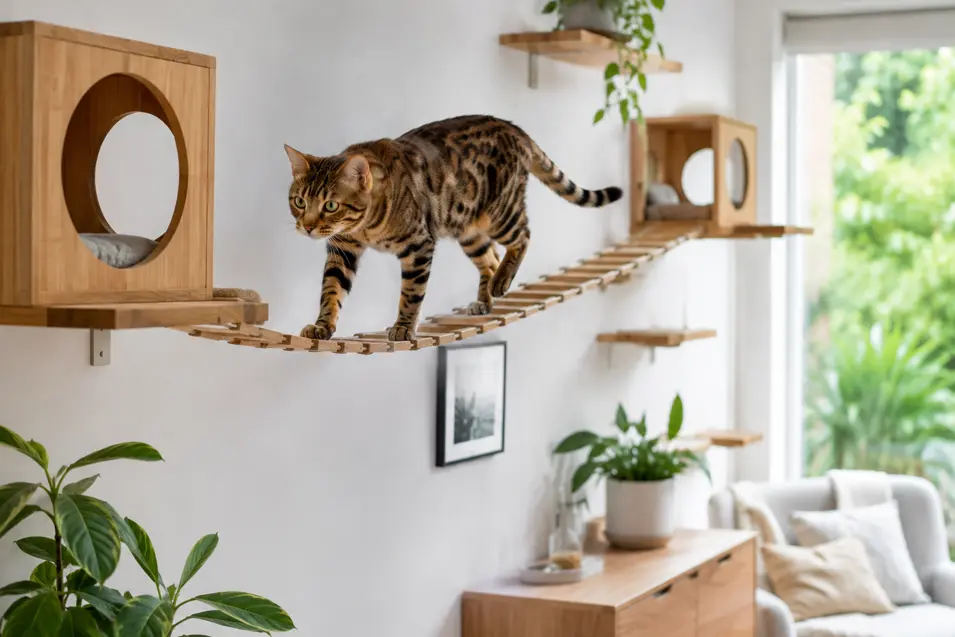
Many cat owners combine shelves with additional enrichment features.
Popular options include:
Wall-Mounted Beds
Elevated sleeping areas provide comfort and security.
Hanging Bridges
Bridges create fun challenges and connect different climbing zones.
Scratching Surfaces
Integrated scratching panels encourage natural claw maintenance.
Hammocks
Wall-mounted hammocks offer relaxing resting spots with elevated views.
Designing a Cat Climbing Wall
Before installation, consider your cat’s age, mobility, and personality.
Plan a Route
Cats prefer connected pathways rather than isolated shelves.
Think about how your cat will move from one platform to the next.
Vary Heights
Different elevations create opportunities for exploration and choice.
Include Rest Stops
Not every platform should serve as a jumping point.
Some should function as observation areas or resting spots.
Consider Window Access
Positioning shelves near windows can provide additional entertainment through wildlife watching and outdoor observation.
Vertical Enrichment for Small Spaces
One of the greatest advantages of climbing walls is their ability to maximize limited square footage.
Vertical enrichment works particularly well in:
- Apartments
- Condos
- Small homes
- Multi-cat households
By utilizing wall space, owners can provide significant enrichment without sacrificing valuable floor area.
Safety Considerations
Use Sturdy Materials
Shelves should be designed to support your cat’s weight comfortably.
Secure Properly
Always anchor shelves into wall studs or use appropriate mounting hardware.
Provide Adequate Traction
Smooth surfaces may become slippery.
Carpet, sisal, or textured materials often improve safety.
Match Your Cat’s Abilities
Older cats may need shorter jumps and easier access routes.
Combining Climbing Walls with Other Enrichment
Vertical enrichment works best when combined with other activities.
Consider pairing climbing shelves with:
- Puzzle feeders
- Interactive toys
- Window perches
- Scratching posts
- Cat-safe plants
- Catios
Together, these elements create a richer and more stimulating environment.
Are Cat Climbing Walls Worth It?
For many indoor cats, the answer is absolutely.
Climbing walls and shelves provide exercise, mental stimulation, security, and opportunities to express natural behaviors. They can transform ordinary living spaces into dynamic environments that encourage activity and exploration.
Whether you install a few simple shelves or create an elaborate climbing system, vertical enrichment can significantly improve your cat’s quality of life.
Related Reading
Looking for more ways to enrich your cat’s environment?
Explore these helpful guides:
- Indoor Cat Enrichment: Keeping Indoor Cats Happy, Healthy, and Active
- Signs Your Indoor Cat Is Bored (and How to Help)
- Puzzle Feeders for Cats: Benefits and How They Keep Cats Mentally Stimulated
- Catio Ideas: Creating a Safe Outdoor Space for Indoor Cats
These resources can help you create a more engaging, active, and rewarding environment for your indoor cat.