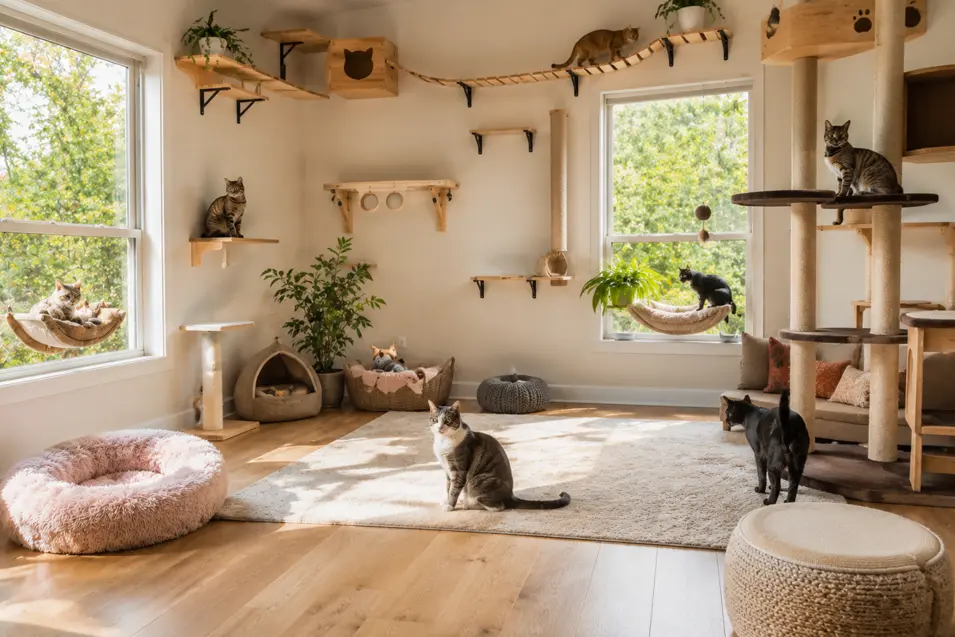
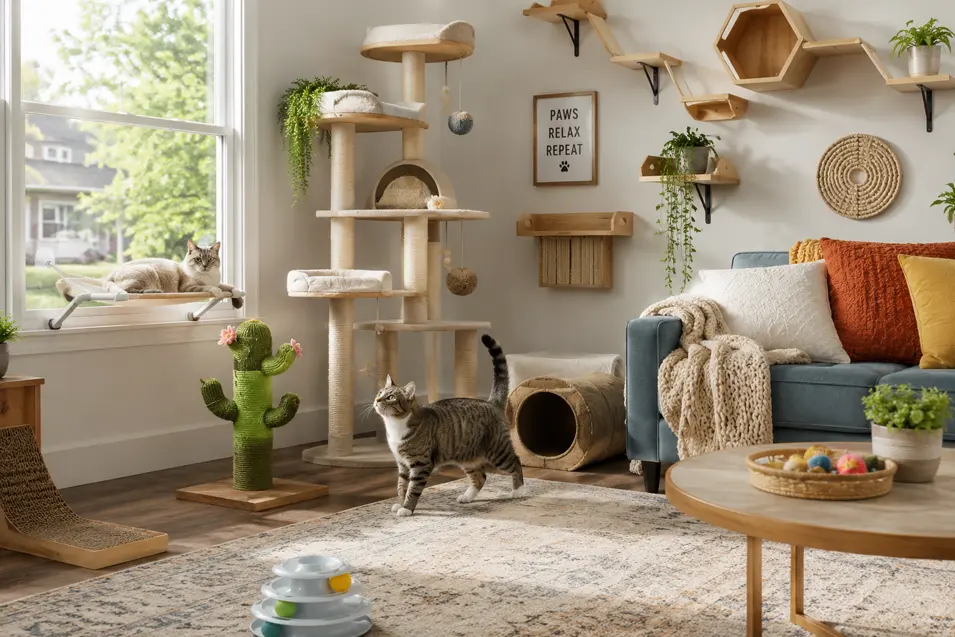
Keeping cats indoors offers many important benefits, including protection from traffic, predators, disease, and other outdoor dangers. However, indoor living can also present challenges. Without enough stimulation, some cats may become bored, inactive, or develop unwanted behaviors.
That’s where enrichment comes in.
Indoor cat enrichment involves creating opportunities for cats to engage their minds, exercise their bodies, and express natural instincts. By providing a stimulating environment, cat owners can help prevent boredom, encourage healthy activity, and improve overall quality of life.
Whether you share your home with a playful kitten or a laid-back senior cat, enrichment plays a vital role in supporting your cat’s physical and emotional well-being.
What Is Cat Enrichment?
Enrichment refers to activities, experiences, and environmental features that encourage cats to engage in natural behaviors.
These behaviors include:
- Climbing
- Exploring
- Hunting
- Scratching
- Observing wildlife
- Solving problems
- Playing
- Resting in secure spaces
A well-enriched environment helps satisfy a cat’s instincts while reducing boredom and frustration.
Why Indoor Cats Need Enrichment
Although domestic cats have adapted to life indoors, they still retain many of the instincts of their wild ancestors.
Without opportunities to express those instincts, cats may experience:
- Boredom
- Anxiety
- Stress
- Weight gain
- Destructive behavior
- Excessive vocalization
- Overgrooming
Enrichment helps address these issues by providing both mental and physical stimulation.
Benefits of Indoor Cat Enrichment
Encourages Physical Activity
Exercise is essential for maintaining a healthy weight and supporting overall health.
Enrichment encourages movement through:
- Climbing
- Jumping
- Chasing
- Exploring
- Interactive play
Active cats are often healthier and less prone to obesity-related health concerns.
Provides Mental Stimulation
Cats are intelligent animals that benefit from problem-solving and sensory experiences.
Enrichment activities help keep their minds engaged while reducing boredom.
Reduces Behavioral Problems
Many unwanted behaviors stem from a lack of stimulation.
Providing appropriate outlets for energy and natural instincts can help reduce:
- Scratching furniture
- Excessive meowing
- Attention-seeking behavior
- Destructive habits
Improves Emotional Well-Being
A stimulating environment helps cats feel more secure, confident, and content.
Enrichment can also reduce stress and anxiety, particularly in multi-cat households.
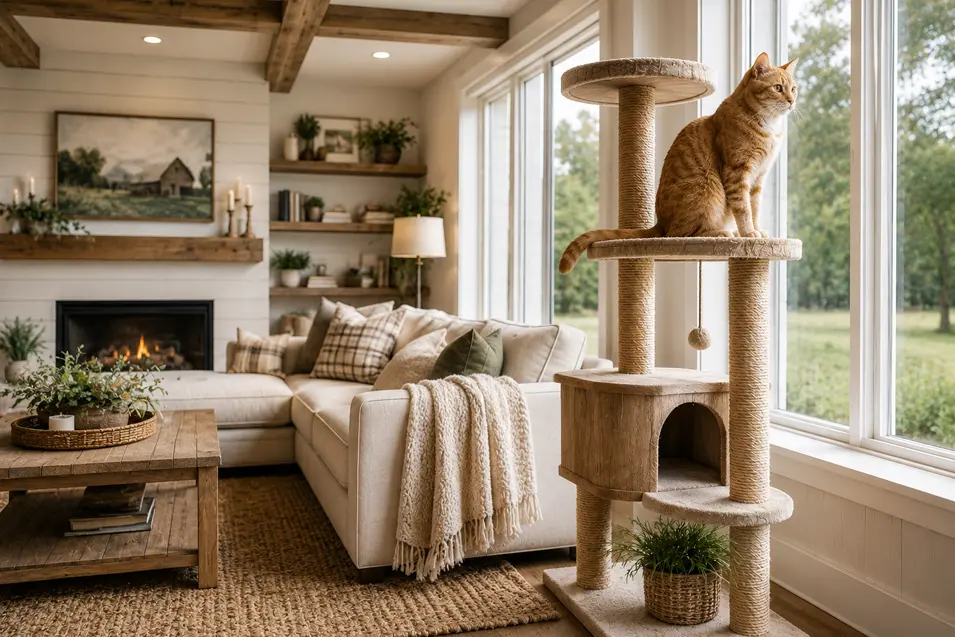
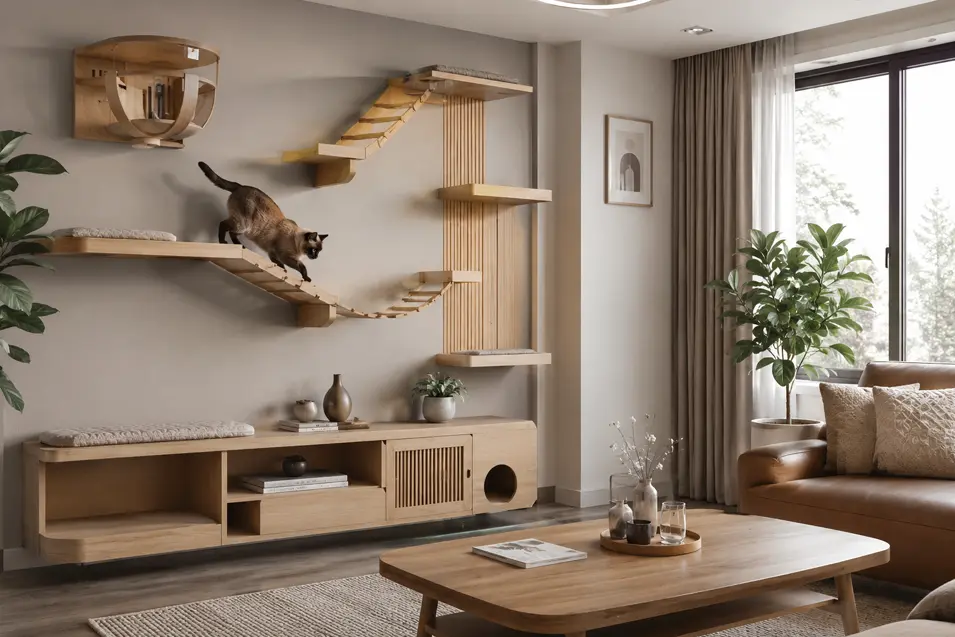
Cat Trees and Climbing Structures
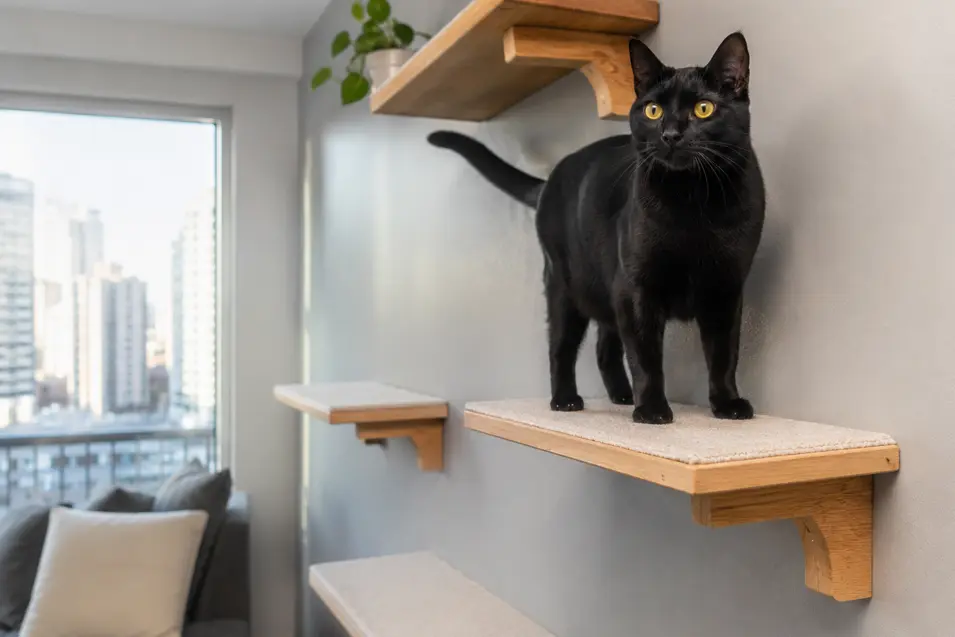
Cats naturally enjoy elevated spaces.
Providing vertical territory allows cats to:
- Observe their surroundings
- Feel secure
- Exercise through climbing
- Escape household activity when desired
Popular options include:
- Cat trees
- Wall-mounted shelves
- Cat climbing walls
- Window perches
- Elevated beds
Vertical enrichment is especially important in smaller homes and apartments.
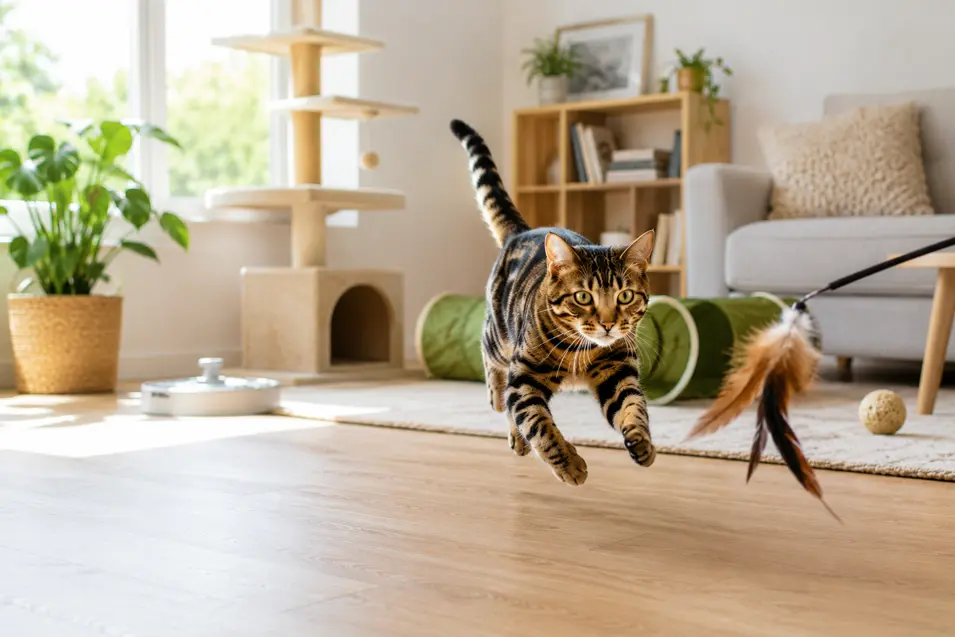
Interactive Toys
Interactive toys help satisfy a cat’s hunting instincts.
Examples include:
- Wand toys
- Feather toys
- Motion-activated toys
- Rolling balls
- Electronic prey simulators
Rotating toys regularly can help maintain interest and prevent boredom.
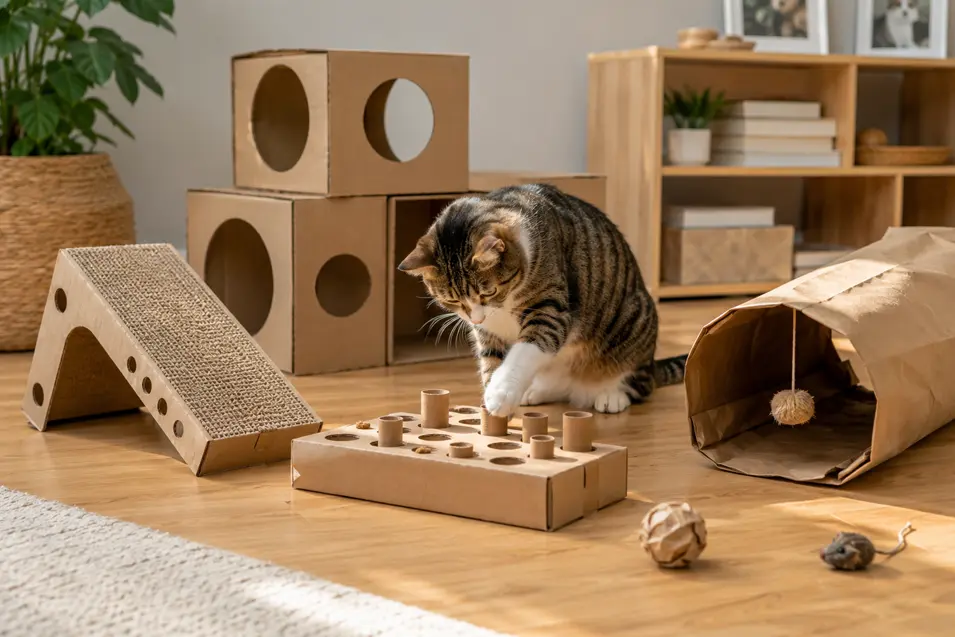
Puzzle Feeders and Food Enrichment
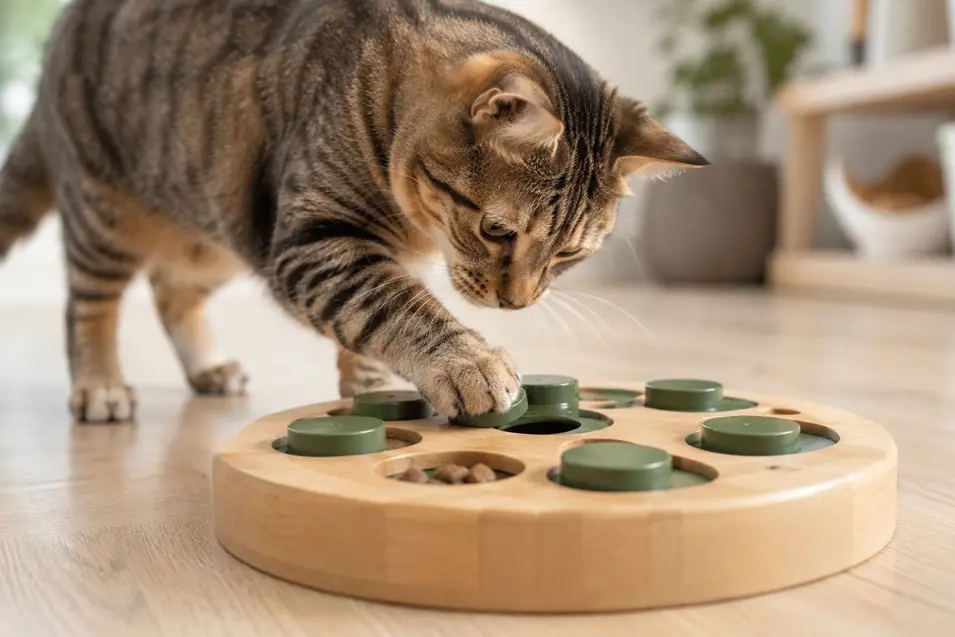
Food-based enrichment encourages cats to work for their meals, mimicking natural hunting behaviors.
Popular options include:
- Puzzle feeders
- Treat-dispensing toys
- Slow feeders
- Food scavenger hunts
These activities provide mental stimulation while slowing eating habits.
Window Perches and Outdoor Views
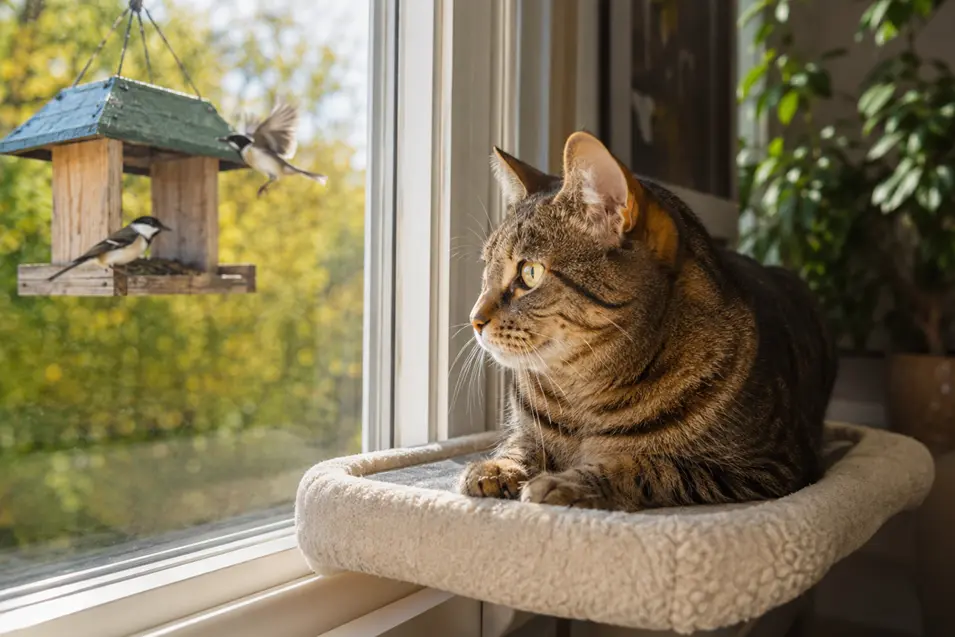
Many cats enjoy watching the world outside.
A window perch provides opportunities to observe:
- Birds
- Squirrels
- People
- Weather changes
- Neighborhood activity
This type of passive enrichment can occupy a cat for hours each day.
Catios and Safe Outdoor Access
One of the most effective forms of enrichment is safe outdoor access.
A catio allows indoor cats to enjoy:
- Fresh air
- Sunshine
- Natural scents
- Wildlife observation
- Additional exercise opportunities
Unlike free-roaming outdoor access, catios provide enrichment while keeping cats protected from common dangers.
Scratching Opportunities
Scratching is a normal and necessary behavior.
Cats scratch to:
- Stretch muscles
- Maintain claws
- Mark territory
- Relieve stress
Every cat should have access to appropriate scratching surfaces such as:
- Scratching posts
- Scratching boards
- Sisal-covered furniture
Providing multiple options often leads to better results.
Cat-Safe Plants
Plants can add both beauty and enrichment to a cat’s environment.
Popular cat-friendly options include:
- Catnip
- Cat grass
- Spider plants
- Wheatgrass
- Valerian
Always verify that plants are safe before introducing them into your home.
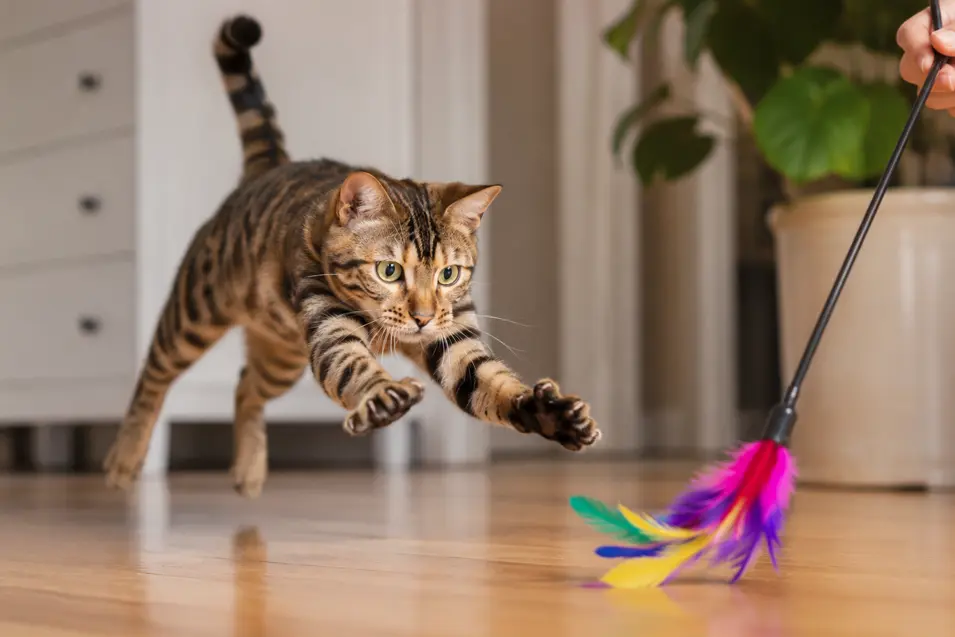
Play Sessions with Your Cat
One of the simplest forms of enrichment is interactive play with a human companion.
Regular play sessions help:
- Strengthen the human-cat bond
- Encourage exercise
- Reduce boredom
- Satisfy hunting instincts
Most cats benefit from several short play sessions throughout the day.
Enrichment for Senior Cats
Older cats still need enrichment, although their preferences may change.
Consider:
- Lower climbing platforms
- Comfortable window perches
- Gentle interactive toys
- Food puzzles
- Soft resting areas
Age-appropriate enrichment helps maintain mental sharpness and quality of life.
Signs Your Cat May Need More Enrichment
Cats experiencing boredom or insufficient stimulation may display behaviors such as:
- Excessive sleeping
- Weight gain
- Destructive scratching
- Restlessness
- Overgrooming
- Increased vocalization
- Attention-seeking behaviors
Introducing additional enrichment can often help address these concerns.
Creating an Enrichment Plan
Every cat has unique preferences.
A balanced enrichment plan may include:
Physical Enrichment
- Climbing
- Jumping
- Play
Mental Enrichment
- Puzzle feeders
- Problem-solving toys
- Exploration opportunities
Sensory Enrichment
- Outdoor views
- Cat-safe plants
- New scents
Social Enrichment
- Human interaction
- Play sessions
- Positive experiences
Combining multiple forms of enrichment often produces the best results.
A Happier Indoor Life
Indoor cats can live long, healthy, and fulfilling lives when their physical and mental needs are properly met. Through climbing opportunities, interactive play, puzzle feeders, window perches, catios, and other enrichment activities, cat owners can create environments that encourage natural behaviors and support overall well-being.
A little creativity can go a long way toward transforming an ordinary indoor space into an engaging feline paradise.
Related Reading
Looking for more ways to enrich your cat’s environment?
Explore these helpful guides:
- Catio Ideas: Creating a Safe Outdoor Space for Indoor Cats
- Catio Benefits: Why Indoor Cats Need Safe Outdoor Enrichment
- Small Catio Ideas for Apartments, Patios, and Balconies
- How to Build a DIY Catio: Step-by-Step Guide for Cat Owners
These articles can help you safely expand your cat’s world while supporting their physical and mental well-being.