Choosing the right cat tree is only half the battle. Once you’ve found a cat tree that fits your space and your décor, the next question becomes: where should you put it?
Many cat owners assume that any empty corner will do, but placement can have a significant impact on whether your cat actually uses the tree. Cats are naturally curious, territorial animals that prefer locations offering views, security, and opportunities to observe their surroundings.
The best cat tree placement benefits both your cat and your home by creating an attractive, functional space that supports natural feline behavior.
Here are the best places to put a cat tree and a few locations you may want to avoid.
Why Placement Matters
Cats don’t use climbing structures simply because they’re available. They use them because those structures satisfy natural instincts.
A well-placed cat tree allows cats to:
- Observe their environment
- Monitor household activity
- Feel safe and secure
- Access sunlight
- Watch birds and wildlife
- Establish territory
Poor placement can make even the most expensive cat tree far less appealing.
Understanding what motivates cats can help you choose a location they’ll use regularly.
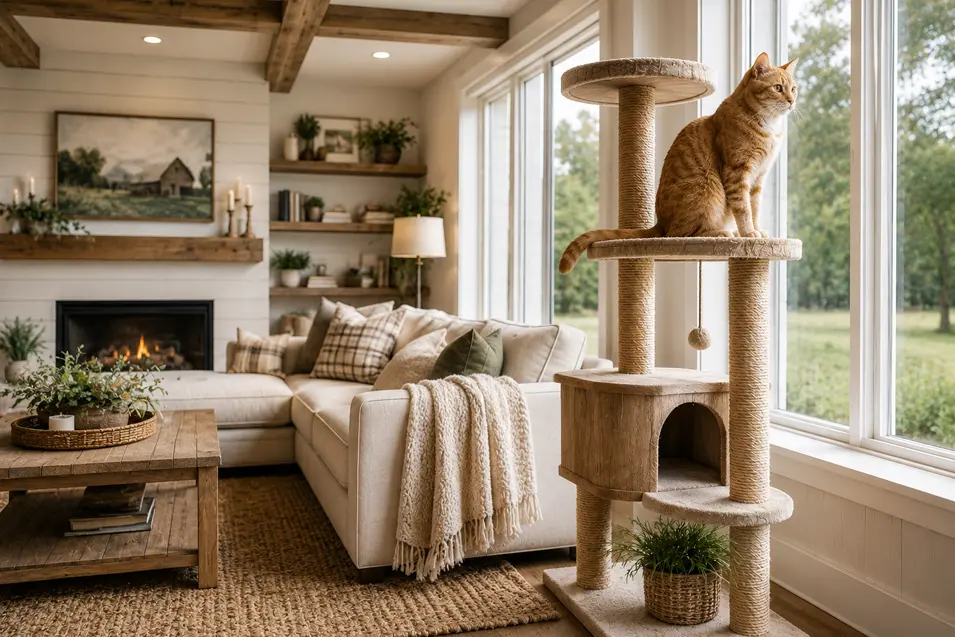
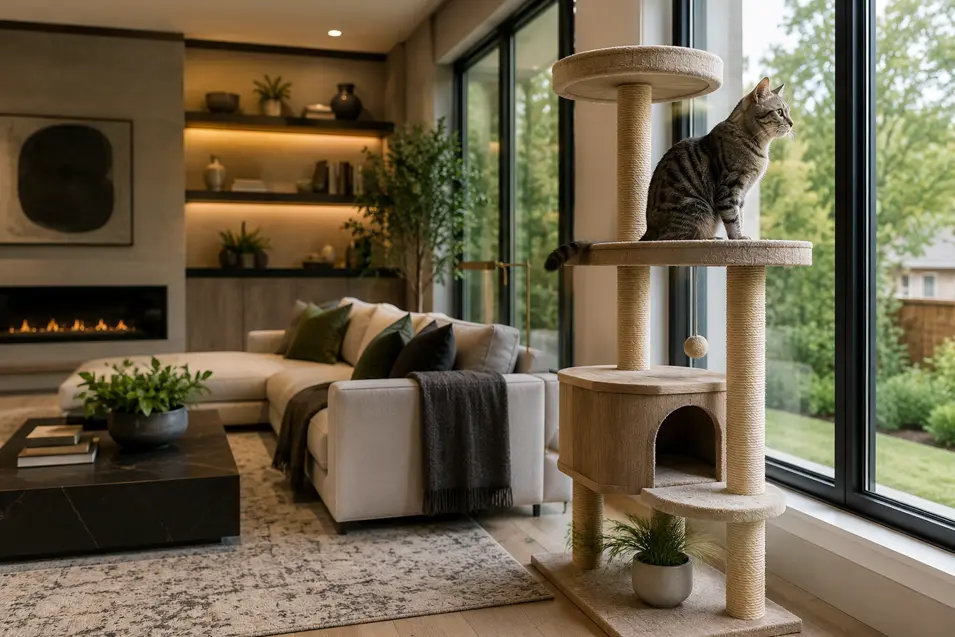
1. Near a Window
For most cats, a window is the ultimate entertainment center.
Birds, squirrels, people, vehicles, and changing weather provide endless visual stimulation throughout the day.
Positioning a cat tree near a window often increases its use dramatically.
Benefits
- Natural sunlight
- Outdoor views
- Mental stimulation
- Comfortable lounging space
- Reduced boredom
Many cats quickly claim window-side perches as their favorite locations in the home.
Design Tip
Choose a cat tree that complements nearby furniture and window treatments for a more integrated appearance.
2. In the Living Room
Living rooms are among the most popular locations for cat trees because they place cats near family activity.
Cats are often social creatures who enjoy observing daily household routines while maintaining their own personal space.
A cat tree in the living room allows your pet to remain involved without constantly seeking attention.
Benefits
- Allows cats to observe family activities
- Creates a sense of inclusion
- Provides convenient lounging spots
- Encourages regular use
Modern cat trees can often blend seamlessly into living room décor.
3. In a Home Office
With more people working from home, home offices have become favorite hangouts for many pets.
A cat tree in the office gives your cat a place to relax while you work, reducing the likelihood that they’ll claim your desk, keyboard, or paperwork as their preferred resting spot.
Benefits
- Keeps cats nearby during work hours
- Provides enrichment throughout the day
- Reduces desk interruptions
- Creates a pet-friendly workspace
Many remote workers appreciate having their feline companions nearby without sacrificing productivity.
4. Beside Existing Cat Favorites
Pay attention to where your cat already spends time.
If your cat frequently naps in a particular room, sits near a specific window, or watches household activity from a favorite corner, placing the cat tree nearby often increases its appeal.
Cats tend to prefer familiar territory.
Look For
- Favorite sleeping spots
- Frequently used windows
- Areas with regular family activity
- Existing elevated locations
Following your cat’s habits often leads to the most successful placement.
5. In Multi-Cat Living Areas
In homes with multiple cats, vertical space becomes especially important.
Cat trees provide additional territory and can help reduce competition for resources.
Placing a cat tree in a shared living area allows multiple cats to interact while maintaining personal space.
Benefits
- Reduces tension between cats
- Creates separate resting zones
- Increases available territory
- Encourages climbing and play
Larger cat trees with multiple levels are often ideal for multi-cat households.
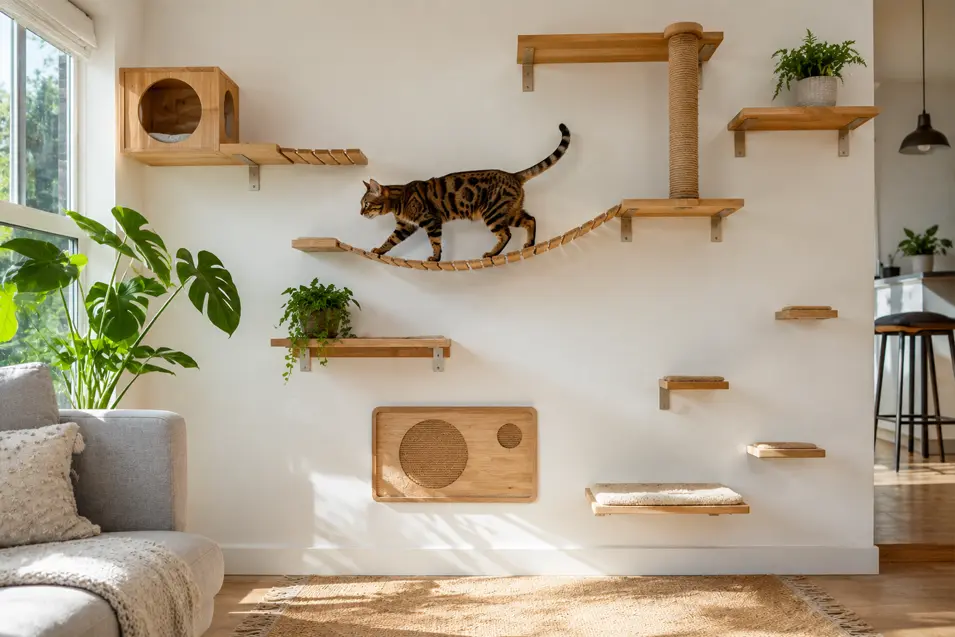
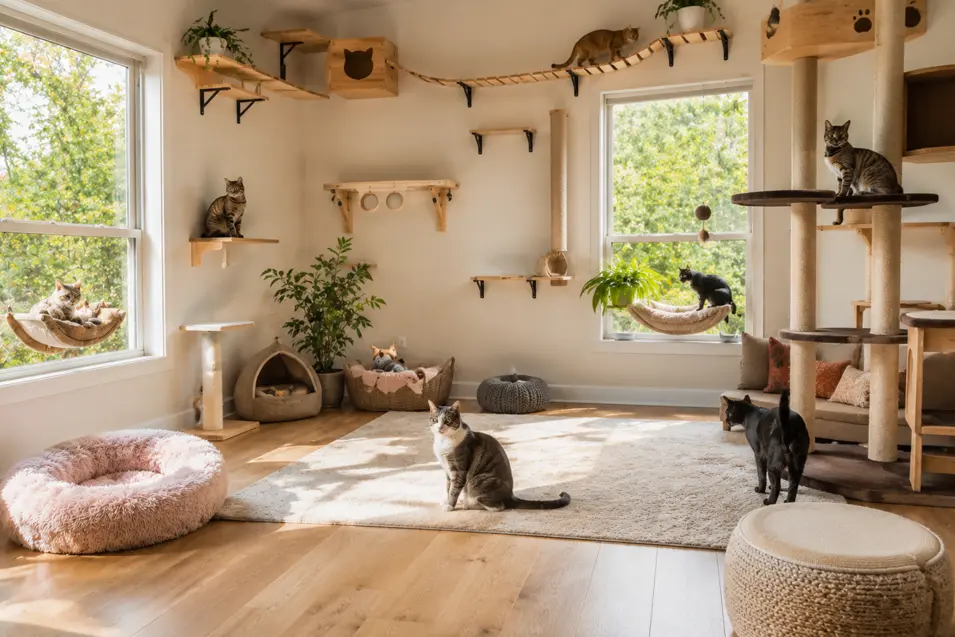
6. Near Cat Wall Furniture
If you already have cat shelves, climbing walls, or window perches installed, positioning a cat tree nearby can create a larger enrichment system.
Cats often enjoy moving between various elevated surfaces.
Combining multiple features encourages exploration and exercise while maximizing vertical space.
Great Combinations
- Cat tree and wall shelves
- Cat tree and window perch
- Cat tree and climbing bridge
- Cat tree and observation platform
Together, these elements create a more dynamic environment.
7. In a Quiet Corner
Not every cat enjoys constant activity.
Some cats appreciate having a retreat where they can observe the household without being directly involved.
A cat tree placed in a quiet corner can provide a sense of security while still allowing visibility.
Ideal For
- Senior cats
- Shy cats
- Newly adopted cats
- Multi-pet households
These locations often become favorite napping spots.
Places to Avoid
Just as important as knowing where to place a cat tree is understanding where not to place one.
Isolated Rooms
Cats generally prefer being near household activity.
A cat tree placed in an unused room may receive little attention.
High-Traffic Walkways
Constant foot traffic can make some cats feel vulnerable or unsettled.
Near Loud Appliances
Avoid placing cat trees next to:
- Washing machines
- Dryers
- Loud speakers
- Exercise equipment
Unexpected noise may discourage use.
Directly Beside Litter Boxes
Cats generally prefer to separate their resting, feeding, and bathroom areas.
Keeping these zones distinct often leads to greater comfort.
Consider Your Home’s Design
A cat tree doesn’t have to disrupt your interior design.
Modern cat trees are available in styles that complement:
- Scandinavian interiors
- Contemporary homes
- Modern apartments
- Industrial lofts
- Farmhouse designs
Choosing attractive materials and thoughtful placement can make a cat tree feel like part of the room rather than an afterthought.
Creating the Perfect Cat-Friendly Space
The best cat tree placement balances your cat’s needs with your home’s layout.
Ideally, the location should offer:
- Visibility
- Security
- Sunlight
- Family interaction
- Opportunities for observation
When these elements come together, cats are more likely to use the tree consistently and enjoy the enrichment it provides.
Final Thoughts
A cat tree can become one of the most important pieces of furniture in your cat’s world—but only if it’s placed in the right location.
By positioning your cat tree near windows, family gathering spaces, home offices, or other favorite areas, you can encourage climbing, exercise, and relaxation while supporting your cat’s natural instincts.
With thoughtful placement and a stylish design, a cat tree can benefit both your pet and your home’s overall appearance.
Frequently Asked Questions
Where is the best place to put a cat tree?
Near a window is often the best location because it provides natural light, outdoor views, and ongoing mental stimulation.
Should a cat tree be in the living room?
Yes. Living rooms often work well because cats enjoy observing family activity while maintaining a comfortable perch.
Can I put a cat tree in my bedroom?
Absolutely. Many cats enjoy having access to a cat tree in bedrooms, particularly if they spend significant time there.
Should a cat tree be near a litter box?
It’s generally best to keep cat trees separate from litter box areas so cats can maintain distinct sleeping and bathroom zones.
What if my cat ignores the cat tree?
Try moving it closer to a favorite window, sleeping area, or family gathering space. Placement often plays a major role in whether cats use climbing structures.
Is one cat tree enough for multiple cats?
It depends on the number of cats and available space. Multi-cat households often benefit from multiple climbing structures and additional vertical territory.