For many cat owners, finding the right cat tree can feel like a compromise. Your cat needs a place to climb, scratch, and relax, but many traditional cat trees seem designed with function alone in mind. Oversized carpet-covered towers, bright colors, and bulky structures often clash with carefully planned interiors.
Fortunately, pet furniture has evolved.
Today’s stylish cat trees are designed to blend seamlessly into modern homes while still providing the enrichment and exercise cats need. Whether your style is contemporary, Scandinavian, minimalist, industrial, or modern farmhouse, there are cat trees available that complement your décor rather than detract from it.
Here’s how to choose a cat tree that both you and your cat will love.
Why Every Cat Needs a Cat Tree
Cats are natural climbers. They seek elevated spaces that allow them to observe their surroundings, monitor activity, and feel secure.
A quality cat tree provides:
- Vertical territory
- Scratching opportunities
- Exercise and climbing
- Resting spots
- Mental stimulation
- A safe retreat from household activity
Without dedicated climbing areas, many cats will seek alternatives such as bookshelves, countertops, and other furniture.
A well-chosen cat tree helps satisfy these natural instincts while protecting your home.
The Rise of Designer Cat Furniture
As pets increasingly become part of the family, manufacturers have begun creating furniture that serves both functional and aesthetic purposes.
Modern cat trees often feature:
- Real wood finishes
- Neutral color palettes
- Contemporary silhouettes
- Natural materials
- Furniture-inspired designs
- Minimalist construction
These features make it easier to incorporate cat furniture into living spaces without disrupting a room’s overall appearance.
Choose Natural Materials
One of the easiest ways to make a cat tree feel more sophisticated is by selecting natural materials.
Look for:
Wood
- Walnut
- Oak
- Birch
- Bamboo
- Ash
Wood finishes often coordinate naturally with existing furniture and flooring.
Woven Materials
- Sisal rope
- Natural fiber baskets
- Seagrass accents
These textures provide scratching opportunities while maintaining an organic appearance.
Neutral Fabrics
- Cream
- Beige
- Gray
- Charcoal
- Soft white
Neutral upholstery tends to blend more effectively into modern interiors than brightly colored carpeting.
Modern Cat Tree Styles
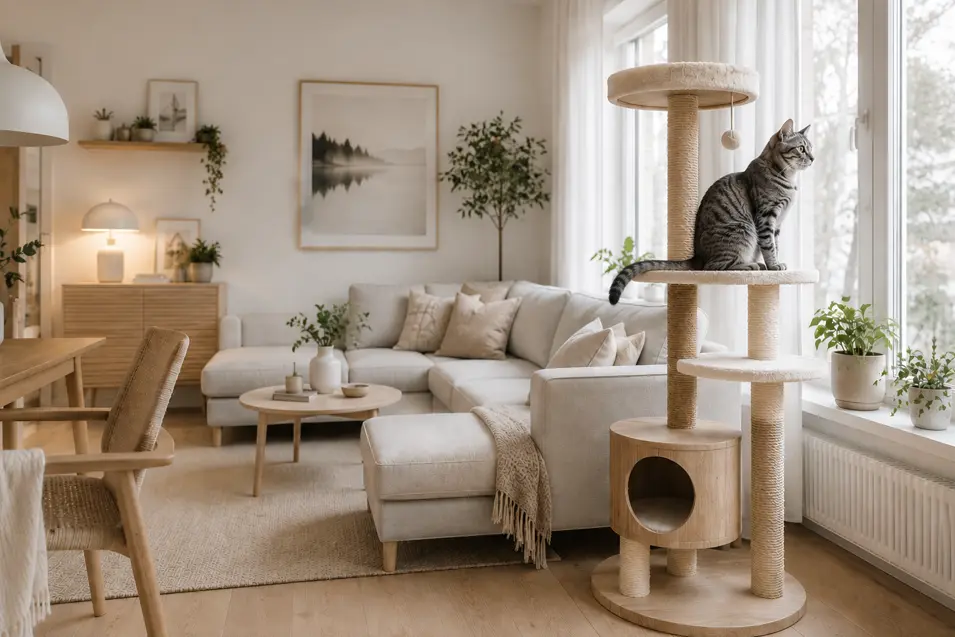
Simple forms, pale wood finishes, and a minimalist footprint make Scandinavian-inspired cat trees ideal for light and airy interiors.
Scandinavian-Inspired Cat Trees
Scandinavian design emphasizes simplicity, functionality, and natural materials.
Features often include:
- Light wood finishes
- Clean lines
- Minimal ornamentation
- Neutral fabrics
These cat trees work particularly well in bright, airy interiors.
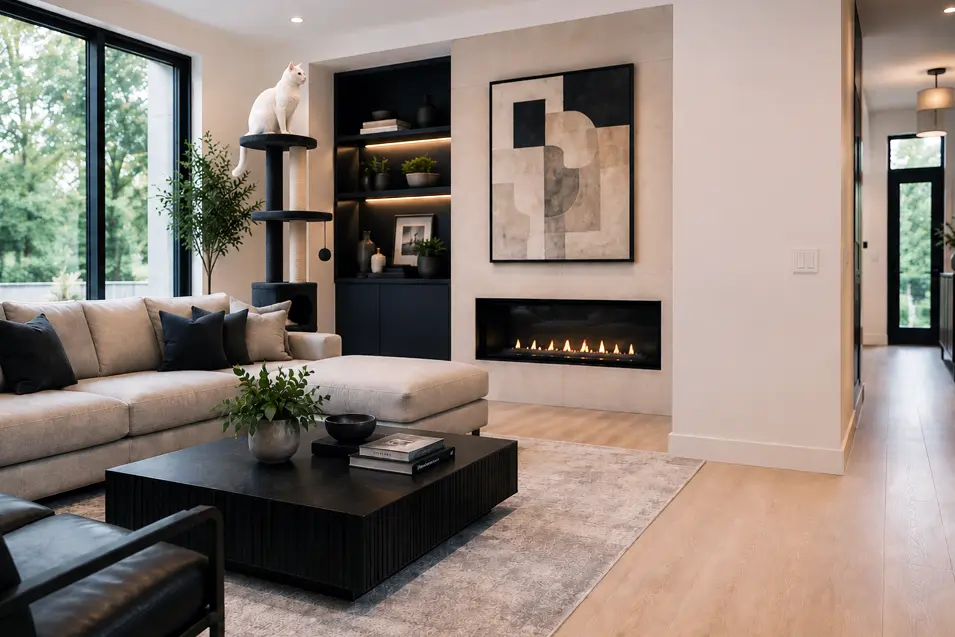
Contemporary Cat Trees
Contemporary designs focus on sleek forms and sophisticated materials.
Common characteristics include:
- Geometric shapes
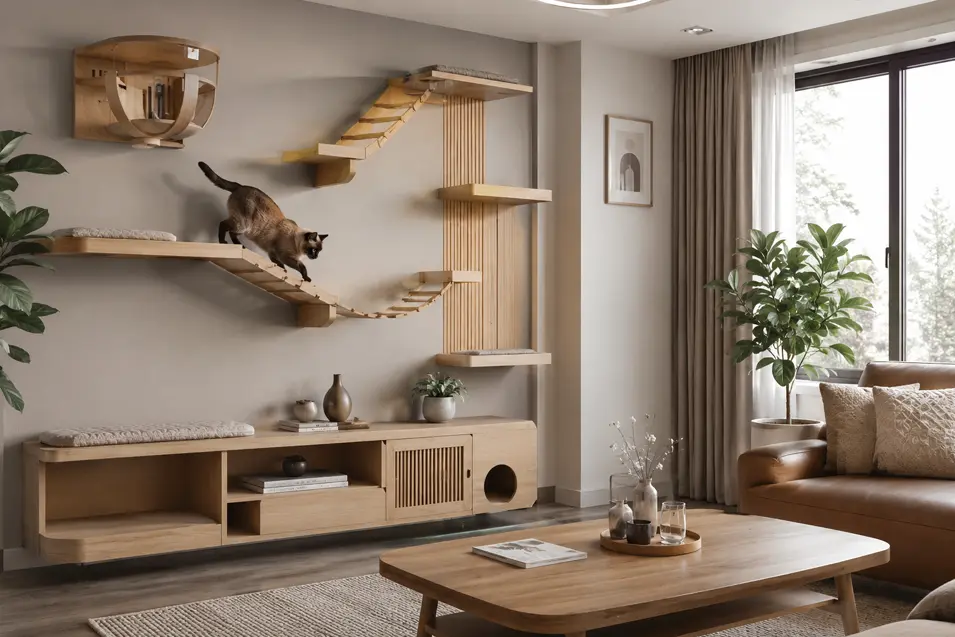
- Floating platforms
- Integrated scratching surfaces
- Streamlined construction
These pieces often resemble modern furniture more than traditional pet products.
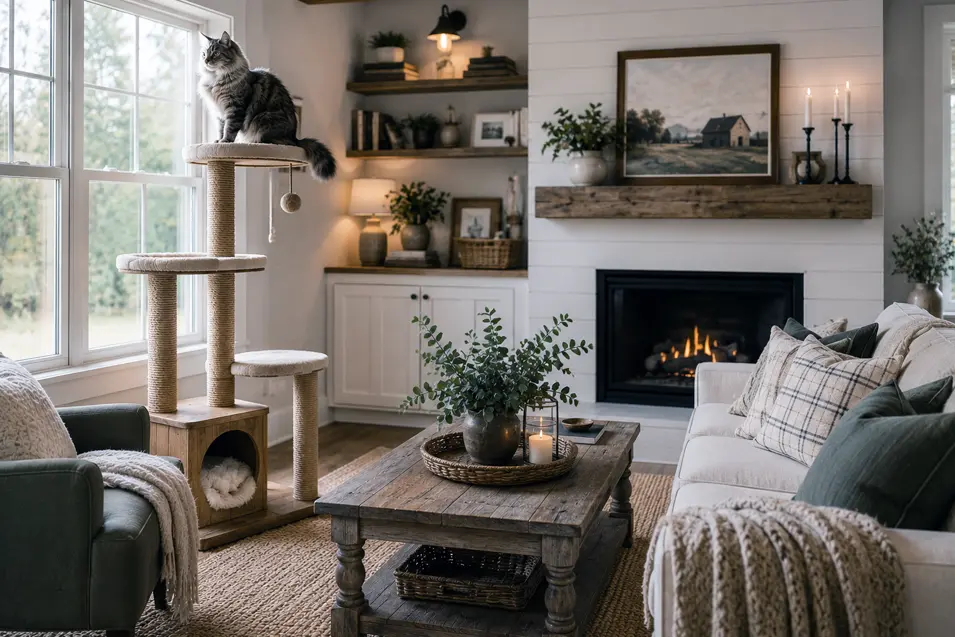 Modern Farmhouse
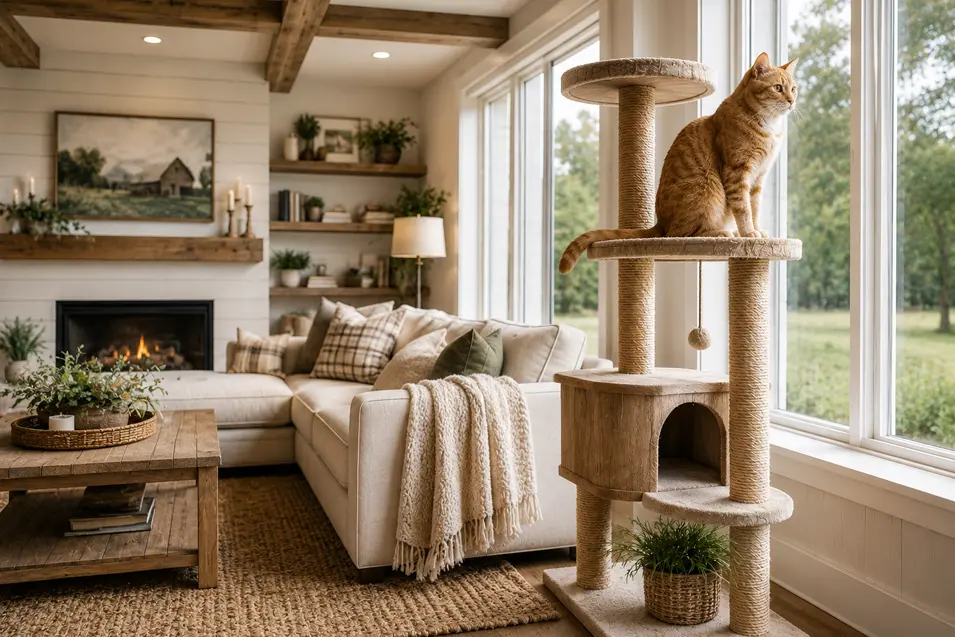
For homeowners who prefer a warmer aesthetic, modern farmhouse-inspired cat trees combine functionality with rustic charm.
Look for:
- Distressed wood finishes
- Soft neutral tones
- Natural textures
- Cozy lounging areas
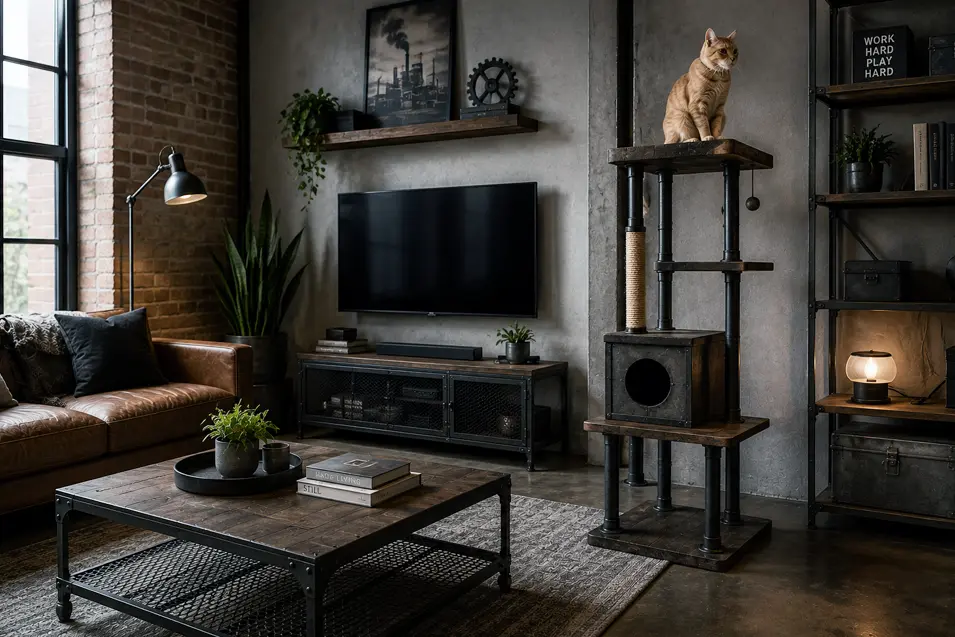
Constructed from steel pipe and reclaimed wood, this industrial-style cat tree complements loft-inspired interiors while giving cats elevated territory to explore.
Industrial-Inspired Cat Trees
Industrial-style cat furniture often combines:
- Metal frames
- Wood platforms
- Exposed materials
- Clean architectural lines
These designs pair beautifully with loft-style and urban interiors.
Match the Cat Tree to Your Existing Decor
The most successful cat tree installations feel intentional.
Consider:
Color Coordination
Choose finishes that complement existing furniture, flooring, or cabinetry.
Material Consistency
Repeat materials already found throughout the room.
Scale
Select a cat tree that fits proportionally within the space.
A large tower may overwhelm a small apartment, while a compact design might appear insignificant in a spacious living room.
Best Rooms for Stylish Cat Trees
Living Rooms
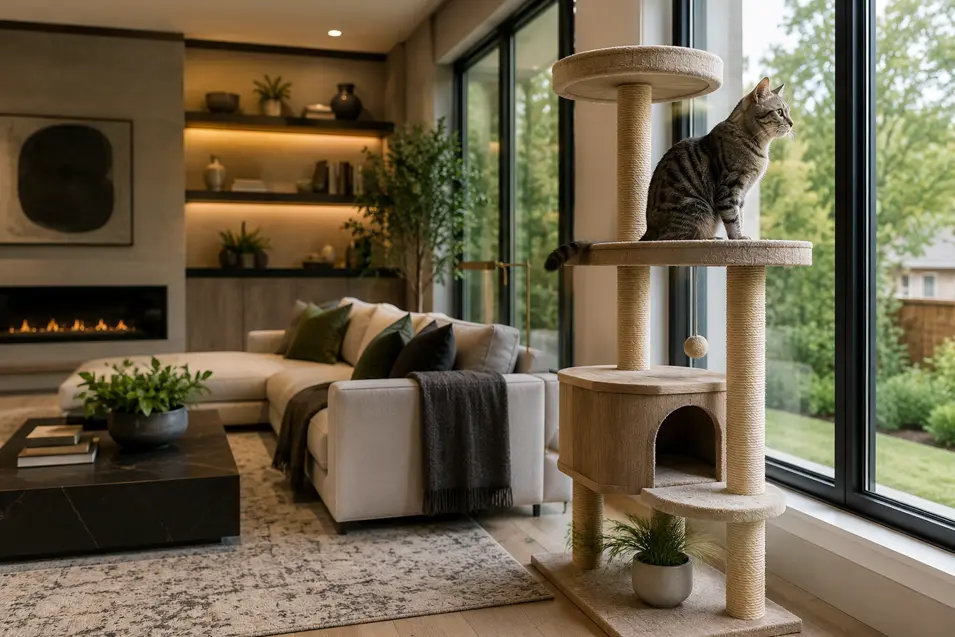
A thoughtfully designed cat tree can function as both pet furniture and décor.
Position it near windows where cats can enjoy natural views and sunlight.
Home Offices
Cat trees provide enrichment and entertainment for pets while owners work from home.
Bedrooms
Smaller cat trees often work well in bedrooms where space may be more limited.
Sunrooms
Natural light and outdoor views make sunrooms ideal locations for cat furniture.
Window Placement Matters
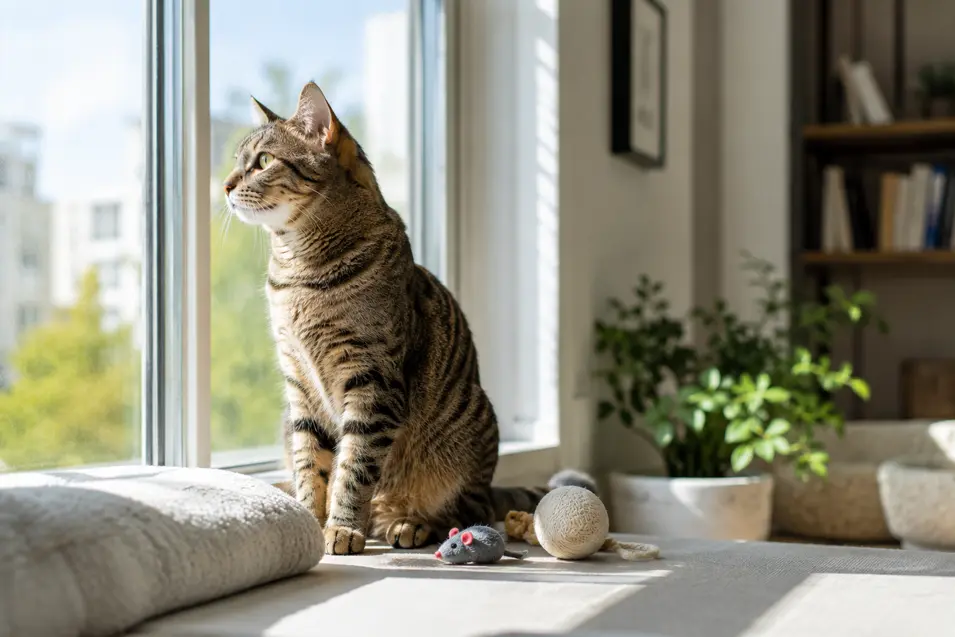
Cats enjoy observing birds, squirrels, and neighborhood activity.
Positioning a cat tree near a window can significantly increase its appeal.
Benefits include:
- Increased usage
- Additional mental stimulation
- Natural sunlight for lounging
- Reduced boredom
Many cats quickly claim window-side perches as their favorite spots in the house.
Consider Multi-Cat Households
Homes with multiple cats often benefit from taller cat trees featuring multiple levels.
Additional platforms provide:
- Separate resting areas
- Reduced competition
- Greater vertical territory
- More opportunities for play
This can help create a more harmonious environment for feline companions.
Look Beyond Traditional Carpet
Many stylish cat trees avoid the bulky carpet-covered designs that dominated the market for years.
Alternative materials include:
- Felt
- Woven fabrics
- Natural wood
- Sisal panels
- Upholstered cushions
These finishes often look more refined while remaining durable enough for everyday use.
Cat Trees as Part of a Pet-Friendly Design Strategy
Modern homeowners increasingly view pet accommodations as part of overall interior design.
Rather than hiding pet furniture, many designers now incorporate cat trees, wall shelves, and scratching surfaces into room layouts from the beginning.
This approach creates spaces that are comfortable for both humans and animals while maintaining visual cohesion throughout the home.
Final Thoughts
You don’t have to choose between a beautiful home and a happy cat.
Today’s stylish cat trees prove that pet furniture can be both functional and attractive. By selecting designs that complement your décor, use natural materials, and provide the enrichment cats need, it’s possible to create a home that works equally well for people and pets.
Whether your style leans toward Scandinavian simplicity, modern sophistication, or industrial charm, there is a cat tree available that can enhance your space while giving your feline companion a place to climb, scratch, and relax.
Frequently Asked Questions
Are modern cat trees worth the extra cost?
Many homeowners find that designer cat trees are worth the investment because they blend more effectively with home décor and often use higher-quality materials.
What color cat tree works best in modern homes?
Neutral colors such as white, gray, beige, charcoal, and natural wood tones typically integrate most successfully into modern interiors.
Where should a cat tree be placed?
Cat trees are often most successful when positioned near windows, in living rooms, or in areas where cats can observe household activity.
Are wooden cat trees better than carpeted cat trees?
Wooden cat trees often provide a more sophisticated appearance, though both styles can work well depending on your design preferences and your cat’s needs.
How tall should a cat tree be?
Most cats enjoy elevated viewpoints. Taller cat trees generally provide more opportunities for climbing and observation, provided they are stable and appropriately sized for the room.
Can stylish cat trees work in small apartments?
Absolutely. Many modern cat trees are designed specifically for smaller spaces and emphasize vertical functionality without occupying excessive floor area.