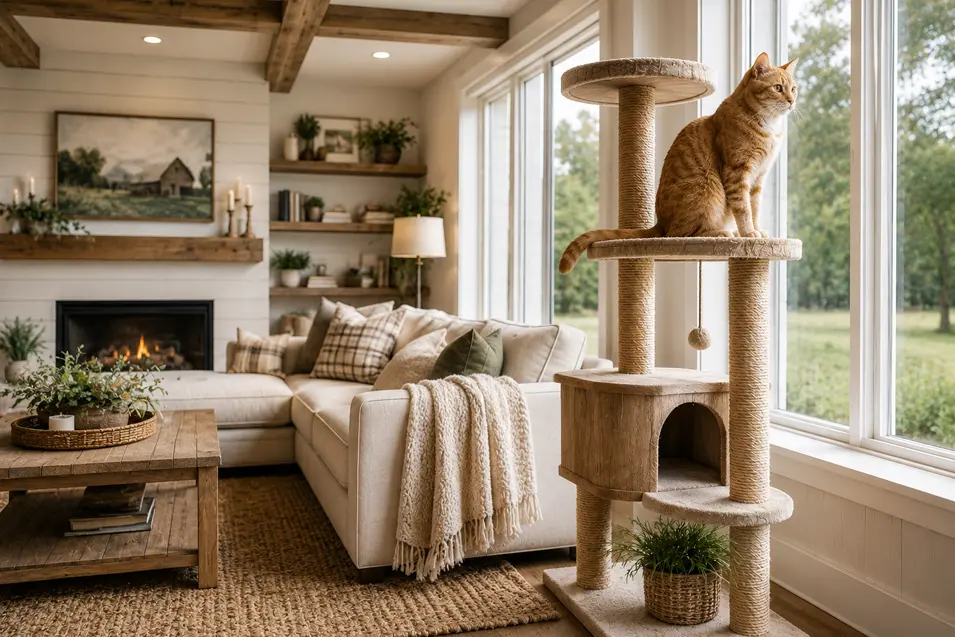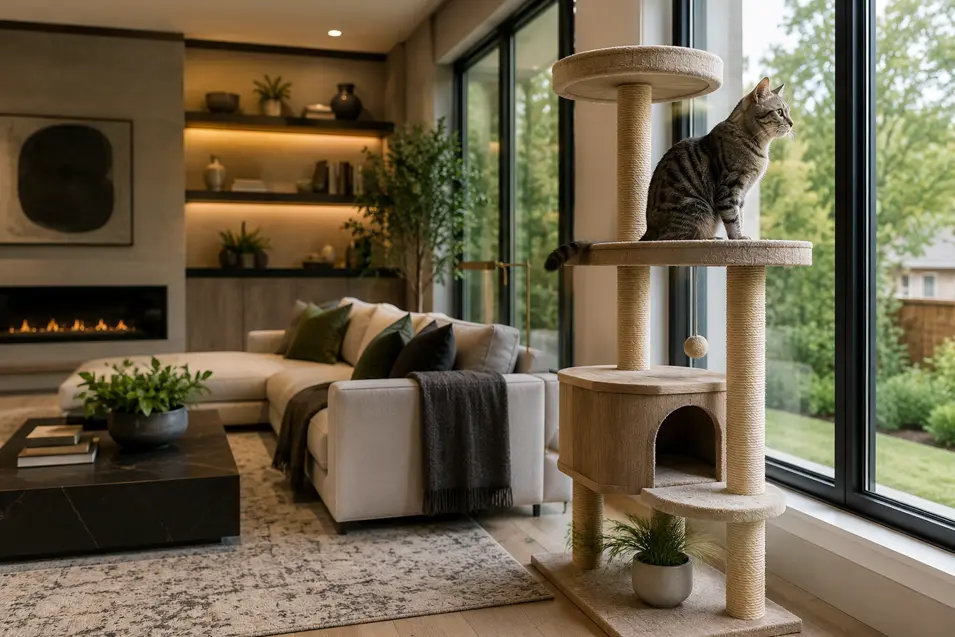
For cat owners, creating an enriching environment for their feline companions often means making room for cat trees, scratching posts, and climbing structures. Unfortunately, many traditional pet products don’t exactly complement modern home décor.
That’s where cat wall furniture comes in.
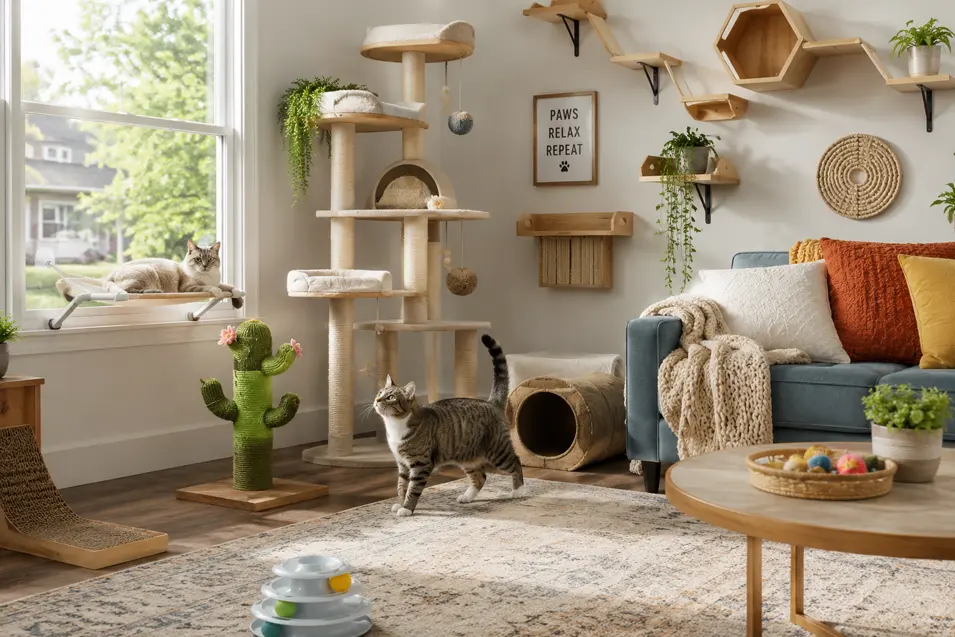
Designed to provide cats with vertical space while maintaining a stylish appearance, cat wall shelves, bridges, climbing systems, and wall-mounted perches have become increasingly popular among homeowners who want the best of both worlds: happy cats and beautiful interiors.
Whether you live in a modern apartment, a contemporary home, or a minimalist space, cat wall furniture can blend seamlessly into your décor while giving your cats the exercise and stimulation they need.
Why Cats Love Vertical Space
Cats naturally seek elevated positions where they can observe their surroundings, monitor activity, and feel secure.
In the wild, climbing offers protection and strategic advantages. Domestic cats retain many of these instincts, which is why you’ll often find them perched on bookshelves, countertops, or the highest piece of furniture available.
Providing dedicated vertical spaces can help satisfy these natural behaviors while reducing boredom and encouraging exercise.
Benefits of Cat Wall Furniture
- Encourages climbing and activity
- Provides mental stimulation
- Creates additional territory
- Reduces stress in multi-cat homes
- Helps save floor space
- Protects furniture from unwanted climbing
What Is Cat Wall Furniture?
Cat wall furniture refers to wall-mounted features designed specifically for feline use.
Popular options include:
- Floating cat shelves
- Wall-mounted cat steps
- Cat bridges
- Hammocks
- Window perches
- Climbing walls
- Cat condos
- Observation platforms
These systems can be installed individually or combined to create a custom cat playground throughout the home.
Floating Shelves for a Clean Modern Look
Floating cat shelves are among the most popular options for design-conscious homeowners.
Their simple appearance fits naturally into modern interiors while providing cats with elevated resting and observation areas.
Wood finishes such as oak, walnut, maple, and birch often complement contemporary décor particularly well.
Design Tip
Choose shelf finishes that coordinate with existing cabinetry, flooring, or furniture for a cohesive appearance.
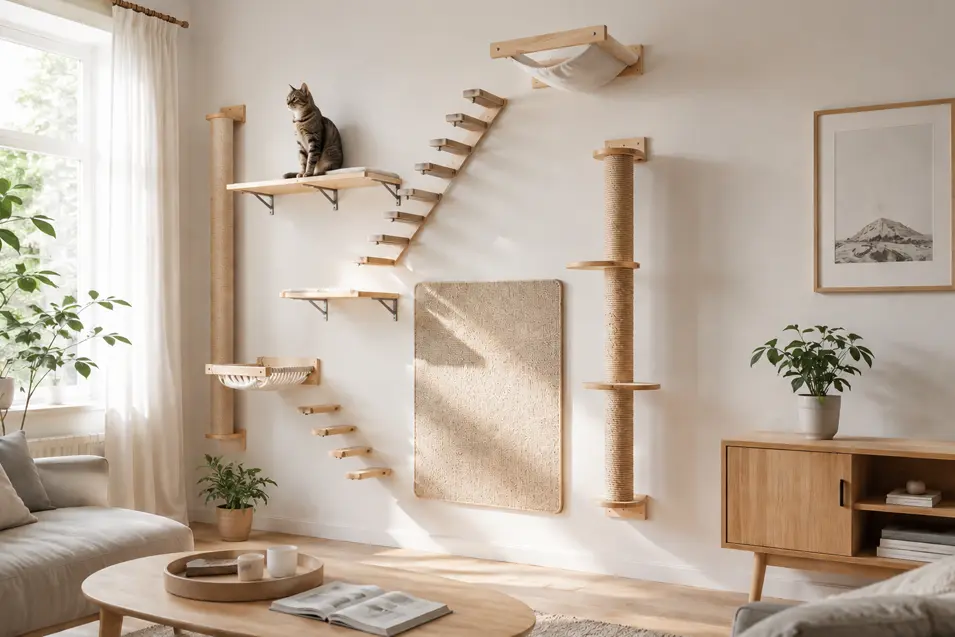
Create a Cat Climbing Wall
For active cats, a dedicated climbing wall can serve as both functional pet furniture and a unique design feature.
By arranging shelves, steps, and platforms in an artistic layout, homeowners can create a visually interesting wall that doubles as feline enrichment.
Popular configurations include:
- Stair-step designs
- Zigzag pathways
- Geometric layouts
- Asymmetrical installations
When designed thoughtfully, these structures often resemble modern wall art.
Add Wall-Mounted Cat Bridges
Cat bridges create connections between platforms and provide opportunities for movement and exploration.
These elevated walkways encourage exercise while adding visual interest to a room.
Many modern bridge designs incorporate:
- Natural wood
- Metal accents
- Rope elements
- Minimalist hardware
The result is a feature that feels intentional rather than purely functional.
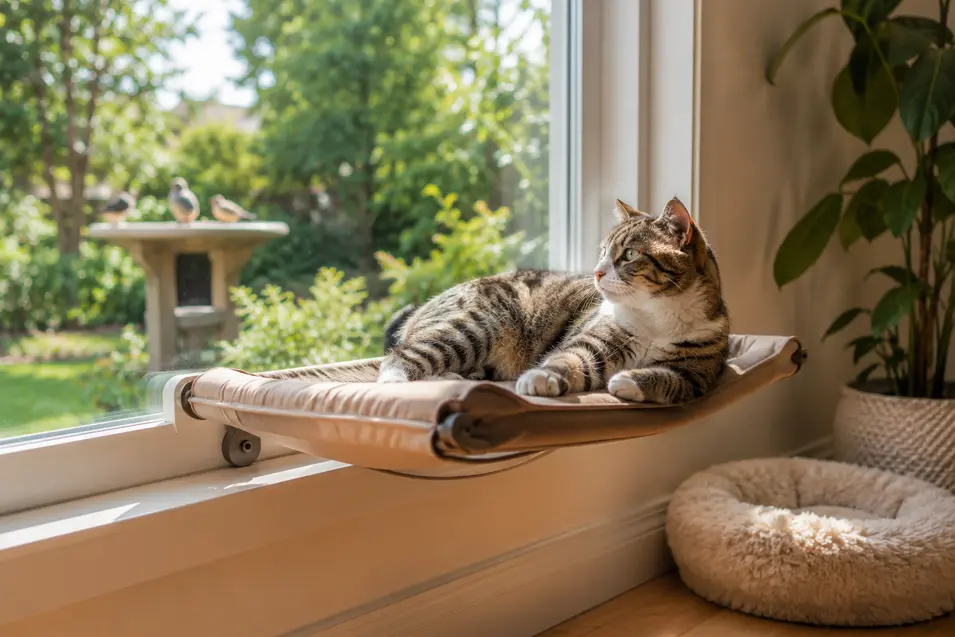
Integrate Window Perches
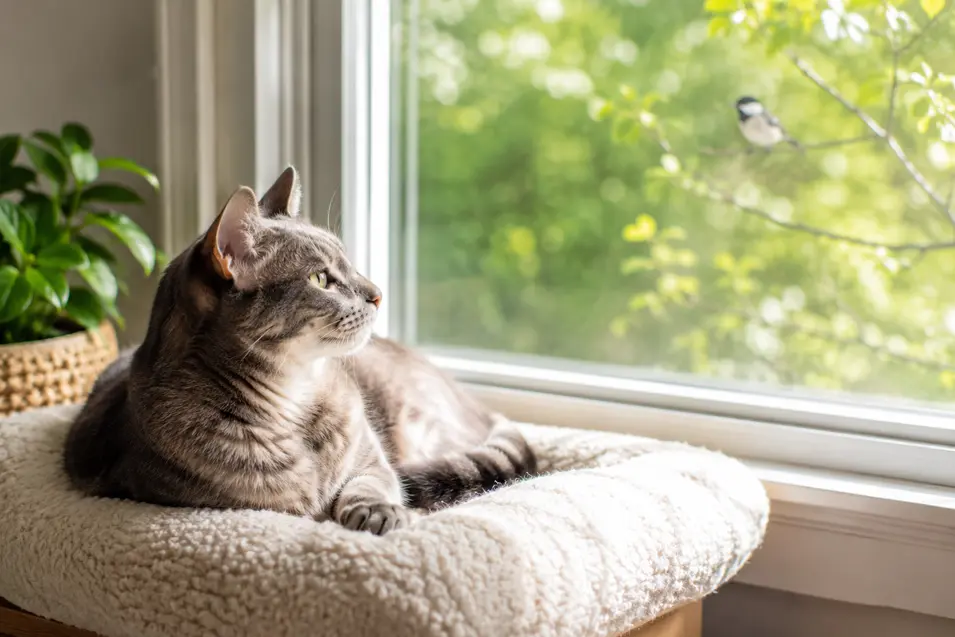
Cats love watching birds, people, and outdoor activity.
Wall-mounted window perches allow cats to enjoy these views while freeing up valuable floor space.
Window perches work especially well in:
- Living rooms
- Home offices
- Bedrooms
- Sunrooms
They also help create natural lounging areas that cats often prefer over traditional furniture.
Choose Neutral Colors and Natural Materials
The key to blending cat furniture with modern décor is selecting materials that complement your existing design style.
Popular choices include:
Wood Tones
- Walnut
- Oak
- Ash
- Maple
- Bamboo
Neutral Colors
- White
- Black
- Gray
- Beige
- Natural wood finishes
These materials tend to integrate more successfully into contemporary interiors than brightly colored pet furniture.
Design Around Your Existing Décor Style
Cat wall furniture can work with a variety of design aesthetics.
Modern
Choose clean lines, simple platforms, and minimal hardware.
Scandinavian
Focus on light wood tones, simplicity, and functionality.
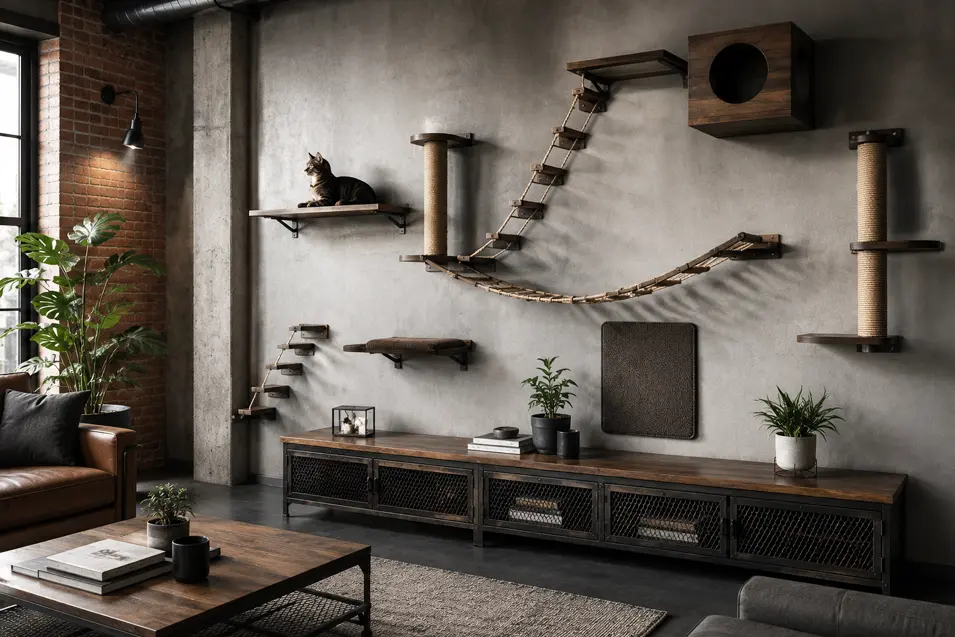
Industrial
Combine wood shelves with black metal brackets and exposed materials.
Contemporary
Use geometric layouts and integrated lighting.
Minimalist
Limit installations to a few carefully positioned platforms that maintain visual simplicity.
Use Cat Furniture as a Design Feature
Instead of trying to hide cat furniture, consider embracing it as part of your home’s design.
A thoughtfully designed climbing wall can become an architectural element that adds personality and visual interest to a room.
Some homeowners even create feature walls specifically dedicated to cat activity while coordinating materials with the rest of the home’s décor.
Best Rooms for Cat Wall Furniture
Living Rooms
Allows cats to participate in family activities while enjoying elevated viewpoints.
Home Offices
Provides entertainment and enrichment for cats while owners work.
Bedrooms
Offers additional territory without taking up floor space.
Hallways
Transforms underutilized wall space into functional cat territory.
Multi-Cat Homes
Helps reduce competition by creating additional vertical zones.
Safety Considerations
Before installing cat wall furniture, consider:
- Wall stud placement
- Weight capacity
- Secure mounting hardware
- Safe spacing between platforms
- Easy access points
- Cat age and mobility
Proper installation is essential for both safety and longevity.
Why Cat Wall Furniture Is Growing in Popularity
As homeowners increasingly view pets as family members, there’s growing demand for products that accommodate animals without compromising interior design.
Cat wall furniture addresses this need by combining function, aesthetics, and enrichment into a single solution.
Rather than hiding pet-related items, homeowners can create spaces that celebrate both their design preferences and their cats’ natural behaviors.
Final Thoughts
Cat wall furniture offers a practical and stylish way to enrich your cat’s environment while preserving the beauty of your home.
From floating shelves and bridges to climbing walls and window perches, modern cat furniture can blend seamlessly into contemporary interiors while supporting your cat’s physical and mental well-being.
With thoughtful planning and design, it’s possible to create a home that feels equally welcoming to both people and pets.
Frequently Asked Questions
Is cat wall furniture safe?
Yes, provided it is properly installed using appropriate mounting hardware and anchored securely to wall studs when necessary.
Do cats actually use wall furniture?
Most cats naturally enjoy climbing and elevated spaces. Many quickly adapt to cat shelves, bridges, and wall-mounted perches.
Is cat wall furniture better than a cat tree?
Both offer benefits. Cat wall furniture saves floor space and often integrates more effectively into modern home décor, while cat trees may provide scratching surfaces and enclosed resting areas.
What type of cat wall furniture is best for beginners?
Floating shelves and window perches are often the easiest starting points and require minimal installation compared to larger climbing systems.
Can cat wall furniture work in small apartments?
Absolutely. Wall-mounted systems are particularly useful in small homes because they utilize vertical space without occupying valuable floor area.
How high should cat wall shelves be installed?
Shelf height depends on your cat’s age, mobility, and confidence level. Most installations include multiple levels that allow cats to climb comfortably between platforms.