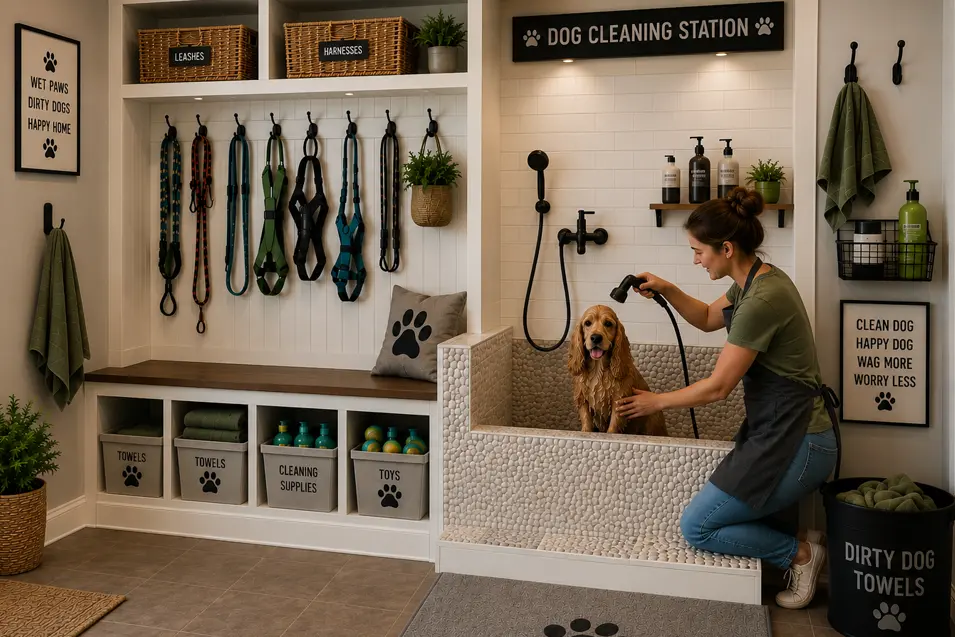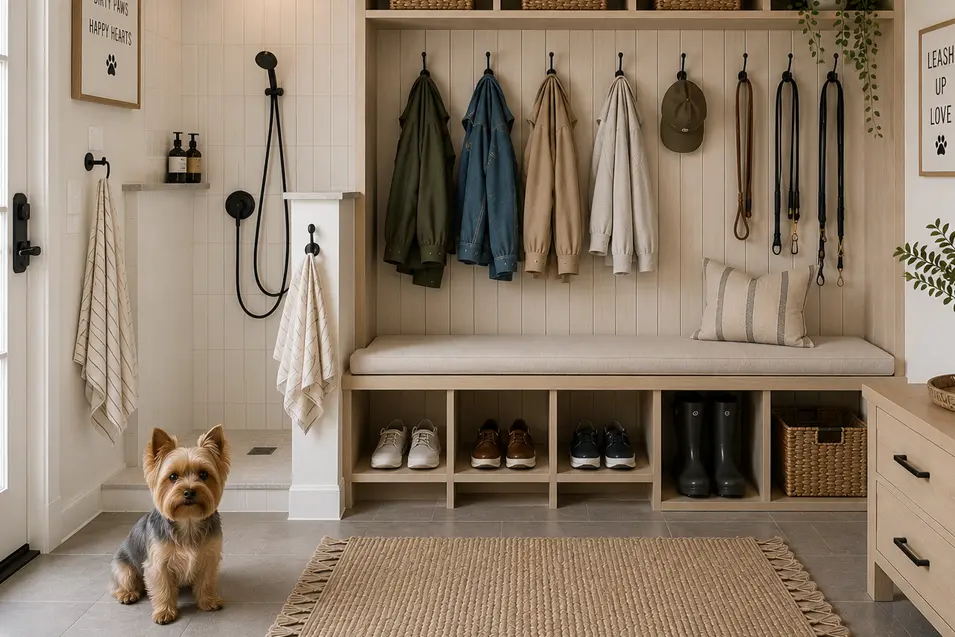
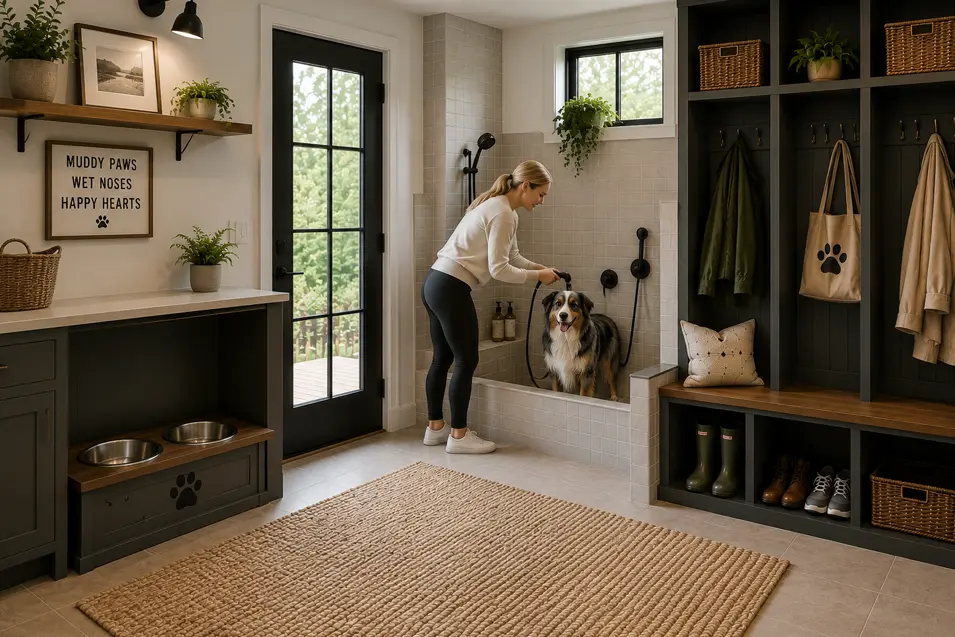
For many pet owners, mealtime can quickly become messy. Water splashes, scattered kibble, food storage containers, and feeding accessories often take up valuable kitchen space and create clutter. That’s why more homeowners are incorporating dedicated pet feeding areas into their mudroom designs.
A thoughtfully designed feeding station keeps pet supplies organized, simplifies daily routines, and helps contain messes in a practical location. Whether you have one pet or several, a mudroom feeding area can improve both convenience and cleanliness throughout your home.
Why Place a Pet Feeding Area in the Mudroom?
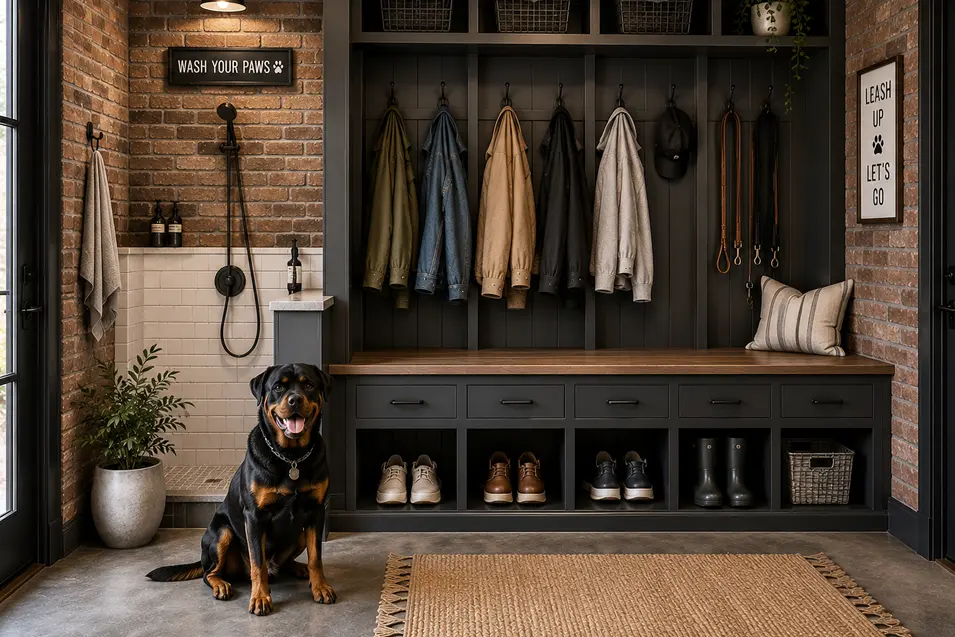
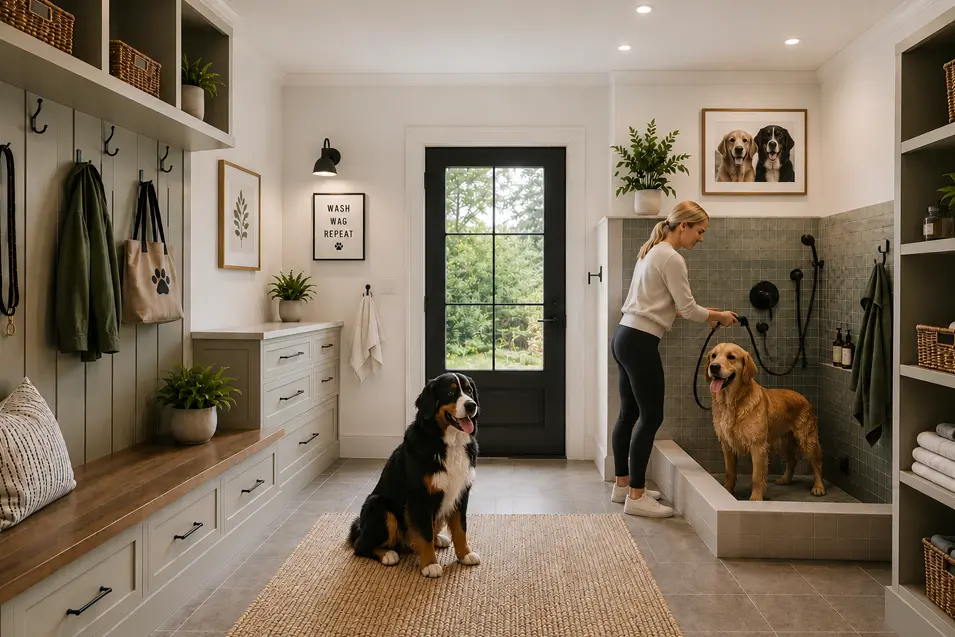
Mudrooms are often the perfect location for pet-related activities. Since many homeowners already use the space for leashes, grooming supplies, and pet storage, adding a feeding area creates a centralized hub for daily pet care.
Benefits of a mudroom feeding station include:
- Reducing clutter in the kitchen
- Creating a dedicated area for feeding routines
- Improving organization of pet supplies
- Keeping food and water bowls out of high-traffic areas
- Simplifying cleanup and maintenance
- Providing a consistent feeding environment for pets
For busy households, having all pet essentials in one location can make everyday life significantly easier.
Choosing the Right Location
The success of a pet feeding area often depends on its placement within the mudroom.
Look for a location that offers:
- Easy access for pets
- Adequate floor space
- Nearby storage opportunities
- Minimal foot traffic during feeding times
- Access to water if possible
Avoid placing food bowls directly beside exterior doors where drafts, dirt, or constant activity may disturb pets while they eat.
A quiet corner often works best for creating a comfortable feeding environment.
Consider Your Pet’s Size and Needs
The ideal feeding setup depends largely on the size, age, and habits of your pets.
For larger dogs, elevated feeding stations may improve comfort and reduce strain during meals.
For smaller pets, standard bowl placement may be sufficient.
If you have multiple pets, consider:
- Separate feeding stations
- Additional spacing between bowls
- Individual storage areas
- Dedicated water stations
Designing around your pets’ specific needs can help reduce competition and create a more peaceful feeding routine.
Built-In Feeding Stations
One of the most popular mudroom upgrades is a built-in feeding station.
These custom features often include:
- Recessed food and water bowls
- Integrated cabinetry
- Hidden storage compartments
- Pull-out feeding drawers
Built-in stations offer a clean, organized appearance while maximizing available space.
When not in use, some pull-out designs can be tucked away, making them ideal for smaller mudrooms.
Add Convenient Food Storage
Keeping food close to the feeding area streamlines daily routines.
Storage options may include:
Cabinets
Dedicated cabinets can conceal food containers, treats, and feeding accessories.
Pull-Out Drawers
Deep drawers make it easy to access food bags and bulk supplies.
Airtight Containers
Proper storage helps maintain freshness while reducing odors and preventing pest issues.
Open Shelving
Frequently used items can remain within easy reach while still looking organized.
The goal is to keep feeding supplies accessible without creating clutter.
Select Durable, Easy-to-Clean Flooring
Food and water spills are inevitable, making flooring selection especially important.
Pet-friendly flooring options include:
- Porcelain tile
- Luxury vinyl plank (LVP)
- Natural stone
- Waterproof laminate products
These materials resist moisture, scratches, and stains while simplifying cleanup.
Avoid flooring that may absorb spills or become damaged by repeated exposure to water.
Incorporate a Dedicated Water Station
Hydration is just as important as feeding.
Many homeowners choose to create a separate water station that remains accessible throughout the day.
Helpful additions may include:
- Spill-resistant bowls
- Waterproof mats
- Elevated water stations
- Automatic water dispensers
Keeping water separate from food areas can sometimes reduce congestion in multi-pet households.
Make Cleanup Simple
A successful feeding area should be easy to maintain.
Consider adding:
- Washable feeding mats
- Waterproof wall surfaces
- Easy-access storage
- Durable countertops
- Nearby waste containers
These features help contain messes and make daily cleaning more efficient.
The easier cleanup becomes, the more likely you’ll maintain a tidy feeding space.
Design Solutions for Small Mudrooms
Even compact mudrooms can accommodate a functional pet feeding area.
Space-saving ideas include:
- Corner feeding stations
- Fold-down feeding shelves
- Pull-out drawer systems
- Wall-mounted storage
- Multi-purpose cabinetry
Small-space designs can often be just as effective as larger custom installations when thoughtfully planned.
Feeding Multiple Pets Successfully
Homes with multiple pets require additional planning.
Helpful strategies include:
- Assigning designated feeding locations
- Using clearly labeled storage bins
- Providing separate water bowls
- Establishing consistent feeding schedules
Creating individual spaces for each pet can reduce stress and prevent food-related conflicts.
Common Mistakes to Avoid
When designing a mudroom feeding area, avoid these common issues:
- Insufficient storage for food and supplies
- Placing bowls in high-traffic areas
- Using flooring that stains easily
- Ignoring cleanup requirements
- Overcrowding feeding stations
- Forgetting future pet needs
Careful planning can help ensure your feeding area remains practical and functional for years to come.
Final Thoughts
A dedicated pet feeding area transforms the mudroom into a complete pet-care center. By combining smart storage, durable materials, and thoughtful design, homeowners can create a feeding station that keeps supplies organized, minimizes messes, and simplifies daily routines.
Whether you choose a simple corner setup or a custom built-in feeding station, incorporating pet-friendly features into your mudroom can improve convenience for both you and your pets while helping maintain a cleaner, more organized home.