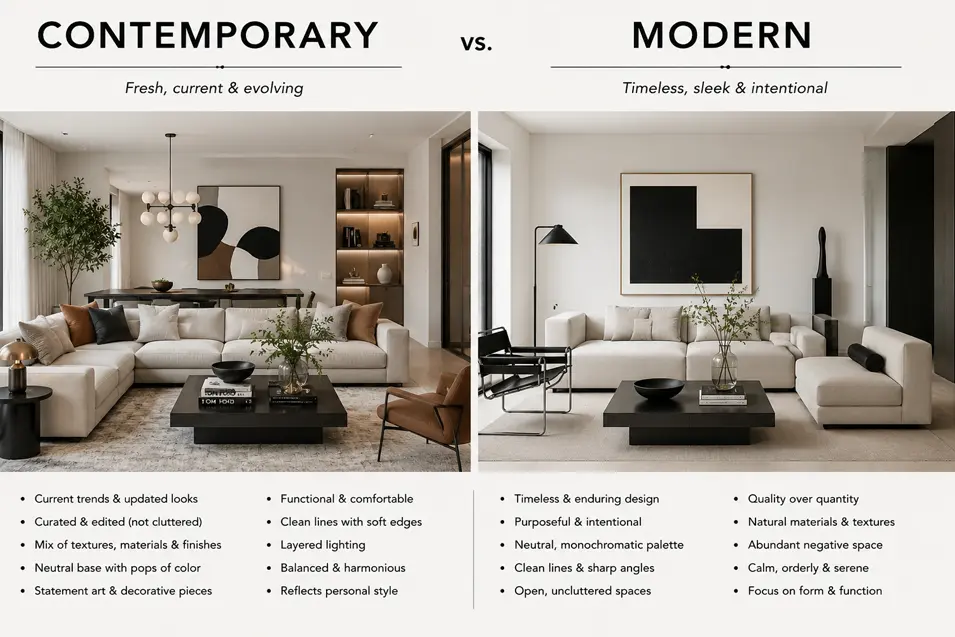
Many people use the terms modern and contemporary interchangeably, but they are not the same thing.
While both styles embrace simplicity, clean lines, and uncluttered spaces, they have different origins, philosophies, and design characteristics. Understanding these differences can help homeowners create a more cohesive space and choose a style that truly fits their personality and lifestyle.
If you’ve ever wondered whether your home is modern or contemporary, you’re not alone. These two popular design styles share many similarities, but several important distinctions set them apart.
Why People Confuse Modern and Contemporary Design
At first glance, modern and contemporary interiors often look similar.
Both styles typically feature:
- Open floor plans
- Neutral color palettes
- Minimal clutter
- Simple furniture
- Clean architectural lines
The confusion comes from the fact that the word “modern” is commonly used to mean “current” or “up-to-date.”
In design, however, Modern is a specific historical style, while Contemporary refers to what is popular right now.
That distinction makes all the difference.
What Is Modern Interior Design?
Modern design originated during the early-to-mid twentieth century and was heavily influenced by the Modernist movement.
It emphasized:
- Function over decoration
- Simplicity
- Clean lines
- Honest materials
- Practical living
Modern interiors are based on established design principles that remain relatively consistent over time.
Key Characteristics of Modern Design
Modern interiors often feature:
- Clean horizontal and vertical lines
- Neutral color palettes
- Natural wood tones
- Functional furniture
- Minimal ornamentation
- Open spaces
- Large windows
The goal is to create a calm, organized environment where every element serves a purpose.
What Is Contemporary Interior Design?
Contemporary design reflects current decorating trends and evolves over time.
Unlike modern design, contemporary interiors are not tied to a specific historical period.
Instead, contemporary design adapts to changing tastes, technologies, materials, and lifestyles.
What is considered contemporary today may look very different twenty years from now.
Key Characteristics of Contemporary Design
Contemporary interiors often include:
- Clean lines
- Mixed materials
- Statement lighting
- Flexible layouts
- Curved furniture
- Large windows
- Current color trends
- Innovative design features
The style embraces change and often incorporates ideas from multiple design movements.
Modern vs Contemporary: The Biggest Differences
Although the styles share many similarities, several important differences separate them.
1. Historical Style vs Current Trends
Modern Design
Modern design is a defined style rooted in the Modernist movement.
Its principles remain relatively stable regardless of changing trends.
Contemporary Design
Contemporary design changes over time and reflects current preferences.
Today’s contemporary interiors may look very different from contemporary interiors twenty years ago.
Winner for Timelessness
Modern design is generally more timeless because it is based on established principles rather than evolving trends.
2. Furniture Style
Modern Furniture
Modern furniture tends to be:
- Streamlined
- Functional
- Simple
- Low-profile
- Geometric
The emphasis is on practicality and clean design.
Contemporary Furniture
Contemporary furniture often incorporates:
- Curved shapes
- Unique silhouettes
- Statement pieces
- Trend-driven designs
- Mixed materials
Contemporary interiors allow for greater experimentation.
3. Color Palettes
Modern Colors
Modern interiors typically rely on:
- White
- Beige
- Gray
- Black
- Warm wood tones
Color is often used sparingly.
Contemporary Colors
Contemporary interiors may include:
- Neutral foundations
- Bold accent colors
- Trend-driven palettes
- Contrasting materials
Color trends evolve as contemporary design changes.
4. Materials
Modern Materials
Modern design often emphasizes:
- Natural wood
- Leather
- Stone
- Glass
- Steel
Materials are typically showcased in an honest and straightforward way.
Contemporary Materials
Contemporary interiors often mix:
- Metal
- Concrete
- Glass
- Recycled materials
- Sustainable products
- Innovative finishes
The focus is often on combining textures and materials in unexpected ways.
5. Decorative Elements
Modern Design
Modern interiors generally use fewer accessories and decorative details.
Every object is chosen intentionally.
Contemporary Design
Contemporary spaces may include:
- Statement artwork
- Sculptural lighting
- Decorative accents
- Trend-focused décor
The style is still clean but often feels more expressive.
Which Style Feels Warmer?
Modern design often incorporates natural wood and organic materials that add warmth and comfort.
Contemporary interiors can sometimes feel cooler because they frequently use metal, glass, and high-contrast finishes.
However, either style can feel warm or inviting when balanced with texture, lighting, and comfortable furnishings.
Which Style Is Better for Small Spaces?
Both styles work exceptionally well in smaller homes and apartments.
Modern Design
Modern interiors help small spaces feel larger through:
- Simple furniture
- Open layouts
- Limited clutter
- Functional design
Contemporary Design
Contemporary interiors maximize flexibility through:
- Multifunctional furniture
- Creative storage solutions
- Flexible layouts
Both styles can be excellent choices for condos, apartments, and smaller homes.
Which Style Is More Family and Pet Friendly?
Both styles can be adapted for families and pet owners.
Modern interiors often benefit from:
- Durable materials
- Fewer decorative objects
- Easy-to-clean surfaces
Contemporary interiors may include:
- Performance fabrics
- Innovative storage solutions
- Flexible furniture arrangements
For pet-friendly homes, consider:
- Washable rugs
- Durable flooring
- Stain-resistant upholstery
- Built-in pet spaces
- Easy-to-clean surfaces
The specific materials you choose matter more than the style itself.
Can You Mix Modern and Contemporary Design?
Absolutely.
In fact, many homeowners unknowingly combine the two.
A room might feature:
- Modern furniture
- Contemporary lighting
- Modern architecture
- Contemporary artwork
Because contemporary design often borrows elements from modern design, the two styles can blend naturally.
The key is maintaining a cohesive color palette and overall aesthetic.
How to Choose Between Contemporary and Modern
Choose Modern if you prefer:
- Timeless design
- Functional furniture
- Natural materials
- Clean architectural lines
- Consistency over trends
Choose Contemporary if you prefer:
- Current trends
- Design flexibility
- Statement pieces
- Innovative materials
- Evolving aesthetics
Choose a blend of both if you appreciate the structure of modern design but enjoy incorporating fresh ideas and current influences.
Quick Comparison
| Feature | Modern | Contemporary |
| Based On | Historical design movement | Current trends |
| Style Stability | Consistent | Constantly evolving |
| Furniture | Simple and functional | Trend-driven and varied |
| Colors | Neutral and restrained | Flexible and trend-based |
| Materials | Natural and timeless | Mixed and innovative |
| Décor | Minimal and intentional | More expressive |
Final Thoughts
Modern and contemporary design share many similarities, but understanding their differences can help you create a home that better reflects your personal style.
Modern design focuses on timeless simplicity, function, and intentional living. Contemporary design embraces current trends, innovation, and flexibility.
Neither style is inherently better. The right choice depends on whether you prefer the enduring appeal of established design principles or the excitement of evolving trends.
For many homeowners, the ideal solution is a thoughtful combination of both—using modern design as a foundation while incorporating contemporary elements that keep the space feeling fresh and current.