Gustavian and Scandinavian design share many characteristics that make them easy to confuse. Both styles originate from Nordic countries, embrace light color palettes, prioritize natural materials, and create homes that feel calm, welcoming, and functional.
At first glance, the two styles can appear remarkably similar.
However, Gustavian and Scandinavian design come from different periods and reflect different philosophies. Gustavian design blends Swedish neoclassical elegance with Nordic simplicity, while modern Scandinavian design focuses on functionality, minimalism, and contemporary living.
Understanding the differences can help homeowners choose the style that best suits their home and lifestyle.
What Is Gustavian Design?
Gustavian design originated in Sweden during the late eighteenth century under King Gustav III.
Inspired by the grand neoclassical interiors of France, Gustav sought to bring similar elegance to Sweden. However, rather than replicating the lavish French style, Swedish designers adapted it to suit Nordic tastes, climates, and available materials.
The result was a lighter, simpler, and more restrained version of European luxury.
Common characteristics include:
- Pale color palettes
- Painted furniture
- Weathered finishes
- Neoclassical details
- Elegant proportions
- Natural materials
Gustavian interiors feel timeless, refined, and quietly sophisticated.
What Is Scandinavian Design?
Scandinavian design emerged during the twentieth century and became known worldwide for its emphasis on simplicity, functionality, and everyday comfort.
The style focuses on creating practical living spaces that maximize light, comfort, and efficiency.
Common characteristics include:
- Clean lines
- Minimal ornamentation
- Natural wood finishes
- Functional furniture
- Neutral color schemes
- Modern simplicity
Scandinavian interiors often feel bright, airy, and highly livable.
The emphasis is on beauty through practicality.

Similarities Between Gustavian and Scandinavian Design
The reason these styles are often confused is because they share several important design principles.
Both styles embrace:
- Light color palettes
- Natural materials
- Bright interiors
- Functional living spaces
- Simplicity
- Nordic influences
Both also seek to create calm environments that feel comfortable and welcoming.
Neither style relies on excessive ornamentation or heavy visual clutter.
Key Differences Between Gustavian and Scandinavian Design
While the overall feeling may be similar, the details reveal important distinctions.
Historical Influence
Gustavian design is deeply rooted in history.
The style draws heavily from:
- Neoclassical architecture
- Eighteenth-century European design
- Traditional craftsmanship
- Historical furnishings
Scandinavian design is much more modern.
Its influences include:
- Modernism
- Functional design
- Contemporary lifestyles
- Minimalist principles
Gustavian looks to the past, while Scandinavian looks toward the present.
Furniture Styles
Gustavian furniture often features:
- Fluted legs
- Carved details
- Painted finishes
- Elegant silhouettes
- Classical proportions
Scandinavian furniture tends to emphasize:
- Clean lines
- Natural wood
- Minimal detailing
- Modern forms
- Practical functionality
Both styles value craftsmanship, but Gustavian furniture feels more decorative.
Color Palettes
Gustavian interiors typically feature:
- Soft white
- Cream
- Pale gray
- Dusty blue
- Sage green
These muted colors help create an atmosphere of elegance and tranquility.
Scandinavian interiors often use:
- Bright white
- Light gray
- Beige
- Black accents
- Natural wood tones
The palette generally feels cleaner and more contemporary.
Decorative Elements
Gustavian design often includes:
- Antique mirrors
- Decorative moldings
- Chandeliers
- Classical artwork
- Elegant accessories
Scandinavian interiors are more restrained.
Common decorative elements include:
- Simple artwork
- Natural textiles
- Indoor plants
- Functional accessories
- Minimal décor
Scandinavian design tends to prioritize simplicity over ornamentation.
Overall Mood
Gustavian interiors typically feel:
- Elegant
- Romantic
- Historic
- Refined
Scandinavian interiors tend to feel:
- Modern
- Practical
- Relaxed
- Minimal
Both styles are calming, but Gustavian feels more formal and decorative.
Gustavian vs. Scandinavian Furniture
Furniture is often the easiest way to distinguish between these two styles.
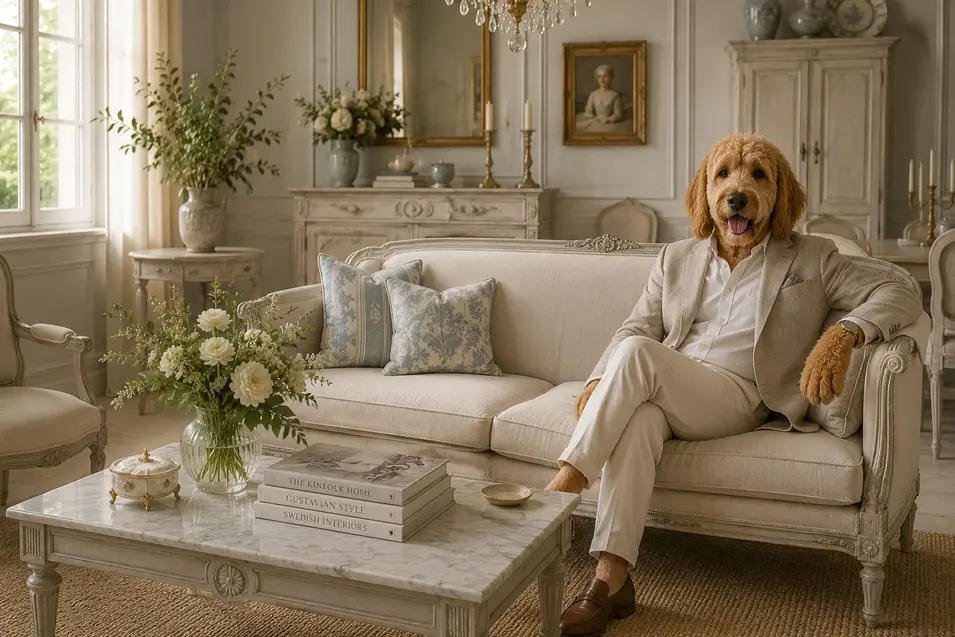
A Gustavian living room may include:
- Painted wood furniture
- Carved details
- Antique-inspired pieces
- Linen upholstery
- Decorative accents
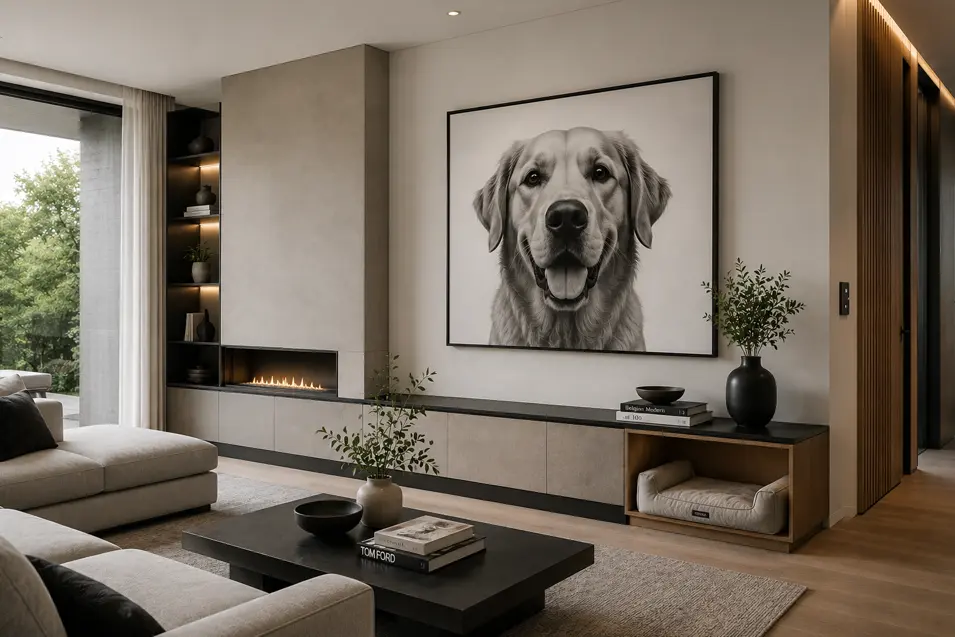
A Scandinavian living room is more likely to feature:
- Natural wood furniture
- Streamlined sofas
- Minimalist shelving
- Modern lighting
- Functional storage
The Gustavian approach emphasizes elegance, while Scandinavian furniture focuses on simplicity.
Which Style Is Better for Pet Owners?
Both styles can work beautifully in pet-friendly homes.
Scandinavian design often has the advantage of practicality. Durable materials, simple layouts, and uncluttered spaces can make daily life with pets easier to manage.
Gustavian interiors can also accommodate pets well, particularly when using washable fabrics and durable finishes. However, antique furnishings and delicate decorative accessories may require additional care.
For active households with dogs or cats, Scandinavian design is often slightly easier to maintain.
How to Choose Between Gustavian and Scandinavian Design
If you appreciate antique-inspired furnishings, subtle elegance, and historical European influences, Gustavian design may be the better fit.
If you prefer modern simplicity, functional furniture, and uncluttered living spaces, Scandinavian design may feel more natural.
Many homeowners successfully blend elements of both styles, combining Gustavian charm with Scandinavian practicality.
The two aesthetics complement each other surprisingly well.
Final Thoughts
Gustavian and Scandinavian design both celebrate light, simplicity, and the beauty of Nordic living, but they approach those goals differently. Gustavian design blends Swedish elegance with neoclassical influences, while Scandinavian design focuses on modern functionality and minimalist comfort.
Neither style is inherently better. The right choice depends on whether you’re drawn to timeless historical charm or contemporary simplicity.
As Scout discovered while comparing an elegant Swedish manor with a modern Nordic retreat, both styles prove that beautiful interiors don’t need excess—they simply need thoughtful design, quality craftsmanship, and a sense of balance.
Still deciding? Compare the key elements of Gustavian vs. Scandinavian design, then visit our detailed Gustavian Style Guide and Scandinavian Style Guide for room-by-room inspiration.