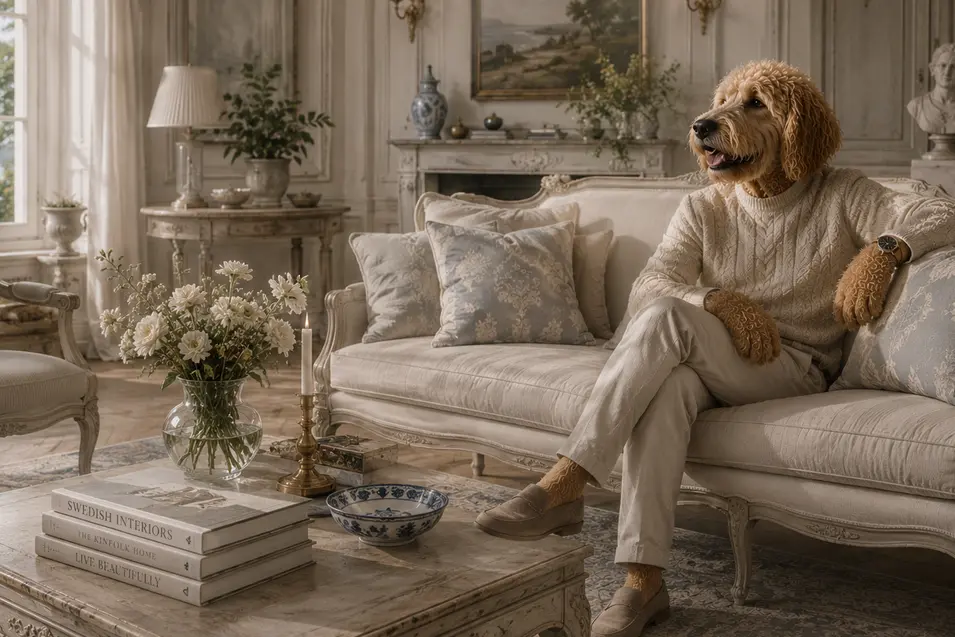
Gustavian style is a timeless design aesthetic that combines the elegance of European neoclassical design with the simplicity and practicality of Scandinavian living. Originating in Sweden during the late eighteenth century, Gustavian interiors are known for their light color palettes, graceful furnishings, weathered finishes, and understated sophistication.
Unlike the lavish interiors that inspired it, Gustavian design embraces restraint. Ornate details are softened, colors are muted, and furnishings are designed to feel elegant without becoming overly formal. The result is a style that feels bright, refined, and welcoming while maintaining a strong sense of history and craftsmanship.
For homeowners who appreciate classic beauty and Scandinavian simplicity, Gustavian style offers the perfect balance.
The Origins of Gustavian Design
Gustavian style emerged during the reign of King Gustav III of Sweden in the late 1700s. Inspired by the grand palaces and neoclassical interiors of France, Gustav sought to bring similar elegance to Sweden.
However, Sweden’s climate, available materials, and cultural preferences led to a more restrained interpretation of French luxury. Rich gilding and elaborate ornamentation were simplified, while lighter colors were used to brighten interiors during long Nordic winters.
The result was a uniquely Swedish style that retained classical influences while embracing practicality, comfort, and understated beauty.
Today, Gustavian design remains one of the most admired examples of Scandinavian elegance.
Key Characteristics of Gustavian Style
Several defining features help distinguish Gustavian interiors from other traditional and Scandinavian design styles.
Soft and Light Color Palettes
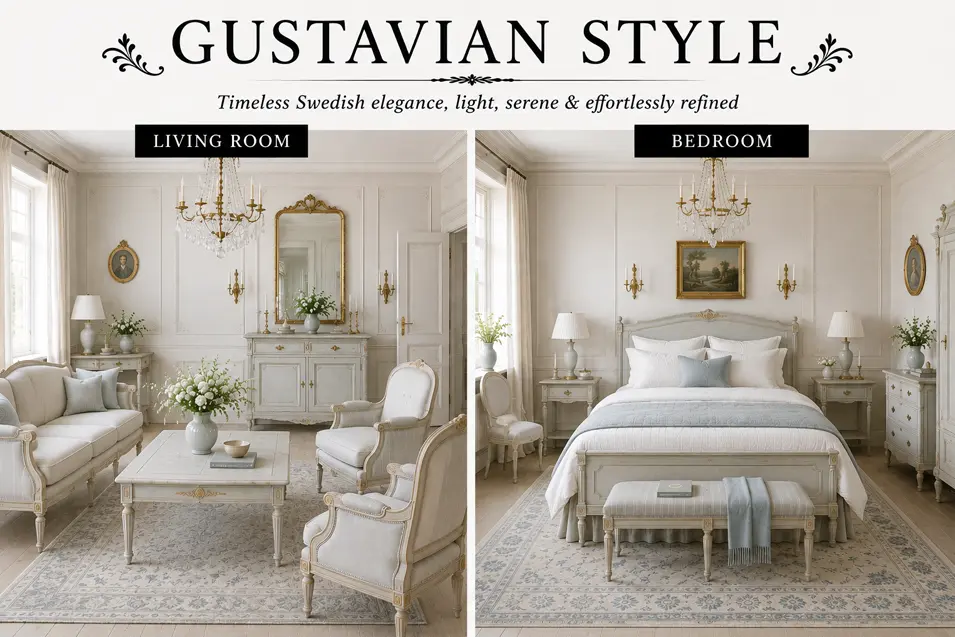
Gustavian homes are known for their pale, muted colors.
Popular shades include:
- Soft white
- Cream
- Pale gray
- Dusty blue
- Sage green
- Light beige
These colors help maximize natural light and create interiors that feel calm and airy.
Weathered and Painted Finishes
Furniture often features painted surfaces that have naturally aged over time or have been intentionally distressed.
These weathered finishes add character while contributing to the style’s relaxed elegance.
Neoclassical Influences
Gustavian furnishings frequently incorporate classical design elements such as:
- Fluted legs
- Carved detailing
- Symmetrical forms
- Decorative moldings
- Elegant proportions
These features add sophistication without overwhelming the room.
Natural Materials
Wood remains a central component of Gustavian interiors.
Linen, cotton, wool, stone, and other natural materials are also commonly used to create warmth and texture throughout the home.
Refined Simplicity
Perhaps the most defining characteristic of Gustavian style is its restraint.
While decorative details are present, they are carefully balanced and never excessive. Every element contributes to an atmosphere of quiet elegance.
Why Homeowners Love Gustavian Design
One reason Gustavian style continues to attract homeowners is its timeless appeal.
The combination of light colors, elegant furnishings, and natural materials creates interiors that feel both sophisticated and comfortable. The style offers the beauty of traditional European design without the heaviness often associated with more ornate historical interiors.
Many people are also drawn to the sense of tranquility that Gustavian spaces provide. The soft palette and balanced design create rooms that feel peaceful and inviting.
How to Bring Gustavian Style Into Your Home
Creating a Gustavian-inspired interior begins with establishing a light and neutral foundation.
Choose furniture with graceful silhouettes and painted finishes, and incorporate natural materials through textiles, flooring, and decorative accents. Look for pieces that feature subtle classical detailing without excessive ornamentation.
Layer soft linens, wool throws, and textured fabrics to add warmth and comfort. Antique mirrors, simple chandeliers, and vintage-inspired accessories can help reinforce the aesthetic.
The goal is to create a space that feels elegant yet approachable.
Gustavian vs. French Country Design
Although both styles share European roots, Gustavian interiors are generally lighter and more restrained.
French Country design often incorporates warmer colors, rustic textures, and a more decorative aesthetic. Gustavian style relies on pale colors, neoclassical influences, and a cleaner overall appearance.
Think of French Country as rustic European charm and Gustavian as Scandinavian elegance inspired by France.
Gustavian vs. Scandinavian Design
The two styles share many similarities, including light color palettes, natural materials, and an emphasis on simplicity.
However, Gustavian incorporates more historical and classical influences, while modern Scandinavian design tends to focus on contemporary functionality and minimalism.
Gustavian feels more traditional and romantic, while Scandinavian design feels more modern and streamlined.
Is Gustavian Style Right for You?
Gustavian design is ideal for homeowners who appreciate timeless elegance, soft color palettes, and interiors that feel both refined and comfortable. Its combination of neoclassical influences and Scandinavian simplicity creates spaces that remain beautiful and relevant generation after generation.
Whether incorporated through antique furnishings, weathered finishes, or subtle architectural details, Gustavian style offers a graceful approach to creating a bright and welcoming home.
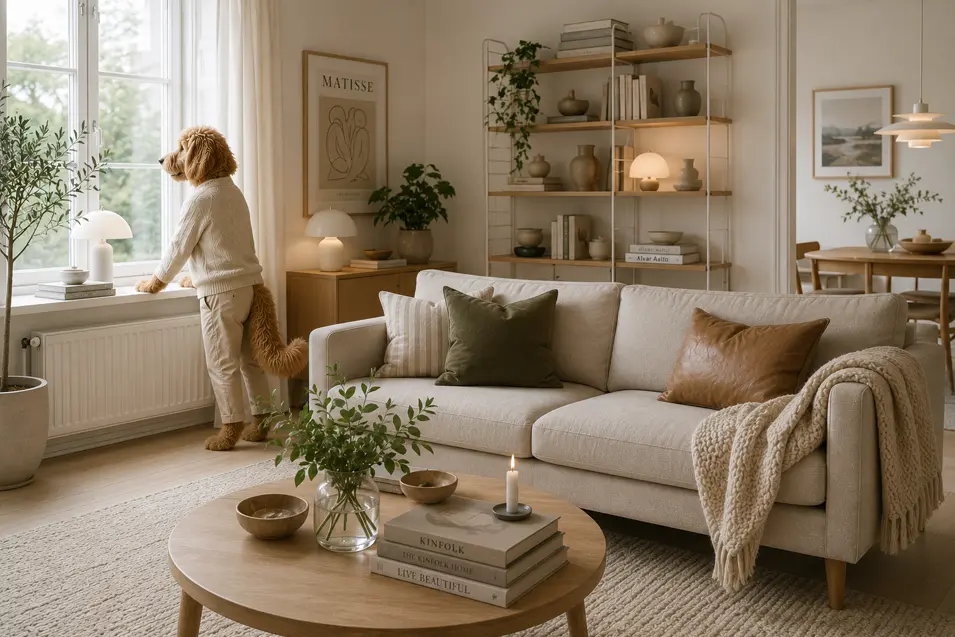
As Scout discovered while relaxing among painted furniture, soft linens, and sunlit rooms, Gustavian design proves that true luxury often comes from simplicity, balance, and timeless craftsmanship.