Dog crates are useful, but they are not always beautiful.
For many dog owners, the challenge is not whether a crate belongs in the home. It is figuring out how to make it fit into the home without making the room feel crowded, cluttered, or unfinished.
That is where sideboards with built-in dog crates become such a smart idea.
A sideboard already belongs in many living rooms, dining rooms, hallways, and open-concept spaces. It provides storage, gives you a place to display lamps or décor, and helps anchor a room visually. By building a dog crate into one section of the furniture, you create a comfortable space for your pet without sacrificing style.
Instead of hiding a wire crate in the corner, the crate becomes part of the furniture.
These ideas show how beautiful pet-friendly design can be when comfort and home décor are planned together.
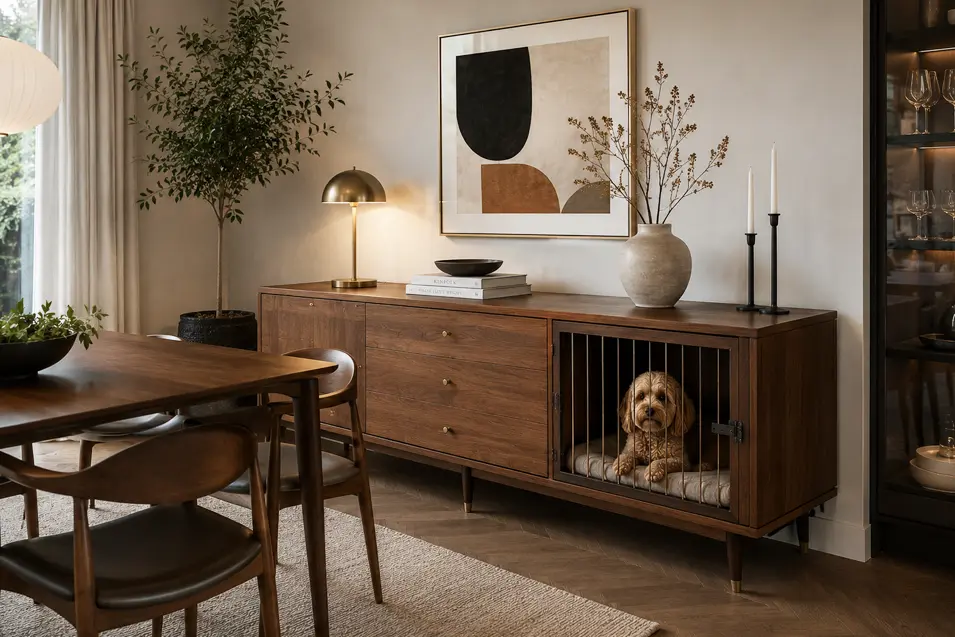
1. The Classic Wood Sideboard Dog Crate
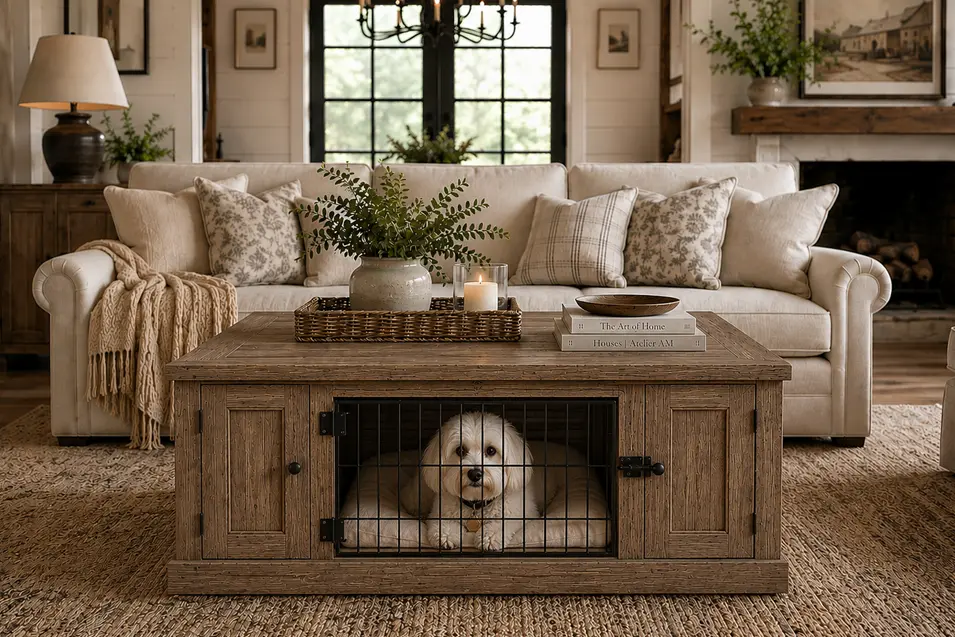
This design is one of the most practical ways to combine storage and pet comfort. The sideboard keeps the look of a traditional furniture piece while dedicating one end to a built-in dog crate.
The solid wood finish gives the piece warmth, while the crate door allows the dog to stay connected to the room. This is especially useful for dogs that like being near family activity but still enjoy having their own resting spot.
This type of piece works especially well in
Farmhouse, Modern Farmhouse, Americana, and Rustic interiors, where natural wood finishes and practical furniture are already part of the design aesthetic.
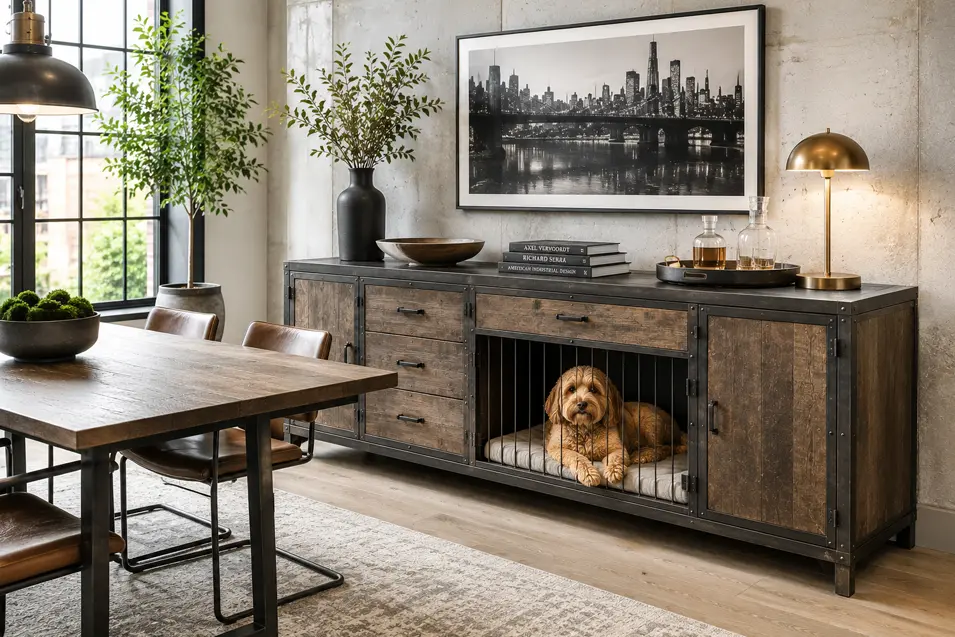
2. The Modern Dining Room Sideboard Crate
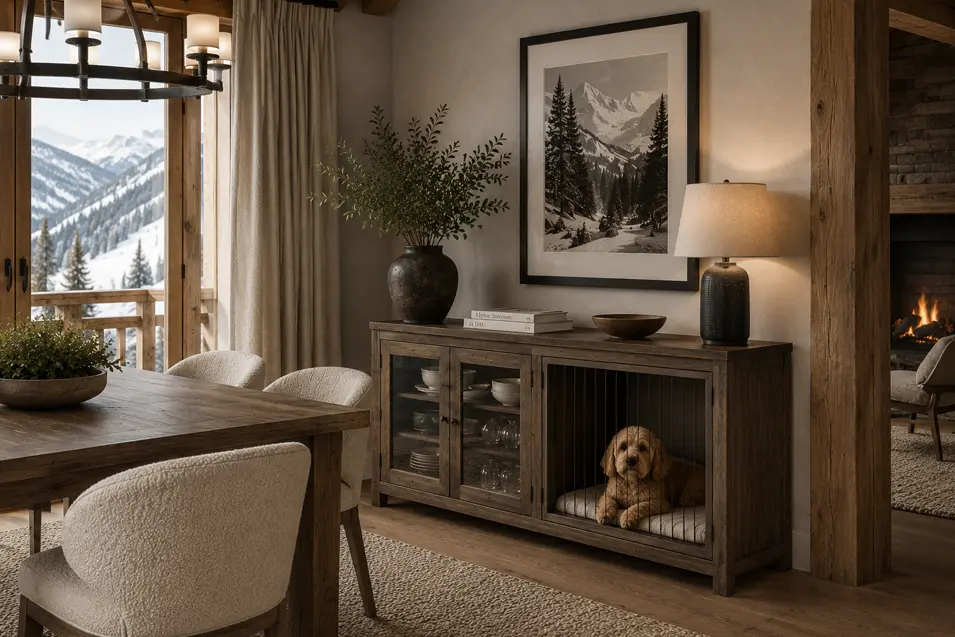
A dining room sideboard with a built-in crate is a clever solution because the furniture already serves a purpose. Dishes, linens, candles, and serving pieces can be stored in one section, while the dog has a comfortable nook in the other.
The clean lines and understated appearance make this style a natural fit for Transitional, Contemporary, and Scandinavian homes where furniture is expected to be both functional and visually streamlined.
For homes where dogs like to stay close during family meals or gatherings, this is a stylish and functional option.

3. The Mid-Century Style Dog Crate Sideboard
A mid-century sideboard is a great match for a built-in dog crate because the style is already low, long, and furniture-focused.
Tapered legs, warm wood tones, and simple cabinet fronts make the crate feel intentional rather than added on. The dog gets a cozy resting place, while the homeowner still gets a beautiful furniture piece that fits the room.
This idea works especially well in homes with modern, Scandinavian, or retro-inspired décor.
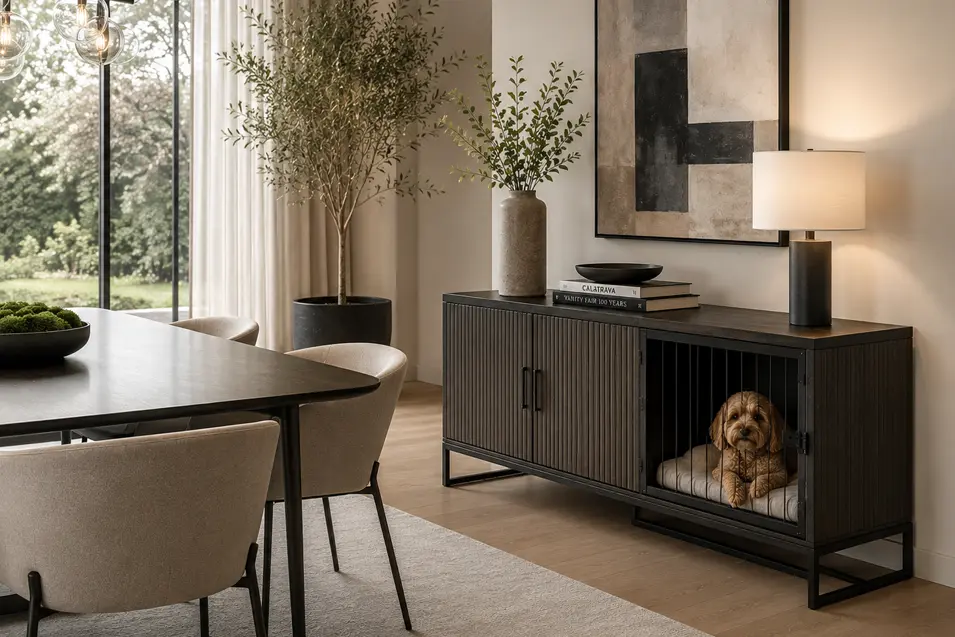
4. The Luxury Sideboard With Hidden Dog Space
Some built-in dog crate sideboards look less like pet furniture and more like custom cabinetry.
A luxury version might include premium wood, brass hardware, stone accents, or decorative panels. The crate area can be tucked into one side so subtly that guests may not even notice it at first.
This is the kind of design that proves pet-friendly living does not have to mean giving up an elegant home. It is ideal for homeowners who want their dog’s space to feel as carefully designed as the rest of the room.
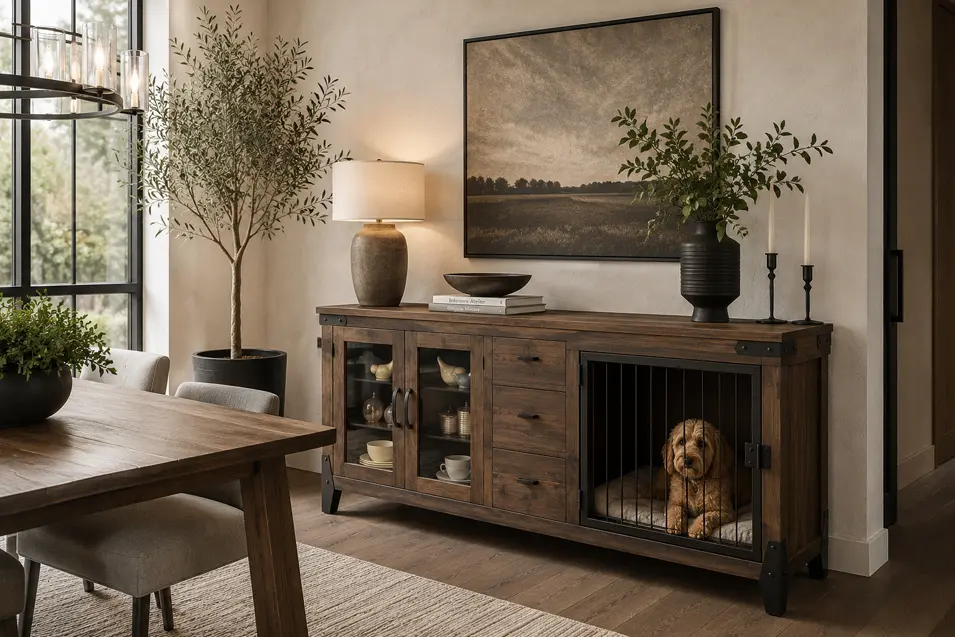
5. The Open-Concept Living Room Sideboard Crate
In open-concept homes, furniture often has to do more than one job.
A sideboard with a built-in dog crate can help define a space while also providing storage and a safe place for your dog. It can sit along a wall, behind a sofa, near a dining area, or beside a kitchen transition zone.
This design is especially useful because it keeps the dog close to the household without placing a crate in the middle of the room.

6. The Small Dog Sideboard Crate
For smaller dogs, a sideboard crate can be especially charming.
Because small breeds do not need as much room as larger dogs, the crate area can fit neatly into one cabinet section. That leaves plenty of space for drawers, shelves, or closed storage.
The key is comfort. Add a soft cushion, make sure there is proper airflow, and keep the crate easy for the dog to enter and exit.
This type of setup is perfect for dogs that like having a quiet little den.
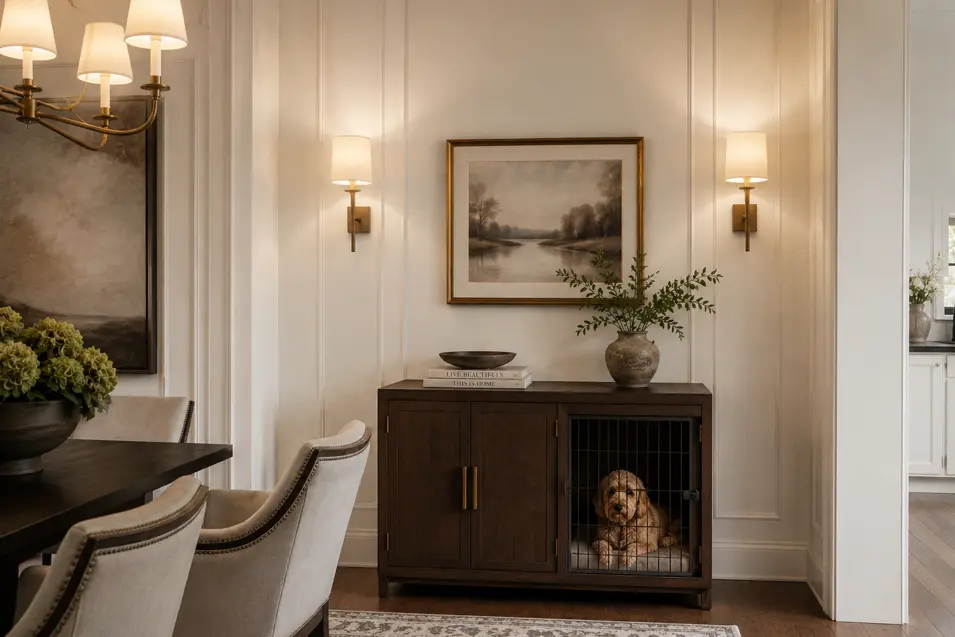
7. The Statement Furniture Dog Crate
Some dog crate sideboards are not meant to disappear completely. Instead, they become a conversation piece.
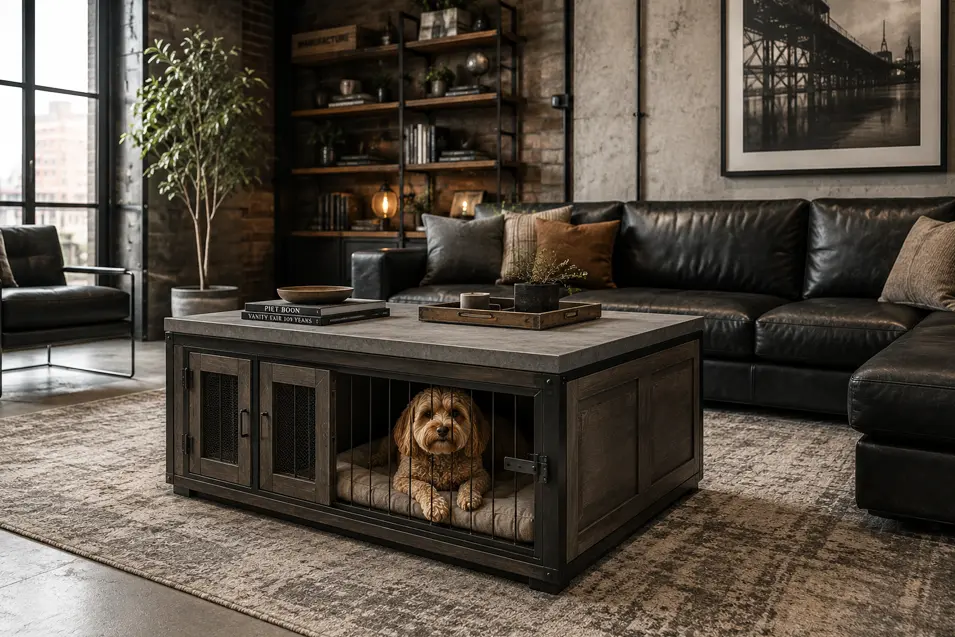
A bold finish, dramatic hardware, or beautiful styling on top can make the furniture stand out for the right reasons. The built-in crate still serves a practical purpose, but the overall design feels more like custom home décor than pet equipment.
This is a great approach for homeowners who want pet-friendly furniture that feels creative rather than hidden.

8. The Hallway or Entryway Sideboard Crate
A sideboard with a built-in dog crate can work beautifully in a hallway or entryway.
This gives your dog a resting place near the center of household activity without taking up space in the main living room. It can also pair well with storage for leashes, collars, toys, waste bags, and grooming supplies.
For busy homes, this setup can act almost like a mini dog station.
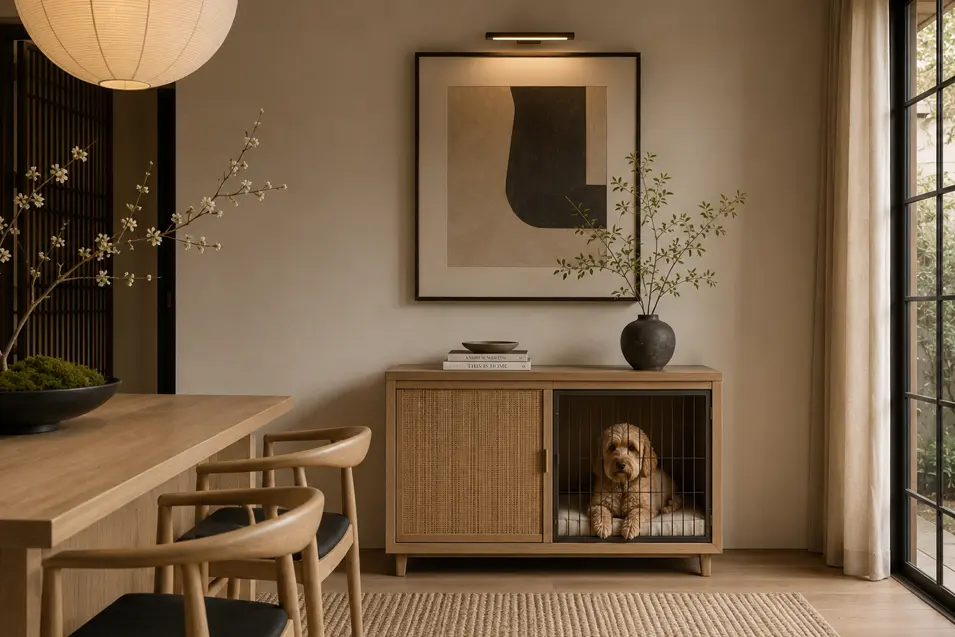
9. The Sideboard Crate With Extra Storage
One of the biggest advantages of using a sideboard is storage.
Unlike a standalone crate, a sideboard crate can include drawers, cabinets, shelves, and tabletop space. That means the furniture can hold everyday household items while still giving your dog a dedicated space.
This is especially helpful in smaller homes where every piece of furniture needs to earn its place.
A well-designed sideboard crate can reduce clutter instead of adding to it.
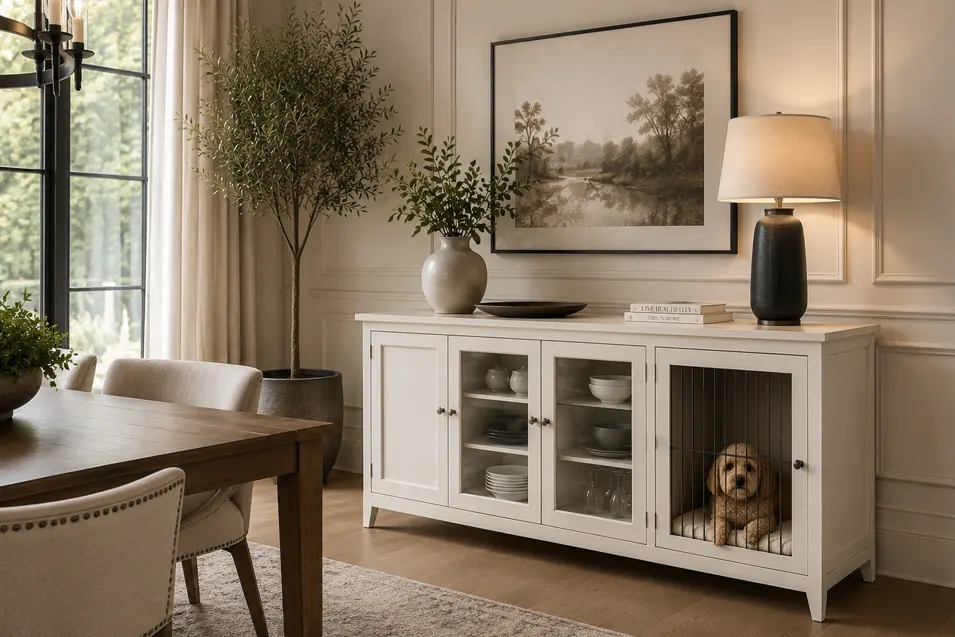
10. The Fully Integrated Pet-Friendly Sideboard
The best built-in dog crate sideboards do not look like compromises.
They look like furniture that was designed for the home from the beginning.
The crate area should feel comfortable for the dog, but the overall piece should still fit the homeowner’s style. When the proportions, materials, hardware, and placement are right, the sideboard becomes a seamless part of the room.
This is the goal of pet-friendly design: a home that works beautifully for both people and pets.
Why Sideboards Make Great Built-In Dog Crates
Sideboards are especially well suited for dog crate designs because they are already large, sturdy pieces of furniture. They usually sit against a wall, which makes them easy to place in dining rooms, living rooms, hallways, and open spaces.
They also offer a natural balance between storage and pet space.
A traditional wire crate only does one thing. A sideboard crate can provide:
- A comfortable space for your dog
- Storage for household items
- A display surface for lamps or décor
- A cleaner-looking room
- A more intentional pet-friendly design
For homeowners who want their dog’s crate nearby but do not want it to dominate the room, this is one of the best furniture-based solutions.
Things to Consider Before Building a Dog Crate Into a Sideboard
A built-in dog crate needs to be more than attractive. It also needs to be safe and comfortable.
Before choosing or building one, consider the following.
Ventilation
Your dog needs good airflow. Slatted doors, metal bars, mesh inserts, or open panels can help keep the space comfortable.
Size
The crate area should be large enough for your dog to stand, turn around, and lie down comfortably.
Cleaning
Choose materials that are easy to wipe down. A removable cushion or washable bed is also helpful.
Location
Place the sideboard somewhere your dog feels included but not overwhelmed. Avoid areas that are too hot, too cold, or too noisy.
Safety
Avoid sharp edges, toxic finishes, loose hardware, or small parts your dog could chew.
Final Thoughts
A sideboard with a built-in dog crate is one of the most stylish ways to create a dedicated space for your dog without making your home feel cluttered.
These designs prove that dog crates do not have to be hidden away or treated like an afterthought. With the right furniture, a crate can become part of the room’s design while still giving your dog a safe, cozy place to rest.
For pet owners who care about both comfort and style, built-in dog crate sideboards are a beautiful example of what a truly pet-friendly home can look like.