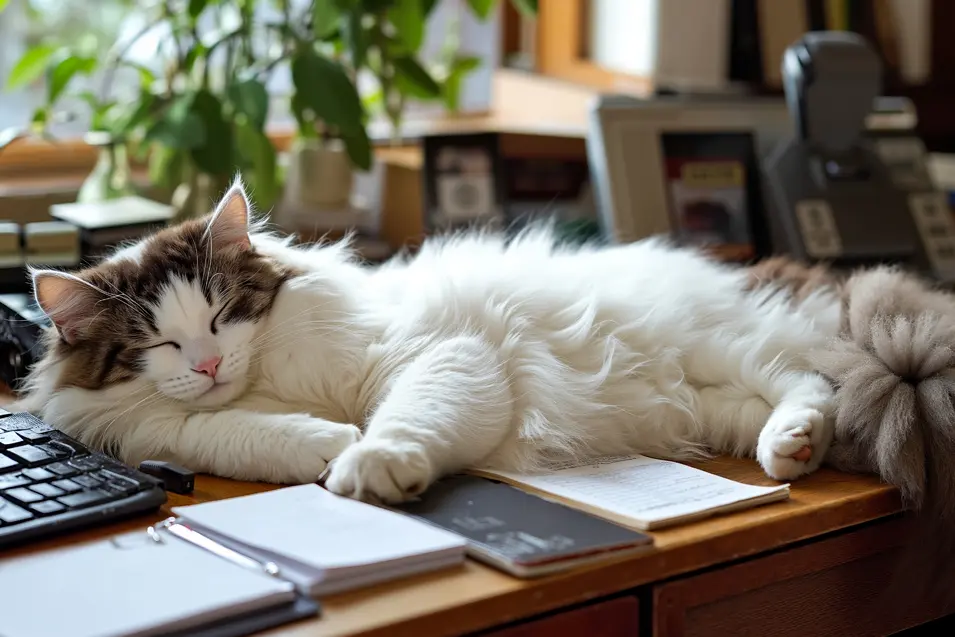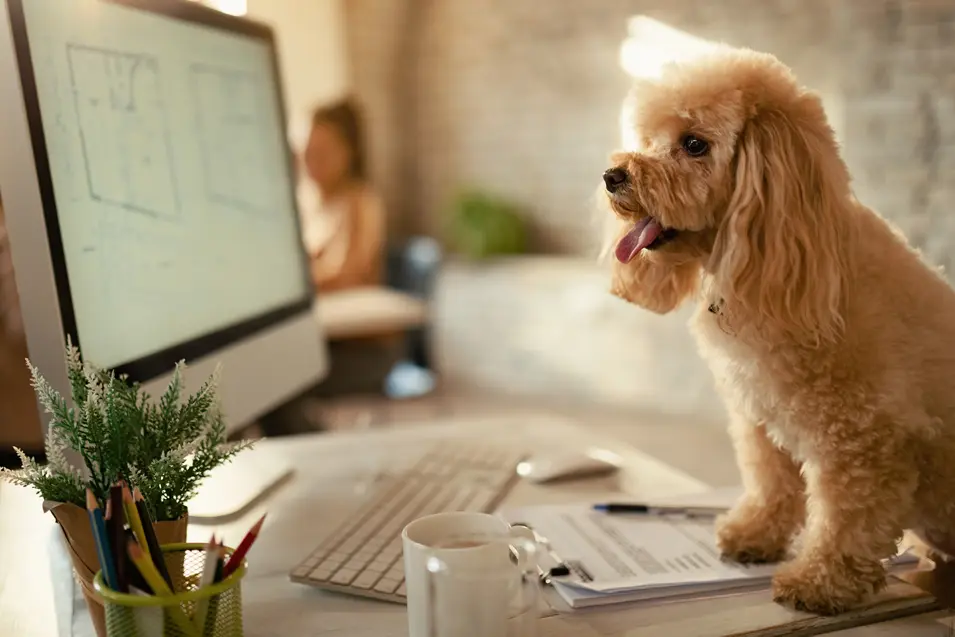
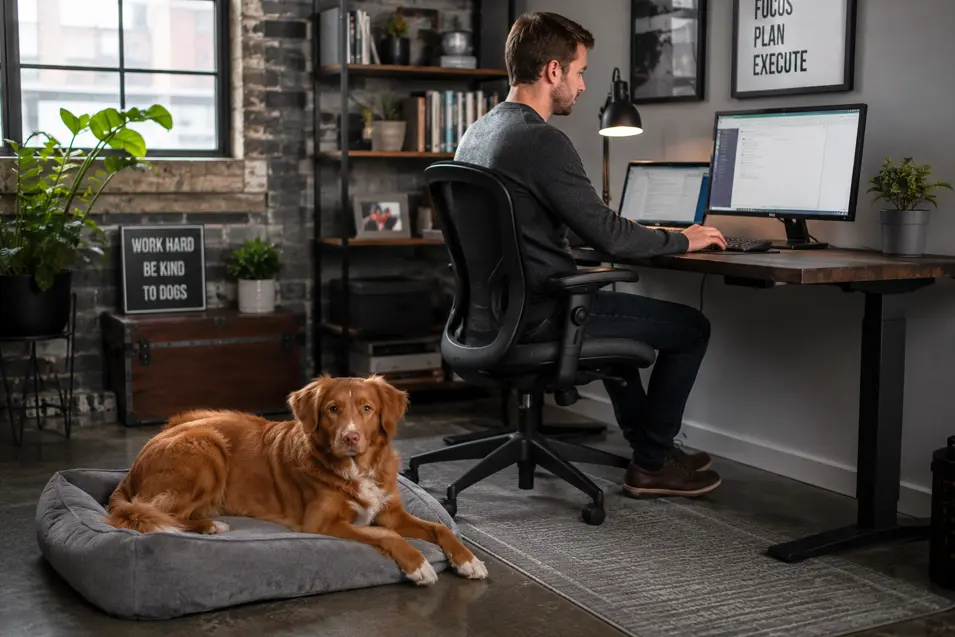
Working from home has become a permanent reality for many people, and for pet owners, that often means sharing office space with a dog, cat, or both. While having pets nearby can make the workday more enjoyable, it can also create unique challenges. Barking during meetings, cats walking across keyboards, tangled cords, and distracted pets can all affect productivity if the workspace isn’t designed with both human and animal needs in mind.
Fortunately, creating a pet-friendly home office doesn’t require sacrificing professionalism or efficiency. With thoughtful planning, you can build a workspace that supports concentration while keeping your pets comfortable, safe, and happy throughout the day.
A well-designed pet-friendly office can improve workflow, reduce distractions, and strengthen the bond between you and your pets by allowing them to remain close without disrupting your work.
Why Pets Love Home Offices
Many pets naturally gravitate toward home offices.
Dogs often want to stay near their owners and may view the office as another place to spend time together. Cats are frequently attracted to office spaces because they contain comfortable chairs, warm electronics, sunny windows, and plenty of opportunities for attention.
Common reasons pets enjoy office spaces include:
- Proximity to family members
- Comfortable resting spots
- Predictable routines
- Warm environments
- Opportunities for interaction
Understanding why pets are drawn to the office can help you design a space that accommodates their needs while protecting your productivity.
Benefits of a Pet-Friendly Home Office
When designed properly, a pet-friendly office can offer several advantages.
Benefits may include:
- Reduced stress
- Increased companionship
- Improved work-life balance
- Emotional support during busy days
- More opportunities for interaction
Studies have shown that spending time with pets can help reduce stress levels, which may contribute to a more pleasant work environment.
The key is finding a balance between companionship and distraction.
Create a Dedicated Pet Space
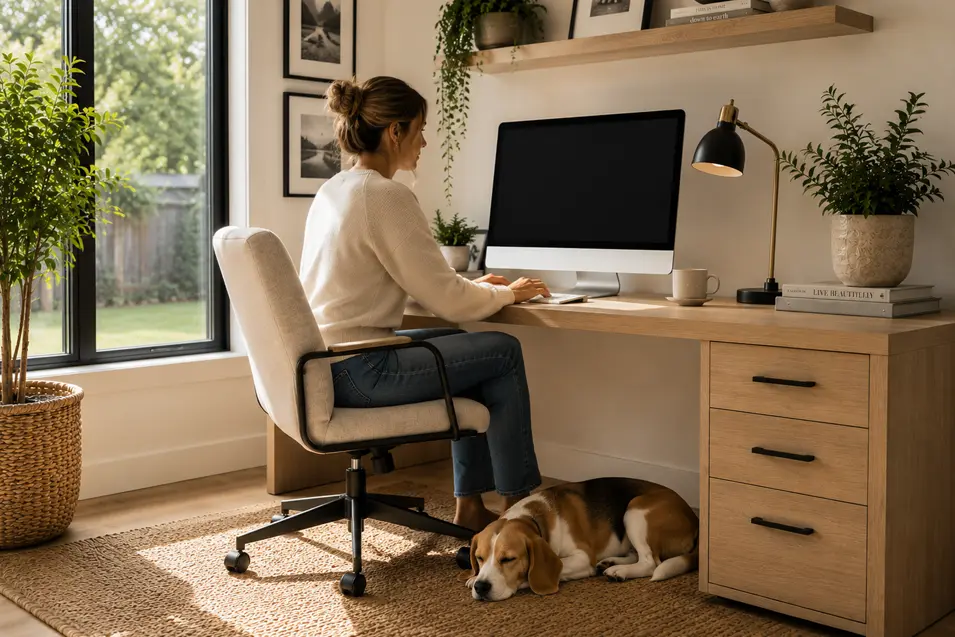
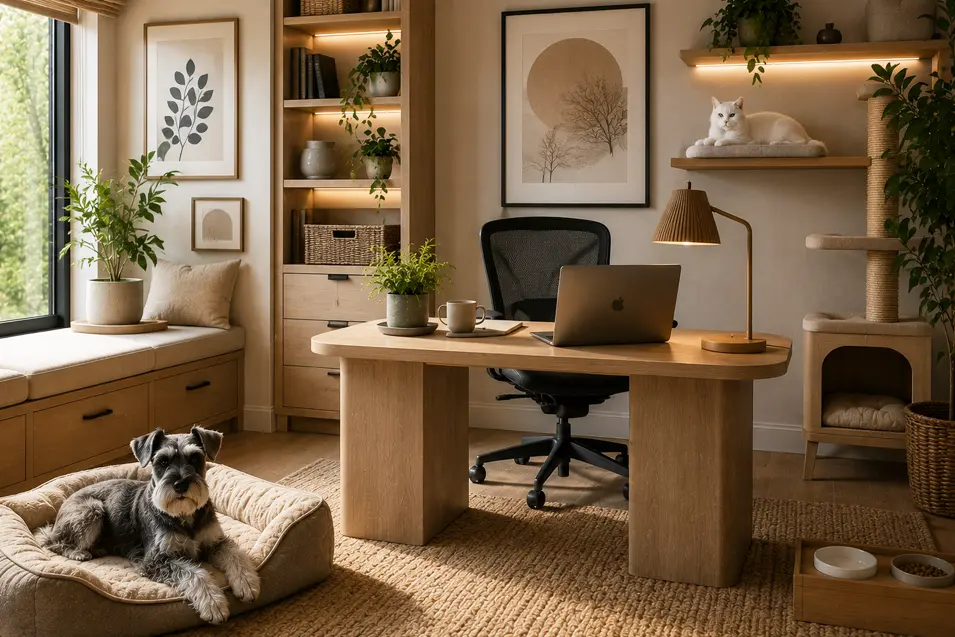
One of the most effective ways to reduce interruptions is to give your pet a designated area within the office.
This space may include:
- A comfortable pet bed
- A mat or blanket
- Favorite toys
- Fresh water
- A window view
When pets have their own space, they are often less likely to compete for yours.
Positioning the area near your desk allows pets to remain close while encouraging them to stay settled throughout the workday.
Choose Durable Flooring
Office floors often experience more activity than homeowners anticipate.
Pets may enter the room frequently, bringing:
- Dirt
- Hair
- Water
- Muddy paws
Pet-friendly flooring options include:
- Luxury vinyl plank
- Tile
- Waterproof laminate
- Sealed hardwood
These materials are generally easier to clean and more resistant to scratches than carpet or delicate flooring surfaces.
Manage Electrical Cords
Electrical cords are among the most overlooked hazards in home offices.
Some pets, particularly puppies and kittens, may chew cords out of curiosity.
Potential risks include:
- Electrical shock
- Burns
- Equipment damage
- Fire hazards
To improve safety:
- Use cord covers
- Route cables behind furniture
- Bundle loose wires
- Keep cords out of reach
A tidy cable management system benefits both safety and appearance.
Provide Comfortable Resting Areas
Many pets spend a significant portion of the workday resting.
Creating a comfortable place to relax can help minimize attention-seeking behavior.
Options include:
- Orthopedic dog beds
- Cushioned mats
- Cat beds
- Window perches
- Elevated pet lounges
Comfortable pets are generally less likely to interrupt your work.
Use Pet-Friendly Furniture Fabrics
Office chairs, couches, and accent furniture may experience regular pet use.
Look for fabrics that are:
- Durable
- Easy to clean
- Resistant to hair accumulation
- Scratch resistant
Performance fabrics, microfiber, and tightly woven materials often perform better than delicate upholstery.
Choosing practical materials can help maintain the appearance of the office over time.
Create Storage for Pet Supplies
Even office pets require supplies.
Consider storing:
- Toys
- Treats
- Waste bags
- Grooming items
- Cleaning supplies
Small cabinets, drawers, or storage baskets can keep these items organized and easily accessible.
Dedicated storage prevents pet-related clutter from accumulating around your workspace.
Control Noise and Distractions
One challenge of working from home with pets is managing interruptions.
Dogs may bark at:
- Delivery drivers
- Visitors
- Outdoor noises
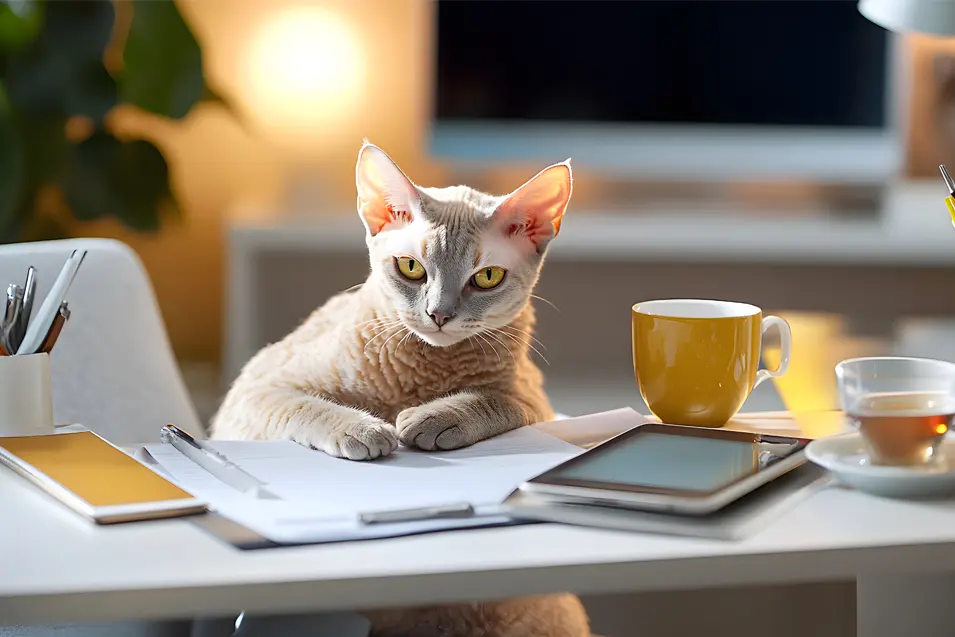
Cats may seek attention during meetings or phone calls.
Strategies for reducing distractions include:
- Providing enrichment toys
- Maintaining regular exercise routines
- Closing blinds when appropriate
- Using white noise machines
A mentally stimulated pet is often a quieter pet.
Take Advantage of Natural Light
Both people and pets tend to benefit from natural light.
If possible, position your workspace near windows.
Benefits include:
- Improved mood
- Better visibility
- Comfortable resting spots for pets
- Increased productivity
Cats, in particular, often enjoy sunny window areas where they can observe outdoor activity.
Consider a Cat-Friendly Office Design
Cats have different needs than dogs.
Cat-friendly office features may include:
- Window perches
- Climbing shelves
- Cat trees
- Hidden resting spaces
Providing vertical territory can help cats stay occupied while reducing the likelihood of keyboard interruptions.
Schedule Pet Breaks
Working from home sometimes leads people to overlook their pets’ needs.
Regular breaks can benefit both productivity and pet well-being.
Use breaks for:
- Walks
- Play sessions
- Bathroom trips
- Training activities
- Fresh air
These short interactions often help pets remain calmer throughout the rest of the day.
Maintain Good Air Quality
Pets contribute to:
- Hair
- Dander
- Dust
Good air quality is important in any workspace.
Consider:
- Regular vacuuming
- Air purifiers
- HVAC filter upgrades
- Routine grooming
Cleaner air can improve comfort for both pets and people.
Plan for Video Calls
Remote workers frequently participate in virtual meetings.
Pets may unexpectedly appear on camera or create background noise.
To prepare:
- Keep treats nearby
- Provide toys during meetings
- Create a designated pet area
- Close the door if necessary
While many people enjoy seeing pets during video calls, it’s helpful to have a plan for important meetings.
Think About Long-Term Comfort
A pet-friendly office should support your needs as well as your pet’s.
When planning the space, consider:
- Future equipment needs
- Growing pets
- Senior pet accommodations
- Storage expansion
Flexibility helps ensure the office remains functional over time.
The Bottom Line
Creating a pet-friendly home office is about balancing productivity with companionship. By providing dedicated pet spaces, managing cords, improving storage, choosing durable materials, and addressing potential distractions, homeowners can create work environments that support both professional success and pet well-being.
The best home offices recognize that pets are part of the family while still maintaining the organization and functionality needed for effective work. With a few thoughtful adjustments, it’s possible to enjoy the benefits of having pets nearby without sacrificing focus, comfort, or productivity.