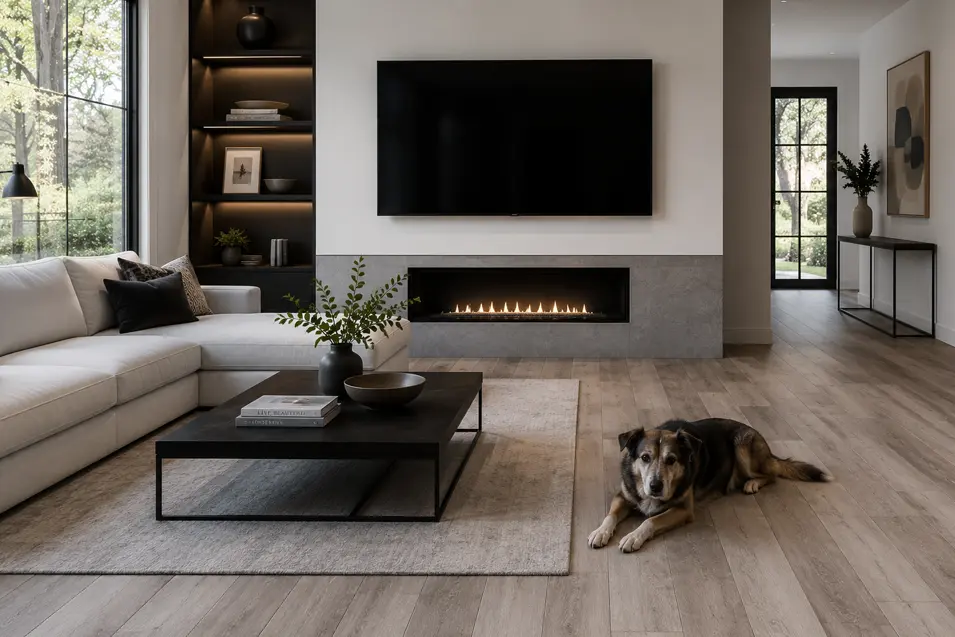
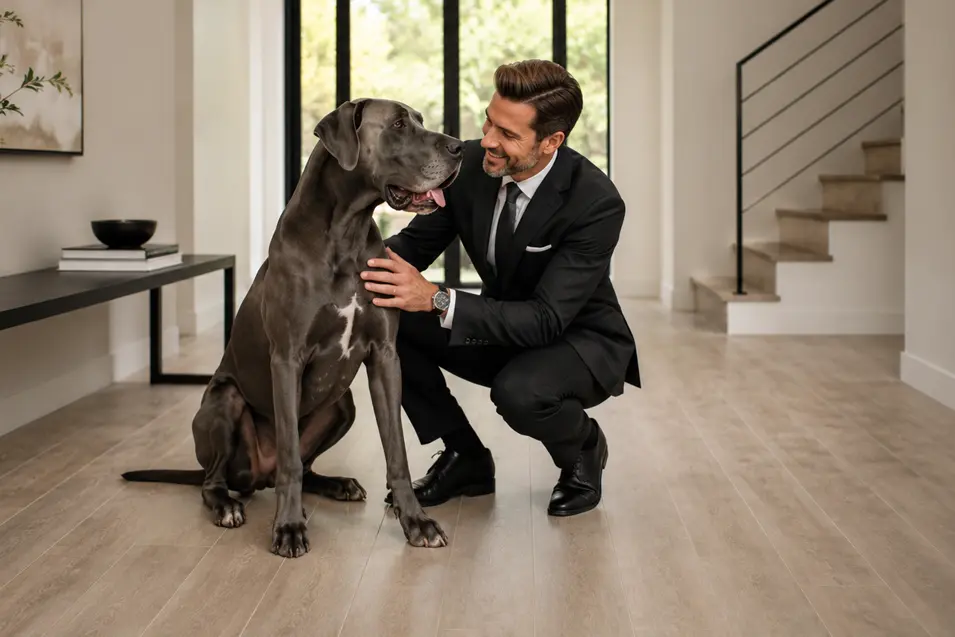
Living with a large dog comes with many rewards, but it also presents unique challenges for homeowners. From muddy paws and shedding fur to heavy foot traffic and powerful claws, large breeds can place significant demands on flooring surfaces throughout the home.
Whether you share your house with a Labrador Retriever, German Shepherd, Golden Retriever, Bernese Mountain Dog, Great Dane, or another large breed, choosing the right flooring can make a tremendous difference in both appearance and long-term durability. The wrong flooring may quickly show scratches, stains, and wear, while the right material can stand up to years of daily activity while remaining attractive and easy to maintain.
If you’re planning a renovation or building a new home, understanding which flooring materials perform best in households with large dogs can help you make a smart investment.
What Makes Large Dogs Hard on Flooring?
Large dogs affect flooring differently than smaller pets.
Their size, weight, and activity levels often create additional wear and tear, including:
- Scratches from larger nails
- Increased dirt and debris
- Higher moisture exposure
- Greater impact from running and jumping
- More shedding and fur accumulation
- Heavier traffic patterns
A flooring material that works well for a small dog may not perform as effectively when subjected to the daily demands of a large breed.
Key Features to Look For
Before comparing flooring options, it’s important to identify the qualities that matter most.
The best flooring for large dogs should offer:
- Scratch resistance
- Water resistance
- Easy maintenance
- Durability
- Stain resistance
- Good traction
- Comfort for pets
Balancing these factors helps ensure the flooring remains functional and attractive over time.
Luxury Vinyl Plank: One of the Best Overall Choices
Luxury vinyl plank (LVP) consistently ranks among the top flooring choices for pet owners.
Modern luxury vinyl products are designed to resist moisture, scratches, and heavy use while mimicking the appearance of hardwood or stone.
Why Large Dog Owners Love It
- Waterproof construction
- Excellent durability
- Comfortable surface
- Easy cleaning
- Affordable pricing
- Wide variety of styles
Unlike hardwood, luxury vinyl typically handles muddy paws, water bowls, and occasional accidents without significant damage.
Its slightly softer surface can also provide more comfort and traction for large dogs.
Porcelain Tile: Maximum Durability
Porcelain tile is one of the toughest flooring materials available.
For homeowners who prioritize durability above all else, porcelain tile is difficult to beat.
Advantages
- Waterproof
- Highly scratch resistant
- Extremely durable
- Easy to clean
- Resistant to stains and odors
Large dogs are unlikely to damage quality porcelain tile under normal conditions.
Potential Drawbacks
- Hard surface
- Can feel cold
- More expensive installation
- Grout maintenance may be required
Many homeowners address comfort concerns by adding washable area rugs in selected locations.
Ceramic Tile
Ceramic tile offers many of the same benefits as porcelain while often costing less.
Pros
- Durable
- Water resistant
- Easy maintenance
- Variety of styles and colors
Cons
- Less durable than porcelain
- Hard surface
- Grout can require cleaning
Ceramic tile remains an excellent option for entryways, kitchens, mudrooms, and other high-traffic areas.
Waterproof Laminate Flooring
Laminate flooring has improved dramatically over the years.
Many newer waterproof laminate products offer impressive durability and realistic wood appearances.
Benefits
- Scratch resistant
- Easy to clean
- More affordable than hardwood
- Attractive appearance
Considerations
- Lower-quality products may be vulnerable to moisture
- Some surfaces can be slippery
- Damaged sections may be difficult to repair
Choosing a waterproof product is particularly important in homes with large dogs.
Engineered Hardwood
Many homeowners love the appearance of real wood but worry about durability.
Engineered hardwood can provide a compromise.
Advantages
- Real wood surface
- More stable than solid hardwood
- Attractive appearance
- Available in many styles
Disadvantages
- Can still scratch
- Sensitive to standing water
- Limited refinishing opportunities
For homeowners committed to a wood floor aesthetic, engineered hardwood may offer better performance than traditional hardwood.
Solid Hardwood: Beautiful but Demanding
Hardwood flooring remains highly desirable, but large dogs can present challenges.
Pros
- Timeless appearance
- Excellent resale value
- Can be refinished
- Long lifespan
Cons
- Scratches easily
- Moisture damage possible
- Higher maintenance requirements
If choosing hardwood, harder species such as oak, maple, or hickory generally perform better than softer woods.
Regular nail trimming can also help minimize scratching.
Sealed Concrete
Concrete flooring is increasingly common in modern homes and can be a practical option for large dog owners.
Benefits
- Extremely durable
- Scratch resistant
- Easy cleaning
- Long lifespan
- Water resistant when sealed
Drawbacks
- Hard underfoot
- Cold in some climates
- Less comfortable without rugs
Concrete is especially popular in basements, mudrooms, garages, and contemporary home designs.
Flooring Materials That May Be Less Ideal
While every household is different, some flooring materials typically present greater challenges for large dog owners.
Carpet
Carpet offers comfort and warmth but can:
- Trap pet hair
- Hold odors
- Stain easily
- Wear quickly in traffic areas
Soft Wood Flooring
Pine and other softer woods may show scratches and dents more readily than harder species.
Standard Laminate
Older or non-waterproof laminate products can be vulnerable to moisture damage.
Don’t Overlook Traction
Many homeowners focus exclusively on durability while overlooking traction.
Large dogs need stable footing, particularly:
- Senior dogs
- Dogs with arthritis
- Breeds prone to hip issues
- Active dogs that frequently run indoors
Slippery floors can contribute to injuries and mobility challenges.
To improve traction:
- Choose textured flooring
- Add area rugs
- Use non-slip runners
- Keep floors clean and dry
Providing secure footing can improve both comfort and safety.
Consider Your Dog’s Age
The ideal flooring may depend partly on your dog’s life stage.
Puppies
Puppies often have accidents and may chew or scratch surfaces.
Waterproof, easy-to-clean materials are usually preferred.
Adult Dogs
Durability and scratch resistance become primary concerns.
Senior Dogs
Comfort and traction become increasingly important as mobility changes.
Planning with your dog’s future needs in mind can help maximize long-term satisfaction.
Balancing Durability and Appearance
The best flooring choice is rarely based on durability alone.
Homeowners should also consider:
- Design preferences
- Budget
- Maintenance requirements
- Room usage
- Climate conditions
A flooring material that perfectly suits one household may not be ideal for another.
Finding the right balance is key.
The Bottom Line
Large dogs can be tough on flooring, but the right material can withstand years of activity while remaining attractive and easy to maintain. Luxury vinyl plank, porcelain tile, ceramic tile, waterproof laminate, engineered hardwood, and sealed concrete all offer advantages for pet-friendly households.
For most homeowners, luxury vinyl plank and porcelain tile provide the strongest combination of durability, water resistance, scratch protection, and ease of maintenance. By selecting flooring that matches your lifestyle and your dog’s needs, you can create a beautiful home that stands up to muddy paws, wagging tails, and countless everyday adventures.