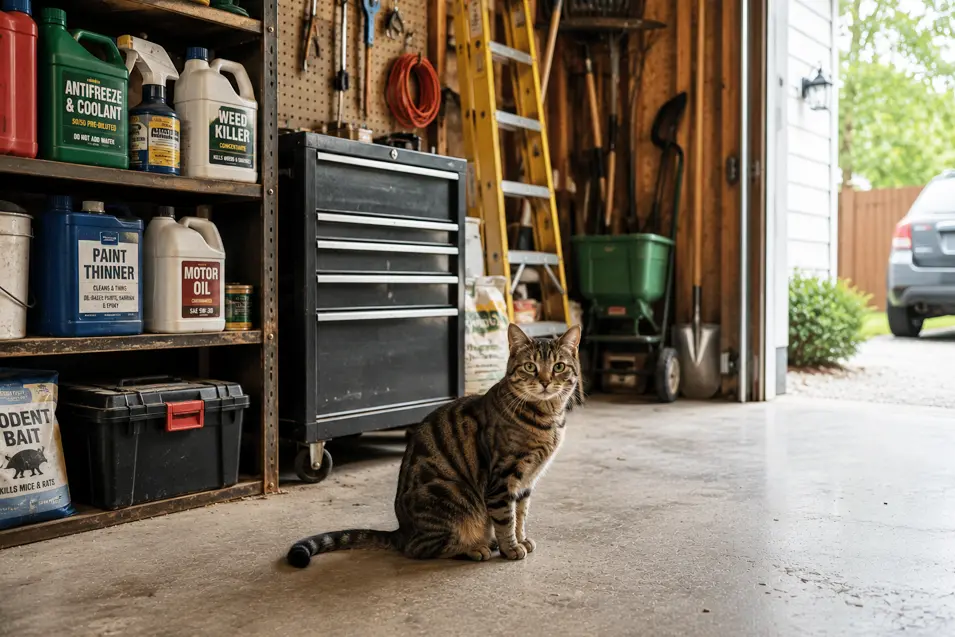
Many cats are naturally curious about garages. These spaces offer countless opportunities for exploration, from shelves and storage boxes to hidden corners and unusual scents. For an adventurous cat, the garage can seem like an exciting place to investigate.
Unfortunately, garages often contain numerous hazards that many pet owners overlook. While the average garage may appear safe at first glance, it can house toxic chemicals, dangerous machinery, sharp objects, and hidden dangers capable of causing serious injury or illness.
Because cats are skilled climbers, expert explorers, and masters of squeezing into tight spaces, they may encounter risks that homeowners never anticipate. Understanding these hazards is the first step toward protecting your feline companion and creating a safer home environment.
Why Cats Are Attracted to Garages
Cats are naturally drawn to environments that offer stimulation and opportunities for exploration.
Garages provide many features that appeal to feline instincts, including:
- Elevated shelves for climbing
- Small hiding places
- Interesting smells
- Warm resting spots
- Boxes and storage containers
- Quiet areas for sleeping
Cats often view garages as giant playgrounds filled with opportunities for adventure. Unfortunately, what seems exciting to a cat can quickly become dangerous.
Vehicles Create Serious Risks
One of the most significant hazards in any garage is the presence of vehicles.
Cats are attracted to warm engines, particularly during cooler weather. After a vehicle has been driven, the engine compartment may remain warm for hours. Some cats crawl underneath vehicles or into engine compartments seeking warmth and shelter.
This creates a dangerous situation because owners may not realize a cat is hiding inside or beneath the vehicle.
Before starting a vehicle, especially during colder months, it’s wise to:
- Check around the vehicle
- Tap the hood
- Look underneath
- Listen for unusual sounds
These simple precautions may help prevent serious injuries.
Toxic Automotive Fluids
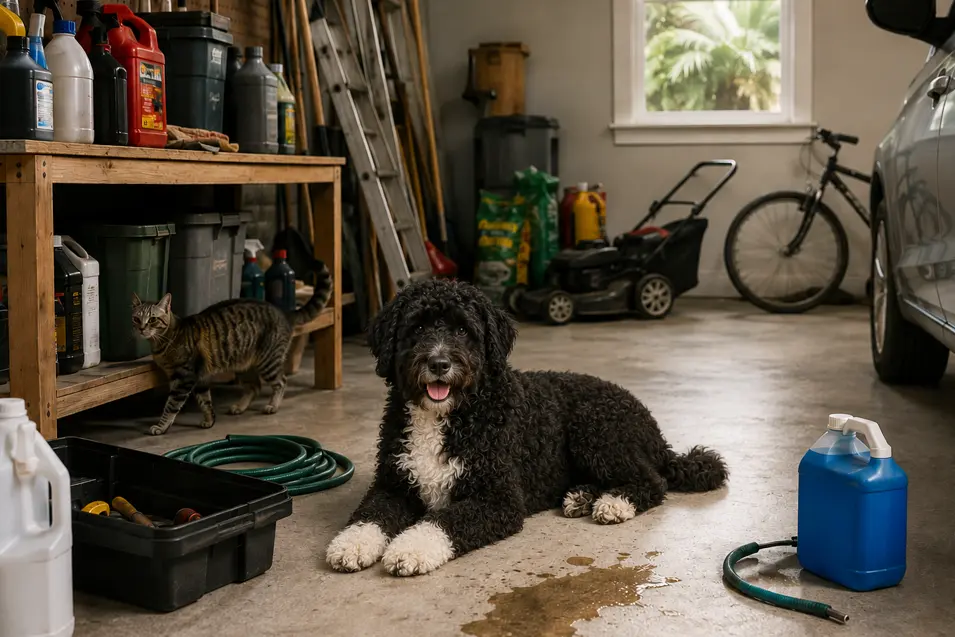
Garages commonly contain automotive products that can be extremely dangerous to cats.
Potential hazards include:
- Antifreeze
- Motor oil
- Brake fluid
- Transmission fluid
- Windshield washer fluid
Antifreeze is particularly concerning because it often has a sweet taste that can attract animals. Even a tiny amount can cause severe kidney damage and may be fatal without immediate veterinary treatment.
Cats may encounter these substances through:
- Leaks
- Spills
- Open containers
- Contaminated surfaces
All automotive fluids should be stored securely and spills cleaned immediately.
Poisonous Chemicals and Cleaning Products
Beyond automotive products, garages often contain a variety of household chemicals.
Common examples include:
- Paints
- Solvents
- Fertilizers
- Weed killers
- Insecticides
- Cleaning products
- Pool chemicals
Cats may be exposed through direct contact, inhalation, or grooming contaminated fur after walking through treated areas.
Because cats spend a significant amount of time grooming themselves, even small amounts of chemical residue on their paws can become dangerous.
Secure storage is essential for preventing accidental exposure.
Dangerous Hiding Places
Cats excel at finding hiding spots.
Unfortunately, garages contain many locations where a cat can become trapped or injured, including:
- Cabinets
- Storage boxes
- Tool chests
- Wall cavities
- Crawl spaces
- Storage shelves
Some cats may hide in areas that become inaccessible once doors, drawers, or containers are closed.
Before moving storage items or closing cabinets, take a quick look to ensure a curious cat hasn’t climbed inside.
Sharp Tools and Equipment
Many garages function as workshops and contain tools that can pose risks to pets.
Potential hazards include:
- Saws
- Utility knives
- Screwdrivers
- Gardening equipment
- Nails and screws
- Power tools
Cats may accidentally knock tools from shelves or encounter sharp edges while exploring.
Proper storage systems help reduce these risks while keeping work areas organized.
Electrical Hazards
Garages often contain extension cords, battery chargers, power tools, and other electrical equipment.
Cats sometimes chew cords, particularly younger cats and kittens.
Chewing electrical wiring can result in:
- Burns
- Electric shock
- Oral injuries
- Fire hazards
Keeping cords secured and unplugging equipment when not in use can help improve safety.
Small Objects Can Be Swallowed
Cats frequently play with small moving objects.
Unfortunately, many garages contain items that can become choking hazards or cause internal injuries if swallowed.
Examples include:
- Nuts and bolts
- Screws
- Washers
- Zip ties
- Rubber bands
- String
- Fishing line
These objects should be stored in secure containers and work areas should be cleaned regularly.
Temperature Extremes
Garages are often less climate-controlled than the rest of the home.
During summer, temperatures can rise rapidly, while winter conditions may become dangerously cold.
Cats left in garages for extended periods may be exposed to:
- Heat stress
- Dehydration
- Hypothermia
- Poor ventilation
Even if your garage feels comfortable for a short visit, conditions can change quickly throughout the day.
Pest Control Products
Many homeowners store rodenticides and insect-control products in garages.
Unfortunately, these products are specifically designed to attract pests, which can also make them attractive to curious cats.
Poison exposure can occur through:
- Direct ingestion
- Contact with bait stations
- Consuming poisoned rodents
Whenever possible, choose pet-safe pest control methods and keep all products securely stored.
Garage Doors and Escape Risks
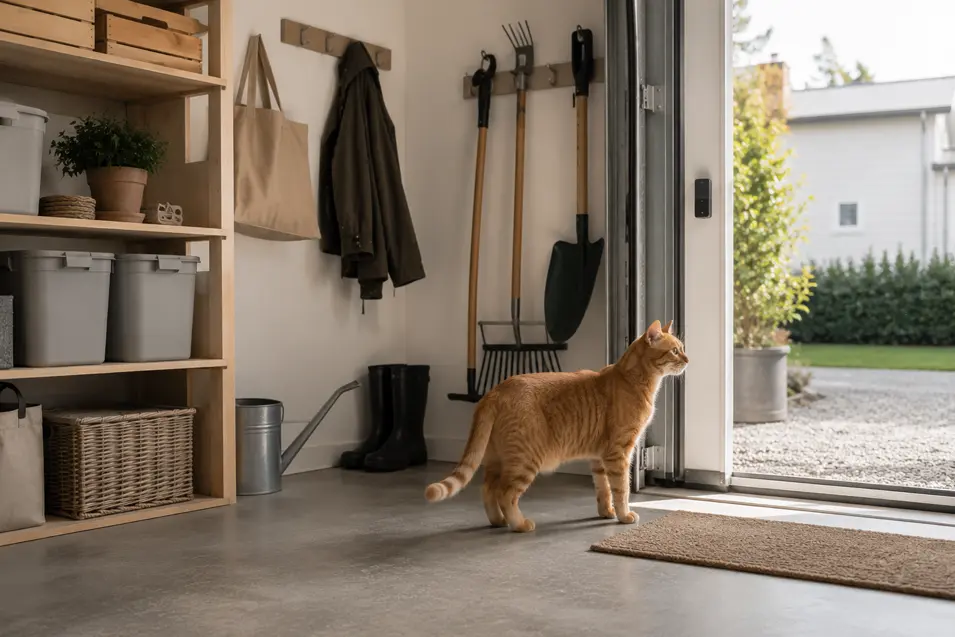
Open garage doors can create opportunities for cats to wander outside.
Indoor cats that escape may become lost, injured, or exposed to dangers such as:
- Traffic
- Predators
- Extreme weather
- Unfamiliar environments
Monitoring garage access and ensuring cats cannot slip outside unnoticed can help prevent escapes.
Clutter Increases Risk
A cluttered garage creates additional hazards.
Boxes, equipment, cords, and miscellaneous items can provide hiding places while making it harder to spot potential dangers.
An organized garage offers several benefits:
- Improved visibility
- Easier cleaning
- Fewer hiding spots
- Reduced accident risk
- Better chemical management
Keeping the space tidy is one of the simplest ways to improve overall safety.
Creating a Cat-Safe Garage
If your cat has access to the garage, a few precautions can dramatically improve safety:
- Store chemicals in closed cabinets.
- Clean spills immediately.
- Secure tools and sharp objects.
- Keep cords organized.
- Inspect vehicles before starting them.
- Monitor temperature conditions.
- Eliminate clutter.
- Limit unsupervised access when possible.
These steps help reduce risks while allowing the garage to remain functional.
The Bottom Line
Garages can be fascinating places for cats, but they also contain numerous hidden dangers. Warm vehicles, toxic chemicals, sharp tools, electrical equipment, extreme temperatures, and escape opportunities all present potential risks that pet owners should take seriously.
By understanding these hazards and taking proactive safety measures, homeowners can significantly reduce the likelihood of accidents. A well-organized, pet-conscious garage helps protect curious cats while providing peace of mind for the people who care for them. After all, keeping your cat safe is far more important than whatever project happens to be taking place in the garage.