For many homeowners, the garage serves as more than just a place to park vehicles. It’s often a workshop, storage area, gardening center, and catch-all space for household supplies. While garages are incredibly useful, they can also contain numerous hazards that pose risks to curious pets.
Dogs and cats are naturally inquisitive. They explore unfamiliar smells, investigate new objects, and often wander into areas that seem interesting without understanding the potential dangers. Unfortunately, garages frequently contain chemicals, tools, machinery, and other hazards that can lead to serious injuries or poisoning.
The good news is that most garage-related pet accidents are preventable. With thoughtful organization and a few simple safety measures, homeowners can create a garage that remains functional while significantly reducing risks to their pets.
Why Garages Can Be Dangerous for Pets
Unlike most living spaces, garages are often designed primarily for storage and utility rather than safety and comfort.
Common garage hazards include:
- Automotive fluids
- Fertilizers and pesticides
- Sharp tools
- Power equipment
- Toxic chemicals
- Electrical cords
- Heavy storage items
- Small parts that can be swallowed
Many of these items are harmless when used properly but become dangerous when accessed by curious pets.
Understanding the risks is the first step toward creating a safer environment.
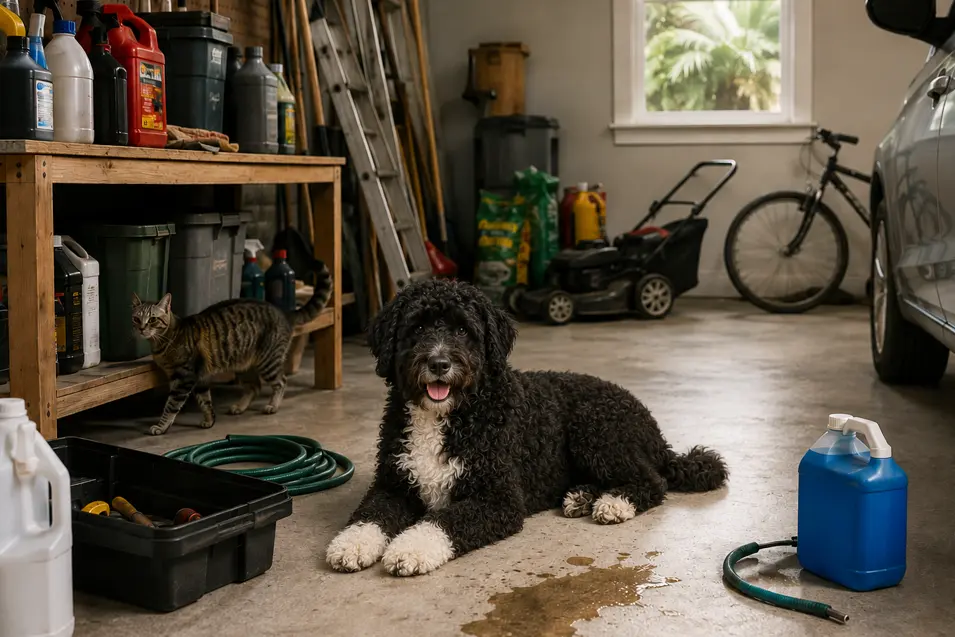
Secure Automotive Fluids
One of the most serious dangers found in garages involves automotive chemicals.
Products such as:
- Antifreeze
- Motor oil
- Brake fluid
- Transmission fluid
- Windshield washer fluid
can be highly toxic to pets.
Antifreeze is particularly dangerous because it has a sweet taste that may attract animals. Even a small amount can cause severe kidney damage and may be fatal if treatment is not provided quickly.
Store all automotive fluids in tightly sealed containers and place them inside secure cabinets or on high shelves. Check regularly for leaks and clean spills immediately.
Store Chemicals Safely
Many garages contain chemicals used for home maintenance, cleaning, lawn care, and gardening.
Potentially hazardous products include:
- Fertilizers
- Weed killers
- Insecticides
- Paints
- Solvents
- Pool chemicals
- Cleaning products
Whenever possible, keep these products in locked cabinets or storage units designed specifically for chemical storage.
Never leave open containers unattended, and always follow manufacturer storage recommendations.
Keep Garbage Secure
Garage trash containers can be surprisingly tempting to pets.
Food packaging, discarded chemicals, used cleaning products, and other waste materials may attract dogs and cats looking for something interesting to investigate.
Choose garbage containers with secure lids and empty them regularly.
If pets frequently access the garage, consider using pet-resistant trash containers for additional protection.
Organize Tools and Equipment
Sharp tools present obvious dangers.
Items such as:
- Saws
- Screwdrivers
- Utility knives
- Gardening tools
- Power equipment
should never be left where pets can reach them.
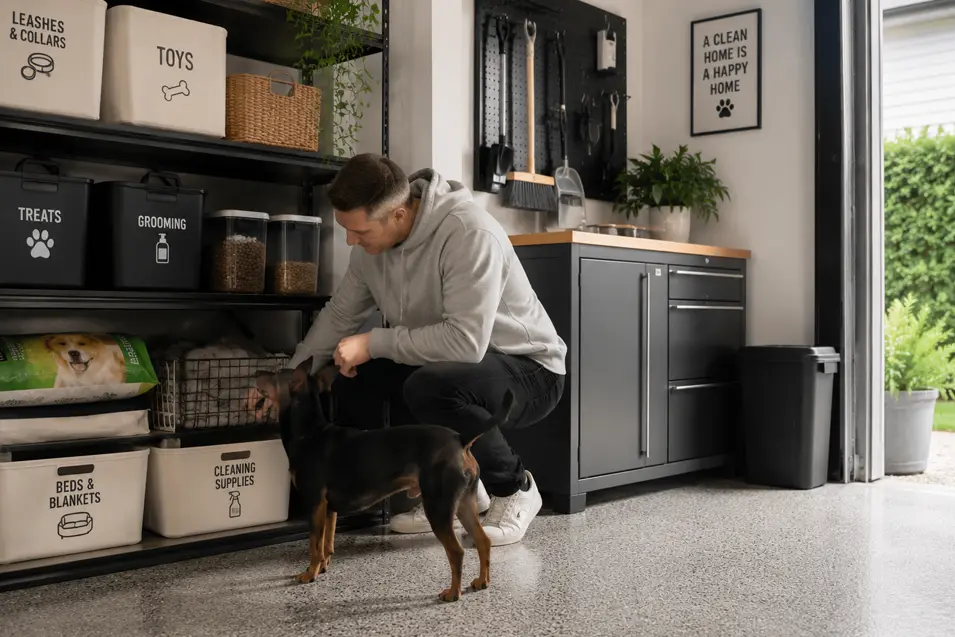
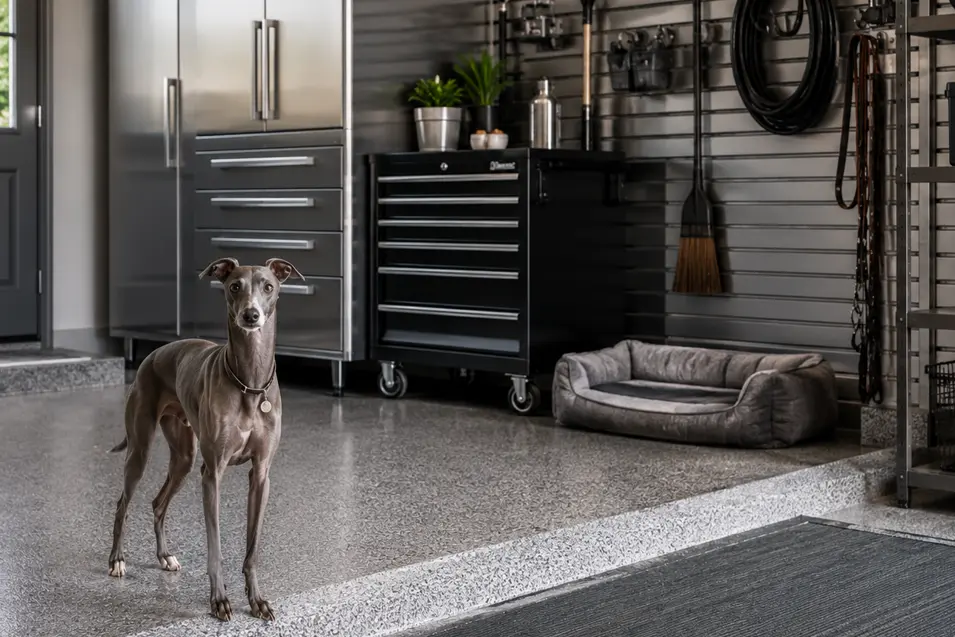
Wall-mounted storage systems, pegboards, tool cabinets, and locking storage boxes can help keep equipment organized while reducing the risk of injury.
Keeping work areas tidy also minimizes the chance of pets stepping on sharp objects.
Manage Electrical Hazards
Garages often contain extension cords, battery chargers, power tools, and other electrical equipment.
Curious pets may chew cords or become tangled in loose wiring, creating risks of burns, shocks, or other injuries.
To improve safety:
- Store cords neatly when not in use.
- Use cord management systems.
- Inspect cords regularly for damage.
- Unplug equipment after use whenever possible.
Proper cord management improves both safety and organization.
Be Careful With Small Parts
Nuts, bolts, screws, nails, and other small hardware items can become choking hazards if swallowed.
These items are particularly dangerous because they may also cause internal injuries or intestinal blockages.
Store hardware in sealed containers, drawer organizers, or cabinets that prevent accidental spills and limit access by pets.
Regularly sweep work areas to remove dropped items.
Create Designated Storage Zones
One of the easiest ways to improve garage safety is through organization.
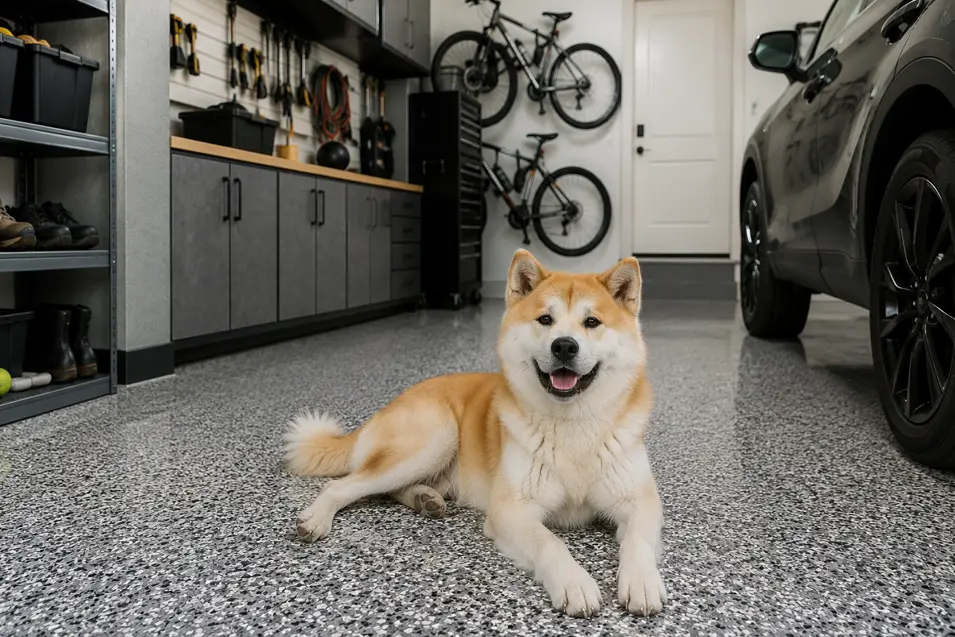
Designating specific areas for different categories of items helps reduce clutter and makes it easier to identify potential hazards.
Consider creating zones for:
Automotive Supplies
Store fluids, tools, and maintenance products together.
Lawn and Garden Products
Keep fertilizers, pesticides, and gardening equipment in a separate area.
Household Storage
Organize seasonal decorations, sports equipment, and household supplies.
Pet Supplies
Dedicate a safe area for food, toys, leashes, and outdoor pet gear.
Clear organization reduces the likelihood of dangerous items being misplaced or forgotten.
Monitor Garage Temperatures
Many homeowners underestimate how extreme garage temperatures can become.
During summer, garages may become dangerously hot, while winter temperatures can drop significantly depending on the climate.
Pets should never be left unattended in garages for extended periods, particularly when temperatures are extreme.
If your pet spends time in the garage, ensure adequate ventilation and temperature control whenever possible.
Watch Out for Pest Control Products
Rodenticides and insect control products are common garage hazards.
Unfortunately, many pest-control products are designed to be attractive to animals. Pets that ingest them may experience severe illness or poisoning.
Always follow label instructions carefully and store these products where pets cannot access them.
If pest control is necessary, consider pet-safe alternatives whenever available.
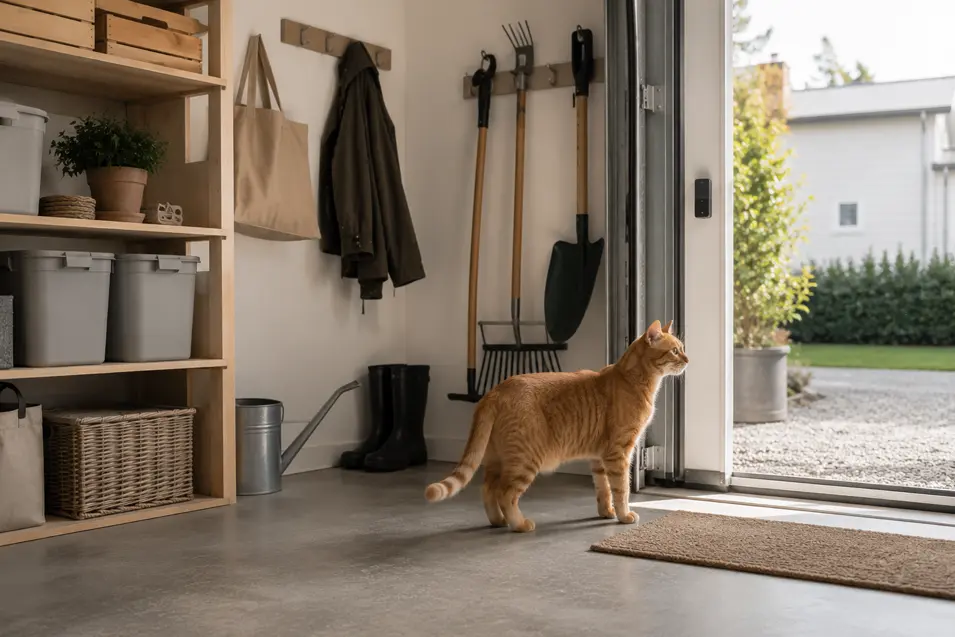
Keep Garage Doors and Access Points Secure
An open garage door can create additional risks.
Pets may wander into driveways, streets, or unfamiliar areas if access is not controlled. Cats may also become trapped inside vehicles or storage areas.
To improve safety:
- Close garage doors when not in use.
- Monitor pets when vehicles are entering or exiting.
- Inspect vehicles before starting them if pets have access to the garage.
- Secure side doors and storage rooms.
Managing access helps prevent both escapes and accidents.
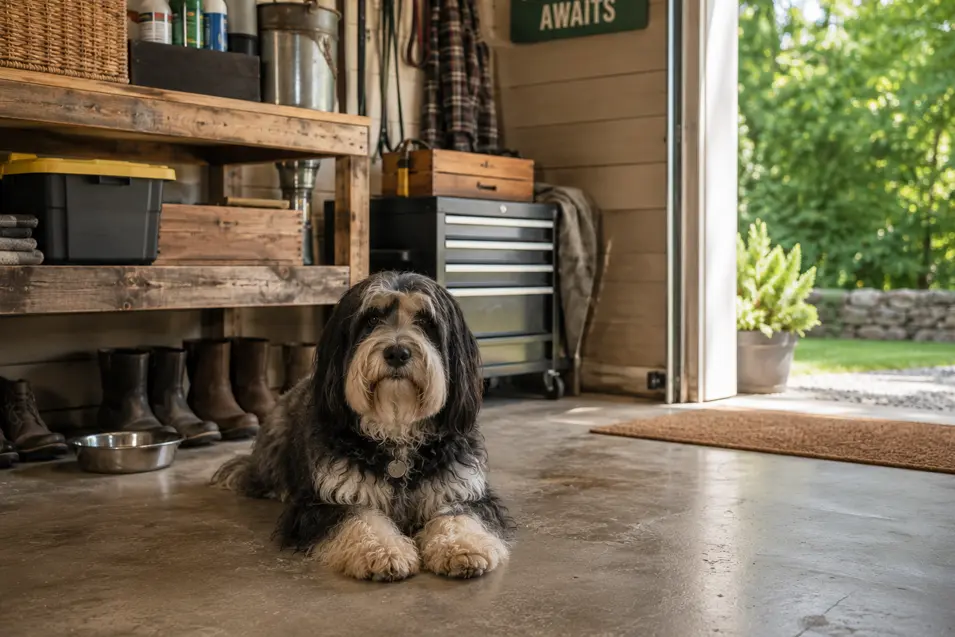
Consider a Pet-Friendly Zone
Some homeowners choose to create a dedicated pet area within the garage.
This can be particularly useful when the garage serves as a transition space between outdoor and indoor activities.
A pet-friendly area might include:
- A washable mat
- Water bowls
- Storage for leashes and toys
- Towel storage for muddy paws
- A pet washing station
Providing a designated area can help keep pets away from potentially hazardous sections of the garage.
Develop Good Cleanup Habits
Many garage accidents occur because potentially dangerous materials are left behind after projects.
Adopt habits such as:
- Returning tools to storage immediately
- Cleaning spills promptly
- Sweeping floors regularly
- Disposing of waste properly
- Inspecting the area after completing projects
Consistent cleanup significantly reduces risk.
The Bottom Line
Garages contain many items that can be hazardous to pets, including automotive fluids, chemicals, tools, electrical equipment, and small hardware. While these risks may seem overwhelming, most can be addressed through proper organization, secure storage, and simple safety practices.
By pet-proofing your garage, you can create a safer environment that protects your dogs and cats while preserving the functionality of one of the hardest-working spaces in your home. A few preventive measures today can help avoid serious accidents and provide greater peace of mind for every pet owner.