Keeping a home clean often requires a variety of detergents, disinfectants, stain removers, and other cleaning products. While these items play an important role in maintaining a healthy living environment, they can also pose significant risks to pets if not stored properly.
Dogs and cats are naturally curious. They explore the world through smell, taste, and touch, which can sometimes lead them into dangerous situations. A bottle left on the floor, an unsecured cabinet, or a leaking detergent container may seem harmless to humans but can become a serious hazard for pets.
Fortunately, most cleaning-product accidents are preventable. By understanding the risks and implementing proper storage practices , pet owners can maintain a clean homewhile protecting their furry family members from accidental exposure.
Why Cleaning Products Can Be Dangerous
Many household cleaning products contain chemicals that can cause illness or injury if swallowed, inhaled, or absorbed through the skin.
Common products that may pose risks include:
- Laundry detergents
- Detergent pods
- Bleach
- Fabric softeners
- Stain removers
- All-purpose cleaners
- Disinfectants
- Toilet bowl cleaners
- Glass cleaners
- Floor-cleaning products
Depending on the product and level of exposure, pets may experience symptoms ranging from mild stomach upset to severe chemical burns, respiratory distress, or poisoning.
Because pets are smaller than humans, even small amounts of certain products can have serious consequences.
Laundry Detergent Pods Require Extra Caution
Detergent pods deserve special attention in pet-friendly homes.
Their bright colors and soft texture can resemble toys or treats to both dogs and cats. If punctured or swallowed, the concentrated detergent inside can cause severe irritation to the mouth, throat, stomach, and eyes.
Potential symptoms include:
- Drooling
- Vomiting
- Difficulty breathing
- Coughing
- Eye irritation
- Lethargy
Detergent pods should always be stored in their original container and kept in a secure location well beyond a pet’s reach.
Store Products in Closed Cabinets
One of the simplest ways to improve safety is to store cleaning products in closed cabinets.
Open shelving may be convenient, but it provides easy access for curious pets. Dogs can sometimes reach surprisingly high locations, while cats are well known for their climbing abilities.
Whenever possible:
- Use enclosed cabinets
- Keep cabinet doors closed
- Store chemicals above floor level
- Avoid leaving products on countertops
The more barriers between pets and cleaning products, the safer the home becomes.
Consider Childproof Cabinet Locks
For particularly curious pets, cabinet doors alone may not provide enough protection.
Some dogs learn how to open cabinets using their noses or paws. Installing childproof safety latches can provide an additional layer of security.
These locks are inexpensive, easy to install, and effective at preventing access to potentially dangerous products.
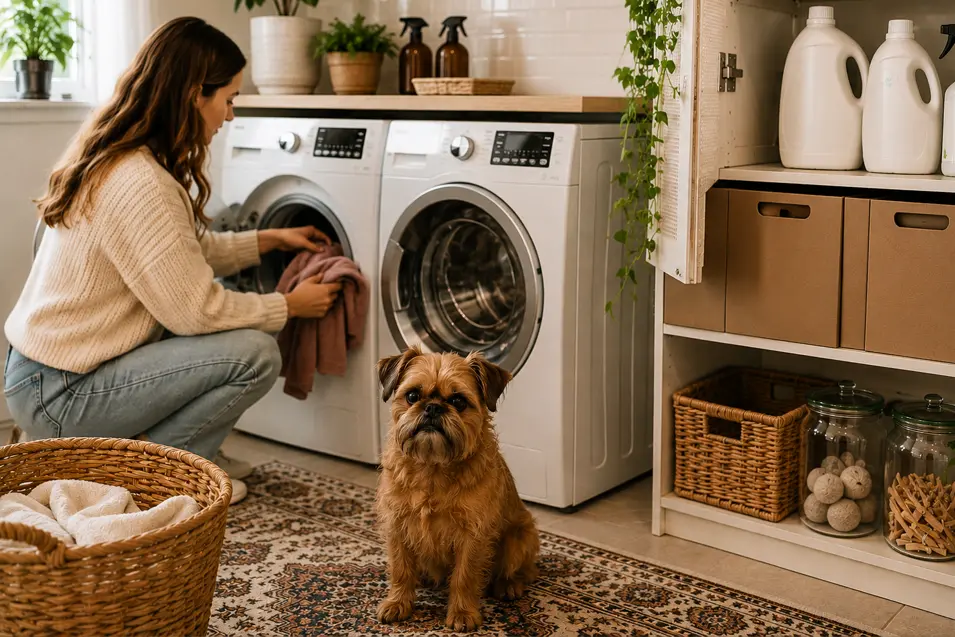
They are especially useful in laundry rooms, kitchens, mudrooms, and utility areas where cleaning products are frequently stored.
Keep Products in Original Containers
Transferring cleaning products into unmarked containers may seem convenient, but it can create unnecessary risks.
Original packaging provides:
- Safety information
- Usage instructions
- Hazard warnings
- Emergency contact information
- Proper sealing systems
Using the original container also reduces the likelihood of accidental misuse or confusion.
Never store cleaning products in food or beverage containers, as this increases the risk of accidental ingestion by both pets and people.
Avoid Storing Chemicals on the Floor
Many homeowners store large detergent bottles, bleach containers, or cleaning supplies directly on the floor of laundry rooms or utility closets.
Unfortunately, this makes products easily accessible to pets.
Dogs may chew plastic containers, while cats may investigate leaking bottles or spilled liquids.
Whenever possible, store chemicals:
- On elevated shelves
- Inside cabinets
- In secured utility closets
- In designated storage areas
Keeping products off the floor significantly reduces accidental exposure.
Clean Up Spills Immediately
Even properly stored products can become hazardous if spills occur.
Small leaks or drips may attract pets, especially if the product has an unusual scent or texture. Walking through spilled chemicals can also expose paws and fur to harmful substances.
If a spill occurs:
- Remove pets from the area.
- Clean the spill thoroughly.
- Follow product-specific cleanup instructions.
- Ensure the floor is completely dry before allowing pets to return.
Prompt cleanup helps prevent accidental contact and ingestion.
Be Careful During Cleaning
Storage isn’t the only concern.
Many accidents happen while products are actively being used. Pets may walk through freshly cleaned floors, lick wet surfaces, or investigate cleaning supplies left unattended during chores.
To reduce risks:
- Keep pets out of cleaning areas until surfaces are dry.
- Avoid leaving bottles unattended.
- Follow label directions carefully.
- Use products in well-ventilated spaces.
Allowing sufficient drying time can help minimize exposure.
Choose Pet-Friendly Cleaning Products When Possible
Not every cleaning task requires harsh chemicals.
Many manufacturers now offer products specifically designed for homes with pets. These cleaners are often formulated to reduce toxicity while still providing effective cleaning performance.
When selecting products:
- Read labels carefully.
- Follow usage instructions.
- Avoid mixing chemicals.
- Research pet safety information.
Even pet-friendly products should still be stored securely and used responsibly.
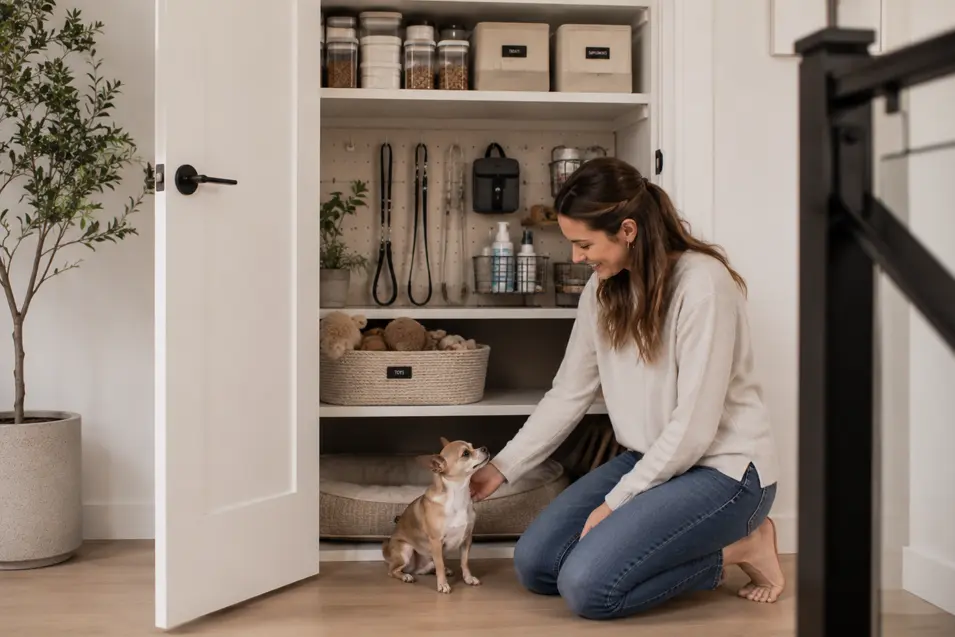
Create a Dedicated Cleaning Supply Zone
Organization plays an important role in safety.
A designated storage area makes it easier to monitor supplies, identify leaks, and ensure products remain secure.
Consider grouping products by category:
Laundry Supplies
- Detergents
- Fabric softeners
- Stain removers
Household Cleaning Products
- Disinfectants
- Surface cleaners
- Glass cleaners
Pet Cleaning Supplies
- Stain removers
- Odor eliminators
- Pet-safe cleaners
Keeping products organized reduces clutter and helps maintain a safer environment.
Know the Signs of Possible Poisoning
Despite precautions, accidents can still happen.
Potential warning signs include:
- Excessive drooling
- Vomiting
- Diarrhea
- Difficulty breathing
- Tremors
- Lethargy
- Loss of appetite
- Mouth irritation
If you suspect your pet has been exposed to a cleaning product, contact your veterinarian immediately. Having the product label available can help veterinary professionals provide appropriate treatment recommendations.
The Bottom Line
Detergents and cleaning products are essential household tools, but they should always be treated with care in homes with pets. Proper storage, secure cabinets, immediate spill cleanup, and thoughtful organization can dramatically reduce the risk of accidental exposure.
By creating safe storage habits and remaining mindful during cleaning routines, pet owners can maintain a clean, healthy home while protecting their dogs and cats from potentially dangerous chemicals. A few simple precautions today can prevent serious emergencies tomorrow.