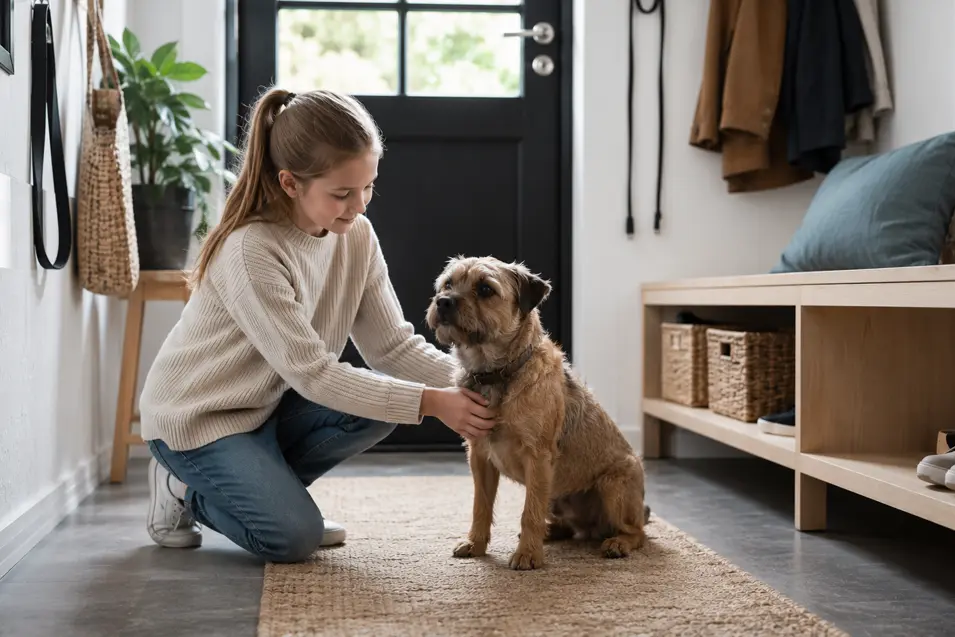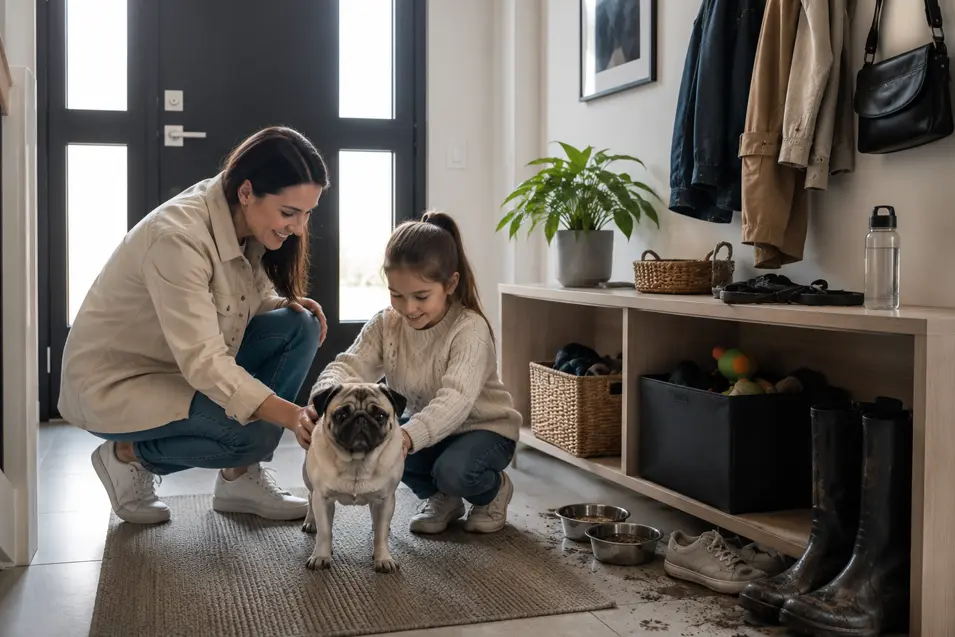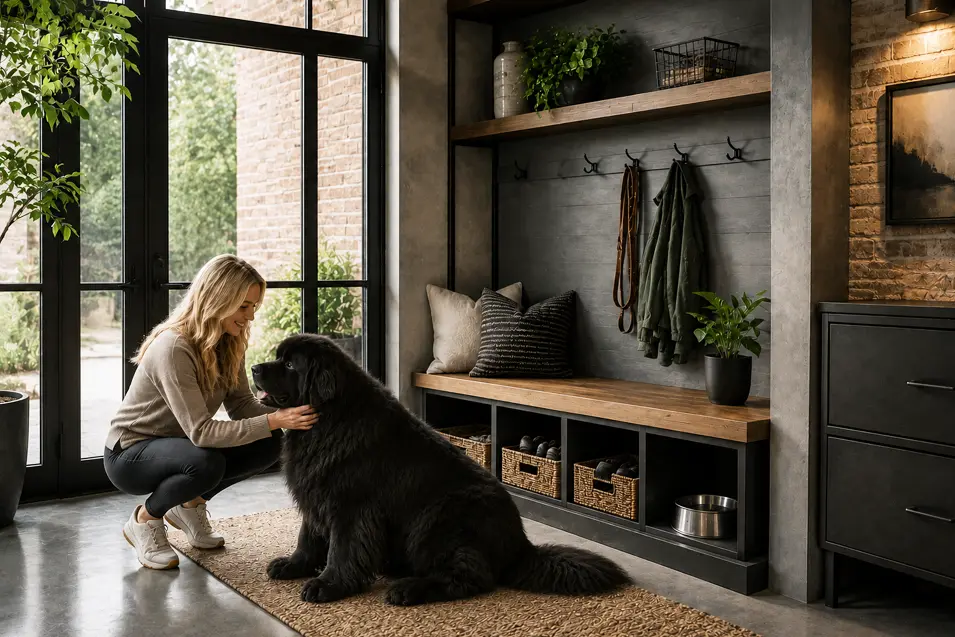
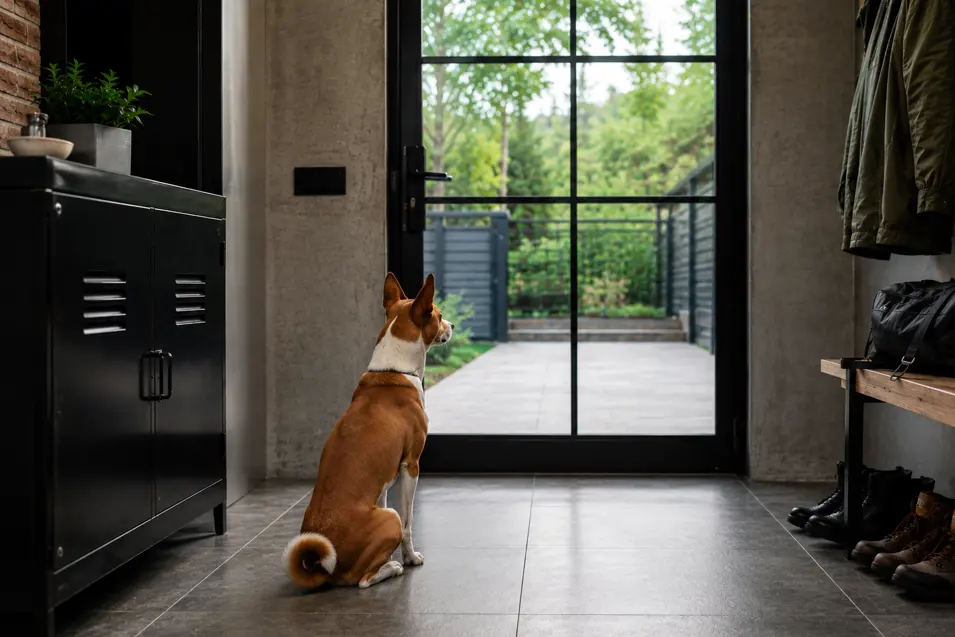
For dog owners, the entryway is ground zero for dirt, moisture, mud, and wear. Every walk, backyard adventure, or rainy-day bathroom break has the potential to leave a trail of paw prints across your floors. While training dogs to wipe their feet remains an unrealistic goal, choosing the right flooring can make a significant difference in how well your home handles the daily challenges that come with pet ownership.
The entryway serves as the transition point between the outdoors and your living space. As a result, it experiences more foot traffic, moisture, and debris than almost any other area of the home. When dogs are part of the household, flooring needs to withstand muddy paws, sharp nails, occasional accidents, and constant use.
Fortunately, today’s flooring options offer a wide range of attractive and durable solutions designed to handle the realities of life with pets. Choosing the right material can help reduce maintenance, protect your investment, and keep your home looking great for years to come.
What Dog Owners Should Look For
Before comparing flooring materials, it’s important to understand the qualities that matter most in a dog-friendly entryway.
The ideal flooring should be:
- Water resistant or waterproof
- Scratch resistant
- Easy to clean
- Durable under heavy traffic
- Slip resistant
- Comfortable for pets and people
- Resistant to stains and odors
While no flooring material is completely indestructible, some options perform significantly better than others when faced with muddy paws and active dogs.
Luxury Vinyl Plank: The Top Choice for Many Dog Owners
Luxury vinyl plank (LVP) has become one of the most popular flooring options for pet-friendly homes, and for good reason.
Modern vinyl flooring is highly durable, water resistant, and available in designs that closely resemble hardwood, stone, or tile. Many premium products are fully waterproof, making them ideal for entryways where moisture is common.
Benefits of luxury vinyl plank include:
- Excellent water resistance
- Strong scratch protection
- Comfortable underfoot
- Easy maintenance
- Wide range of styles and colors
- More affordable than many alternatives
Because it combines durability with comfort, luxury vinyl plank is often considered one of the best all-around choices for households with dogs.
Porcelain Tile: Built for Heavy Use
If durability is your primary concern, porcelain tile deserves serious consideration.
Porcelain is extremely hard, highly water resistant, and capable of withstanding years of heavy foot and paw traffic. Mud, snow, rain, and spills can be cleaned quickly without damaging the surface.
Advantages include:
- Exceptional durability
- Waterproof performance
- Resistance to stains
- Long lifespan
- Easy cleanup
One consideration is comfort. Tile can feel cold underfoot, particularly during winter months. Area rugs or heated flooring systems can help make the space more comfortable for both people and pets.
Textured porcelain tiles are often preferable in entryways because they provide better traction and reduce slipping.
Ceramic Tile: A Practical Alternative
Ceramic tile offers many of the same benefits as porcelain at a potentially lower price point.
While slightly less dense than porcelain, ceramic tile still performs extremely well in high-traffic entryways. It’s easy to clean, highly resistant to moisture, and available in countless styles.
For homes with medium-sized or smaller dogs, ceramic tile can provide an excellent balance between durability, appearance, and cost.
Natural Stone Flooring
Natural stone creates a beautiful, upscale appearance while offering excellent durability.
Popular options include:
- Slate
- Travertine
- Granite
- Limestone
Among these choices, slate is particularly popular for dog-friendly entryways because its textured surface provides excellent traction.
However, natural stone often requires periodic sealing and may be more expensive than manufactured flooring alternatives. Some stones are also more susceptible to staining if not properly maintained.
For homeowners seeking a high-end look and long-term durability, natural stone remains a strong option.
Engineered Hardwood: Better Than Traditional Hardwood
Many homeowners love the warmth and appearance of wood flooring but worry about how it will hold up to dogs.
Traditional hardwood can be vulnerable to scratches, moisture damage, and wear in entryways. Engineered hardwood offers improved stability because it features a real wood surface over multiple layers designed to resist expansion and contraction.
While engineered hardwood is generally more durable than solid hardwood, it still requires prompt cleanup of moisture and may show wear over time in homes with large, active dogs.
If maintaining a wood appearance is important, choosing harder wood species and durable finishes can improve performance.
Flooring Materials to Approach With Caution
Some flooring options may not be ideal for dog-heavy entryways.
Solid Hardwood
While beautiful, solid hardwood is vulnerable to scratches, moisture, and dirt. Repeated exposure to muddy paws and water can eventually damage the finish and underlying wood.
Carpet
Carpet tends to trap dirt, moisture, pet hair, and odors. It can also stain easily when exposed to muddy paws or accidents.
While carpet may work well in some rooms, most experts recommend avoiding it in entryways used regularly by dogs.
Laminate Flooring
Modern laminate flooring has improved significantly, but many products remain vulnerable to moisture damage if water penetrates seams or edges.
Some waterproof laminate options perform well, but buyers should carefully review manufacturer specifications before installation.
Don’t Forget About Slip Resistance
Durability is important, but traction matters too.
Highly polished flooring surfaces may become slippery when wet, creating potential hazards for dogs and humans alike. Slipping can be especially problematic for senior dogs, large breeds, and pets with joint issues.
When selecting flooring, look for products that provide a balance between easy cleaning and secure footing.
Adding washable entry mats can further improve traction while capturing dirt and moisture before it spreads throughout the home.
Create a Complete Dirt-Control System
Even the most durable flooring benefits from a little help.
A well-designed entryway should include:
- Outdoor scraper mats
- Indoor absorbent mats
- Storage for towels
- Convenient paw-cleaning supplies
- Easy access to cleaning tools
These additions reduce wear on the flooring while helping keep the rest of the home cleaner.
Long-Term Value Matters
While budget often influences flooring decisions, focusing solely on initial cost can be misleading.
A more durable flooring material may cost more upfront but save money over time by reducing repairs, refinishing, and replacement costs. For households with dogs, investing in quality flooring often pays dividends through lower maintenance and longer lifespan.
The Bottom Line
When choosing entryway flooring for a home with dogs, durability, water resistance, and ease of maintenance should be top priorities. Luxury vinyl plank, porcelain tile, ceramic tile, and certain natural stone options consistently rank among the best choices for handling muddy paws, moisture, scratches, and everyday wear.
The right flooring won’t eliminate dirt altogether, but it can make cleaning easier, protect your home from damage, and provide a welcoming space for both pets and people. After all, the entryway is where every adventure begins—and where every muddy paw eventually returns home.