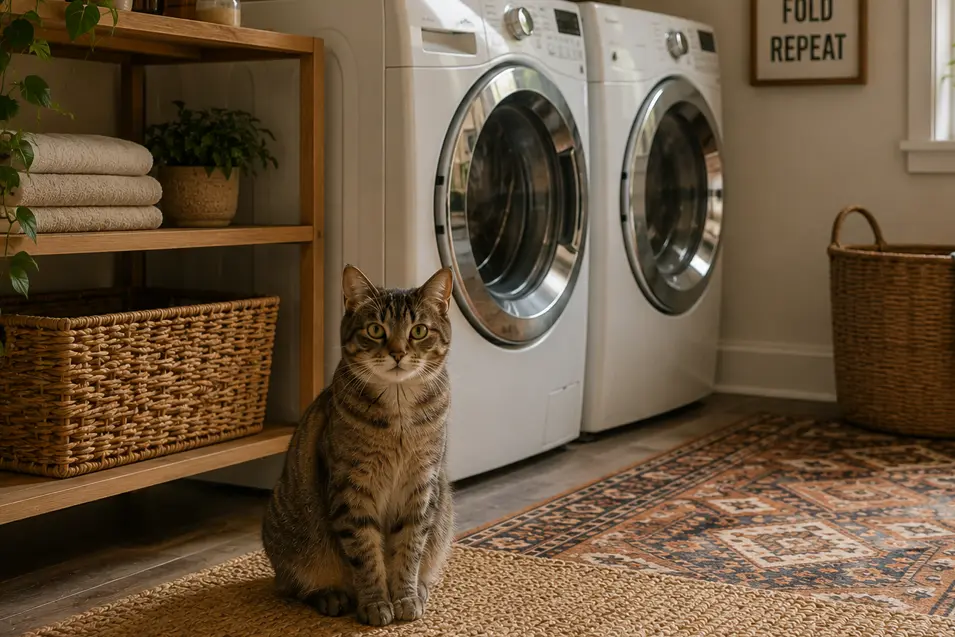
The laundry room may not be the first place that comes to mind when designing a pet-friendly home, but it deserves more attention than many homeowners realize. For curious cats, adventurous dogs, and even smaller pets, the laundry room can be both an attractive hangout and a source of potential hazards.
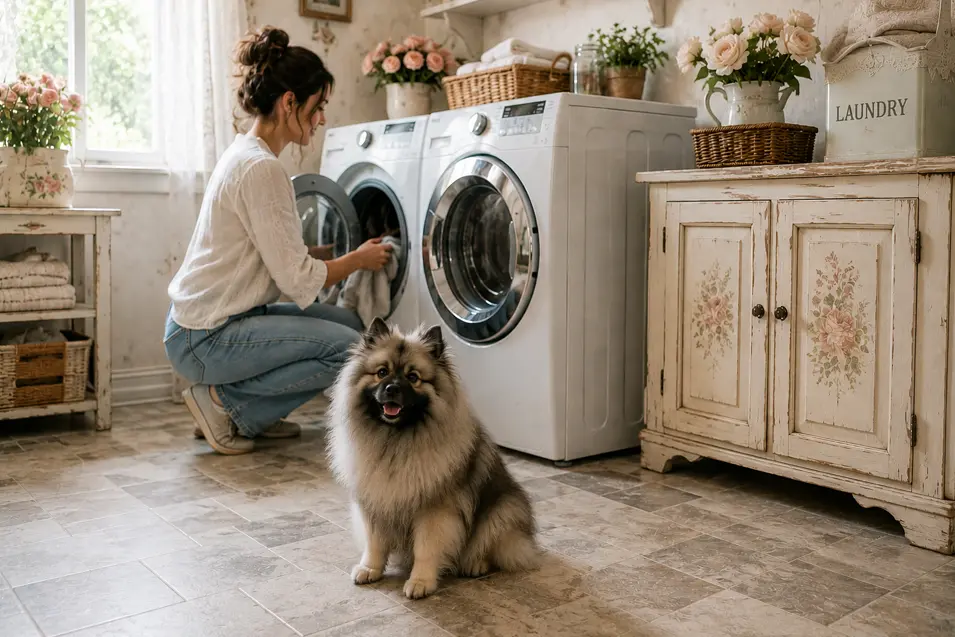
Many pets are naturally drawn to laundry areas because they contain familiar scents, warm appliances, cozy baskets, and often quieter corners of the home. While these features can make the room appealing, they can also create safety concerns if the space isn’t designed with pets in mind.
Fortunately, a few thoughtful design choices can transform your laundry room into a safer, more functional space for both pets and people. Whether you’re building a new laundry room or simply making improvements to an existing one, these pet-friendly design ideas can help create a safer environment while making daily chores easier.
Prioritize Safety First
Before focusing on aesthetics or convenience, address the biggest safety concerns.
Washers and dryers should always have doors that remain closed when not in use. If possible, choose appliances with child-lock or control-lock features that prevent accidental activation. Families with particularly curious cats may benefit from making appliance checks part of their laundry routine.
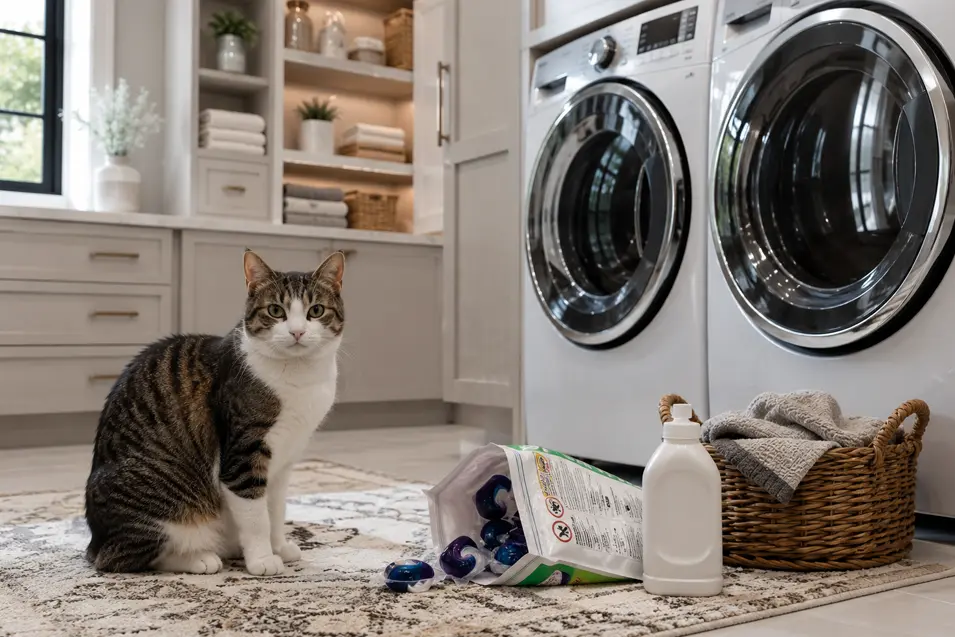
Laundry products should be stored in secure cabinets rather than on open shelves. Detergent pods, bleach, stain removers, and fabric softeners can be dangerous if chewed, swallowed, or spilled.
Installing cabinet latches may provide additional protection for determined pets.
Add Closed Storage Solutions
Open shelving can look attractive, but it often creates temptation for pets.
Cats may climb shelves to explore, while dogs may investigate baskets, cleaning products, or stored supplies. Closed cabinetry helps eliminate many of these risks while creating a cleaner, more organized appearance.
Consider storage solutions for:
- Laundry detergents and cleaning supplies
- Dryer sheets and fabric softeners
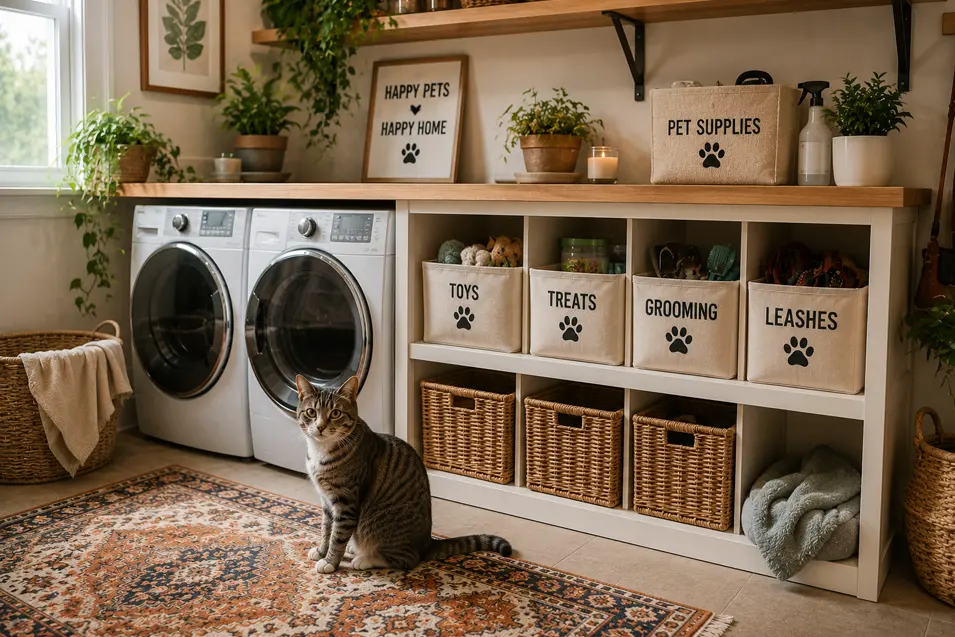
- Pet grooming supplies
- Extra pet bedding
- Leashes, harnesses, and accessories
Keeping clutter contained makes the room safer and easier to maintain.
Create a Dedicated Pet Zone
If space allows, consider incorporating a designated pet area within the laundry room.
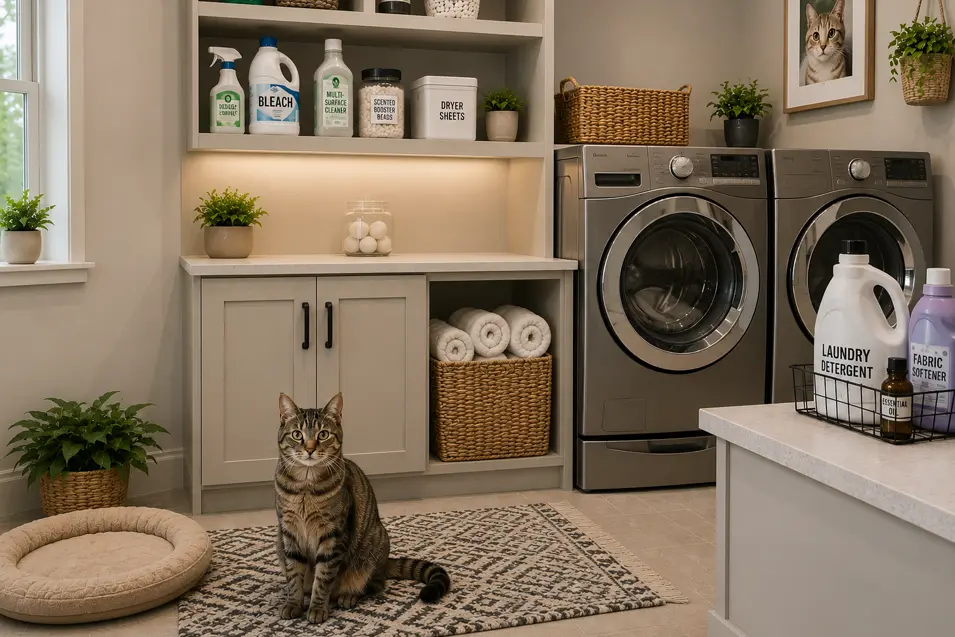
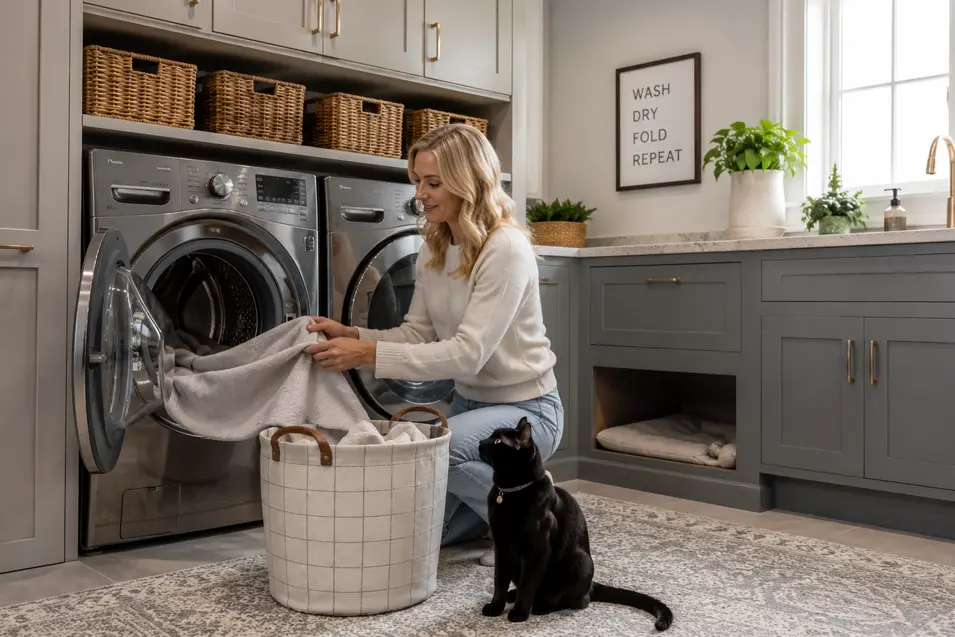
A small pet nook can give your dog or cat a comfortable place to rest while you complete household chores. Since many pets enjoy being near their owners, providing a dedicated space can reduce the likelihood that they’ll seek out unsafe locations such as laundry baskets or appliance tops.
The area might include:
- A comfortable pet bed
- A washable blanket
- A few favorite toys
- Fresh water
- A scratching post for cats
Providing an approved resting area often encourages pets to stay where you’d like them.
Use Durable, Pet-Friendly Flooring
Laundry rooms experience heavy foot traffic, moisture, and occasional spills. Adding pets to the mix increases the importance of choosing durable flooring.
Pet-friendly flooring should be:
- Water resistant
- Easy to clean
- Scratch resistant
- Slip resistant
Luxury vinyl plank, ceramic tile, and porcelain tile are popular choices because they handle moisture well while standing up to pet claws and accidents.
Avoid flooring materials that become slippery when wet, as they can increase the risk of injuries for both pets and people.
Include Built-In Pet Washing Stations
One of the most popular pet-friendly laundry room upgrades is a pet washing station.
For dog owners, a dedicated washing area can make bath time significantly easier. Instead of lifting muddy dogs into a bathtub, owners can use a low-entry wash station designed specifically for pets.
Features may include:
- Handheld sprayers
- Non-slip surfaces
- Raised platforms
- Storage for shampoos and towels
- Easy drainage
Even smaller laundry rooms can sometimes accommodate compact pet-washing solutions that double as utility sinks.
Improve Ventilation and Air Quality
Laundry rooms often generate heat, humidity, lint, and airborne particles.
Proper ventilation benefits both pets and humans by reducing moisture buildup and improving indoor air quality. Good airflow can help prevent respiratory irritation while also reducing odors and excess humidity.
Consider:
- High-quality exhaust fans
- Regular dryer vent maintenance
- Air purifiers
- Proper HVAC circulation
Keeping the room comfortable encourages pets to use designated areas rather than seeking alternative resting spots elsewhere.
Choose Pet-Safe Materials
When selecting finishes, paints, and furnishings, look for products that are durable and non-toxic.
Pets frequently investigate surfaces through licking, chewing, or scratching. Choosing low-VOC paints and pet-safe materials can help reduce exposure to potentially harmful chemicals.
Washable surfaces are also a smart choice, particularly in rooms that may serve multiple purposes, such as grooming, laundry, and pet care.
Incorporate Hidden Litter Box Solutions
For cat owners, the laundry room is often a popular location for litter boxes.
While practical, exposed litter boxes can affect both appearance and odor control. Built-in litter box cabinets or concealed litter stations can provide privacy for cats while maintaining a cleaner look.
Popular options include:
- Cabinet enclosures
- Bench-style litter box furniture
- Hidden compartments beneath counters
- Customized storage units with cat entrances
Cats often appreciate the added privacy, and owners benefit from a more attractive space.
Add Comfortable Resting Areas
Many pets simply enjoy spending time near family members. If you frequently fold laundry or complete household chores in the room, your pet may naturally want to accompany you.
A comfortable resting area can encourage safe behavior while making the room more inviting.
Consider adding:
- Soft washable mats
- Elevated pet beds
- Window perches for cats
- Cozy corner spaces
Position these areas away from appliance doors and work zones to prevent accidents.
Keep Cords and Hoses Protected
Electrical cords, appliance hoses, and exposed wiring can attract curious pets.
Dogs and puppies may chew on cords, while cats sometimes bat at dangling cables. Whenever possible, conceal cords behind cabinets or use protective cord covers.
Water supply lines and drainage hoses should also be inspected regularly to ensure they remain secure and inaccessible.
The Bottom Line
A pet-friendly laundry room combines safety, comfort, and functionality. By reducing hazards, improving storage, and creating designated spaces for your pets, you can transform a frequently overlooked room into one that serves the entire household more effectively.
Whether your goal is preventing accidents, simplifying pet care, or simply making your home more welcoming, thoughtful laundry room design can make a significant difference. With a few smart upgrades, your laundry room can become a safer place for pets and a more efficient space for the people who care for them.