Bringing a rescue pet home is one of the most rewarding experiences a pet owner can have. Whether you’ve adopted a dog from a shelter, welcomed a rescued cat into your family, or opened your home to an animal from a foster program, you’re giving that pet a second chance at a better life.
However, moving into a new home can be overwhelming for rescue animals. Many have experienced uncertainty, frequent changes, neglect, abandonment, or simply the stress of being in unfamiliar environments. Even pets with no history of trauma often need time to adjust to new sights, sounds, smells, and routines.
One of the most effective ways to help a rescue pet transition successfully is by creating a dedicated safe space. A thoughtfully designed area gives your new companion a place to decompress, build confidence, and begin feeling secure in their surroundings.
Why Rescue Pets Need a Safe Space
Every rescue pet arrives with a unique history.
Some animals adjust quickly, while others require weeks or even months to fully settle into a new home.
A safe space provides:
- A sense of security
- A predictable environment
- Reduced stress
- A quiet place to rest
- Opportunities to adjust at their own pace
Rather than forcing immediate interaction with every room, family member, and visitor, a safe space allows pets to explore gradually and build confidence naturally.
Choose a Quiet Location
The ideal safe space should be located in a calm area of the home.
Look for a room or section of a room that is:
- Away from heavy foot traffic
- Relatively quiet
- Comfortable year-round
- Easy to supervise
- Free from excessive noise
Good options may include:
- A spare bedroom
- A home office
- A quiet corner of a living room
- A finished basement room
- A guest room
The goal is to provide a place where your pet can relax without feeling overwhelmed.
Start Small
One common mistake new adopters make is giving rescue pets immediate access to the entire house.
While this may seem welcoming, it can actually increase stress for some animals.
Starting with a smaller area helps:
- Reduce overstimulation
- Simplify house training
- Create routine
- Build confidence gradually
As your pet becomes more comfortable, you can slowly introduce additional areas of the home.
Provide Comfortable Bedding
A comfortable resting area is essential.
Many rescue pets spend their first few days sleeping more than usual as they recover from the stress of transition.
Consider including:
- Soft pet beds
- Washable blankets
- Orthopedic bedding for senior pets
- Covered beds for shy animals
Place bedding in a location where your pet can observe the room while still feeling protected.
Many animals prefer sleeping against a wall or in a corner during their adjustment period.
Include Fresh Food and Water
Basic necessities should always be easily accessible.
The safe space should contain:
- Fresh water
- Food bowls
- Feeding supplies
For rescue pets, consistency is especially important.
Maintaining regular feeding schedules can help establish routine and create positive associations with their new environment.
Avoid placing food and water in busy walkways where pets may feel vulnerable while eating or drinking.
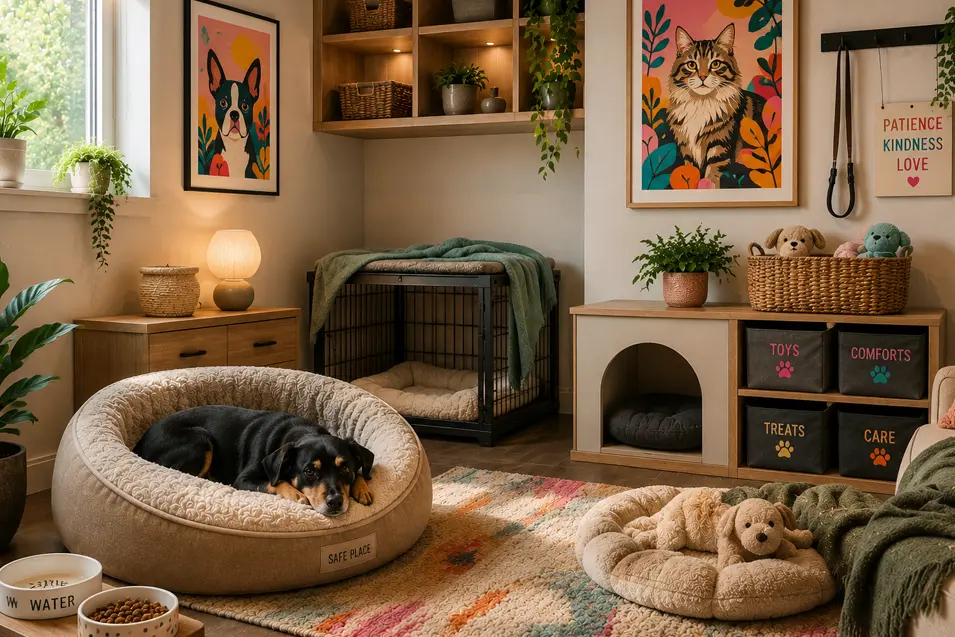
Provide Hiding Opportunities
Many rescue pets, especially cats, seek out hiding places when they feel nervous.
Rather than trying to prevent this behavior, provide safe options.
Good hiding spaces include:
- Covered beds
- Crates with blankets
- Cat tunnels
- Open carriers
- Furniture with enclosed spaces
Having access to hiding spots allows pets to feel more in control of their environment.
Ironically, pets often become more confident when they know they have a safe retreat available.
Use a Crate as a Positive Retreat
For dogs, a crate can serve as an excellent safe space when introduced properly.
A crate should never be used as punishment.
Instead, it can provide:
- Security
- Predictability
- Quiet rest
- A personal retreat
Leave the crate door open whenever appropriate and allow your dog to enter and exit voluntarily.
Adding blankets and favorite toys can make the space more inviting.
Limit Household Stressors
The first few days and weeks are critical for adjustment.
Try to minimize unnecessary stress.
Consider limiting:
- Loud music
- Large gatherings
- Frequent visitors
- Excessive handling
- Sudden routine changes
Rescue pets often benefit from calm, predictable environments where they can learn what to expect each day.
Introduce Family Members Gradually
While everyone may be excited to meet the new pet, introductions should occur at the animal’s pace.
Allow your pet to:
- Approach voluntarily
- Observe from a distance
- Build trust gradually
Forcing interaction can increase anxiety and delay the bonding process.
Patience often leads to stronger long-term relationships.
Give Pets Control Over Interactions
Many rescue animals gain confidence when they can make choices.
Whenever possible, allow pets to decide:
- When to approach
- Where to rest
- When to explore
- How much interaction they want
This approach helps build trust and reduces feelings of pressure or fear.
Confidence often develops naturally when pets feel they have some control over their surroundings.
Include Familiar and Comforting Items
If available, items that carry familiar scents can ease the transition.
Examples may include:
- Shelter blankets
- Foster bedding
- Favorite toys
- Familiar food dishes
Scent plays a major role in helping animals feel secure.
Even simple familiar objects can provide comfort during the adjustment period.
Create Opportunities for Enrichment
While rest is important, mental stimulation also supports emotional well-being.
Appropriate enrichment may include:
- Puzzle toys
- Snuffle mats
- Gentle training sessions
- Interactive toys
- Window perches for cats
Choose activities that match your pet’s comfort level and avoid overwhelming them with too many new experiences at once.
Monitor Interactions with Other Pets
If you already have pets, introductions should be handled carefully.
The safe space provides a valuable buffer during the introduction process.
Benefits include:
- Reduced territorial conflicts
- Controlled introductions
- Lower stress levels
- Better observation opportunities
Allow relationships to develop gradually rather than rushing interactions.
Patience can help prevent future behavioral issues.
Establish Consistent Routines
Rescue pets often thrive when daily life becomes predictable.
Try to maintain consistency with:
- Feeding times
- Walk schedules
- Play sessions
- Bedtime routines
- Training activities
Predictable routines help pets understand what to expect and can significantly reduce anxiety.
Over time, routine becomes one of the strongest sources of security.
Watch for Signs of Progress
Every rescue pet adjusts at a different pace.
Positive signs may include:
- Exploring more frequently
- Relaxed body language
- Increased appetite
- Seeking interaction
- Playing with toys
- Resting comfortably in open areas
Small improvements often indicate growing confidence and trust.
Celebrate progress without rushing the process.
Building Trust One Day at a Time
Creating a safe space for a rescue pet is one of the most important gifts you can provide during the transition to a new home. A quiet, comfortable environment gives your pet the opportunity to decompress, build confidence, and develop trust at their own pace.
Whether you’ve adopted a nervous shelter dog, a shy rescue cat, or a pet with an unknown background, patience and consistency are key. By providing comfortable bedding, predictable routines, opportunities for retreat, and plenty of positive experiences, you can help your new companion feel secure and supported.
The journey from rescue animal to beloved family member doesn’t happen overnight, but a thoughtfully designed safe space can make that transition smoother, less stressful, and far more successful for everyone involved.