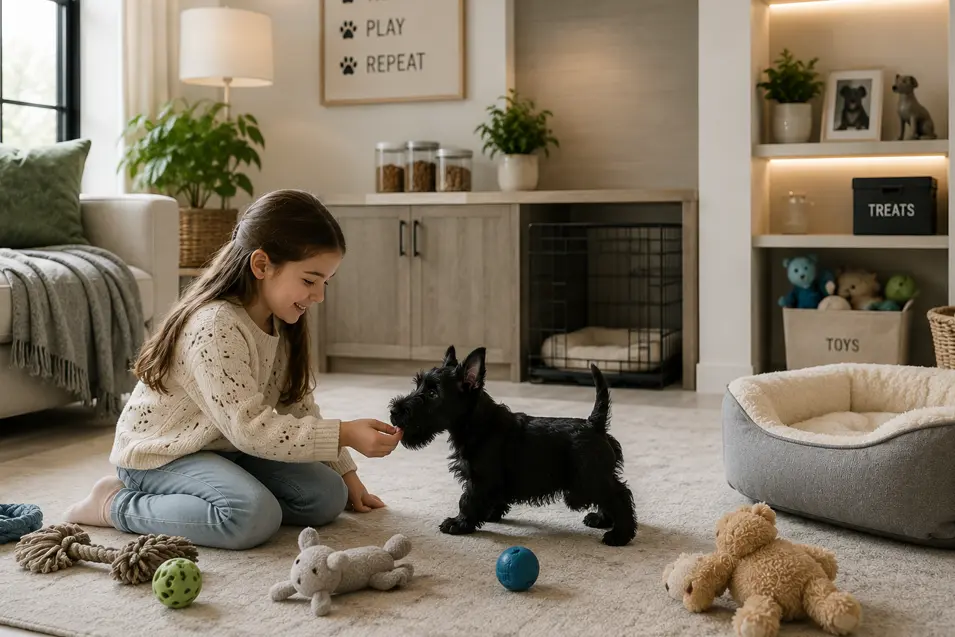
Bringing home a new puppy is an exciting experience filled with cuddles, playtime, and countless memorable moments. It also comes with challenges, especially during the first few months when puppies are learning household rules, developing routines, and exploring their new environment.
Many new dog owners focus on purchasing toys, food, and a comfortable bed, but one often-overlooked aspect of puppy care is creating a dedicated puppy room or puppy space. A thoughtfully designed area can help with training, provide a safe environment, and make life easier for both the puppy and the owner.
Whether you have an entire room available or simply a section of your home dedicated to your new companion, understanding what puppies need can help you create a space that supports healthy development while minimizing stress and accidents.
Why Consider a Puppy Room?
Puppies are naturally curious and energetic.
Everything in their environment becomes something to investigate, chew, climb on, or play with. Providing a dedicated puppy space helps create boundaries while allowing your new pet to explore safely.
A puppy room can:
- Support house training
- Reduce household accidents
- Protect furniture and belongings
- Provide a safe place for unsupervised time
- Help establish routines
- Create a comfortable sleeping environment
For many owners, a puppy room becomes an important training tool during the first year of a dog’s life.
Safety Comes First
The most important aspect of any puppy room is safety.
Puppies explore the world with their mouths, making them vulnerable to a variety of household hazards.
Remove or secure:
- Electrical cords
- Small objects
- Cleaning products
- Medications
- Toxic plants
- Loose fabrics
- Sharp objects
Before introducing your puppy to the space, get down on the floor and view the room from their perspective. This often reveals hazards that are easy to overlook from an adult’s point of view.
Choose Durable Flooring
Accidents are a normal part of puppyhood.
For that reason, flooring should be easy to clean and resistant to moisture.
Popular puppy-friendly flooring options include:
- Luxury vinyl plank flooring
- Tile flooring
- Sealed concrete
- Waterproof laminate products
Avoid flooring that stains easily or absorbs odors.
While area rugs can add comfort, choose washableoptions that can handle occasional accidents and muddy paws.
Include a Comfortable Sleeping Area
Puppies need a surprising amount of sleep.
Many young puppies sleep between 18 and 20 hours per day, making a comfortable sleeping space essential.
Consider:
- A soft puppy bed
- Washable blankets
- Crate bedding
- Orthopedic support for larger breeds
Position the sleeping area in a quiet part of the room where your puppy can rest without constant interruptions.
Crates Can Be Valuable Tools
Many professional trainers recommend crate training as part of a puppy’s development.
When used properly, a crate provides:
- Security
- Structure
- A safe resting place
- Assistance with house training
The crate should never be used as punishment.
Instead, it should become a positive space where the puppy feels comfortable and secure.
Many owners incorporate the crate directly into the puppy room design.
Create a Feeding Station
A dedicated feeding area helps establish routine and predictability.
Include:
- Food bowls
- Water bowls
- Waterproof mats
- Nearby food storage
Keeping feeding supplies organized helps simplify daily care and reduces clutter.
Try to maintain a consistent feeding schedule, as routines can support both training and digestion.
Provide Plenty of Appropriate Toys
Puppies need outlets for their natural chewing and play instincts.
Without suitable toys, they may redirect those behaviors toward furniture, shoes, or household items.
Useful toy categories include:
- Chew toys
- Puzzle toys
- Soft comfort toys
- Treat-dispensing toys
- Interactive enrichment toys
Rotate toys regularly to maintain interest and prevent boredom.
Plan for House Training
Every puppy room should support house-training efforts.
Helpful additions include:
- Easy-to-clean flooring
- Cleaning supplies nearby
- Puppy pads when appropriate
- Clear pathways to outdoor access
Accidents are inevitable, but having the proper setup can make cleanup much easier.
Consistency remains one of the most important factors in successful house training.
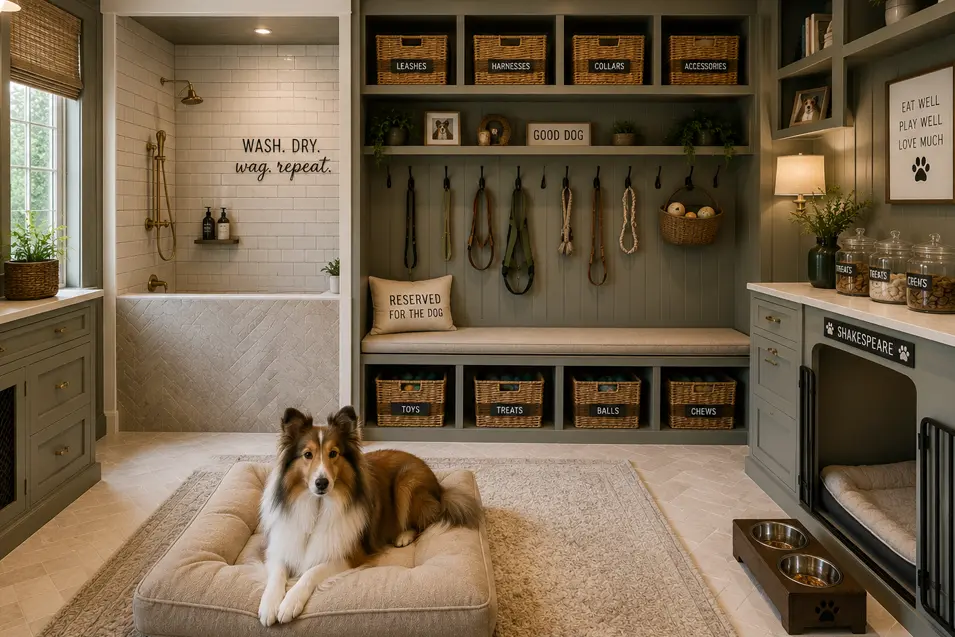
Include Storage for Puppy Supplies
New puppies come with a surprising amount of equipment.
Storage may be needed for:
- Food
- Treats
- Toys
- Leashes
- Harnesses
- Grooming tools
- Training supplies
- Medications
Simple storage solutions such as baskets, cabinets, and shelving can help keep the room organized.
An organized puppy room is easier to maintain and less stressful to navigate.
Provide Mental Stimulation
Physical exercise is important, but mental enrichment is equally valuable.
Puppies that become bored are more likely to develop unwanted behaviors.
Consider including:
- Puzzle feeders
- Snuffle mats
- Training games
- Interactive toys
- Rotating enrichment activities
Mental stimulation helps support healthy development while reducing destructive behaviors.
Control Access During Training
One common mistake new dog owners make is giving puppies unrestricted access to the entire home too quickly.
A puppy room provides controlled freedom.
Benefits include:
- Easier supervision
- Fewer accidents
- Reduced chewing damage
- Better routine development
Baby gates and exercise pens can help gradually expand access as your puppy matures and demonstrates reliable behavior.
Maintain Comfortable Temperatures
Puppies can be sensitive to temperature extremes.
Ensure the room remains:
- Well ventilated
- Free from drafts
- Comfortable year-round
Avoid placing beds directly beside heating vents, air conditioning units, or drafty windows.
A comfortable environment encourages healthy sleep and relaxation.
Prepare for Growth
One of the most important things new dog owners should remember is that puppies grow quickly.
A tiny puppy bed may only be suitable for a few months.
When designing the room, consider:
- Adult size
- Future storage needs
- Larger feeding equipment
- Long-term furniture arrangements
Planning ahead can save money and reduce the need for frequent redesigns.
Make the Space Positive
A puppy room should be associated with positive experiences.
Encourage positive associations by:
- Offering treats
- Providing favorite toys
- Maintaining routines
- Using praise during training
- Creating comfortable resting areas
The goal is to help your puppy view the space as a safe and enjoyable environment.
Creating a Strong Start for Your New Companion
A well-designed puppy room can make the transition into a new home easier for both puppies and their owners. By focusing on safety, comfort, organization, and training support, you can create a space that encourages healthy development while protecting the rest of your home from common puppy-related challenges.
Whether your puppy room occupies an entire spare room or just a carefully planned section of your home, the principles remain the same: provide security, structure, and opportunities for learning. With thoughtful preparation and consistent routines, your puppy’s space can become the foundation for a happy, confident, and well-adjusted adult dog.