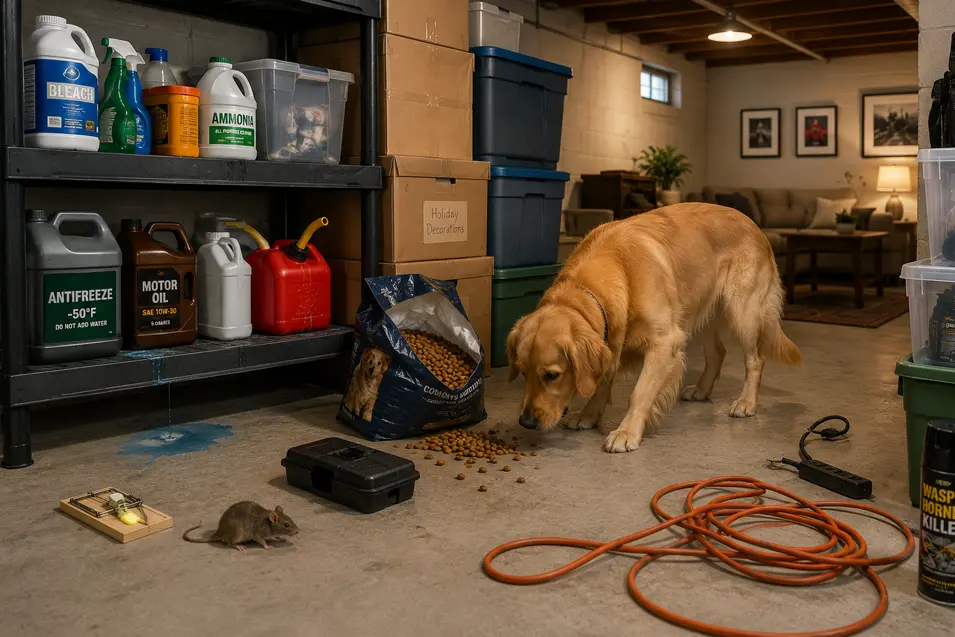
Basements are often the primary storage areas in many homes. Seasonal decorations, household supplies, tools, sporting equipment, and family keepsakes frequently end up downstairs, creating a convenient place to store items that are not used every day. However, what many pet owners don’t realize is that basement storage areas can hide numerous dangers for curious cats and dogs.
Pets naturally explore their surroundings using their noses, paws, and mouths. A cluttered or poorly organized basement can expose them to risks that are easy for humans to overlook. While obvious hazards like toxic chemicals receive a great deal of attention, many lesser-known dangers can be just as serious.
By understanding these overlooked storage risks and taking simple preventative measures, pet owners can make their basements significantly safer for their furry companions.
Why Storage Areas Attract Pets
Many pets find basements intriguing because they contain unfamiliar smells, hidden spaces, and interesting objects.
Cats may enjoy climbing shelves or squeezing into tight storage areas, while dogs often investigate boxes, bins, and containers in search of new scents.
Basement storage spaces often provide:
- Quiet hiding spots
- New textures and smells
- Potential nesting areas
- Cool temperatures
Unfortunately, these same features can place pets in dangerous situations if storage areas are not properly secured.
Unsecured Plastic Storage Bins
Plastic storage totes are commonly used in basements because they are inexpensive and stack easily.
However, they can present unexpected hazards.
Potential risks include:
- Lids collapsing under a pet’s weight
- Pets becoming trapped inside open containers
- Stacked bins tipping over
- Sharp cracked plastic edges
Cats are especially known for jumping onto storage bins, while dogs may investigate open containers.
Choose sturdy bins with secure lids and avoid stacking them in unstable configurations.
Heavy Items Stored on High Shelves
Many homeowners place heavy objects on upper shelving units to maximize storage space.
Examples include:
- Toolboxes
- Paint cans
- Holiday decorations
- Exercise equipment
- Storage totes
If shelves become overloaded or unstable, falling objects can seriously injure pets below.
To improve safety:
- Store heavier items on lower shelves.
- Anchor shelving units to walls.
- Avoid overloading storage racks.
- Inspect shelving regularly for damage.
Keeping heavy items low reduces the likelihood of accidents.
Cardboard Boxes and Hidden Hazards
Pets often enjoy exploring cardboard boxes, but boxes stored in basements may contain dangerous contents.
Common examples include:
- Craft supplies
- Electrical components
- Batteries
- Small hardware
- Toxic household products
Dogs may chew through cardboard, while cats often climb inside boxes without regard for what is stored within them.
Label boxes clearly and keep hazardous materials inside sealed containers rather than loose cardboard storage.
Forgotten Chemicals and Old Products
Basements frequently become storage locations for products that are rarely used or forgotten entirely.
These may include:
- Old pesticides
- Weed killers
- Paint thinners
- Automotive fluids
- Pool chemicals
- Cleaning products
Some containers deteriorate over time, leading to leaks or spills.
Even a small amount of exposure can be dangerous if pets walk through spilled substances and later groom themselves.
Conduct regular inventory checks and dispose of expired or unnecessary chemicals according to local regulations.
Rodent Control Products
One of the most overlooked basement hazards involves rodent traps and bait stations.
Homeowners sometimes place these products in basements without considering the risks they pose to pets.
Potential dangers include:
- Poison ingestion
- Trap-related injuries
- Secondary poisoning from affected rodents
If rodent control is necessary, use pet-safe methods whenever possible and ensure all products remain completely inaccessible to pets.
Stored Building Materials
Many homeowners keep leftover construction materials in the basement after renovation projects.
Examples include:
- Nails
- Screws
- Wood scraps
- Drywall pieces
- Insulation materials
- Adhesives
These items can cause cuts, puncture wounds, or digestive blockages if chewed or swallowed.
Store building materials in secure containers and remove sharp debris from the floor immediately.
Batteries and Electronics
Old electronics often end up in basement storage.
Unfortunately, batteries pose a serious hazard to pets.
Common items include:
- Remote controls
- Flashlights
- Toys
- Portable electronics
- Power tools
If chewed or punctured, batteries can cause severe burns to the mouth and digestive tract.
Store electronic devices in sealed containers and recycle unwanted batteries promptly.
Seasonal Decorations
Holiday decorations may seem harmless, but they can contain numerous pet hazards.
Common risks include:
- Tinsel
- String lights
- Ornament hooks
- Ribbon
- Artificial snow products
- Extension cords
Cats are particularly attracted to dangling decorative materials, while dogs may chew on unfamiliar items.
Store decorations in sturdy, sealed containers and inspect them before seasonal use.
Fabric and Textile Storage
Blankets, clothing, and fabric storage bins often attract pets looking for comfortable resting spots.
While generally safe, textiles can hide unexpected dangers.
Watch for:
- Mothballs
- Loose buttons
- Drawstrings
- Zippers
- Stored medications in pockets
Mothballs are especially dangerous because they contain chemicals that can be toxic if ingested.
Use pet-safe storage alternatives whenever possible.
Cluttered Floors and Hidden Objects
A cluttered basement floor creates numerous opportunities for accidents.
Pets may encounter:
- Sharp objects
- Loose hardware
- Glass fragments
- Electrical cords
- Tripping hazards
Regular organization and cleaning can dramatically reduce risks.
Maintaining clear walkways also allows pets to move safely through the space.
Unstable Shelving Units
Many basement storage systems are assembled quickly and rarely inspected afterward.
Over time, shelves can weaken due to:
- Moisture damage
- Rust
- Improper assembly
- Excessive weight
Cats climbing shelves may unintentionally destabilize them, while dogs can accidentally bump into poorly secured units.
Anchoring shelves to walls is one of the most effective ways to improve basement safety.
Hidden Pest Infestations
Stored items can provide ideal shelter for rodents, insects, and other pests.
These infestations may expose pets to:
- Disease
- Parasites
- Contaminated materials
- Pest control products
Regular inspections can help identify problems before they become serious.
Keeping storage areas clean and organized reduces the likelihood of infestations.
The Importance of Proper Organization
Good organization is one of the simplest ways to reduce basement storage hazards.
Consider these storage practices:
- Use sealed containers whenever possible.
- Label boxes clearly.
- Keep floors free of clutter.
- Store dangerous items in locked cabinets.
- Place heavy items on lower shelves.
- Inspect storage areas regularly.
An organized basement is easier to navigate, maintain, and monitor for potential dangers.
Creating a Pet-Safe Storage Area
You don’t have to eliminate basement storage to protect your pets. The goal is to identify hidden risks and make thoughtful adjustments that reduce opportunities for accidents.
A pet-safe basement storage area should:
- Limit access to hazardous materials
- Prevent climbing and tip-over accidents
- Minimize choking hazards
- Eliminate toxic substances
- Encourage safe exploration
By taking a proactive approach, you can continue using your basement for storage while protecting the health and safety of your cats and dogs.
Small Changes Make a Big Difference
Many of the most dangerous basement storage hazards are easy to overlook because they develop gradually over time. A forgotten box, an aging shelf, or an old container of chemicals may not seem like an immediate threat until a curious pet investigates.
Regular inspections, proper organization, and secure storage practices can go a long way toward preventing accidents. With a little effort, your basement can remain both a practical storage area and a safe part of your pet-friendly home.