For many homeowners, the basement serves as a versatile space. It might be a family room, home gym, storage area, workshop, or even a place where pets spend time during the day. While basements offer plenty of extra square footage, they can also present unique dangers for dogs, cats, and other household pets. Taking the time to evaluate and pet-proof your basement can help prevent accidents, injuries, and health issues.
If your pet has access to the basement, it’s important to ensure the space is as safe and comfortable as the rest of your home.
Common Basement Hazards for Pets
Basements often contain items and conditions that aren’t found elsewhere in the home. Many of these can pose serious risks to curious pets.
Toxic Chemicals and Cleaning Supplies
Many homeowners store paints, solvents, antifreeze, pesticides, fertilizers, and cleaning products in the basement. Even small amounts of these substances can be toxic if ingested.
Pets may chew through containers, knock over bottles, or walk through spills and later lick their paws. Always store hazardous materials in sealed containers and keep them in locked cabinets or on high shelves out of reach.
Exposed Wiring and Electrical Equipment
Basements frequently contain exposed electrical wires, extension cords, circuit panels, and utility equipment. Puppies and kittens are especially prone to chewing cords, which can result in severe burns, electrical shock, or even death.
Inspect your basement regularly for loose wiring and use cord protectors whenever possible. Restrict access to electrical panels and utility areas.
Mold and Poor Air Quality
Basements are naturally prone to dampness and humidity. Excess moisture can lead to mold growth, which may trigger allergies, respiratory issues, or other health problems for both pets and people.
Signs of mold include musty odors, discoloration on walls, and visible fungal growth. If your basement has moisture issues, consider installing a dehumidifier and addressing leaks promptly.
Sharp Tools and Equipment
Workbenches, power tools, nails, screws, and gardening equipment are common basement storage items. Curious pets can easily injure themselves by stepping on sharp objects or knocking tools off shelves.
Store tools securely and keep work areas organized. Sweep floors regularly to remove small items that may pose choking hazards.
Basement Stairs Can Be Dangerous
While healthy adult pets may navigate stairs with ease, basements can be challenging for:
- Puppies and kittens
- Senior pets
- Pets recovering from injuries or surgery
- Small breeds with limited mobility
- Puppies and kittens
- Senior pets
- Pets recovering from injuries or surgery
- Small breeds with limited mobility
Steep or slippery stairs increase the risk of falls. Consider installing:
- Non-slip stair treads
- Secure handrails
- Pet gates to restrict access when unsupervised
- Improved lighting for better visibility
- Non-slip stair treads
- Secure handrails
- Pet gates to restrict access when unsupervised
- Improved lighting for better visibility
These simple upgrades can significantly reduce the likelihood of accidents.
Watch for Temperature Extremes
Basements often remain cooler than the rest of the home, which can be beneficial during hot summer months. However, temperatures can also become uncomfortably cold during winter.
Pets that spend extended periods in the basement need a comfortable environment year-round.
Provide:
- Warm pet beds
- Blankets
- Adequate insulation
- Proper heating or cooling when necessary
- Warm pet beds
- Blankets
- Adequate insulation
- Proper heating or cooling when necessary
Monitor the temperature regularly to ensure it remains within a safe range for your pet’s breed and age.
Secure Storage Areas
Storage rooms can be especially hazardous because they often contain a mix of dangerous materials and tempting objects.
Common risks include:
- Rodent poison
- Holiday decorations with small pieces
- Batteries
- Automotive fluids
- Human medications
- Plastic bags and packaging materials
- Rodent poison
- Holiday decorations with small pieces
- Batteries
- Automotive fluids
- Human medications
- Plastic bags and packaging materials
Create designated pet-free storage areas using doors, gates, or secure barriers. Proper organization not only protects your pets but also makes it easier to identify potential hazards.
Check for Escape Routes
Basements sometimes have exterior doors, window wells, or unfinished areas that can provide unexpected escape opportunities.
Cats are particularly skilled at finding small openings, while dogs may push through poorly secured doors.
Inspect your basement for:
- Loose screens
- Gaps around windows
- Damaged door seals
- Open utility access points
- Loose screens
- Gaps around windows
- Damaged door seals
- Open utility access points
Addressing these vulnerabilities can help prevent lost pets and unwanted wildlife encounters.
Consider Flooring Safety
Basement flooring varies widely, from concrete and tile to carpet and laminate. Some surfaces are more pet-friendly than others.
Concrete floors can be hard on joints, especially for senior dogs. Smooth surfaces may become slippery when wet, increasing the risk of falls.
To improve comfort and safety:
- Add area rugs with non-slip backing
- Use pet-friendly flooring materials
- Clean spills immediately
- Keep walkways free of clutter
- Add area rugs with non-slip backing
- Use pet-friendly flooring materials
- Clean spills immediately
- Keep walkways free of clutter
Comfortable flooring encourages pets to use the space while reducing injury risks.
Create a Pet-Friendly Basement Zone
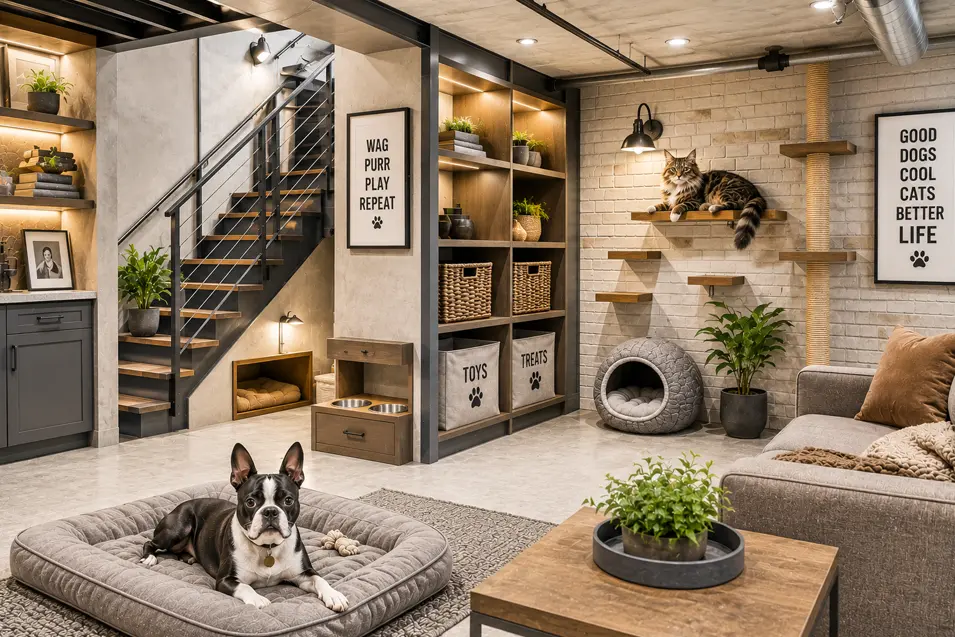
If your pet regularly spends time in the basement, consider creating a dedicated pet area.
Include essentials such as:
- A comfortable bed
- Fresh water
- Toys and enrichment activities
- Appropriate lighting
- Safe resting spaces
- A comfortable bed
- Fresh water
- Toys and enrichment activities
- Appropriate lighting
- Safe resting spaces
For cats, adding scratching posts, climbing shelves, or cozy hideaways can make the basement more inviting. Dogs may appreciate a designated relaxation area away from household noise.
Inspect Utility Areas Carefully
Basements often house furnaces, water heaters, sump pumps, and other mechanical systems.
These areas can present hazards including:
- Hot surfaces
- Moving parts
- Gas lines
- Water leaks
- Chemical exposure
- Hot surfaces
- Moving parts
- Gas lines
- Water leaks
- Chemical exposure
Whenever possible, restrict pet access to utility rooms using doors or barriers. Routine maintenance helps ensure equipment remains safe and functions properly.
Signs Your Basement May Not Be Pet-Safe
Pay attention to your pet’s behavior when they’re in the basement. Warning signs may include:
- Reluctance to enter the space
- Excessive scratching or itching
- Frequent sneezing or coughing
- Anxiety or nervousness
- Unexplained injuries
- Chewing unusual objects
- Reluctance to enter the space
- Excessive scratching or itching
- Frequent sneezing or coughing
- Anxiety or nervousness
- Unexplained injuries
- Chewing unusual objects
These behaviors may indicate environmental issues that need to be addressed.
Final Thoughts
A basement can be a valuable extension of your home’s living space, but it requires special attention when pets are involved. From toxic chemicals and exposed wiring to moisture problems and stairway hazards, basements often contain risks that can easily go unnoticed.
By taking a proactive approach to pet-proofing, improving storage practices, maintaining air quality, and creating a comfortable environment, you can help ensure your basement remains a safe place for every member of the family—including the four-legged ones.
A few thoughtful safety upgrades today can prevent costly emergencies and provide peace of mind for years to come.