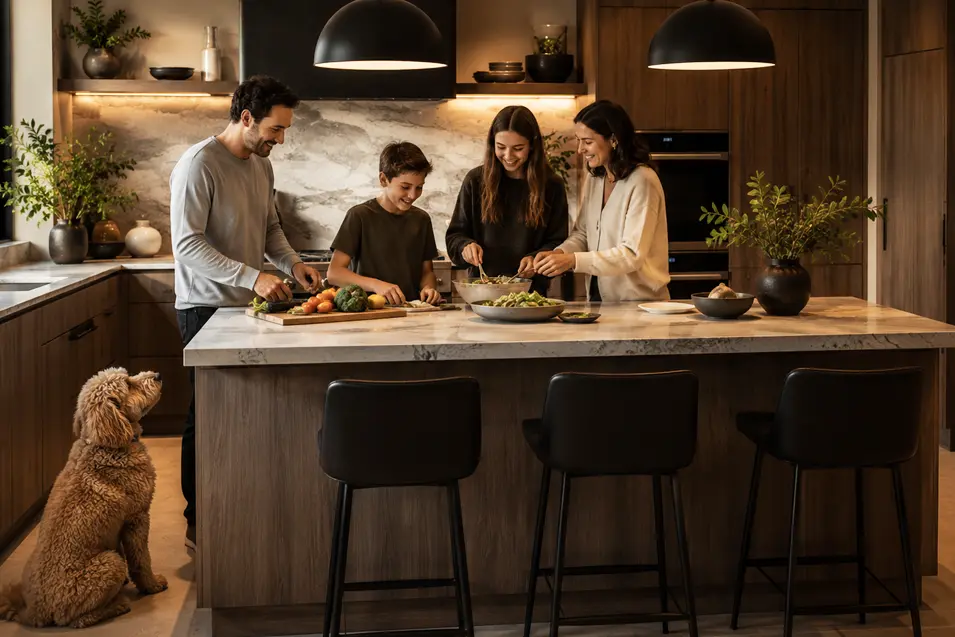
The kitchen is often called the heart of the home, but for pet owners, it can also become one of the busiest areas for four-legged family members. Whether your dog follows you from room to room, your cat enjoys lounging in sunny corners, or you have multiple pets sharing the space, a kitchen remodel presents the perfect opportunity to create a functional, stylish, and pet-friendly environment.
By incorporating thoughtful design features, durable materials, and pet-specific amenities, you can build a kitchen that makes daily life easier while enhancing comfort and safety for both humans and animals. Here are some of the best pet-friendly kitche n remodeling ideasto consider.
Choose Durable, Scratch-Resistant Flooring
Flooring is one of the most important decisions in any pet-friendly kitchen remodel. Pets can be tough on floors, especially large dogs with sharp nails or active animals that frequently run through the house.
When selecting flooring, look for materials that are:
- Scratch-resistant
- Water-resistant
- Easy to clean
- Comfortable for pets to walk on
Luxury vinyl plank (LVP) flooring has become a favorite among pet owners because it combines durability with affordability. Tile flooring is another excellent option, particularly porcelain tile, which resists scratches, moisture, and stains. Engineered hardwood can work well if you prefer a natural wood appearance, but it generally requires more maintenance than vinyl or tile.
Avoid highly polished surfaces that may become slippery and increase the risk of falls for pets, especially senior animals.
Incorporate Built-In Feeding Stations
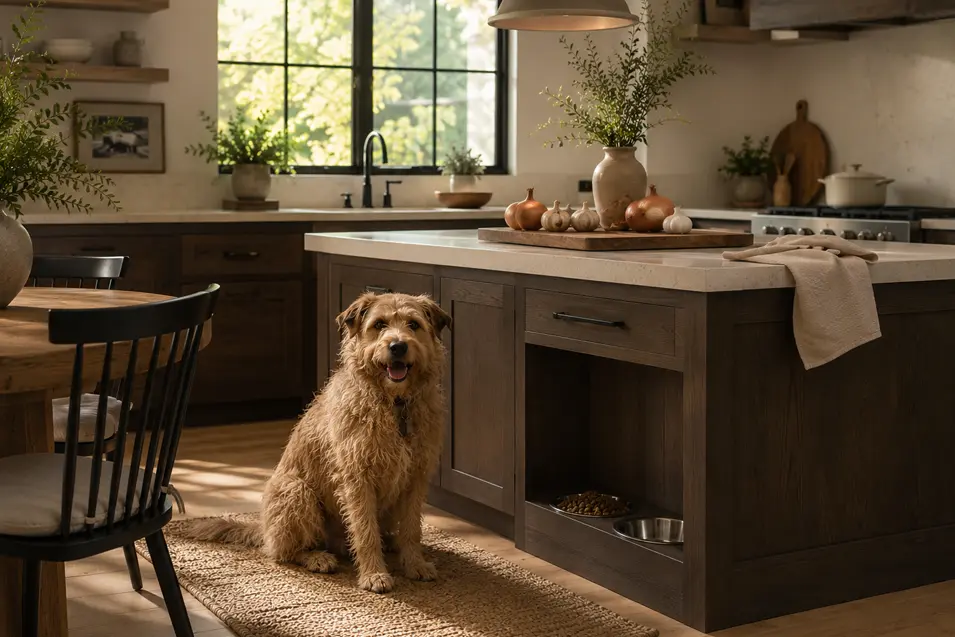
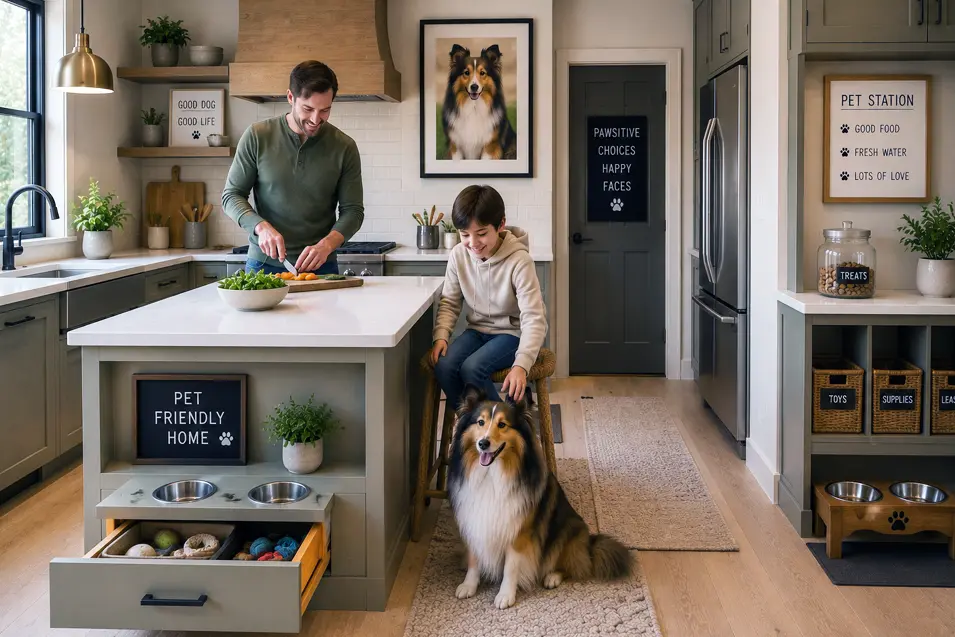
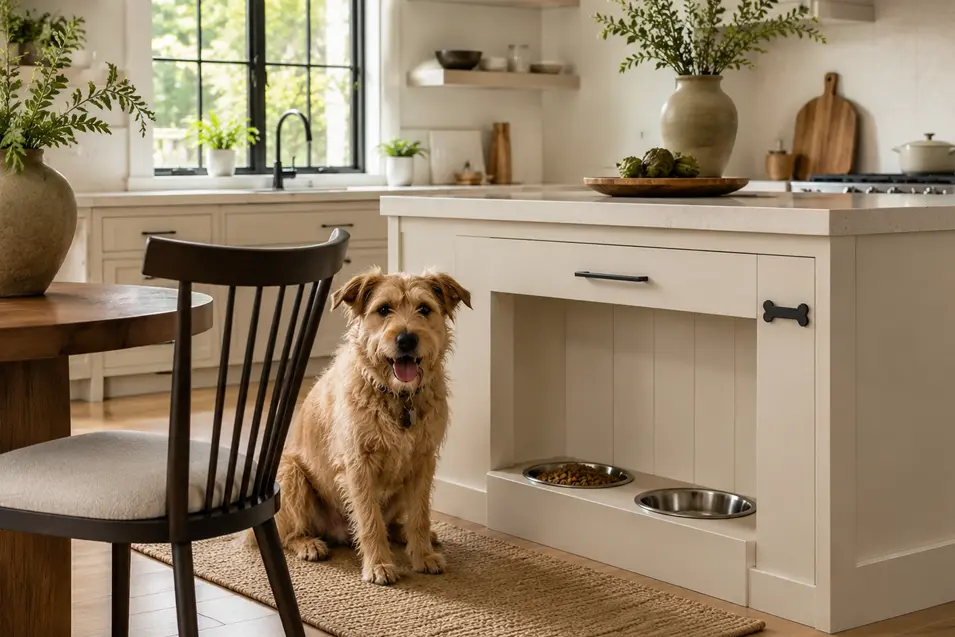
One of the most popular pet-friendly kitchen upgrades is a built-in feeding station. Rather than having bowls scattered across the floor, dedicated feeding areas help keep the kitchen organized while providing pets with a consistent dining space.
Options include:
- Pull-out feeding drawers hidden inside cabinetry
- Built-in feeding nooks beneath islands
- Elevated feeding stations for larger dogs
- Custom storage compartments for food and treats
These solutions reduce clutter while helping to contain spills and maintain a cleaner kitchen environment.
Add Pet Food Storage Solutions
Pet food bags can be bulky, unattractive, and difficult to store properly. During a kitchen remodel, consider incorporating dedicated storage specifically designed for pet supplies.
Popular options include:
- Pull-out pantry bins
- Airtight storage drawers
- Custom cabinets for food containers
- Shelving for treats, medications, and grooming supplies
Proper storage helps preserve freshness while keeping pet-related items organized and easily accessible.
Create a Built-In Pet Washing Station
If space allows, a pet washing station can be a game-changing addition. Muddy paws, rainy walks, and outdoor adventures often lead directly into the kitchen. Having a convenient place to rinse your pet can help protect your newly remodeled space.
A pet wash station may include:
- A low-entry shower area
- Handheld spray attachments
- Non-slip flooring
- Built-in storage for shampoos and towels
Many homeowners incorporate these stations into mudrooms adjacent to the kitchen, but larger kitchen layouts may have room for a dedicated pet-cleaning area.
Select Pet-Friendly Countertop Materials
Countertops should be chosen with durability and hygiene in mind. Pets occasionally jump up, shed hair, spill water, or leave muddy paw prints, making easy-to-clean surfaces essential.
Quartz countertops are among the best choices for pet-friendly kitchens because they are:
- Non-porous
- Stain-resistant
- Easy to sanitize
- Highly durable
Granite can also be an excellent option when properly sealed. Avoid materials that require extensive maintenance or are easily scratched.
Include a Cozy Pet Resting Area
Many pets enjoy spending time near their owners while meals are being prepared. Rather than having them underfoot, consider incorporating a designated resting space into your kitchen design.
Ideas include:
- Built-in pet beds under islands
- Cabinet niches converted into pet dens
- Window-side lounging areas for cats
- Cushioned spaces integrated into banquette seating
These features provide pets with a comfortable place to relax while allowing them to remain part of family activities.
Prioritize Easy-to-Clean Surfaces
Even the cleanest pets can create messes. From shedding fur to water splashes around feeding stations, maintenance should be a major consideration during your remodel.
Choose surfaces that are:
- Stain-resistant
- Moisture-resistant
- Easy to wipe down
- Resistant to odors
Glossy or semi-gloss backsplashes, washable wall paints, and durable cabinet finishes can simplify cleaning while maintaining a polished appearance.
Install Pet-Safe Cabinet Features
Kitchen cabinets often contain cleaning supplies, medications, or foods that may be harmful to pets. A pet-friendly remodel should include safety measures that help prevent accidental access.
Consider adding:
- Childproof cabinet locks
- Soft-close doors and drawers
- Dedicated storage for hazardous materials
- Secure pantry doors
These upgrades improve safety while protecting curious pets from potentially dangerous items.
Improve Air Quality and Ventilation
Pets naturally contribute to household allergens, dander, and odors. Improving kitchen ventilation can help maintain a healthier indoor environment.
Features to consider include:
- High-performance range hoods
- Improved HVAC filtration systems
- Air purifiers
- Easy-to-clean ventilation grilles
Good air circulation benefits everyone in the home and helps reduce lingering pet odors.
Create Safe Traffic Flow
Kitchen layouts should account for both human and pet movement. High-traffic areas can become crowded when pets gather near cooking zones, increasing the risk of accidents.
During the design phase, consider:
- Wider walkways
- Separate feeding areas away from cooking spaces
- Clear traffic patterns
- Pet resting zones outside primary work triangles
Thoughtful space planning helps minimize congestion and creates a safer environment for everyone.
Use Pet-Friendly Finishes and Fabrics
If your kitchen includes upholstered seating, choose materials that stand up to claws, fur, and occasional accidents.
Good options include:
- Performance fabrics
- Leather or faux leather
- Stain-resistant textiles
- Washable slipcovers
For cabinetry, select finishes that resist scratches and fingerprints, helping maintain a clean appearance over time.
Don’t Forget Water Access
Hydration is essential for pets, and modern kitchen designs can make fresh water more accessible.
Some homeowners choose to install:
- Pot fillers adapted for pet bowls
- Built-in water stations
- Pet drinking fountains
- Dedicated water bowl alcoves
These additions can encourage pets to drink more while helping contain spills.
Final Thoughts
A pet-friendly kitchen remodel goes beyond aesthetics. By carefully selecting durable materials, creating dedicated pet spaces, and prioritizing safety and cleanliness, you can design a kitchen that truly accommodates every member of the family.
From built-in feeding stations and scratch-resistant flooring to cozy pet nooks and smart storage solutions, today’s remodeling options make it easier than ever to blend style with functionality. Whether you share your home with one pet or several, incorporating pet-friendly features into your kitchen renovation can improve daily life while creating a space where both people and pets feel comfortable, safe, and welcome.