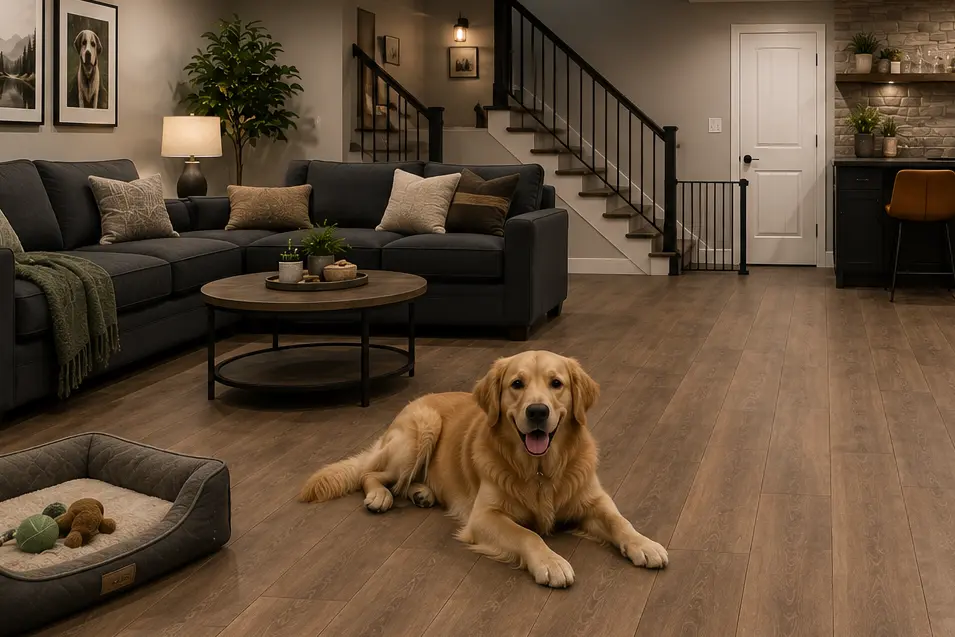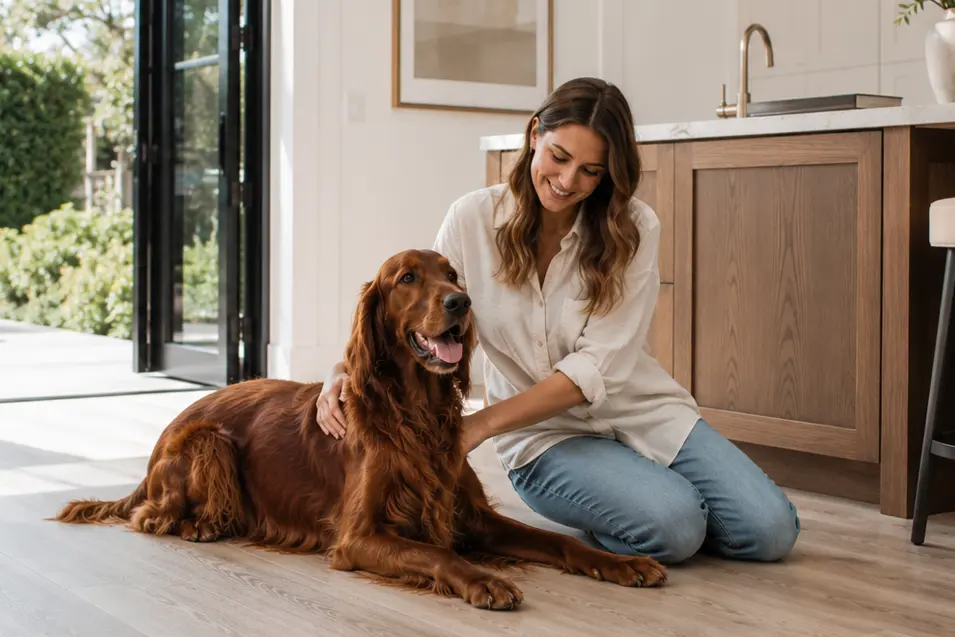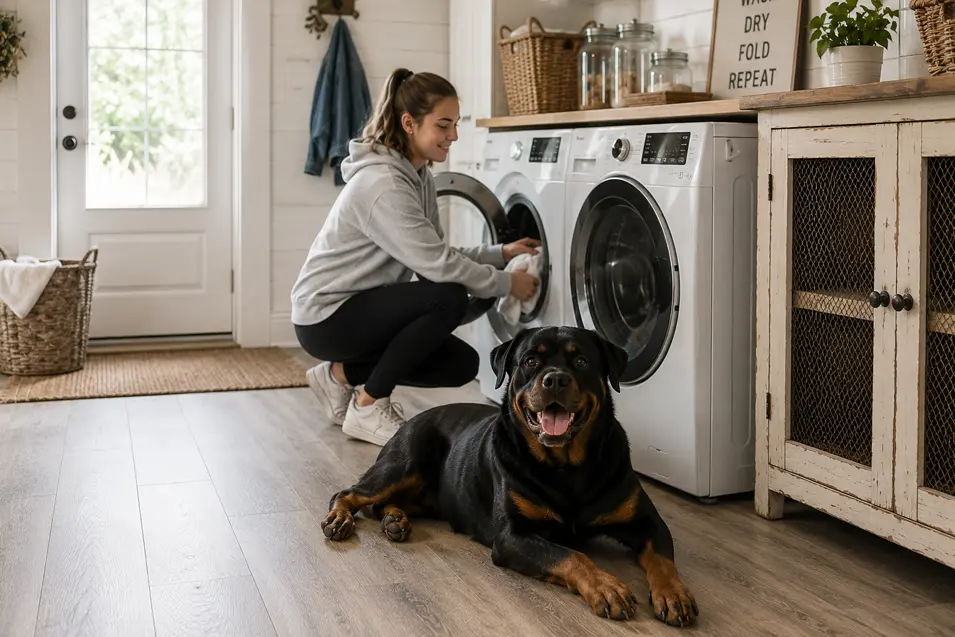
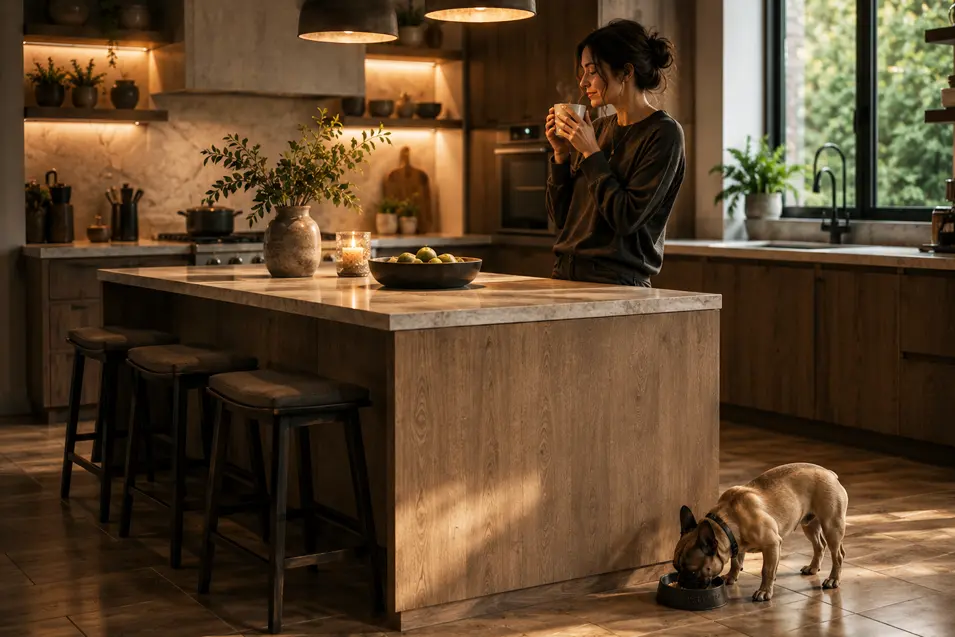
The kitchen is often one of the busiest rooms in the home. It’s where families gather, meals are prepared, and in many households, dogs spend a surprising amount of time waiting for treats, monitoring food preparation, or simply enjoying the company of their favorite people.
Unfortunately, kitchens can also be one of the toughest environments for flooring. Between spills, heavy foot traffic, pet nails, water bowls, muddy paws, and occasional accidents, kitchen floors face daily challenges that can quickly expose the weaknesses of certain materials.
For dog owners, choosing the right kitchen flooring isn’t just about appearance. It’s about finding a surface that can withstand real life while still looking beautiful for years to come.
What Dog Owners Should Look For
Before choosing a flooring material, it helps to understand what matters most in a pet-friendly kitchen.
Ideal kitchen flooring should offer:
- Durability
- Water resistance
- Scratch resistance
- Easy cleaning
- Good traction
- Long-term appearance
The best flooring balances these practical needs with the overall design of the home.
Luxury Vinyl Plank Flooring
Luxury vinyl plank (LVP) has become one of the most popular flooring choices for pet owners—and for good reason.
Benefits include:
- Excellent water resistance
- Scratch resistance
- Comfortable underfoot
- Realistic wood appearance
- Easy maintenance
Many modern LVP products closely resemble hardwood while offering significantly better performance in homes with pets.
For busy families with dogs, luxury vinyl plank often delivers one of the best combinations of practicality and style.
Porcelain Tile
Porcelain tile is another excellent option for dog-friendly kitchens.
Advantages include:
- Exceptional durability
- Water resistance
- Stain resistance
- Easy cleaning
- Long lifespan
Tile can withstand muddy paws, spilled water bowls, and heavy traffic without significant wear.
The main drawback is that tile can feel hard and cold underfoot. Area rugs or pet mats may help improve comfort in areas where dogs spend a lot of time.
Engineered Hardwood
Many homeowners love the appearance of hardwood but worry about pet-related damage.
Engineered hardwood can provide a compromise.
Benefits include:
- Natural wood appearance
- Greater stability than solid hardwood
- Increased resistance to moisture
- Strong resale appeal
While engineered hardwood is not completely scratch-proof, higher-quality products often perform well in homes with dogs when properly maintained.
Sealed Concrete
Sealed concrete is becoming increasingly popular in modern and contemporary homes.
Benefits include:
- Outstanding durability
- Moisture resistance
- Easy cleaning
- Minimal maintenance
- Long lifespan
For homeowners seeking a sleek, modern look, concrete can be an attractive and highly practical solution.
Proper sealing is essential to protect the surface from stains and moisture.
Laminate Flooring
Today’s laminate flooring products are far more durable than earlier generations.
Quality laminate offers:
- Good scratch resistance
- Affordable pricing
- Attractive designs
- Simple maintenance
However, laminate is generally less forgiving when exposed to standing water compared to luxury vinyl flooring.
Prompt cleanup of spills remains important.
Flooring Options to Approach Carefully
Some flooring materials may require additional consideration in homes with dogs.
Solid Hardwood
While beautiful, solid hardwood is often vulnerable to:
- Scratches
- Moisture damage
- Wear from heavy traffic
Large dogs and active households may accelerate the appearance of wear over time.
Natural Stone
Natural stone can be durable, but some varieties require ongoing sealing and maintenance.
Depending on the finish, certain stone surfaces may also become slippery when wet.
Soft Flooring Materials
Carpet is generally not recommended for kitchens due to:
- Stain concerns
- Moisture retention
- Odor absorption
- Cleaning difficulties
Most dog owners find hard-surface flooring easier to maintain in kitchen environments.
Don’t Forget About Traction
One factor many homeowners overlook is traction.
Dogs can struggle on extremely slippery floors, especially:
- Senior dogs
- Large breeds
- Pets with joint issues
A beautiful floor loses some of its appeal if it causes pets to slip regularly.
When evaluating flooring samples, consider both appearance and surface grip.
Think Beyond Puppyhood
Flooring decisions should consider your dog’s entire lifespan.
Puppies may bring:
- Accidents
- Scratches
- High activity levels
Senior dogs may later require:
- Better traction
- Comfortable walking surfaces
- Easier mobility
Choosing durable, pet-friendly flooring today can prevent costly replacements in the future.
Protecting High-Traffic Areas
Even the best flooring benefits from additional protection.
Consider placing mats near:
- Exterior doors
- Food stations
- Water bowls
- Frequently used pathways
These areas often experience the greatest wear and can benefit from extra protection.
Strategic placement of rugs and mats helps preserve flooring while making cleanup easier.
Finding the Right Balance
The best kitchen flooring for dog owners isn’t necessarily the most expensive option.
Instead, it’s the flooring that successfully balances:
- Appearance
- Durability
- Comfort
- Maintenance
- Long-term performance
For many households, luxury vinyl plank and porcelain tile emerge as leading contenders because they offer exceptional durability without sacrificing style.
A Kitchen Designed for Real Life
Dogs are often at the center of family life, and the kitchen is frequently where those interactions happen.
The ideal flooring choice recognizes this reality.
Rather than selecting a surface designed for perfect conditions, homeowners should choose flooring capable of handling everyday life with pets. Muddy paws, spilled water, excited greetings, and daily activity are all part of the experience.
With the right flooring, your kitchen can remain attractive, functional, and welcoming for every member of the family—including the four-legged ones.