The kitchen is often called the heart of the home, but for dog owners, it’s also one of the most challenging rooms to design properly.
While most people focus on aesthetics, storage, and functionality, many overlook how their kitchen layout impacts their four-legged family members. A beautiful kitchen can quickly become a source of stress, accidents, and frustration if it isn’t designed with dogs in mind.
Whether you’re planning a complete renovation or simply making a few upgrades, avoiding these common kitchen design mistakes can create a safer and more comfortable environment for everyone in the household.
1. Choosing Slippery Flooring
One of the biggest mistakes dog owners make is selecting flooring based solely on appearance.
Highly polished tile, glossy hardwood, and smooth laminate may look stunning, but they can be difficult for dogs to navigate safely.
This is especially true for:
- senior dogs
- large breeds
- dogs with joint issues
- energetic puppies
Constant slipping can increase the risk of injuries and create anxiety for dogs who struggle to maintain their footing.
Better Options
Consider flooring materials that provide better traction, such as:
- textured tile
- luxury vinyl plank
- engineered hardwood with a matte finish
Adding washable runners can also improve stability.
2. Leaving the Trash Easily Accessible
Many dogs view the kitchen trash can as an all-you-can-eat buffet.
An exposed garbage can can tempt dogs with:
- food scraps
- bones
- packaging
- spoiled food
Unfortunately, these items can lead to choking, intestinal blockages, or emergency veterinary visits.
Better Solution
Choose cabinets with built-in trash storage or invest in a dog-proof trash can with a locking lid.
3. Ignoring Food Storage Safety
Dogs are surprisingly resourceful when food is involved.
Cabinets that contain treats, pet food, or human snacks may be easy targets for determined dogs.
Some breeds quickly learn how to open lower cabinets and pantry doors.
Better Solution
Store potentially dangerous foods in higher cabinets and use childproof locks when necessary.
4. Forgetting About Feeding Stations
Many homeowners add a dog bowl as an afterthought.
The result?
Bowls that slide across the floor, create messes, and disrupt traffic flow.
Better Solution
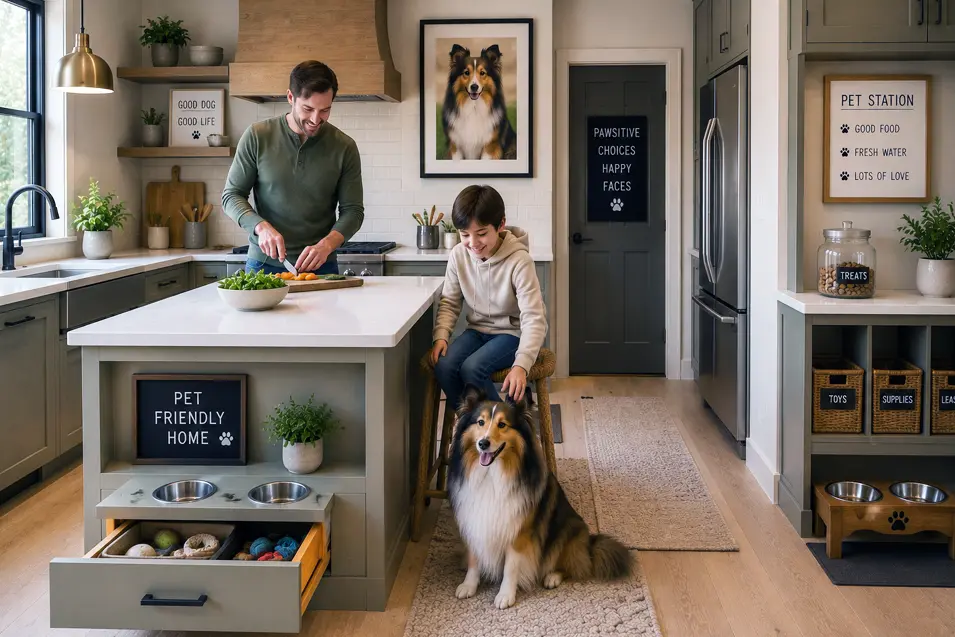
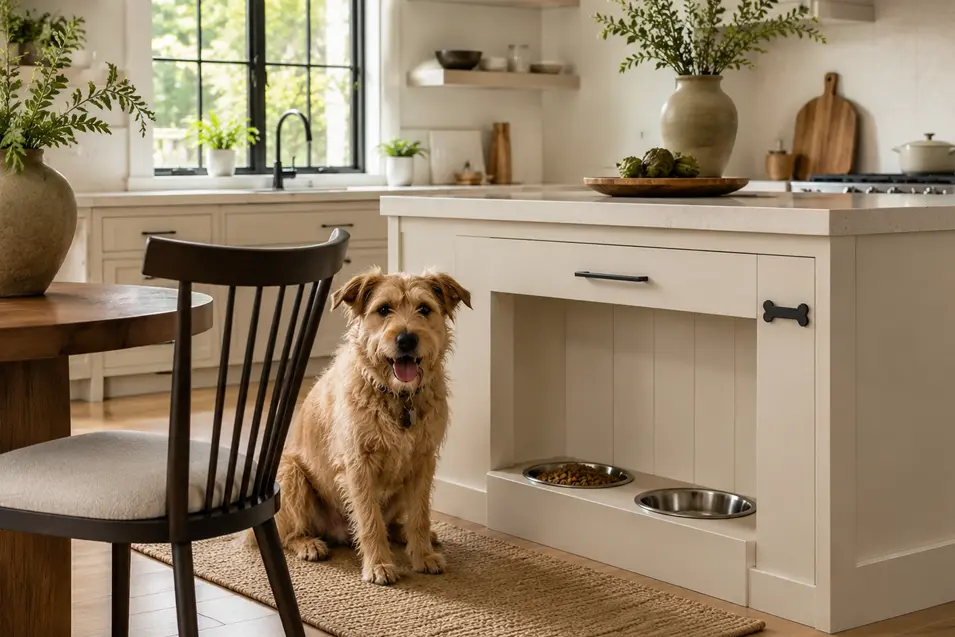
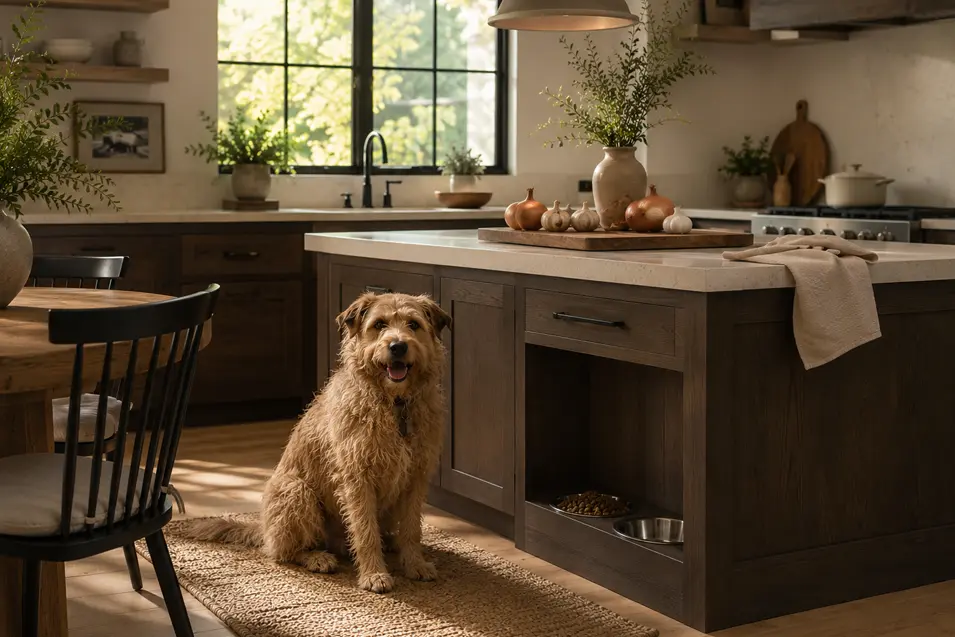
Incorporate a designated feeding area into your kitchen design.
Popular options include:
- built-in feeding drawers
- feeding stations inside kitchen islands
- dedicated pet corners
This keeps food and water organized while minimizing spills.
5. Creating Tight Walkways
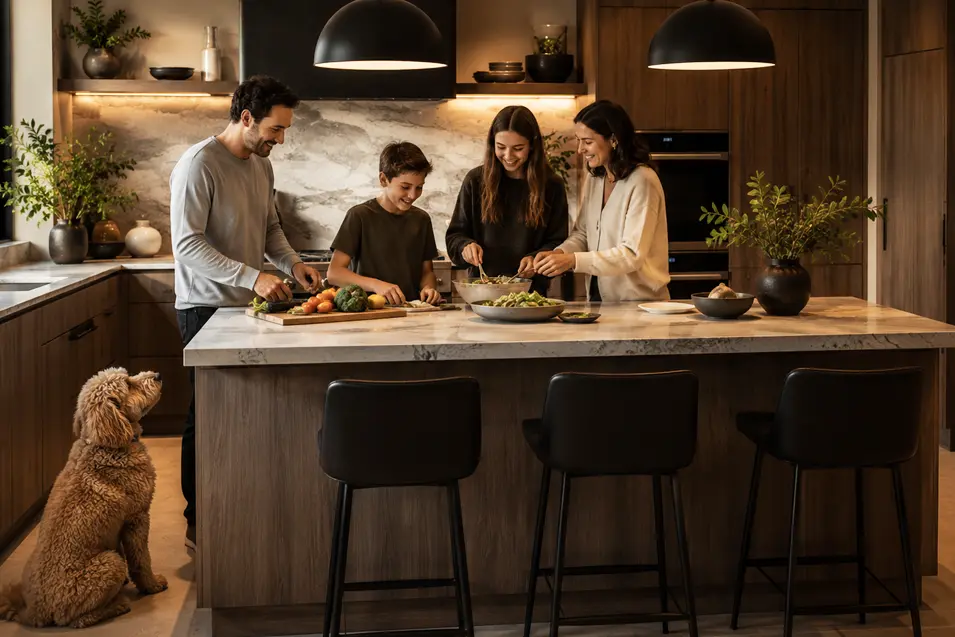
Dogs are often underfoot in the kitchen.
When walkways are too narrow, the room can quickly become crowded and stressful.
This becomes especially noticeable in homes with:
- multiple dogs
- large breeds
- families with children
Better Solution
If you’re remodeling, aim for wider walkways and clear traffic patterns that allow both people and pets to move comfortably.
6. Overlooking Cleaning Convenience
Dogs bring dirt, fur, drool, and muddy paws into the kitchen on a regular basis.
Materials that are difficult to clean can become frustrating over time.
Better Solution
Choose surfaces that are durable and easy to maintain, including:
- washable paint finishes
- stain-resistant countertops
- easy-clean flooring materials
You’ll appreciate the convenience long after the renovation is complete.
7. Leaving Cleaning Products Within Reach
Many common household cleaners contain ingredients that can be harmful to pets.
Unfortunately, under-sink cabinets are often located at a dog’s eye level.
Better Solution
Store cleaning products in secure cabinets and consider childproof latches if curious dogs have access to the kitchen.
8. Forgetting About Water Access
Fresh water should always be available to your dog.
Some kitchen layouts make it difficult to find a convenient location for water bowls.
Better Solution
Designate a permanent location where water can remain accessible without interfering with daily activities.
Many homeowners now incorporate built-in water stations during kitchen renovations.
9. Using Delicate Cabinet Finishes
Dogs don’t intentionally damage cabinets, but noses, paws, and wagging tails can leave marks surprisingly quickly.
Glossy finishes often show:
- scratches
- smudges
- dirt
- nose prints
Better Solution
Durable finishes and textured surfaces tend to hide everyday wear much better.
10. Designing the Kitchen for People Only
The most common mistake is forgetting that dogs use the kitchen too.
While your dog may not help prepare dinner, they likely spend a significant amount of time in the room with the family.
A truly successful kitchen balances:
- beauty
- functionality
- safety
- comfort
for everyone who uses the space.
Creating a Dog-Friendly Kitchen
You don’t need to sacrifice style to create a dog-friendly kitchen.
Small design decisions can make a significant difference in your dog’s safety and comfort while also making daily life easier for you.
By considering flooring, storage, traffic flow, and feeding areas during the design process, you can create a kitchen that works beautifully for every member of the family—including the four-legged ones.
After all, the best kitchens aren’t just designed for cooking. They’re designed for living.