
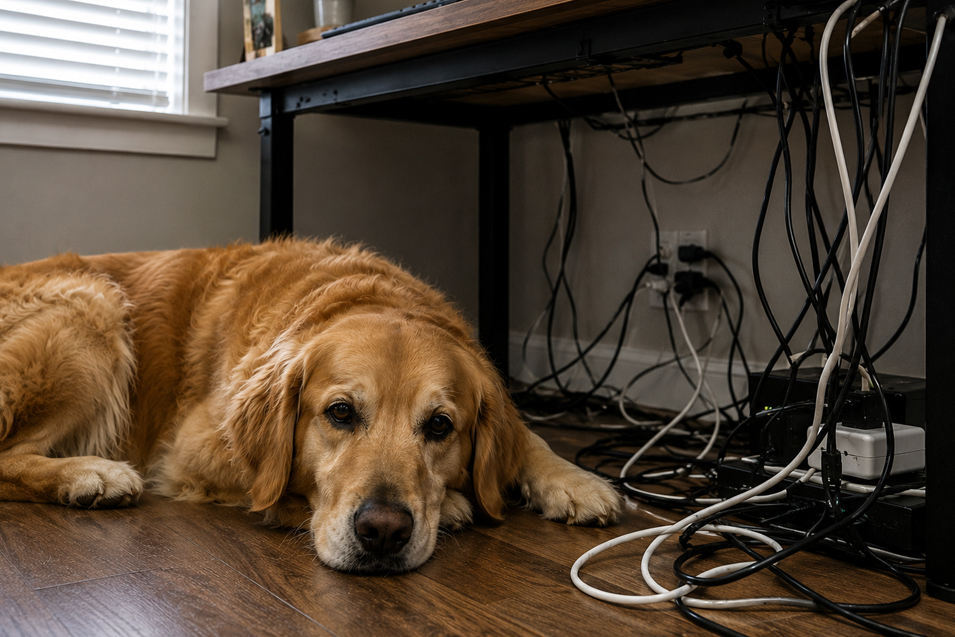
Electrical cords are one of the most overlooked dangers in pet-friendly homes. Learn how to protect cats and dogs from chewing cables, prevent accidents, and create a safer living environment.
Managing Electrical Cords Around Cats and Dogs
Most pet owners spend a lot of time thinking about food, exercise, grooming, and veterinary care.
Few spend much time thinking about electrical cords.
Unfortunately, electrical cords are one of the most overlooked hazards in modern homes.
From phone chargers and computer cables to television wires and extension cords, today’s homes contain dozens of electrical connections that can create risks for curious pets.
Cats may see cords as toys.
Puppies often view them as chewable objects.
Even adult pets can become tangled in poorly managed cables.
The good news is that a few simple precautions can dramatically reduce the risks.
Why Pets Are Attracted to Electrical Cords
To humans, electrical cords are boring.
To pets, they’re surprisingly interesting.
Many cords:
- Dangle and move
- Look similar to vines or ropes
- Carry interesting scents
- Are easy to reach
- Often attract attention from their owners
For kittens and puppies, cords can become irresistible playthings.
Unfortunately, chewing on an electrical cable can have serious consequences.
The Risks of Chewing Electrical Cords
The most obvious danger is electrical shock.
Depending on the voltage and the amount of damage to the cable, pets may suffer:
- Burns to the mouth
- Tongue injuries
- Internal damage
- Breathing difficulties
- Severe electrical injuries
In some cases, chewing electrical cords can even become life-threatening.
Beyond the risk to pets, damaged cords can also increase the risk of electrical fires within the home.
Puppies Are Especially Vulnerable
Puppies explore the world with their mouths.
During teething, many puppies actively seek objects to chew.
Unfortunately, charging cables, power cords, and extension cords often fall within easy reach.
Common targets include:
- Phone chargers
- Laptop power cords
- Gaming system cables
- Television wires
- Lamp cords
The younger the puppy, the more important cord management becomes.
Cats Have Their Own Reasons
Cats are less likely to chew cords than many puppies, but they often play with them.
Dangling cables can mimic prey movements.
A swinging charging cable may look remarkably similar to a toy.
Some cats also develop habits of chewing softer cables, particularly when bored or seeking attention.
Home Offices Can Be Problem Areas
Home offices often contain more cords than any other room in the house.
A typical office may include:
- Computer cables
- Monitor cables
- Printer wires
- Phone chargers
- Power bars
- Internet cables
For households with cats, this creates a perfect storm.
Many cats enjoy spending time near their owners while they work, which means they’re frequently surrounded by cables.
This is one reason cable management should be part of every pet-friendly home office design.
Entertainment Centers Create Hidden Hazards
Televisions, gaming systems, sound systems, and streaming devices often create large bundles of exposed wires.
These areas can be particularly attractive to curious pets.
Because many entertainment centers sit at floor level, pets often have easy access.
Unfortunately, homeowners frequently overlook these cords because they remain hidden behind furniture.
The Best Ways to Protect Electrical Cords
Fortunately, protecting pets doesn’t require major renovations.
Several simple solutions can significantly improve safety.
Use Cord Covers
Cord covers are one of the easiest and most effective solutions.
These protective sleeves make cords:
- Harder to chew
- Less attractive
- More organized
Many styles are inexpensive and easy to install.
Bundle Multiple Cables Together
Loose cables create more temptation.
Bundling cables together can reduce movement and make them less appealing.
Cable sleeves, wraps, and organizers can help keep everything neat and secure.
Secure Cords Against Walls
Whenever possible, cords should be routed along walls or behind furniture.
Reducing accessibility is often the simplest solution.
If pets can’t reach a cord, they can’t chew it.
Hide Charging Stations
Many homes have charging cables scattered throughout multiple rooms.
Creating a dedicated charging area can reduce clutter and minimize risks.
Consider using:
- Charging drawers
- Cable boxes
- Covered charging stations
Replace Damaged Cords Immediately
Even minor damage can become dangerous.
If a pet has chewed a cord, replace it immediately rather than attempting temporary repairs.
Exposed wiring creates risks for both pets and people.
Providing Better Alternatives
Sometimes the best way to prevent unwanted behavior is to provide a better option.
For puppies:
- Durable chew toys
- Teething toys
- Interactive toys
For cats:
- Wand toys
- Puzzle toys
- Scratching posts
- Climbing structures
A pet with appropriate enrichment is often less interested in electrical cords.
Signs Your Pet May Be Interested in Cables
Watch for behaviors such as:
- Pawing at cords
- Carrying cables
- Biting charging cords
- Tugging wires
- Playing behind entertainment centers
Addressing these behaviors early can prevent larger problems later.
Building a Safer Pet-Friendly Home
Electrical cord safety is one of those topics most homeowners don’t think about until something goes wrong.
Yet managing cords is one of the easiest improvements you can make in a pet-friendly home.
Good cable management provides several benefits:
- Improved safety
- Better organization
- Reduced clutter
- Protection for electronics
- Greater peace of mind
It’s a small project that can have a significant impact.
Final Thoughts
Cats and dogs are naturally curious.
Unfortunately, electrical cords often attract exactly the kind of attention homeowners don’t want.
By identifying potential hazards, organizing cables, and providing appropriate alternatives, you can dramatically reduce the risks associated with exposed wiring.
A truly pet-friendly home isn’t just comfortable for pets.
It’s designed to keep them safe from the everyday hazards that many people overlook.
And when it comes to electrical cords, a little prevention can go a very long way.