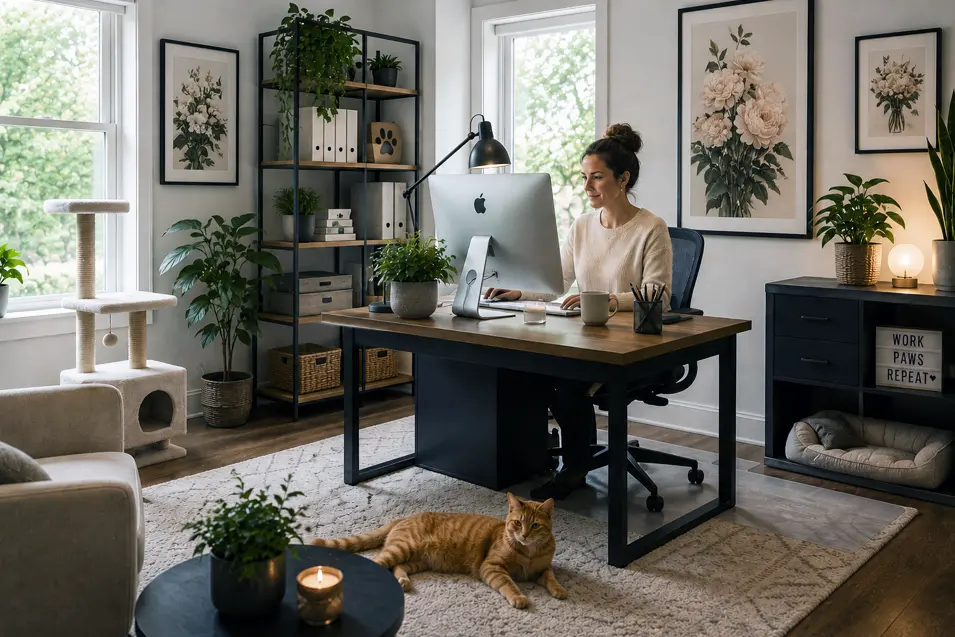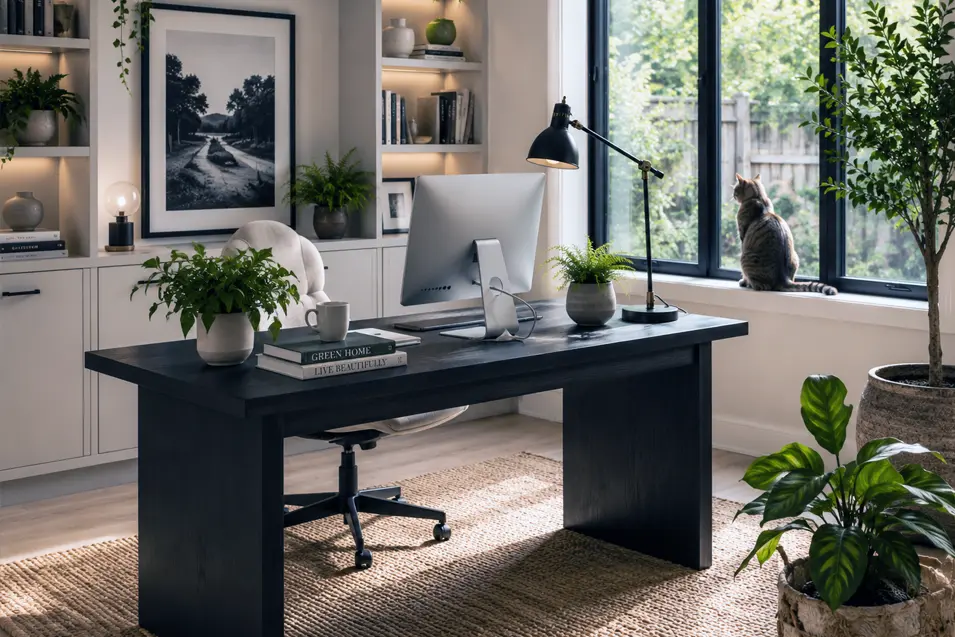
If you work from home and share your house with a cat, you’ve probably experienced a familiar scenario.
You’re trying to answer emails, finish a report, attend a Zoom meeting, or focus on an important project when suddenly your cat jumps onto the desk.
First they walk across the keyboard.
Then they sit directly in front of your monitor.
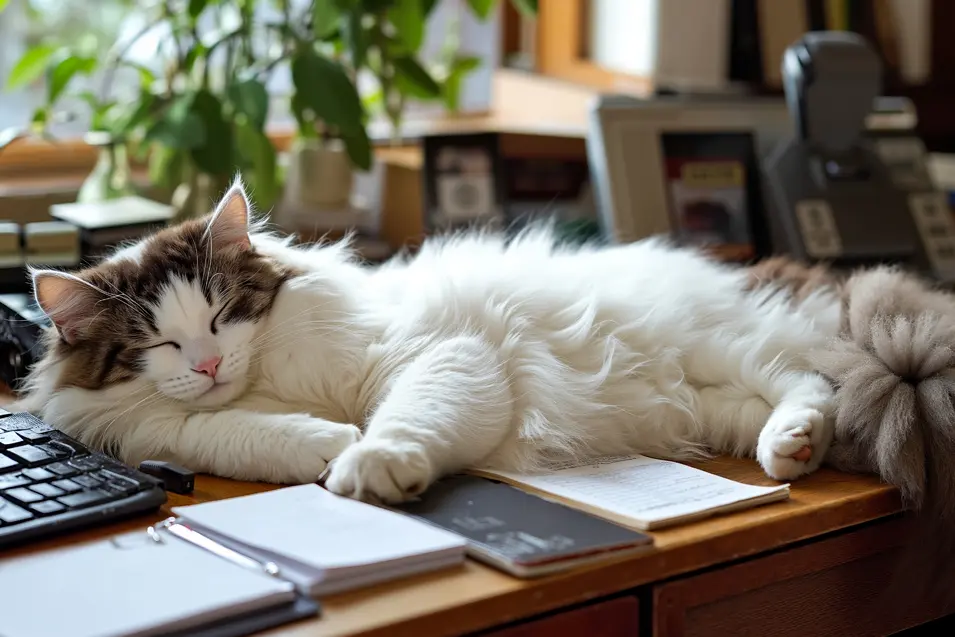
Finally, they settle down on the one document you actually need.
As frustrating as this behavior can be, your cat isn’t trying to sabotage your productivity.
In fact, there are several reasons cats seem irresistibly drawn to home offices.
Understanding why cats love workspaces can help you create an environment that works for both of you.
Your Desk Is the Most Interesting Place in the House
Cats are naturally curious animals.
A home office contains many things that attract their attention:
- Moving computer cursors
- Flashing screens
- Keyboards
- Pens
- Paper
- Cables
- Coffee mugs
- Human activity
From a cat’s perspective, your office is filled with fascinating objects.
Many cats simply want to investigate everything you’re doing.
Cats Want to Be Where You Are
One of the biggest misconceptions about cats is that they’re completely independent.
While cats certainly enjoy their alone time, many form strong bonds with their owners.
If you’re spending eight hours a day in your office, your cat may simply want to spend that time with you.
To your cat, sitting on your desk isn’t an act of defiance.
It’s companionship.
Your Keyboard Is Warm
Electronics generate heat.
Laptops, keyboards, monitors, and computer equipment often create small warm spots that cats find extremely appealing.
Anyone who has found their cat sleeping on a laptop knows exactly what we’re talking about.
Cats naturally seek warm, comfortable places to rest, and your workstation often provides exactly that.
They Want Your Attention
Cats quickly learn what gets a reaction.
If sitting quietly on the floor doesn’t earn attention but jumping onto your keyboard immediately does, your cat may continue repeating the behavior.
Even negative attention can reinforce habits.
From your cat’s perspective, interrupting your work may be a highly effective way to get interaction.
Paper Is Surprisingly Attractive
Many cat owners notice that their pets love sitting on paperwork.
There are several possible reasons:
- Paper retains warmth.
- It provides a different texture.
- It carries your scent.
- It occupies the area where your attention is focused.
Whatever the reason, cats seem to have a remarkable ability to locate the most important document on your desk and sit directly on top of it.
Why Cats Love Video Meetings
Many remote workers discover their cat suddenly becomes interested the moment a video meeting begins.
This isn’t a coincidence.
During meetings:
- You’re talking.
- You’re paying attention to the screen.
- You’re sitting still.
- Your voice changes.
All of these things signal to your cat that something interesting is happening.
Naturally, they want to investigate.
The Risks of Cats in Home Offices
While a cat’s presence can make the workday more enjoyable, home offices also contain potential hazards.
Electrical Cords
Loose electrical cords can attract playful cats, particularly kittens.
Chewing on cables can result in injuries and expensive equipment damage.
Small Objects
Items such as:
- Paper clips
- Push pins
- Rubber bands
- USB drives
can become choking hazards if left within reach.
Houseplants
Many popular office plants can be toxic to cats.
Always research plants carefully before placing them in pet-accessible areas.
Hot Drinks
A curious cat and a freshly brewed coffee can be a dangerous combination.
Spilled beverages can damage electronics and potentially injure pets.
How to Create a Cat-Friendly Home Office
Fortunately, there are ways to make your office more comfortable for both you and your cat.
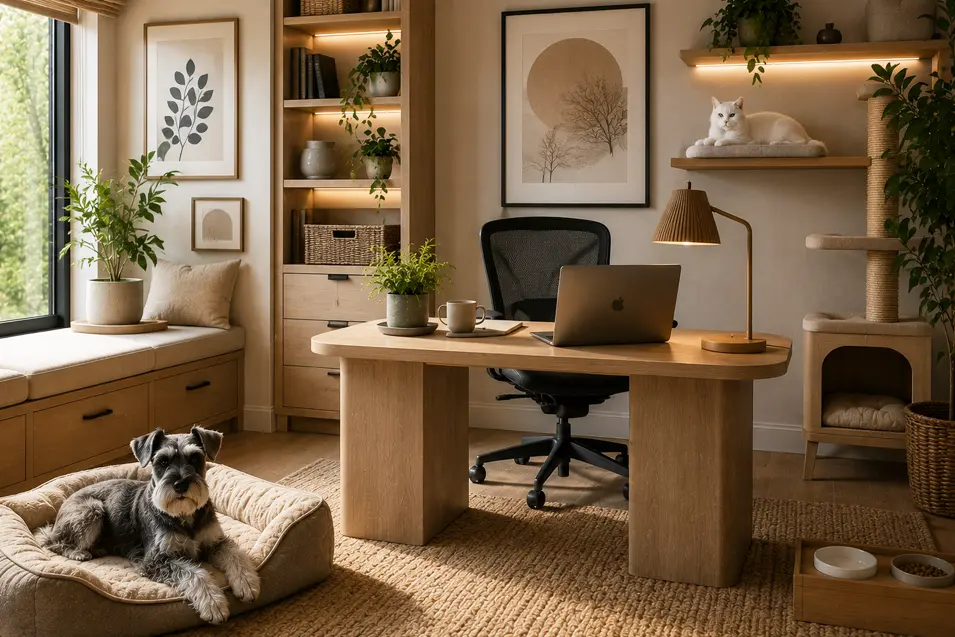
Provide an Alternative Perch
One of the most effective solutions is giving your cat somewhere better to sit.
Consider:
- A cat tree
- A window perch
- A comfortable bed
- A nearby shelf
Cats often prefer elevated locations where they can observe their surroundings.
Place a Bed Near Your Desk
Many cats simply want to be close to their owners.
A soft bed positioned near your workspace may satisfy that desire without requiring your cat to occupy your keyboard.
Protect Electrical Cords
Cable management isn’t just good for organization.
It’s also important for pet safety.
Consider:
- Cord covers
- Cable sleeves
- Wire management systems
These solutions help reduce temptation and protect valuable equipment.
Schedule Play Sessions
A bored cat is more likely to seek entertainment during your workday.
Interactive play sessions before work or during breaks can help burn excess energy and reduce interruptions.
Give Your Cat Their Own Workspace
Some cat owners have success placing a small cat bed, blanket, or mat on a nearby table.
If your cat wants to “work” alongside you, providing a designated space can sometimes redirect their attention away from your desk.
Should You Keep Cats Out of the Home Office?
Not necessarily.
For many people, one of the benefits of working from home is spending more time with their pets.
Rather than trying to completely exclude your cat, it’s often more effective to create boundaries and provide appropriate alternatives.
The goal isn’t to eliminate your cat’s interest in your office.
The goal is to make the space safe and functional for both of you.
Final Thoughts
Cats love home offices for many of the same reasons humans do.
They’re warm, comfortable, stimulating, and occupied by someone they enjoy spending time with.
While it can be frustrating when your cat walks across the keyboard during an important meeting or decides your paperwork is the perfect place for a nap, these behaviors are usually signs of curiosity, comfort, and companionship.
With a few adjustments, it’s entirely possible to create a home office where both productivity and feline supervision can coexist peacefully.
And let’s be honest—if your cat isn’t occasionally interrupting your workday, are you really working from home?