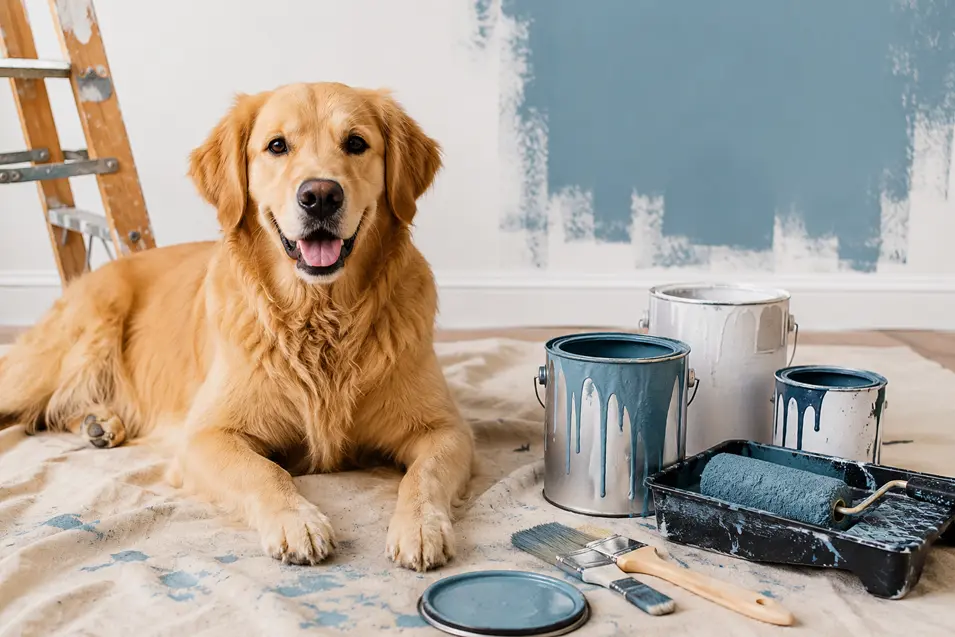
Painting is one of the easiest ways to freshen up a home, but it can create hidden risks for pets. Dogs and cats are naturally curious, and a room full of open paint cans, wet walls, drop cloths, brushes, fumes, and renovation supplies can quickly become a safety concern.
While many modern indoor paints are less dangerous than older products, pets can still become sick if they lick wet paint, chew paint chips, walk through spills, or breathe strong fumes in a poorly ventilated space. Smaller pets, birds, senior animals, and pets with respiratory problems may be especially sensitive.
Fortunately, a few simple precautions can make painting projects much safer for everyone in the home.
Is Paint Dangerous for Pets?
Paint can be dangerous for pets depending on the type of paint, the amount of exposure, and how the pet comes into contact with it.
The most common risks include:
- Inhaling fumes
- Licking wet paint
- Chewing dried paint
- Stepping in paint and grooming it off
- Eating paint chips
- Getting paint in the eyes or on the skin
Water-based paints are generally less hazardous than oil-based paints, but that does not mean they are completely harmless. The ASPCA notes that many modern indoor paints, varnishes, and stains are water-based and may cause vomiting or diarrhea if ingested. Outdoor paints, stains, and varnishes may pose greater risks because some are hydrocarbon-based.
Why Paint Fumes Matter
Many paints, varnishes, stains, solvents, and paint strippers can release volatile organic compounds, commonly called VOCs. These compounds can affect indoor air quality, especially in enclosed or poorly ventilated rooms. The EPA lists paints, paint strippers, solvents, wood preservatives, aerosol sprays, cleansers, disinfectants, and similar products as common sources of VOCs indoors.
Pets spend more time close to the floor than people do, and some animals have more sensitive respiratory systems. Strong odors and fumes may irritate the nose, throat, lungs, or eyes.
Possible signs of irritation include:
If your pet has asthma, heart disease, respiratory problems, or is very young or old, it is best to keep them completely away from painting areas.
Wet Paint and Curious Pets
Wet paint is especially tempting for some pets.
A dog may lick a spill. A cat may brush against a painted wall and later groom the paint from their fur. A pet may step in a paint tray and track paint through the house.
If paint gets on your pet’s fur or paws, do not use harsh cleaners, paint thinner, mineral spirits, or solvents to remove it. These products can be dangerous on the skin and may be ingested during grooming.
Instead:
- Prevent your pet from licking the area.
- Use mild dish soap and warm water if appropriate.
- Contact your veterinarian if a large amount is involved.
- Seek help immediately if your pet seems sick.
Old Paint Chips Can Be Dangerous
Older homes may contain layers of old paint, and paint chips can be especially risky if they contain lead.
Pets may chew on peeling paint, lick paint dust, or ingest chips during renovations. The ASPCA warns that lead poisoning can cause gastrointestinal signs, incoordination, tremors, seizures, and even death.
If you live in an older home, be extra cautious before sanding, scraping, or disturbing painted surfaces. Keep pets away from work areas and clean up dust and debris carefully.
How to Keep Pets Safe While Painting
Keep Pets Out of the Room
The simplest and safest solution is to keep pets away from the painting area.
Use:
- A closed room
- A crate
- A gated-off area
- A friend’s home
- Boarding for the day
This prevents exposure to wet paint, open cans, tools, fumes, and accidental spills.
Ventilate the Area
Open windows and use fans to move air outside when possible. Good ventilation helps reduce fumes and improve indoor air quality.
Do not rely on odor alone. Some low-odor paints may still release chemicals while drying.
Choose Low-VOC or Zero-VOC Paints When Possible
Low-VOC and zero-VOC paints may help reduce fumes and indoor air concerns. They are not automatically risk-free, but they are often a better choice for homes with pets, children, or people sensitive to strong odors.
Store Supplies Securely
Keep these items out of reach:
- Paint cans
- Paint trays
- Brushes
- Rollers
- Drop cloths
- Solvents
- Stains
- Varnishes
- Paint removers
- Sanding debris
A curious pet can create a mess or become sick very quickly.
Let Paint Dry Completely
Keep pets away until painted surfaces are dry and the room has aired out.
Drying time depends on:
- Paint type
- Humidity
- Temperature
- Ventilation
- Number of coats
When in doubt, wait longer.
Be Extra Careful With Birds and Small Pets
Birds are highly sensitive to airborne irritants. Small mammals and reptiles may also be more vulnerable to fumes and environmental changes.
If you have birds, rabbits, guinea pigs, hamsters, reptiles, or other small pets, move them far from the painting area and avoid exposing them to fumes.
What to Do If Your Pet Licks Paint
If your pet licks paint, first identify the type of paint if possible.
Try to determine:
- Was it water-based or oil-based?
- Was it indoor or outdoor paint?
- Was it wet or dried?
- How much was ingested?
- Is your pet showing symptoms?
Do not induce vomiting unless instructed by a veterinarian.
Contact your veterinarian or a pet poison hotline if your pet swallowed paint, chewed paint chips, has paint around the mouth, or begins vomiting, drooling, coughing, trembling, or acting unusually.
What About Painting Pet Furniture or Cages?
If you’re painting a dog crate, bird cage, rabbit hutch, aquarium stand, or pet furniture, use extra caution.
Choose products intended for the material you’re painting and allow them to cure fully before your pet uses the item again. Dry to the touch does not always mean fully cured.
Avoid painting surfaces your pet may chew, lick, or scratch frequently unless the product is specifically appropriate for that use.
Frequently Asked Questions
Can pets be in the house while painting?
Pets can usually remain in the home if they are kept far away from the painting area, but they should not be allowed in freshly painted rooms until the paint is dry and fumes have cleared.
Are paint fumes toxic to dogs and cats?
Paint fumes can irritate pets, especially in poorly ventilated spaces. Oil-based paints, solvents, stains, varnishes, and paint strippers are generally more concerning than many modern water-based indoor paints.
Is dried paint safe for pets?
Dried paint is usually less risky than wet paint, but pets should not chew painted surfaces or eat paint chips. Old paint chips may be especially dangerous if they contain lead.
What should I do if my dog walks through wet paint?
Prevent your dog from licking their paws and clean the area gently with mild soap and warm water. Contact your veterinarian if the paint does not come off easily or if your dog ingested any paint.
Can cats get sick from grooming paint off their fur?
Yes. Cats may ingest paint while grooming. If your cat has paint on their fur, prevent grooming and contact your veterinarian for safe removal advice.
Are low-VOC paints safe for pets?
Low-VOC paints may reduce fumes, but they should still be used with ventilation and pets should be kept away until the paint is dry and the room has aired out.
How long should pets stay out of a freshly painted room?
Follow the paint manufacturer’s drying and ventilation guidance. As a general safety habit, keep pets out until the paint is fully dry, odors have faded, and the room has been well ventilated.
Final Thoughts
Painting and pets can safely coexist, but preparation matters. Keep animals away from work areas, choose safer products when possible, ventilate well, clean spills immediately, and never allow pets to lick wet paint or chew paint chips.
A freshly painted room should make your home feel better, not create a preventable emergency. With a little planning, you can complete your painting project while keeping your dogs, cats, and other pets safe.