Long-haired cats have beautiful coats, but all that fur comes with a little extra maintenance. Even cats that are normally excellent self-groomers can develop tangles and mats, particularly in areas where the fur rubs together or is difficult for them to reach.
A small tangle may be something you can gently work out at home. A tight mat sitting close to your cat’s skin is another matter. Trying to cut or pull out a severe mat can be painful and may injure the delicate skin underneath.
Knowing when you can handle a tangle yourself—and when it’s time to call a professional—is an important part of caring for a long-haired cat.
Why Do Cats Get Mats in Their Fur?
A mat is a dense clump of tangled, knotted fur. Mats tend to develop where hairs repeatedly rub against one another and in places a cat may have difficulty grooming.
Common trouble spots include behind the ears, under the front legs, around the collar area, along the chest and belly, and around the hindquarters.
Long, thick coats naturally make some cats more susceptible to matting, but coat length isn’t the only factor. Loose hair that isn’t regularly removed can become tangled in the surrounding coat, eventually forming a mat.
Sometimes an increase in matting can also tell you something about your cat’s health.
Cats are usually meticulous groomers. Arthritis, dental pain, obesity, illness and other problems can make grooming difficult or uncomfortable. An older cat who can no longer comfortably twist around to reach her back or hindquarters, for example, may begin developing mats in areas she previously kept perfectly groomed.
Changes in the skin and coat can matter, too. If you’re noticing visible flakes or dry skin along with changes in your cat’s fur, learn more about what causes cat dandruff and what you can do about it.
If a cat who has always maintained a healthy coat suddenly becomes noticeably matted or unkempt, don’t assume she has simply become lazy about grooming. It’s worth looking for the reason behind the change.
Are Mats Painful for Cats?
They can be.
As loose hairs become increasingly tangled, a mat can tighten and pull against the skin underneath it. Everyday movements can then tug on that skin, making the area uncomfortable or painful.
Severe matting can also make it difficult to see what is happening underneath the coat. Irritated skin, sores and other problems may remain hidden beneath a dense mat.
That’s one reason mats are easier—and kinder—to deal with when they’re still small.
Can You Brush Mats Out of a Cat’s Fur?
It depends on whether you’re dealing with a small tangle or a true, tightly formed mat.
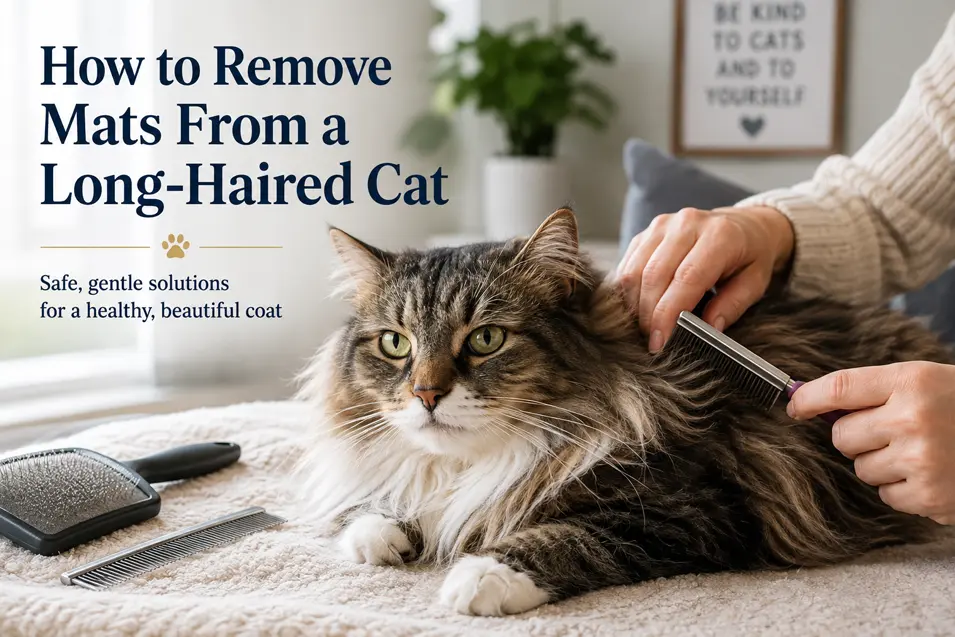
A minor, loose tangle may sometimes be gently teased apart with your fingers or worked through with an appropriate comb. Take your time and avoid pulling against your cat’s skin.
If you’re using a comb, you can gently hold the fur near the skin while working on the ends of the tangle. This helps reduce the amount of pulling your cat feels.
Stop if your cat appears uncomfortable or the tangle isn’t loosening easily.
A dense mat that feels like a solid clump of fur is different. Repeatedly tugging at it with a comb can hurt your cat and isn’t necessarily going to remove it.
When you’re unsure whether a mat can be safely combed out, leave it alone and ask an experienced cat groomer or your veterinarian for help.
Never Cut a Cat’s Mats With Scissors
It can be tempting. You see a clump of fur, grab the scissors and think one quick snip will solve the problem.
Don’t do it.
A cat’s skin is thin and flexible, and a tight mat can pull the skin upward into the tangled fur. That makes it surprisingly difficult to tell where the mat ends and the skin begins.
A cat may also suddenly twist, jump or struggle while you’re cutting.
The result can be a serious skin injury requiring veterinary treatment.
Even if a mat appears to have plenty of fur between it and the body, scissors aren’t worth the risk.
Should You Use Clippers to Remove Cat Mats?
Professional groomers and veterinarians may use electric clippers to remove mats that cannot safely be combed out.
That doesn’t necessarily mean you should try it yourself.
Removing a mat with clippers requires knowing how to work around loose, folded skin and sensitive areas of the body. Clipper blades can also become hot, and a frightened or uncomfortable cat may move unexpectedly.
For a large, tight or skin-level mat, the safest option is usually to have an experienced cat groomer or veterinarian remove it.
Some cats with extensive matting may be too frightened, painful or uncooperative to tolerate the procedure while awake. In those situations, a veterinarian can determine whether sedation is appropriate so the mats can be removed safely and with as little stress as possible.
Should You Bathe a Cat With Matted Fur?
Deal with the mats first.
Water can cause existing tangles and mats to tighten as the coat dries, making them even more difficult to remove.
If your cat needs a bath as well as grooming, remove the mats before bathing her. If the matting is extensive enough to require professional help, ask the groomer or veterinarian about bathing once the coat has been safely dealt with.
Cats generally don’t require frequent baths anyway. For most healthy cats, regular brushing and their own grooming do most of the work.
When Should You Take a Matted Cat to a Groomer?
A professional groomer experienced with cats is a good choice when mats are too tight or extensive to deal with through gentle brushing at home.
Professional help is especially sensible when:
- The mat is tight against the skin.
- There are several mats or large areas of matting.
- Your cat becomes distressed or aggressive when you touch the area.
- The mat is in a particularly sensitive location.
- You can’t clearly distinguish the mat from the skin underneath.
- You’ve tried gentle combing and the mat isn’t loosening.
Don’t turn mat removal into a wrestling match. The more frightened or painful the experience becomes, the harder future grooming may be for both you and your cat.
When Should a Veterinarian See a Matted Cat?
Sometimes the veterinarian is a better destination than the groomer.
Make an appointment if the skin beneath or around a mat looks red, swollen, sore, moist or infected, or if your cat seems painful when the area is touched.
A veterinary visit is also worthwhile when matting appears suddenly in a cat who previously kept herself well groomed.
Changes in grooming habits can sometimes accompany arthritis, dental problems, obesity or illness. Older cats deserve particular attention because decreased flexibility or pain may make parts of the body increasingly difficult to reach.
In other words, the mats themselves may not be the only problem that needs attention.
What If You Accidentally Cut Your Cat’s Skin?
If your cat is accidentally cut during grooming, stop grooming and assess the injury. Before applying anything from your own medicine cabinet, remember that products intended for people aren’t automatically appropriate for pets. If you’re considering an antibiotic ointment for a minor cut or scrape, read our guide to whether Neosporin is safe for cats and talk to your veterinarian if you’re unsure how the wound should be treated.
For minor bleeding, gentle pressure with clean gauze or a clean cloth can help. Don’t pour hydrogen peroxide, rubbing alcohol, essential oils or other household antiseptics onto the wound.
If the wound is deep, gaping, continues bleeding, appears painful, or you’re unsure how serious it is, contact your veterinarian. You should also seek veterinary care if you notice swelling, discharge, increasing redness or other signs that the wound may be becoming infected.
When in doubt, it’s better to have a cut examined than to discover later that an injury hidden beneath the fur was more serious than it appeared.
How to Prevent Mats in a Long-Haired Cat
Preventing mats is considerably easier than removing them.
Long-haired cats generally benefit from frequent brushing and combing to remove loose hair before it becomes tangled in the coat. Some cats may need grooming every day, particularly if they have a dense undercoat or are especially prone to tangles.
Pay extra attention to the areas where mats commonly form, including behind the ears, beneath the legs, around the chest and collar area, and near the hindquarters.
Grooming is easier if your cat learns to associate it with something pleasant. Start with short sessions, be gentle and offer praise or a favorite treat. It’s better to stop after a successful two-minute grooming session than continue until your cat becomes frustrated.
Regular grooming also gives you an opportunity to notice changes that might otherwise remain hidden beneath a long coat, including flaky skin, lumps, sore areas, parasites or changes in body condition.
Don’t Ignore a Sudden Change in Your Cat’s Coat
An occasional tangle in a long-haired cat isn’t unusual. A cat who suddenly stops maintaining her coat is different.
If you’re brushing far more mats out of your cat than you used to, or her coat has become greasy, flaky or generally unkempt, consider what might have changed.
She may simply need more grooming help as she gets older. But discomfort, reduced mobility, dental pain, weight gain or illness can also interfere with normal self-grooming.
Removing the mats will make your cat more comfortable, but when there’s been a significant change in her grooming habits, finding out why those mats started appearing can be just as important.