
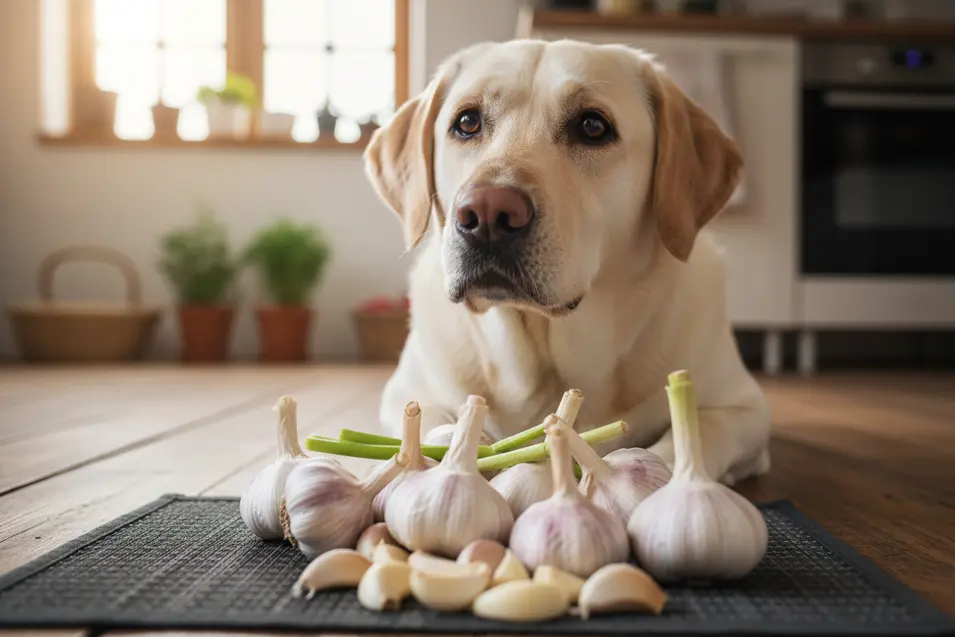
Many dog owners know that onions are dangerous for dogs, but fewer realize that garlic can be just as harmful. Since garlic is often found in sauces, seasonings, soups, meats, and even homemade pet treats, accidental exposure is more common than you might think.
Quick Answer
Can dogs eat garlic?
No. Garlic is toxic to dogs and can damage red blood cells, potentially causing anemia. Fresh garlic, cooked garlic, garlic powder, and garlic bread should all be avoided. If your dog eats garlic, contact your veterinarian for guidance.
Here’s what every dog owner should know about garlic toxicity, the warning signs to watch for, and what to do if your dog accidentally eats garlic.
Why Is Garlic Dangerous for Dogs?
Garlic belongs to the Allium family of plants, which also includes onions, chives, shallots, and leeks. All members of this family contain compounds that can damage a dog’s red blood cells.
When dogs consume garlic, these compounds can cause oxidative damage to red blood cells, making them more likely to rupture. This condition, known as hemolytic anemia, reduces the body’s ability to transport oxygen effectively.
As red blood cells are destroyed, dogs may become weak, lethargic, and seriously ill.
Although garlic contains lower concentrations of certain toxins than onions, it is generally considered more potent by weight. This means even relatively small amounts can pose a risk.
How Much Garlic Is Toxic to Dogs?
The exact amount of garlic needed to cause poisoning depends on several factors, including:
- Your dog’s size
- Age and overall health
- Breed
- Whether the garlic was raw, cooked, powdered, or dehydrated
- How much was consumed
Garlic powder and dehydrated garlic products are often more concentrated than fresh garlic, making them particularly dangerous.
A large dog that consumes a tiny amount of garlic seasoning may experience no symptoms, while a small dog eating several cloves could develop serious toxicity.
Because there is no universally safe amount of garlic for dogs, veterinarians recommend avoiding it entirely.
Are Some Dogs More Sensitive to Garlic?
Yes.
Certain breeds appear to be more susceptible to damage from garlic and other Allium plants. Japanese breeds such as:
- Akitas
- Shiba Inus
- Japanese Chins
may be especially sensitive to the toxic effects of garlic.
Puppies, senior dogs, and dogs with underlying medical conditions may also face a greater risk of complications.
Symptoms of Garlic Poisoning in Dogs
One of the challenges of garlic toxicity is that symptoms don’t always appear immediately.
In some cases, it may take several days before warning signs become noticeable.
Common symptoms include:
- Weakness
- Lethargy
- Loss of appetite
- Pale gums
- Increased heart rate
- Rapid breathing
- Abdominal pain
- Vomiting
- Diarrhea
- Excessive drooling
- Dark or reddish urine
- Collapse in severe cases
If your dog has eaten garlic and begins showing any of these symptoms, contact your veterinarian immediately.
My Dog Ate Garlic. What Should I Do?
If you know or suspect that your dog has eaten garlic, don’t wait for symptoms to develop.
Instead:
- Determine approximately how much garlic was consumed.
- Note your dog’s weight.
- Identify the type of garlic involved (raw, cooked, powdered, seasoned food, etc.).
- Contact your veterinarian or an emergency veterinary clinic.
Prompt treatment can often prevent serious complications.
Never induce vomiting unless specifically instructed to do so by a veterinary professional.
Is Garlic Powder Worse Than Fresh Garlic?
In many cases, yes.
Garlic powder is highly concentrated, meaning a small amount may contain the equivalent of several cloves of fresh garlic.
Foods commonly containing garlic powder include:
- Chips
- Crackers
- Soups
- Seasoning blends
- Processed meats
- Fast food
- Frozen meals
Because garlic powder is present in so many foods, owners may accidentally expose their dogs without realizing it.
Can Dogs Eat Garlic Bread?
Garlic bread should be avoided.
Not only does it contain garlic, but it is often high in butter, oil, salt, and other ingredients that are unhealthy for dogs.
Depending on the recipe, garlic bread may also contain onions or additional seasonings that further increase the risk.
If your dog steals a small bite, monitor them closely and contact your veterinarian for guidance. If a larger amount was consumed, seek veterinary advice immediately.
How Is Garlic Poisoning Treated?
Treatment depends on the amount consumed and how quickly veterinary care is sought.
Your veterinarian may:
- Induce vomiting if ingestion was recent
- Administer activated charcoal
- Perform blood tests
- Monitor red blood cell levels
- Provide intravenous fluids
- Offer supportive care
Severe cases may require hospitalization and, in rare situations, blood transfusions.
The earlier treatment begins, the better the outcome is likely to be.
Can Garlic Ever Be Beneficial for Dogs?
You may encounter claims online suggesting that garlic can help prevent fleas, boost immunity, or improve overall health.
While some alternative health advocates promote garlic supplementation, most veterinarians do not recommend feeding garlic to dogs because the potential risks outweigh any proposed benefits.
Safer alternatives exist for flea prevention, immune support, and general wellness.
Safe Alternatives to Garlic
If you’re looking to add flavor or nutritional variety to your dog’s diet, consider veterinarian-approved options such as:
- Carrots
- Green beans
- Pumpkin
- Blueberries
- Sweet potatoes
- Plain cooked chicken
- Plain cooked turkey
Always introduce new foods gradually and consult your veterinarian if you have questions about your dog’s diet.
Frequently Asked Questions About Dogs and Garlic
Can one clove of garlic hurt a dog?
It depends on your dog’s size and overall health. A single clove of garlic is unlikely to cause serious toxicity in a large dog, but it could be dangerous for a small dog, puppy, or a breed that is particularly sensitive to garlic. Because garlic can damage red blood cells, it’s always best to contact your veterinarian if your dog has consumed any amount.
How much garlic is toxic to dogs?
There is no universally safe amount of garlic for dogs. Toxicity depends on factors such as body weight, age, breed, health status, and the type of garlic consumed. Garlic powder and dehydrated garlic products are more concentrated than fresh garlic and may pose a greater risk. Veterinarians generally recommend avoiding garlic altogether.
How long does it take for garlic poisoning symptoms to appear?
Symptoms of garlic toxicity do not always appear immediately. In some cases, signs may develop within a few hours, while others may not show symptoms for several days. Because the damage occurs to red blood cells over time, owners should continue monitoring their dog even if they initially seem normal.
Can dogs eat cooked garlic?
No. Cooking does not eliminate the compounds that make garlic toxic to dogs. Whether garlic is raw, roasted, sautéed, baked, or mixed into another dish, it can still be harmful.
Can dogs eat garlic powder?
No. Garlic powder is often more dangerous than fresh garlic because it is highly concentrated. A small amount of garlic powder may contain the equivalent of several cloves of garlic, making accidental poisoning easier.
Is garlic bread safe for dogs?
Garlic bread is not considered safe for dogs. In addition to garlic, it typically contains butter, oil, salt, and other ingredients that can upset a dog’s digestive system. Some recipes may also contain onions, which are toxic to dogs as well.
Is garlic more toxic than onions for dogs?
Both garlic and onions are toxic to dogs because they belong to the Allium family. Garlic is generally considered more potent by weight, meaning a smaller amount may cause similar damage compared to onions.
What should I do if my dog ate garlic?
If your dog eats garlic, contact your veterinarian or an emergency veterinary clinic as soon as possible. Be prepared to provide information about your dog’s weight, the amount consumed, and the type of garlic involved. Early treatment can significantly improve the outcome.
Can garlic kill a dog?
In severe cases, garlic poisoning can become life-threatening if left untreated. Significant damage to red blood cells can lead to anemia and other serious complications. Fortunately, most dogs recover well when veterinary care is sought promptly.
Are some dog breeds more sensitive to garlic?
Yes. Japanese breeds such as Akitas and Shiba Inus are believed to be more susceptible to the toxic effects of garlic and other Allium plants. Puppies, senior dogs, and dogs with underlying health conditions may also face increased risks.
Why do some people say garlic is good for dogs?
Some holistic pet care advocates claim garlic can help repel fleas or support the immune system. However, these claims remain controversial, and most veterinarians do not recommend feeding garlic to dogs because the potential risks outweigh any unproven benefits.
What foods commonly contain garlic that dogs should avoid?
Many everyday foods contain garlic, including:
- Garlic bread
- Pizza
- Pasta sauces
- Soups and stews
- Seasoning blends
- Potato chips
- Processed meats
- Frozen dinners
- Restaurant leftovers
Always check ingredient labels before sharing human food with your dog.
Can dogs eat foods with a small amount of garlic?
While a tiny amount of garlic may not cause noticeable symptoms in every dog, there is still a risk. Since toxicity varies from dog to dog, veterinarians recommend avoiding foods that contain garlic whenever possible.
What are the first signs of garlic poisoning in dogs?
Early symptoms may include:
- Loss of appetite
- Vomiting
- Diarrhea
- Lethargy
- Weakness
- Excessive drooling
As toxicity progresses, dogs may develop pale gums, rapid breathing, elevated heart rate, and dark-colored urine.
Are onions and garlic equally dangerous for dogs?
Both are dangerous and should be avoided. Since onions and garlic contain similar toxic compounds, pet owners should treat all members of the Allium family as potentially harmful to dogs.
Final Verdict: Can Dogs Eat Garlic?
No, dogs should not eat garlic.
Garlic contains compounds that can damage red blood cells and potentially lead to anemia. While the severity depends on the amount consumed and the individual dog, there is no established safe amount that veterinarians recommend feeding.
If your dog accidentally eats garlic, contact your veterinarian as soon as possible for guidance.
When it comes to garlic and dogs, prevention is always safer than treatment.
While garlic may be a healthy ingredient for people, it can be dangerous for dogs. Because every dog responds differently and toxicity depends on the amount consumed, it’s safest to avoid feeding garlic altogether. If your dog accidentally eats garlic, contact your veterinarian as soon as possible for guidance.