
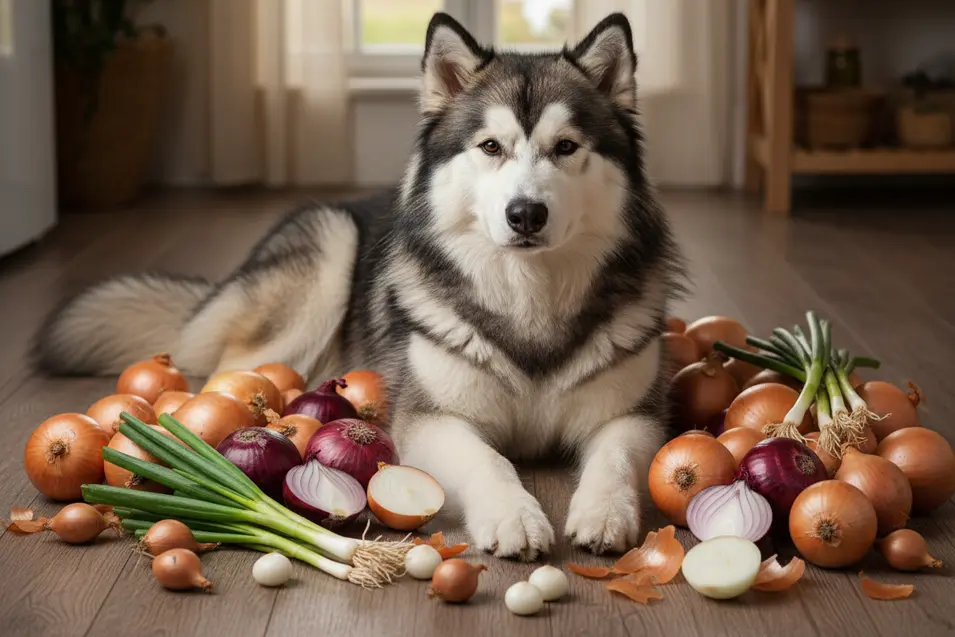
No, dogs should not eat onions. Onions are toxic to dogs and can cause serious health problems, including damage to red blood cells, anemia, weakness, vomiting, and in severe cases, life-threatening complications.
This includes raw onions, cooked onions, fried onions, onion powder, onion flakes, onion soup mix, and foods seasoned with onion. Even though onions are a common ingredient in many human meals, they are not safe for dogs in any form.
If your dog has eaten onion, especially a large amount or a concentrated form such as onion powder, contact your veterinarian or a pet poison control hotline right away.
Why Are Onions Bad for Dogs?
Onions belong to the Allium family of plants, which also includes garlic, leeks, chives, shallots, and scallions. These foods contain compounds that can damage a dog’s red blood cells.
Red blood cells are responsible for carrying oxygen throughout the body. When they are damaged, they can break down faster than the body can replace them. This can lead to a condition called hemolytic anemia.
A dog with anemia may become weak, tired, pale, or short of breath. Severe onion poisoning can become dangerous very quickly, especially if a dog eats a large amount or has repeated exposure over several days.
Are Cooked Onions Safe for Dogs?
No. Cooked onions are not safe for dogs.
Cooking does not remove the toxic compounds that make onions dangerous. Dogs should not eat onions that are:
- Raw
- Cooked
- Fried
- Sautéed
- Roasted
- Grilled
- Dehydrated
- Powdered
This means foods such as onion rings, soups, gravies, casseroles, sauces, stuffing, pizza, burgers, and seasoned meats may also be unsafe if they contain onion.
Is Onion Powder Bad for Dogs?
Yes, onion powder is especially dangerous for dogs because it is more concentrated than fresh onion.
Many processed foods contain onion powder or onion seasoning, including:
- Soups
- Broths
- Gravies
- Sauces
- Baby food
- Seasoning mixes
- Meat marinades
- Chips and snack foods
- Frozen meals
- Stuffing mixes
Because onion powder is concentrated, a smaller amount may pose a greater risk than a small piece of fresh onion. Always check ingredient labels before sharing any human food with your dog.
How Much Onion Is Toxic to Dogs?
There is no safe amount of onion to intentionally feed a dog.
The level of risk depends on several factors, including your dog’s size, weight, overall health, the type of onion eaten, and how much was consumed. A tiny piece may not always cause severe illness, but it is still not considered safe.
Large amounts of onion are more dangerous, and repeated small amounts over several days can also be harmful. Concentrated forms, such as onion powder, dehydrated onion, or onion soup mix, are especially concerning.
If your dog ate onion, do not wait for symptoms to appear before asking for veterinary advice. Onion poisoning symptoms can sometimes take time to develop.
Symptoms of Onion Poisoning in Dogs
Symptoms may appear soon after eating onion, or they may develop over the next several days as red blood cell damage progresses.
Common signs of onion toxicity in dogs include:
- Vomiting
- Diarrhea
- Drooling
- Loss of appetite
- Abdominal pain
- Lethargy
- Weakness
- Pale gums
- Rapid breathing
- Panting
- Increased heart rate
- Dark, reddish, or brown-colored urine
- Collapse in severe cases
If your dog shows any of these symptoms after eating onion, contact a veterinarian immediately.
What Should I Do If My Dog Ate Onions?
If your dog ate onions, take the situation seriously.
First, remove any remaining onion or onion-containing food so your dog cannot eat more. Then try to determine:
- What type of onion your dog ate
- Whether it was raw, cooked, powdered, or dried
- How much your dog may have eaten
- When your dog ate it
- Your dog’s approximate weight
- Whether your dog is showing symptoms
Call your veterinarian, an emergency animal hospital, or a pet poison control hotline for guidance.
Do not try to make your dog vomit unless a veterinarian specifically tells you to do so. Inducing vomiting at home can be dangerous in some situations.
How Do Vets Treat Onion Poisoning?
Treatment depends on how much onion the dog ate, when it was eaten, and whether symptoms are present.
A veterinarian may recommend:
- Inducing vomiting if the onion was eaten recently
- Activated charcoal to reduce absorption
- Blood tests to check red blood cells
- IV fluids
- Anti-nausea medication
- Oxygen support
- Hospital monitoring
- Blood transfusion in severe cases
The sooner a dog receives treatment, the better the chance of avoiding serious complications.
Can Dogs Eat Foods Cooked with Onions?
No. Dogs should not eat foods cooked with onions.
Even if the onion pieces are removed, the food may still contain onion juices, seasoning, or powder. Many dishes also contain garlic, salt, fat, spices, or other ingredients that can upset your dog’s stomach or create additional health risks.
Avoid feeding your dog foods such as:
- Onion soup
- Spaghetti sauce with onion
- Gravy with onion
- Meatloaf with onion
- Stuffing
- Casseroles
- Fried rice
- Seasoned chicken or beef
- Pizza
- Burgers with onion
- Onion-flavored snacks
When in doubt, choose a plain, dog-safe food instead.
Are Other Allium Foods Toxic to Dogs?
Yes. Onions are not the only concern. Other members of the Allium family can also be toxic to dogs, including:
- Garlic
- Chives
- Leeks
- Shallots
- Scallions
- Green onions
Garlic is often considered even more potent than onion, and powdered forms of Allium ingredients can be especially risky.
Dogs should not be fed any food containing onion, garlic, chives, leeks, or related seasonings.
Can Puppies Eat Onions?
No. Puppies should never eat onions.
Because puppies are smaller and still developing, they may be more vulnerable to toxic foods. Even a small amount of onion can be more concerning for a puppy than for a large adult dog.
If your puppy eats onion, contact a veterinarian right away.
Can Dogs Recover from Onion Poisoning?
Many dogs can recover from onion poisoning if they receive prompt veterinary care. Mild cases may improve with monitoring and supportive treatment, while serious cases may require hospitalization.
Recovery depends on the amount eaten, how quickly treatment begins, and whether the dog develops anemia or other complications.
Do not assume your dog is fine just because they seem normal immediately after eating onion. Symptoms related to red blood cell damage can take time to appear.
Safe Vegetable Alternatives for Dogs
If you want to give your dog a healthy vegetable treat, choose safer options instead of onion.
Dog-safe vegetables may include:
- Carrots
- Green beans
- Cucumbers
- Celery
- Zucchini
- Plain cooked pumpkin
- Plain sweet potato
These should be served plain, without onion, garlic, butter, salt, sauces, or seasoning.
Introduce new foods gradually and in small amounts to avoid stomach upset.
How to Prevent Onion Poisoning
The best way to protect your dog is to keep onions and onion-containing foods out of reach.
Helpful prevention tips include:
- Store onions in a cabinet or pantry your dog cannot access.
- Keep trash cans secured.
- Do not leave cooked meals unattended.
- Avoid giving dogs table scraps.
- Check labels on broths, sauces, and baby foods.
- Teach family members that onions are unsafe for dogs.
- Be cautious with leftovers and holiday foods.
Many accidental poisonings happen when dogs eat leftovers, trash, or dropped food from the kitchen floor.
Frequently Asked Questions
Can dogs eat a tiny piece of onion?
Dogs should not intentionally eat any amount of onion. A tiny piece may not always cause severe poisoning, especially in a large dog, but it is still unsafe. Contact your veterinarian for advice if your dog eats onion.
Can dogs eat cooked onions?
No. Cooked onions are toxic to dogs. Boiling, frying, roasting, or sautéing onions does not make them safe.
Can dogs eat onion rings?
No. Onion rings are unsafe because they contain onion. They are also fried and high in fat, which can cause additional digestive problems.
Can dogs eat onion powder?
No. Onion powder is dangerous for dogs and may be more concentrated than fresh onion. It is commonly found in soups, sauces, broths, gravies, and seasoning mixes.
Can dogs eat green onions?
No. Green onions, also called scallions, are part of the Allium family and should not be fed to dogs.
Can dogs eat garlic and onions?
No. Both garlic and onions are toxic to dogs. Garlic can be especially potent, and both ingredients can damage red blood cells.
How long after eating onion will a dog get sick?
Some dogs may develop vomiting or diarrhea soon after eating onion. Signs related to anemia, such as weakness, pale gums, lethargy, or rapid breathing, may take longer to appear.
Should I make my dog vomit after eating onion?
Do not induce vomiting unless a veterinarian tells you to. Call your vet or a pet poison control hotline for instructions based on your dog’s size, the amount eaten, and when it happened.
Final Thoughts: Can Dogs Eat Onions?
Dogs should never eat onions. Raw, cooked, fried, dried, and powdered onions are all unsafe for dogs and can cause serious red blood cell damage.
If your dog eats onion, contact your veterinarian or pet poison control as soon as possible. Quick action can make a major difference, especially if your dog ate a large amount or a concentrated onion product.
When sharing human foods with your dog, always avoid anything seasoned with onion, garlic, chives, leeks, or related ingredients. Safer treats, such as carrots, green beans, or cucumber, are a much better choice.