
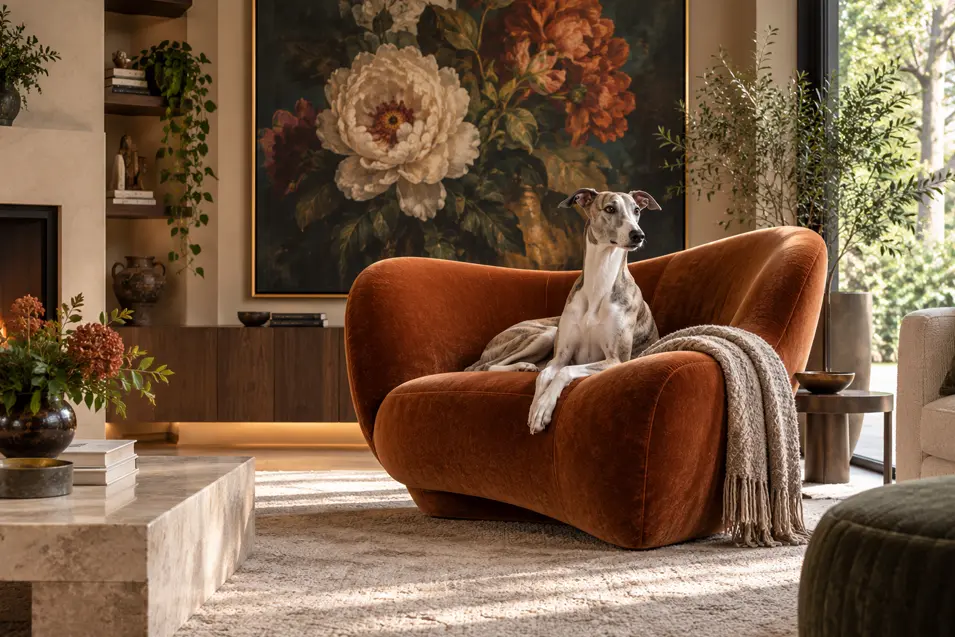
A sofa has responsibilities.
It has to seat several people.
Fit the room.
Survive movie nights.
Accommodate guests.
And, in many households, surrender approximately 40 percent of its usable surface area to a dog.
An accent chair has considerably more freedom.
It can be sculptural.
Colourful.
Strange.
Beautiful.
A little impractical.
Or simply the piece of furniture that makes an otherwise perfectly nice room suddenly feel finished.
Which raises an important design question:
If you’re going to buy the most interesting chair in the room, shouldn’t you consult the person most likely to steal it?
We imagined twelve very different accent chairs in twelve very different rooms.
The dogs, naturally, tested them.
The Green Swivel
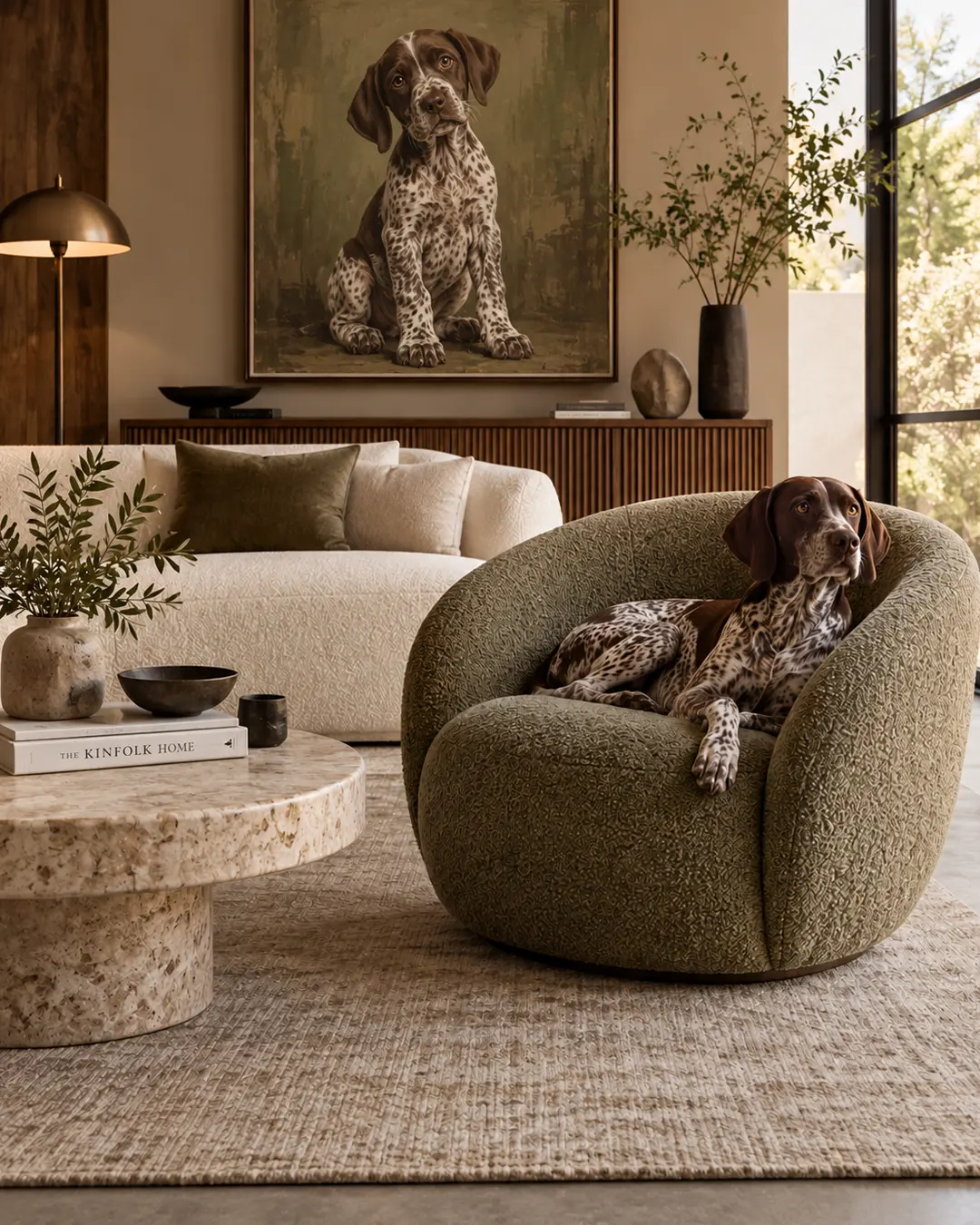
There are rooms where another beige chair would be perfectly acceptable.
This isn’t one of them.
The deep olive upholstery gives this chair enough presence to hold its own against the warm wood, pale sofa and substantial stone coffee table.
Its shape does the rest.
Low.
Rounded.
Almost completely without straight lines.
The dog appears to have noticed these qualities too.
He has settled into the curve with the confidence of someone who was consulted during the purchasing process.
The enormous puppy portrait behind him suggests he may have been.
Some accent chairs fill a corner. This one changes the room.
The Pair
Accent chairs don’t always need to work alone.
Sometimes the strongest move is repetition.
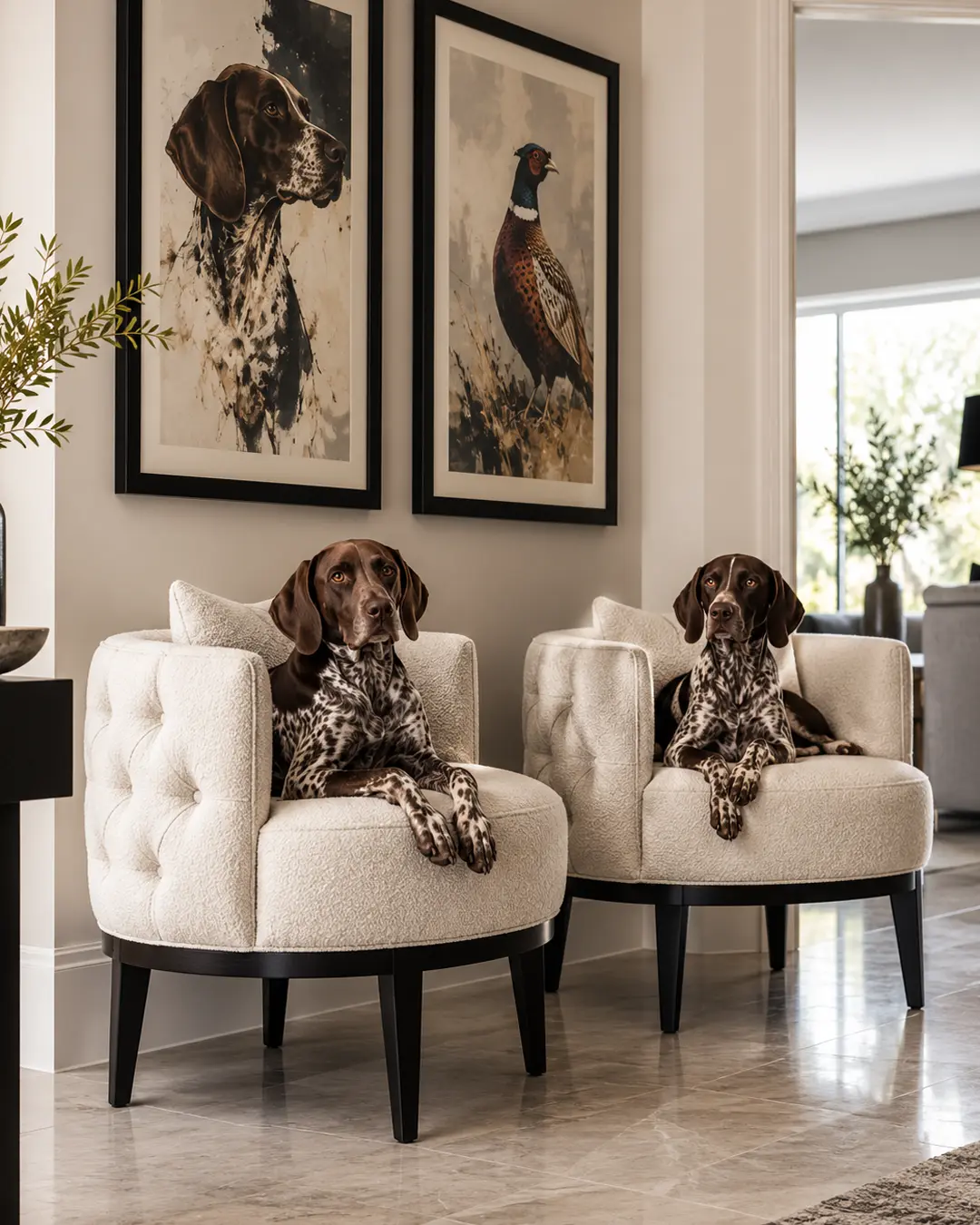
Two cream chairs.
Two black bases.
Two dogs who have apparently reached an agreement regarding seating assignments.
There’s something wonderfully formal about the symmetry until you notice who’s sitting there.
That’s what makes it work.
The chairs bring structure.
The dogs remove just enough seriousness.
And the black-framed artwork above them turns what could have been a forgotten passage through the house into a proper little destination.
Symmetry is considerably less predictable when it has four ears.
The Leather Chair
Some chairs improve when they’re pristine.
Leather isn’t one of them.
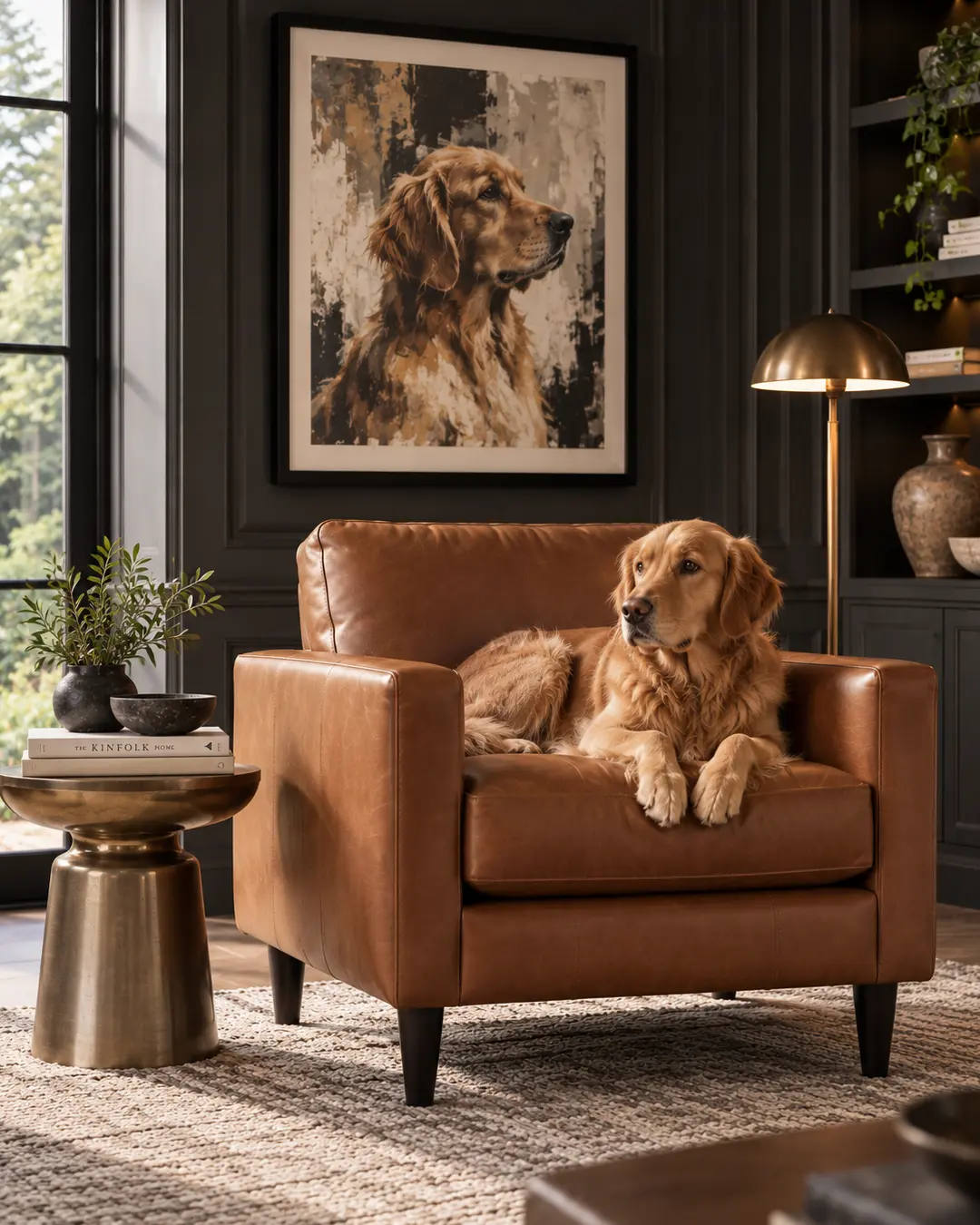
A great leather chair should eventually tell you something about the house it lives in.
The arms soften.
The seat develops character.
The colour deepens.
Someone reads there every morning.
Someone else falls asleep there every Sunday afternoon.
And occasionally, someone with four legs decides all of that history should include him.
Against the dark walls, warm cognac leather feels particularly good — handsome without becoming heavy.
This is not furniture that needs protecting from life.
It’s furniture that gets better because of it.
The Sculptural White Chair
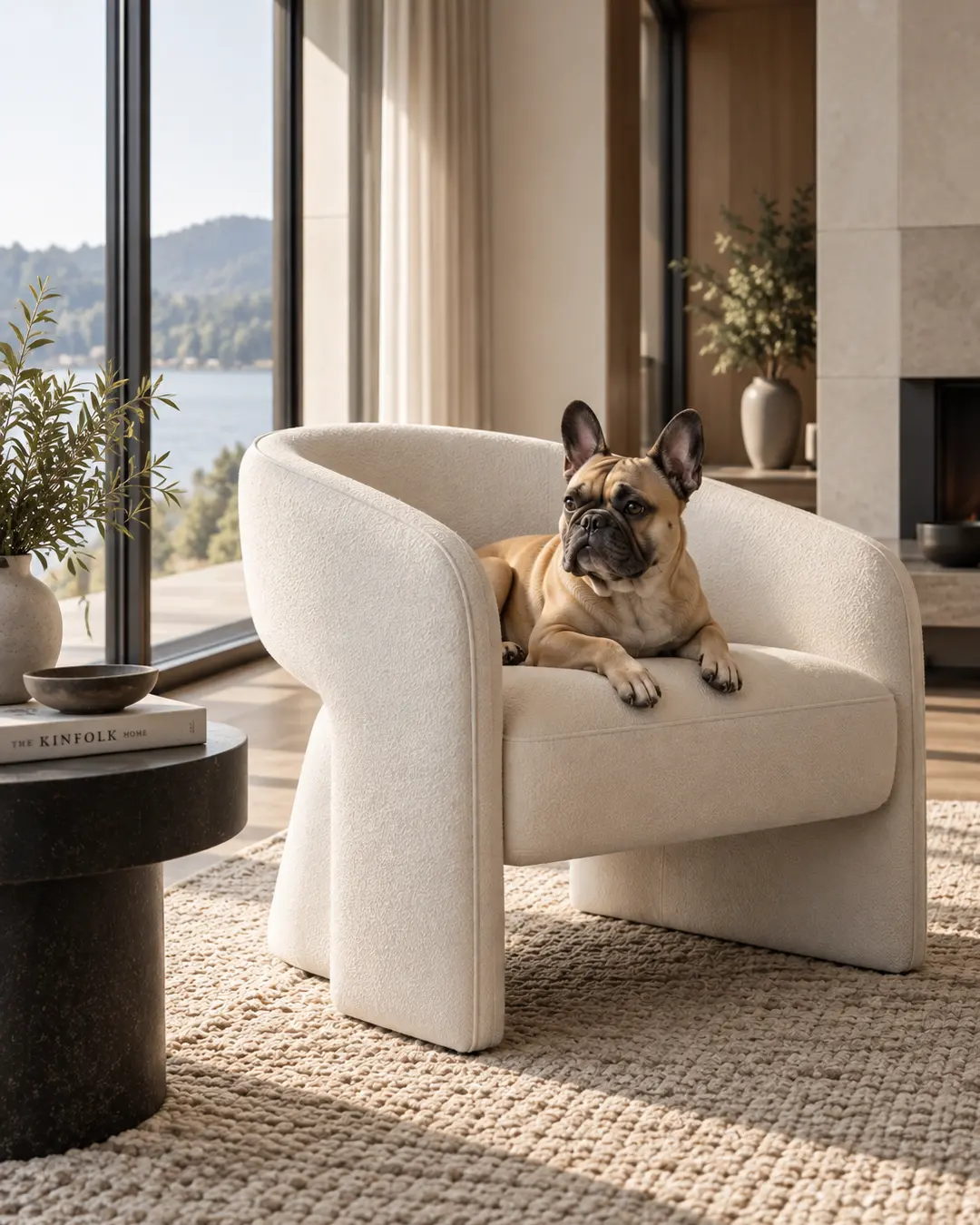
Sometimes the chair is the architecture.
There are no conventional legs here.
No separate wooden frame.
No obvious distinction between arm and back.
Instead, the upholstery bends around the sitter in one continuous gesture.
It’s closer to a piece of sculpture than the chair most of us grew up with.
And then a French Bulldog climbs into it.
Suddenly all that serious furniture design becomes considerably more approachable.
He doesn’t care about the silhouette.
He has simply discovered that contemporary design can be extremely comfortable.
Form follows function. Occasionally function is a nap.
The Chair With the Longhorn
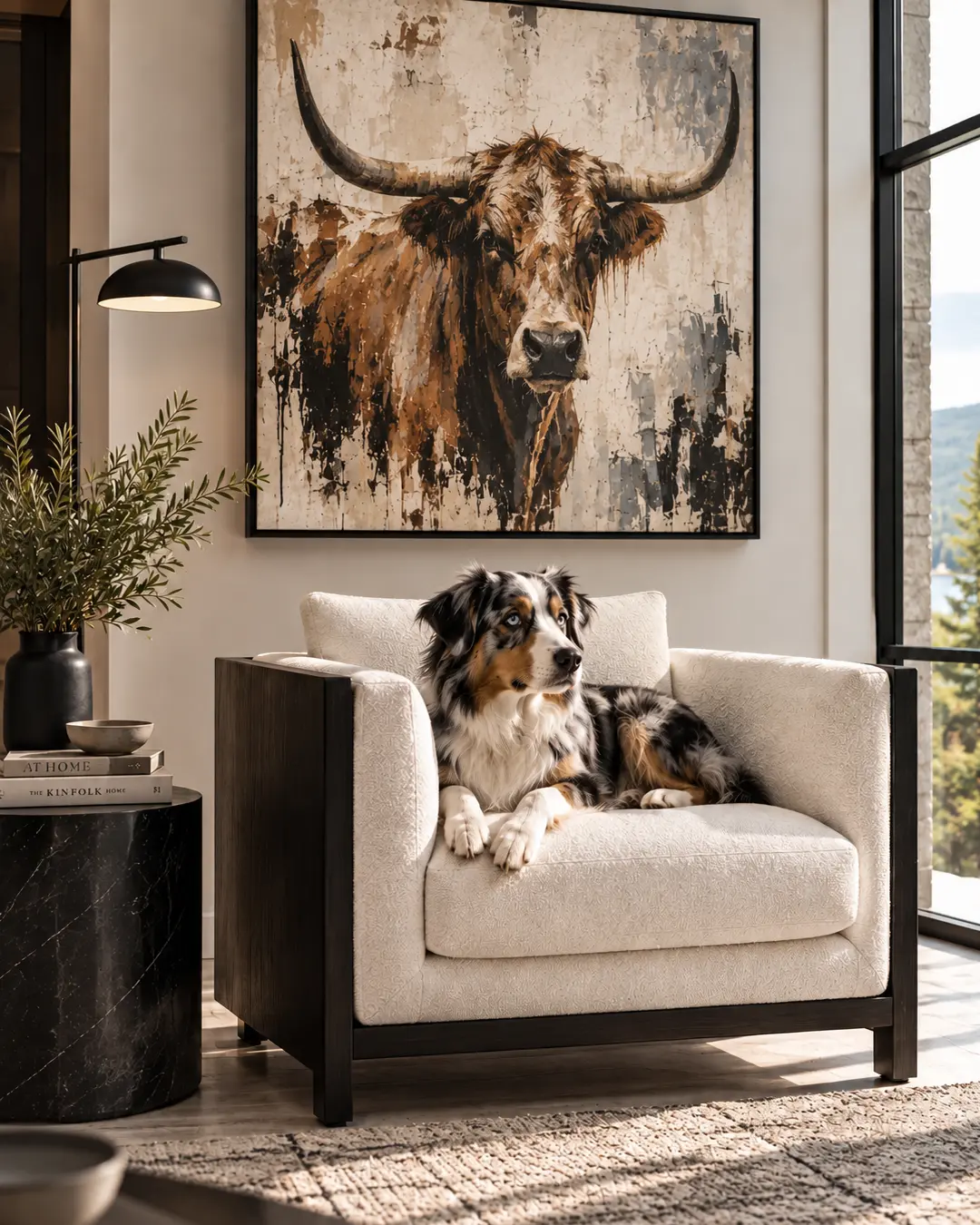
A good room doesn’t need every element to explain every other element.
The dog doesn’t need a portrait of himself.
The artwork doesn’t need to contain a chair.
And the accent chair doesn’t need to match the sofa.
In fact, things become much more interesting when they don’t.
Here, a substantial cream chair sits beneath an enormous Longhorn painting, surrounded by dark wood, black stone and mountain light.
Then an Australian Shepherd settles into the middle of it.
None of these things technically match.
They simply belong together.
That’s considerably more interesting.
The Bird Dog Chair
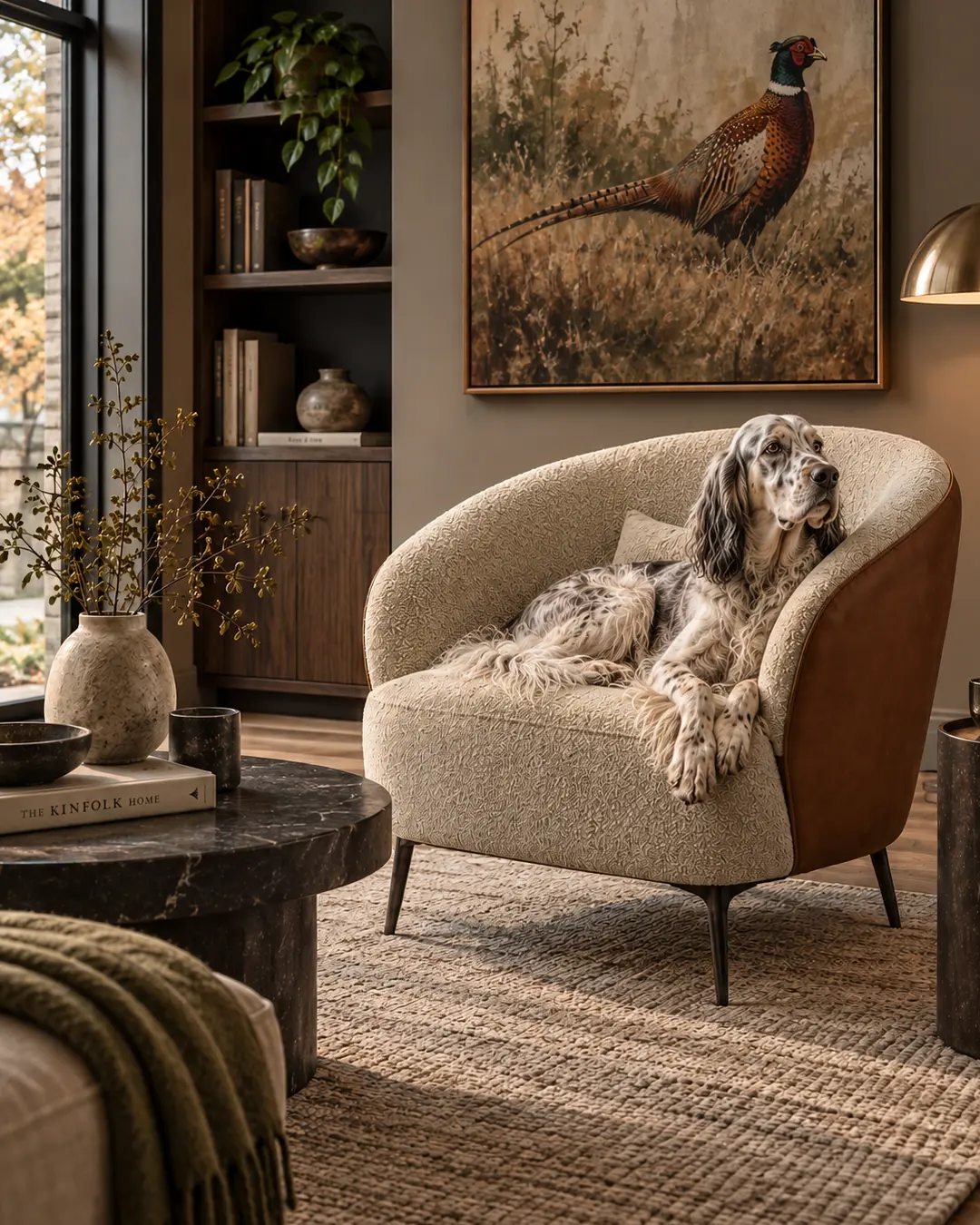
Sometimes the connection can be a little more obvious.
An English Setter.
A pheasant.
A beautifully rounded chair.
Warm wood.
Autumn light.
You don’t need an interior designer to explain what’s happening here.
But what keeps the room from becoming themed is restraint.
There are no hunting signs.
No novelty cushions.
No little ceramic birds arranged across every available surface.
Just one beautiful painting that happens to make perfect sense above one very comfortable bird dog.
A theme whispers. Décor shouts.
The Velvet Chair
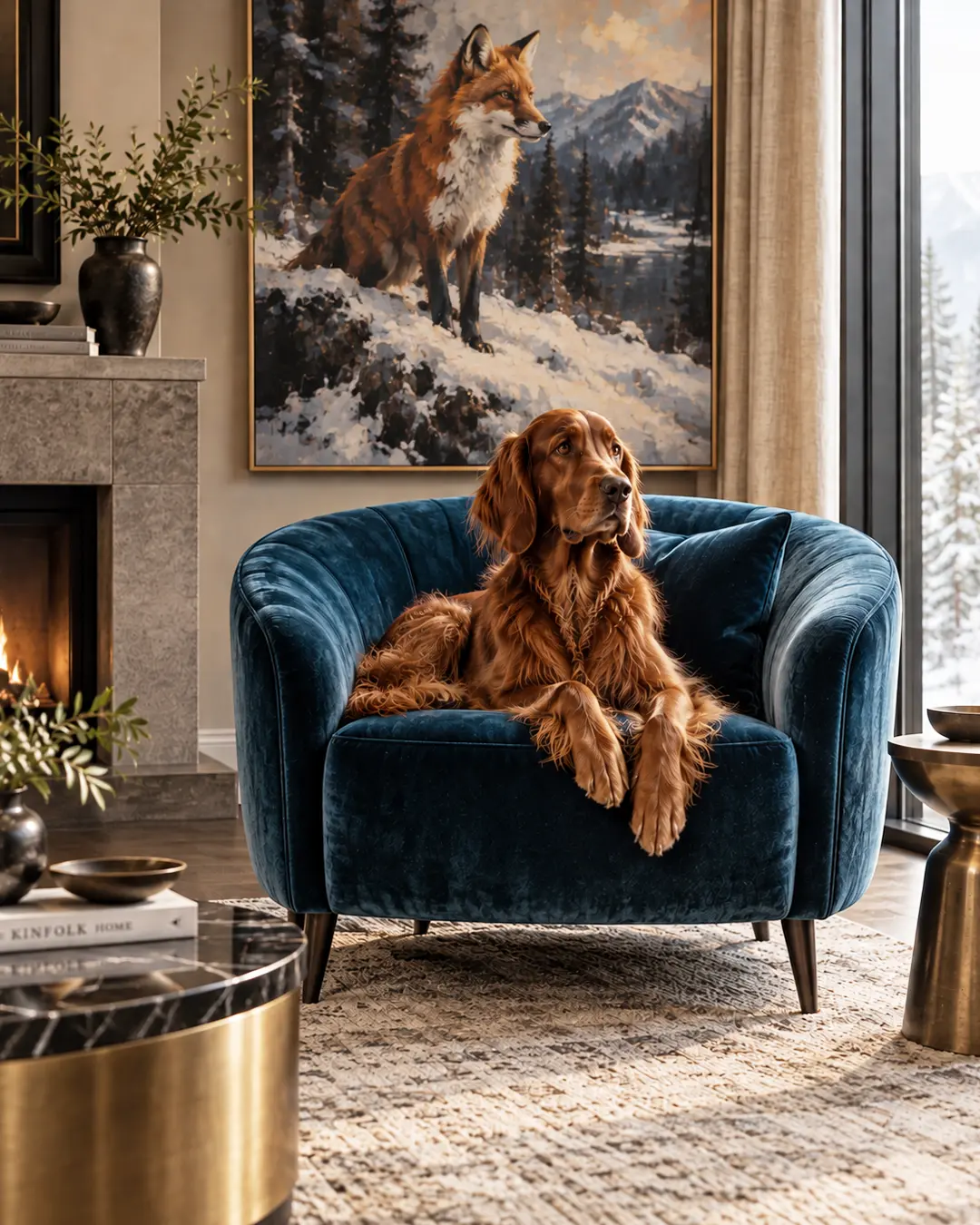
There comes a point when a room has enough neutrals.
That is when velvet becomes useful.
Imagine a deep sapphire, rust or emerald chair sitting in an otherwise restrained room.
Not because the room needed more furniture.
Because it needed punctuation.
Velvet absorbs light differently than linen or bouclé. Colour becomes richer. Shadows become deeper. Even a relatively simple chair can suddenly feel extravagant.
Naturally, the dog selects it immediately.
Probably because dogs understand something humans occasionally forget:
If you’re going to have one unnecessary chair, make it spectacular.
The Mid-Century Chair
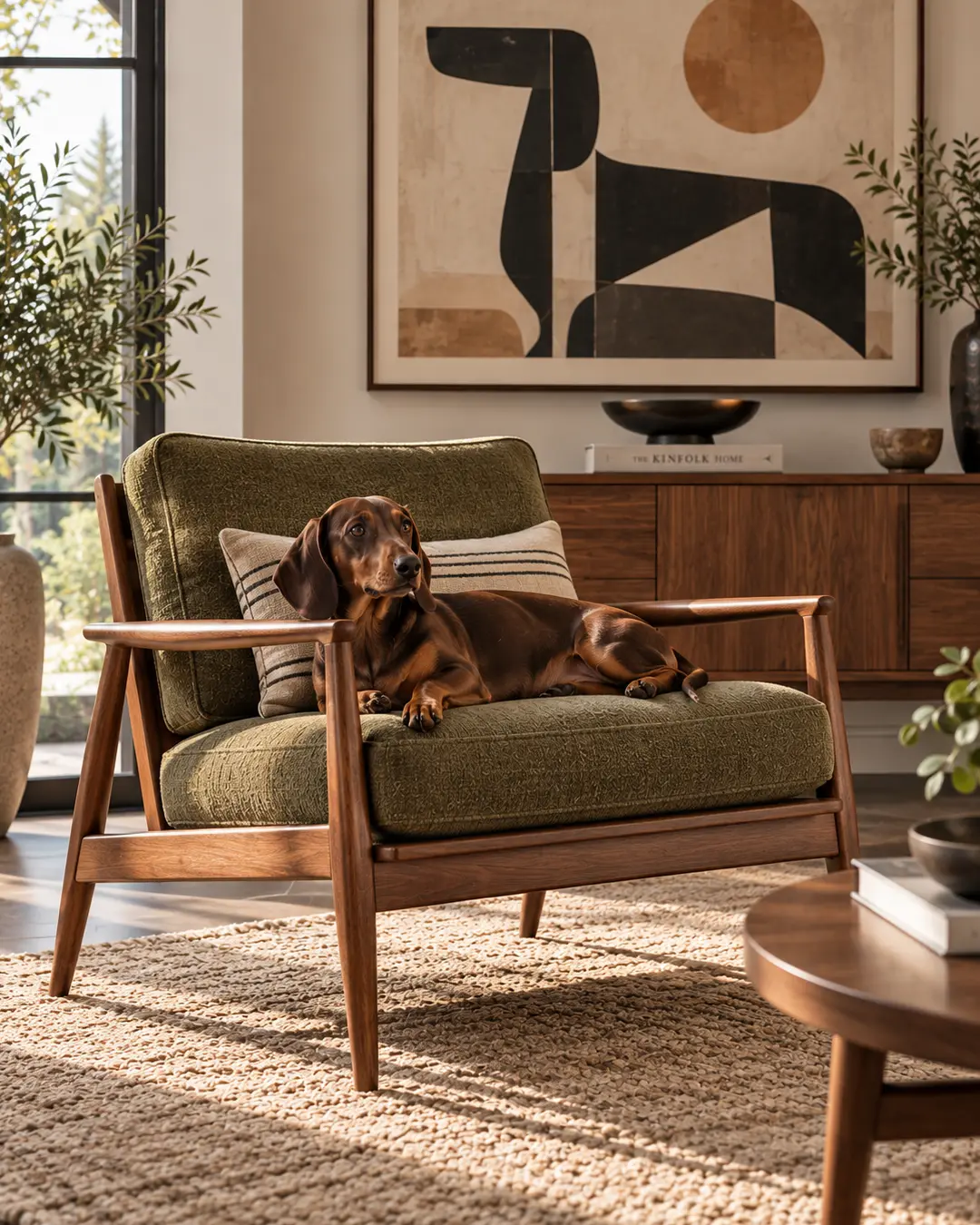
This chair isn’t trying to hide how it’s made.
You can see the frame.
You can see the joinery.
The upholstery sits inside the structure rather than swallowing it.
There is air underneath.
Wood around the edges.
And absolutely nowhere for unnecessary bulk to hide.
Put one in the right room and it almost feels like a piece of architecture.
Put a long, elegantly stretched-out dog across it and the proportions suddenly make even more sense.
Good lines recognize good lines.
The Patterned Chair
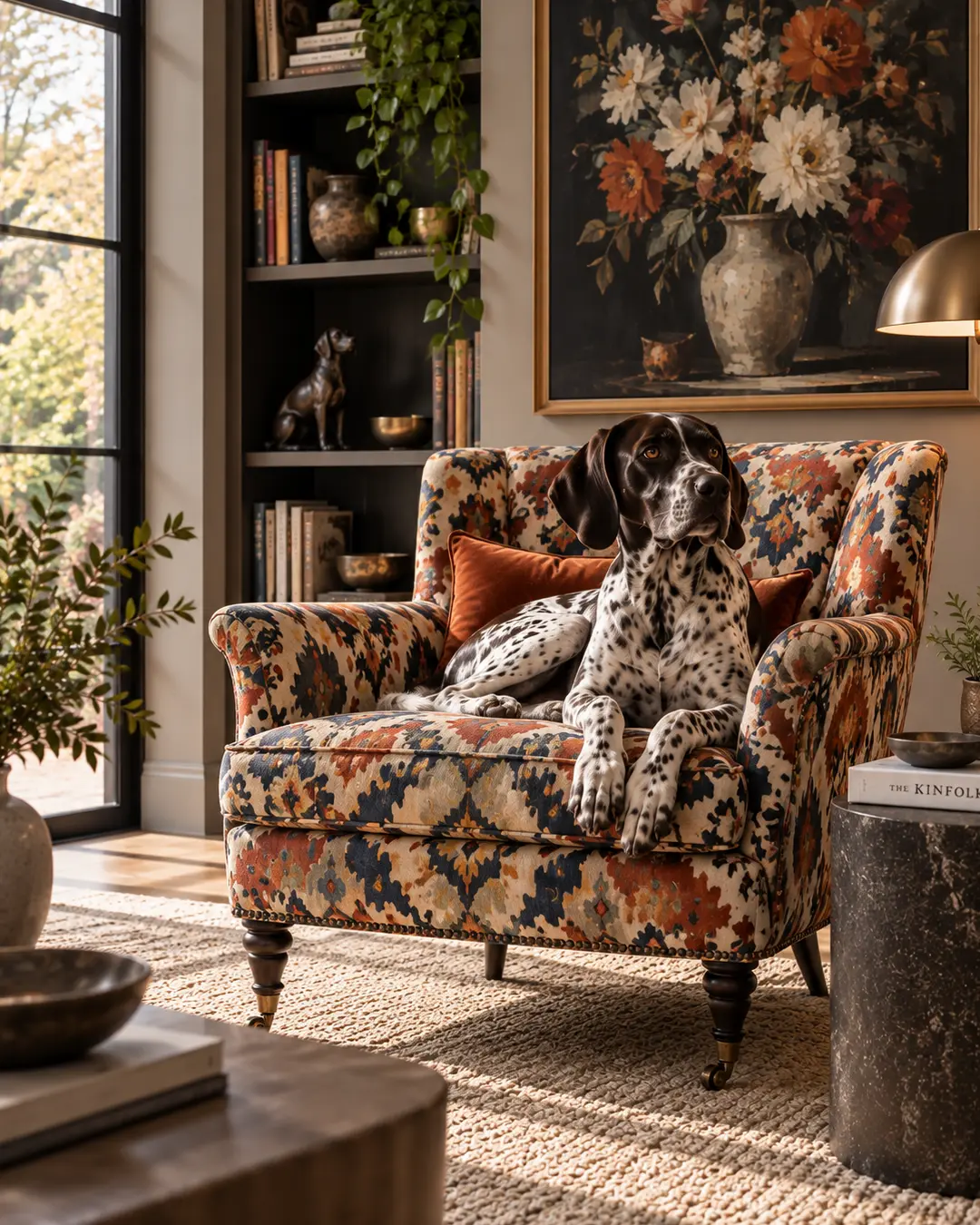
There is an understandable tendency to play it safe with expensive furniture.
Grey.
Cream.
Taupe.
Possibly navy if someone is feeling reckless.
But an accent chair has one enormous advantage:
It doesn’t have to behave like the sofa.
This is where pattern gets interesting.
Stripes.
Checks.
Botanicals.
Geometrics.
Something slightly eccentric that would be terrifying across a ten-foot sectional but wonderful on a single chair.
Then add a dog whose coat has absolutely no intention of coordinating.
Perfect.
Not everything in a good room needs to agree.
The English Chair
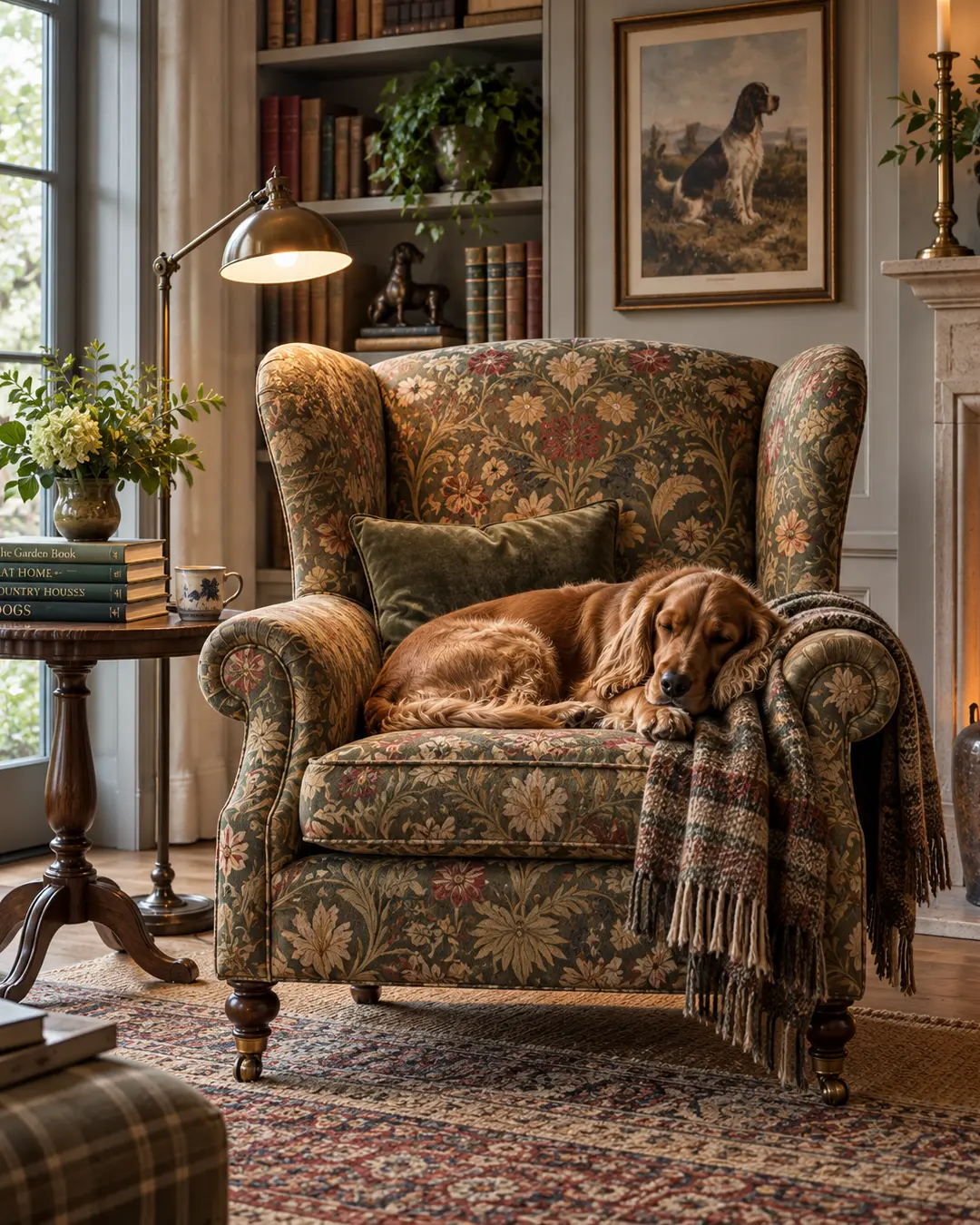
Not every great accent chair needs to look newly invented.
Some have been getting the proportions right for generations.
A high back.
Proper arms.
A deep seat.
Beautiful fabric.
Perhaps turned legs or a skirt that would horrify a committed minimalist.
Put it beside a stack of books, add a reading lamp and let a dog curl into the seat.
Now leave everything alone for twenty years.
It will probably look better.
Some chairs aren’t designed for a moment. They’re designed for a life.
The Black Chair
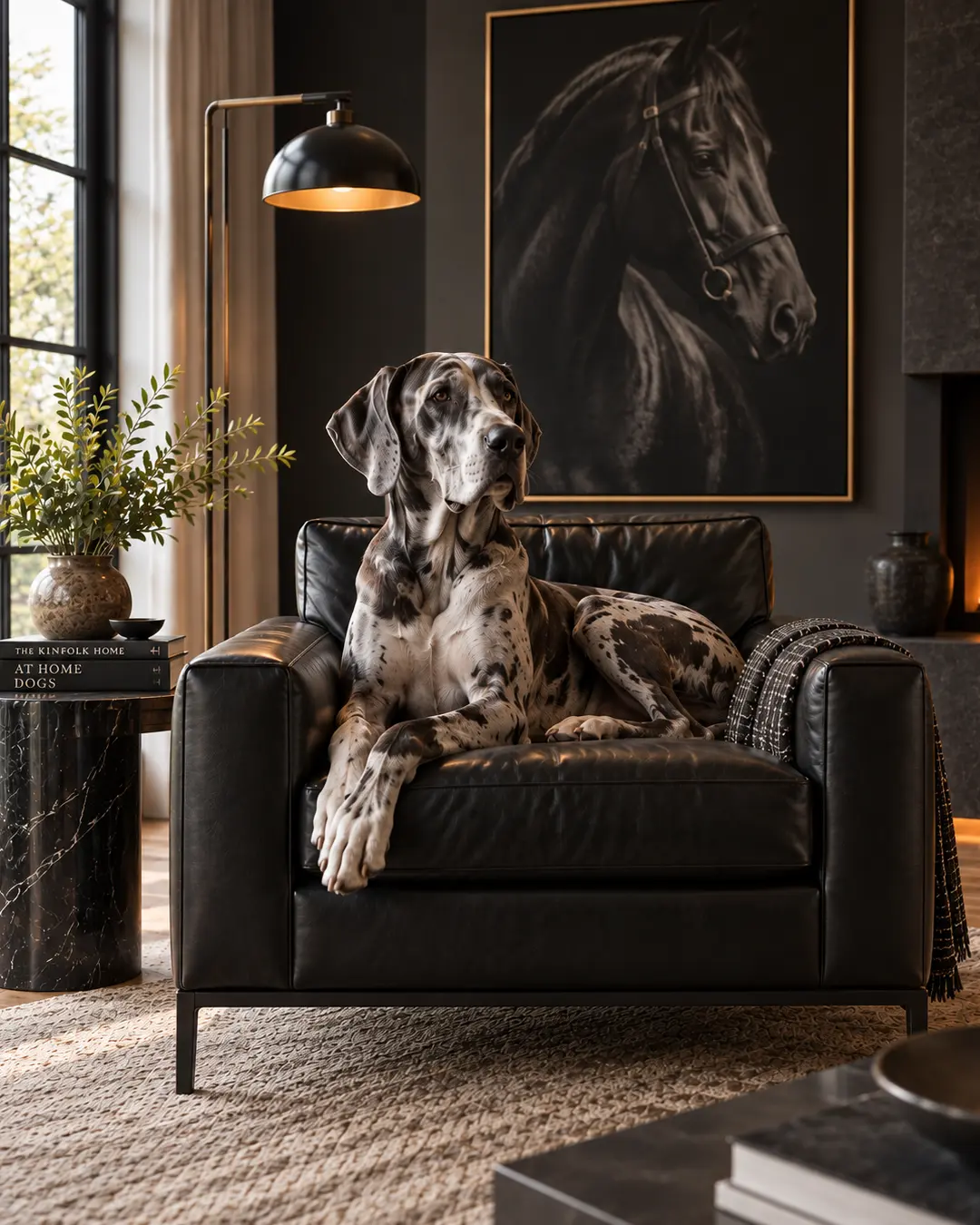
Black furniture changes the temperature of a room.
One black chair can give pale walls, warm wood and soft upholstery something to push against.
It doesn’t need ornament.
In fact, the simpler the silhouette, the better.
A strong frame.
Excellent proportions.
Maybe leather.
Maybe wool.
Maybe something unexpectedly tactile.
Then one dog sitting almost perfectly still in the middle of it.
The result isn’t cold.
It’s graphic.
Sometimes the quietest chair has the strongest voice.
The Chair Nobody Expected
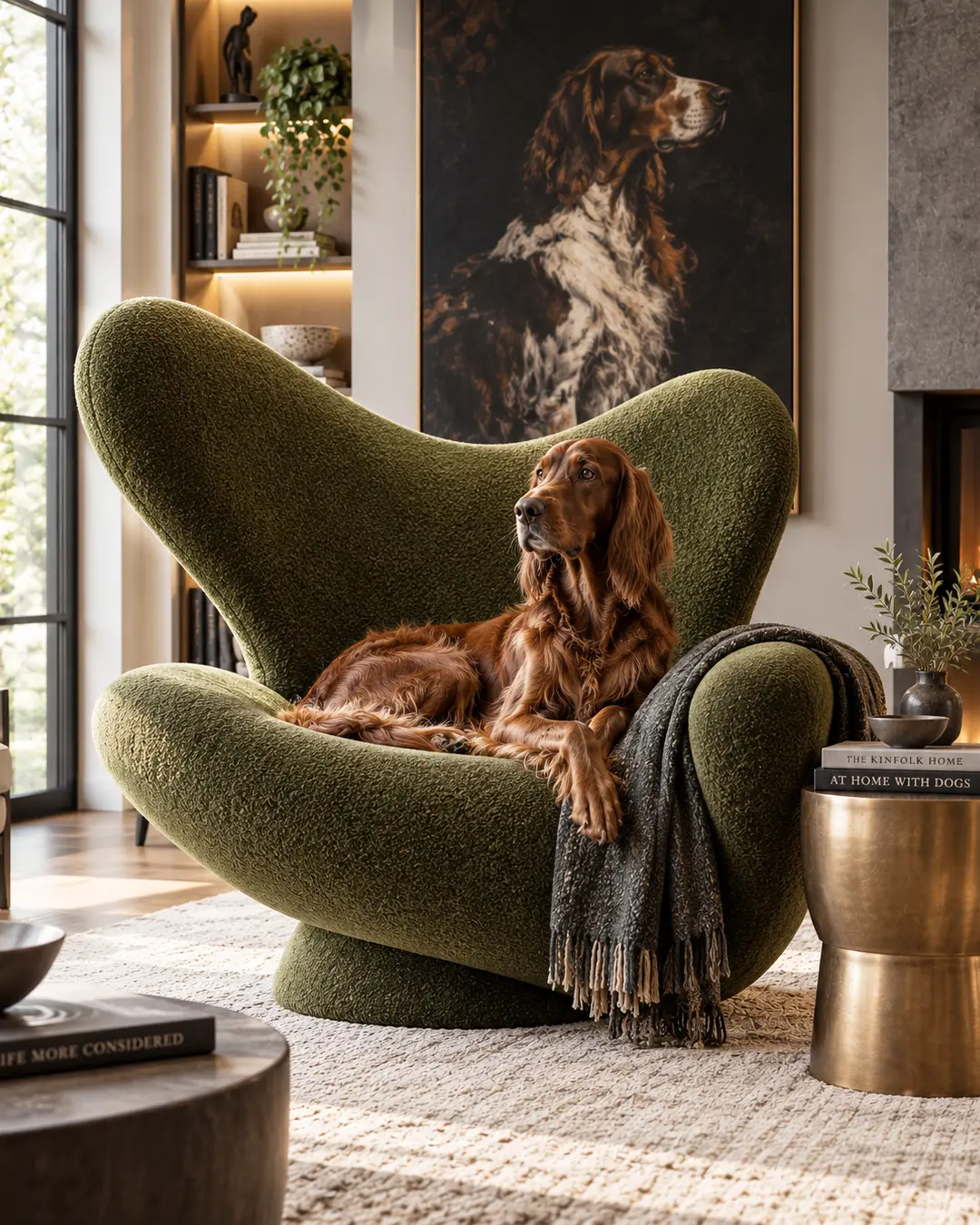
And then there should always be one that doesn’t make immediate sense.
Maybe it’s dramatically oversized.
Maybe it has three legs.
Maybe the back curves in a direction backs aren’t normally expected to curve.
Maybe the upholstery is a colour nobody sensible would have selected from a two-inch fabric sample.
It is the chair someone walks past.
Stops.
Walks backward.
And looks at again.
Naturally, there is a dog sitting in it.
Completely comfortable.
Entirely unconcerned with whether the chair is tasteful, timeless or likely to appear dated in ten years.
Which may actually be the final lesson.
The best accent chair in the room is sometimes simply the one you can’t stop looking at.
The Best Seat in the House
Accent chairs occupy a strange little place in interior design.
We don’t really need most of them.
That’s precisely why they can be so good.
A sofa has to solve problems.
An accent chair gets to have a personality.
It can introduce colour where the room needs colour.
Curves where everything else is square.
Age where everything else is new.
Something strange where everything else is sensible.
And occasionally it becomes the piece that defines the entire room.
Of course, you may spend weeks finding exactly the right one.
You may compare fabrics.
Measure dimensions.
Study the construction.
Wait twelve weeks for delivery.
And carefully position it in precisely the right spot.
Then your dog will climb onto it.
At which point there is really only one thing left to establish.
Apparently, you bought him a chair.