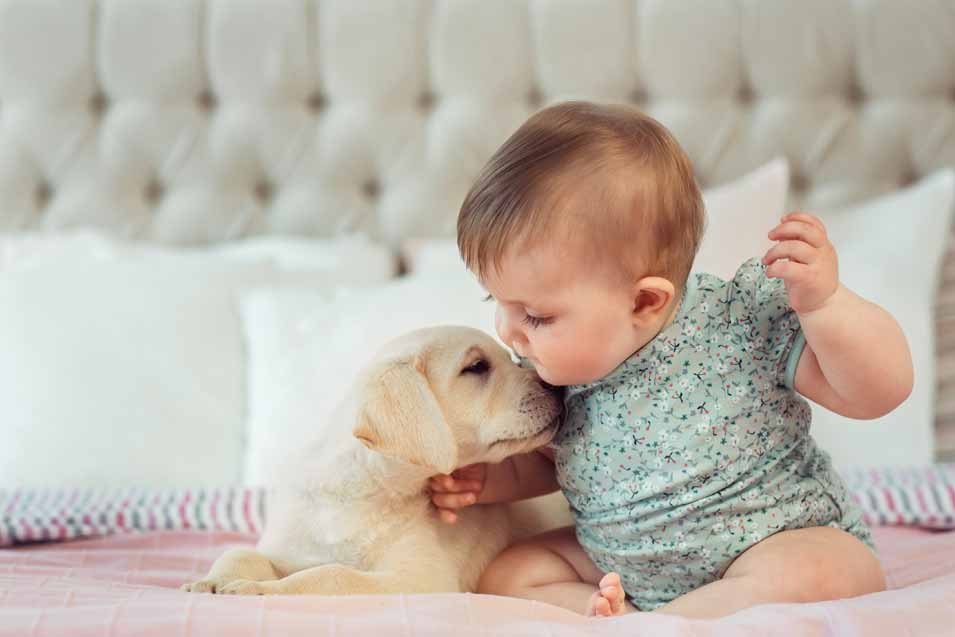
There is nothing like that first moment when you bring your new baby home for the first time. But some new parents have an additional concern. Families with pets worry about how their dog or cat may react to the new bundle of joy. This is especially true with older pets that have not been exposed to infants before. Here are a few tips to help make the introduction easier and safer for your new infant.
– Prior to coming home from the hospital, or during pregnancy, it is sometimes beneficial to begin making mock lifestyle changes so your dog can settle into their new role more readily. For example, buy an inexpensive doll that makes realistic baby like sounds. Let your dog get used to the sounds of a baby crying. Let your dog get used to the smells of baby products and let your dog get used to the idea that your lap may not be theirs anymore.
– When coming home from the hospital, it often helps if your spouse or partner can carry in the new infant. This gives the resident dog the chance to re-unite with the mother first. You want to avoid creating a negative first impression by telling your dog to, “get off” or “go away,” during that initial meeting.
– Watch your dog carefully for any signs of discomfort or potential problems with aggression. If in doubt, take the time to have a trained professional assess the situation early on.
– If you haven’t done so already, teach your dog some useful control cues. Some of the most useful around a child are, down/stay and leave it.
– Supervise actively. Ideally, all dogs would be Lassie like. But the truth is behavior changes, and even good dogs can become aggressive. All dogs have the potential to bite. Never leave a dog alone with a baby, and always give them your full attention.
– Make the first meeting of baby and dog positive and calm. Ideally you want to create an extremely positive association right from the start. You may also want to let your dog sniff a piece of your new baby’s clothing first. Have a leash on your dog as a safety precaution.
– Families with new babies are busy. If you do not have the time to exercise your dog – ask a family member to help by giving the dog some exercise. Dog walkers are available at reasonable costs and are another alternative. A tired dog is a good dog.
– Give your dog some quiet time. A crying infant wakes up you, and wakes up your dog. Make sure the dog gets enough sleep.
– Never force contact. If your dog is hesitant, seek professional help.
Things dog owners should do now:
If you haven’t already taught your dog some basic obedience, you may want to consider doing that now. Problems often emerge as your baby begins crawling. Think ahead.
When teaching “leave it.” Consider using a word like “mine,” instead. Mine is a common toddler word, and in the future, you may be very glad that your dog thinks the word, “mine” means “leave it.”
Do bite prevention exercises. If you have these types of exercises before – Great! Do them again. Behavior fluctuates over the life-time of a dog. Prevention is the best cure.
Put a jar of dog cookies by your door and ask the flow of company visiting your new baby to take a moment to say, “hello” to your dog. Make it easy for your dog to feel special.
Keep both your baby and your dog safe. Children’s toys may not be safe for your dog and dog toys may not be safe for your child. You’ll likely need to pay attention to both for a while.
Have fun. Dogs and kids can get along well, with supervision and a little work. If in doubt, get a professional in to help you proceed in the right direction.
Article supplied by: Meeting Milo